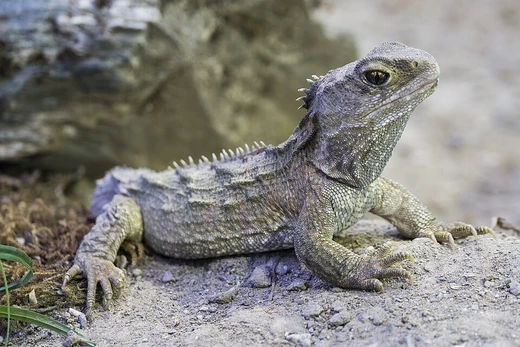
Iguanidae
Family of lizards including iguanas, chuckwallas, and prehistoric relatives.
Last updated
Iguanidae is a family of lizards that includes iguanas, chuckwallas, and their prehistoric relatives. The family likely first appeared in the Cenozoic, and its subfamily Iguaninae, containing all modern genera, likely originated in the earliest Paleocene about 62 million years ago. Iguanas are diverse in size, appearance, and habitat, typically flourishing in tropical warm climates across the Americas and Pacific islands.
Scientific classification
- KingdomAnimalia
- PhylumChordata
- ClassReptilia
- OrderSquamata
- SuborderIguania
- FamilyIguanidae
Named by Oppel, 1811
Sources: Wikipedia taxobox: Iguanidae (CC BY-SA 4.0)
Quick Facts
- First appearance
- Cenozoic
- Origin of iguaninae
- Earliest Paleocene, about 62 million years ago
Facts from the source article.
Lore & Background
The family Iguanidae likely first appeared in the Cenozoic; two previously identified Cretaceous genera (Pristiguana and Pariguana) are now considered unlikely to belong to this family. The subfamily Iguaninae, which contains all modern genera, likely originated in the earliest Paleocene about 62 million years ago. The most basal extant genus, Dipsosaurus, diverged from the rest of Iguaninae during the late Eocene about 38 million years ago, with Brachylophus following about 35 million years ago after its dispersal event to the Pacific. All other modern iguana genera formed in the Neogene period.
Reader's Guide
Iguanidae is significant as a family of lizards that includes well-known species such as the green iguana and chuckwallas, and its members are distributed primarily across the Americas, with one genus (Brachylophus) endemic to Fiji and Tonga. The family's evolutionary history is marked by a likely Cenozoic origin and a complex taxonomy that has been reclassified multiple times. Various classification schemes have been proposed, from informal groupings to formal recognition of subfamilies and families, reflecting ongoing debate among researchers.
Iguanas are notable for their diverse adaptations, including herbivory, arboreal and terrestrial habits, nest-guarding behavior, and reliance on basking for thermoregulation. Their distribution has been influenced by natural rafting events and human introductions via the exotic pet trade. The family's fossil record includes extinct genera such as Lapitiguana and Armandisaurus, while Cretaceous genera once assigned to Iguanidae have been excluded.
Frequently Asked Questions
What kind of animal group is Iguanidae?
Iguanidae is a lizard family that encompasses iguanas, chuckwallas, and several now-extinct lineages. It is one of the more recognizable groups of squamates, known for their stocky bodies and strictly plant-based diets.
Where do Iguanidae species live today?
The vast majority of extant species are restricted to the Americas, thriving in warm tropical settings. A single genus, Brachylophus, is the notable exception, being native to Fiji and Tonga in the Pacific.
Also in the Codexery
More in Extant Reptiles & Amphibians
Sources
Compiled from Wikipedia and the sources listed below. Text from Wikipedia is available under CC BY-SA 4.0; this entry is adapted from it.
- Wikipedia: Iguanidae (CC BY-SA 4.0).
- Word definitions: the Codexery glossary, each quoted from its Wikipedia article.
Spotted an error? Know more?
Reader corrections go straight into our review queue. Suggest an edit · How this site is sourced