Cretaceous
The longest geological period, marked by warm climates, dinosaurs, and the rise of flowering plants, ending with a mass extinction.
Last updated

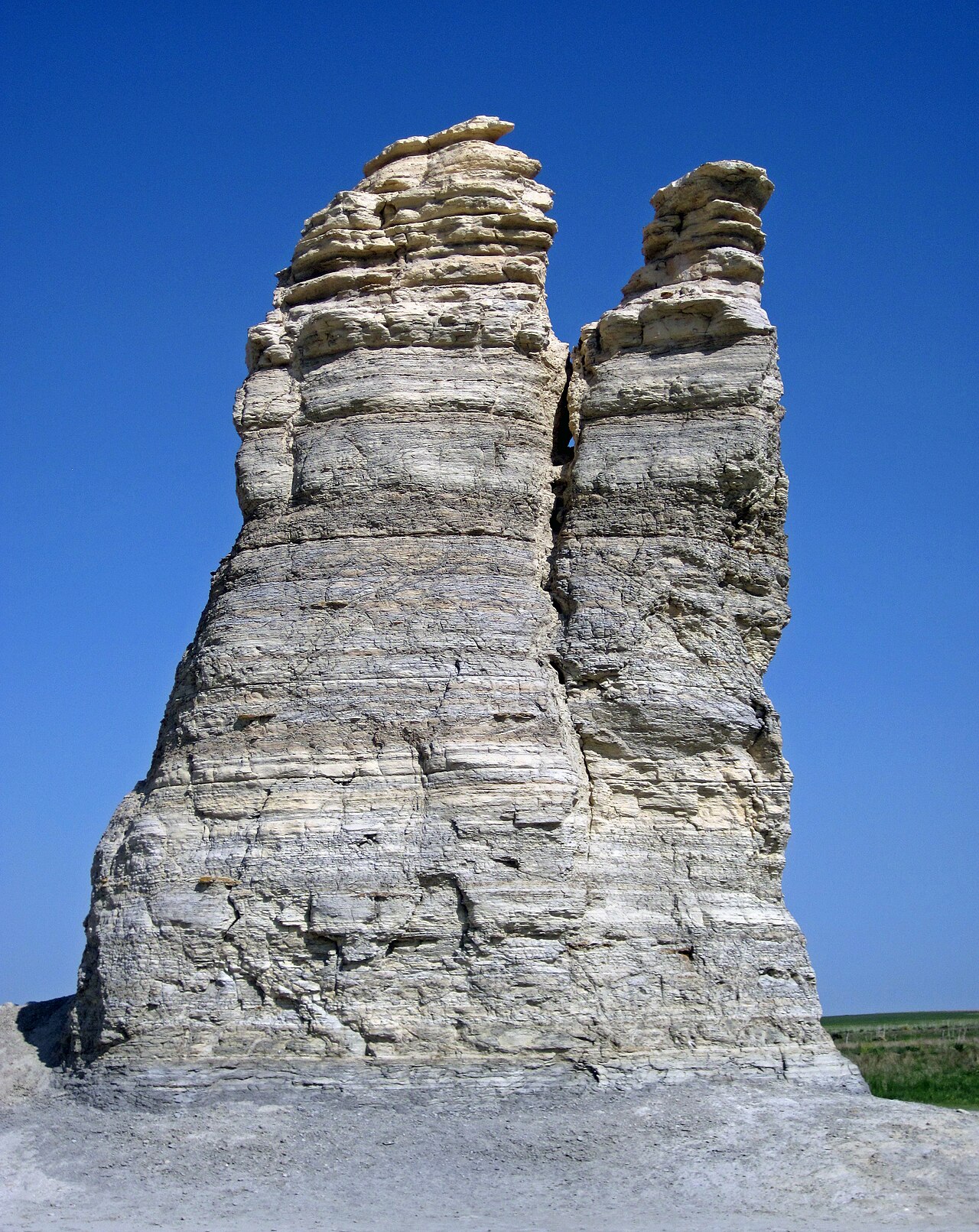
James St. John · CC BY 2.0
The Cretaceous is a geological period that lasted from about 143.1 to 66 million years ago, serving as the third and final segment of the Mesozoic Era. It is the longest period within the Mesozoic and, at roughly 77.1 million years, also the longest period in the entire Phanerozoic Eon. The name comes from the Latin word for chalk, reflecting the extensive chalk deposits—formed from the calcium carbonate shells of marine microorganisms like coccoliths—that are characteristic of the latter half of the period.
It is commonly abbreviated as K, derived from its German name. The climate during the Cretaceous was relatively warm, leading to high sea levels that created many shallow inland seas. These waters teemed with now-extinct marine reptiles, ammonites, and rudists, while on land, dinosaurs remained the dominant animals.
The world was largely ice-free, though brief glacial periods may have occurred during the cooler first half, and forests extended all the way to the poles. Many modern taxonomic groups trace their origins to this time. New mammals and birds appeared, including the earliest relatives of placental and marsupial mammals, with the first crown-group birds emerging near the period’s end. Teleost fish, the most diverse group of modern vertebrates, continued to diversify, and their most varied subgroup, Acanthomorpha, arose.
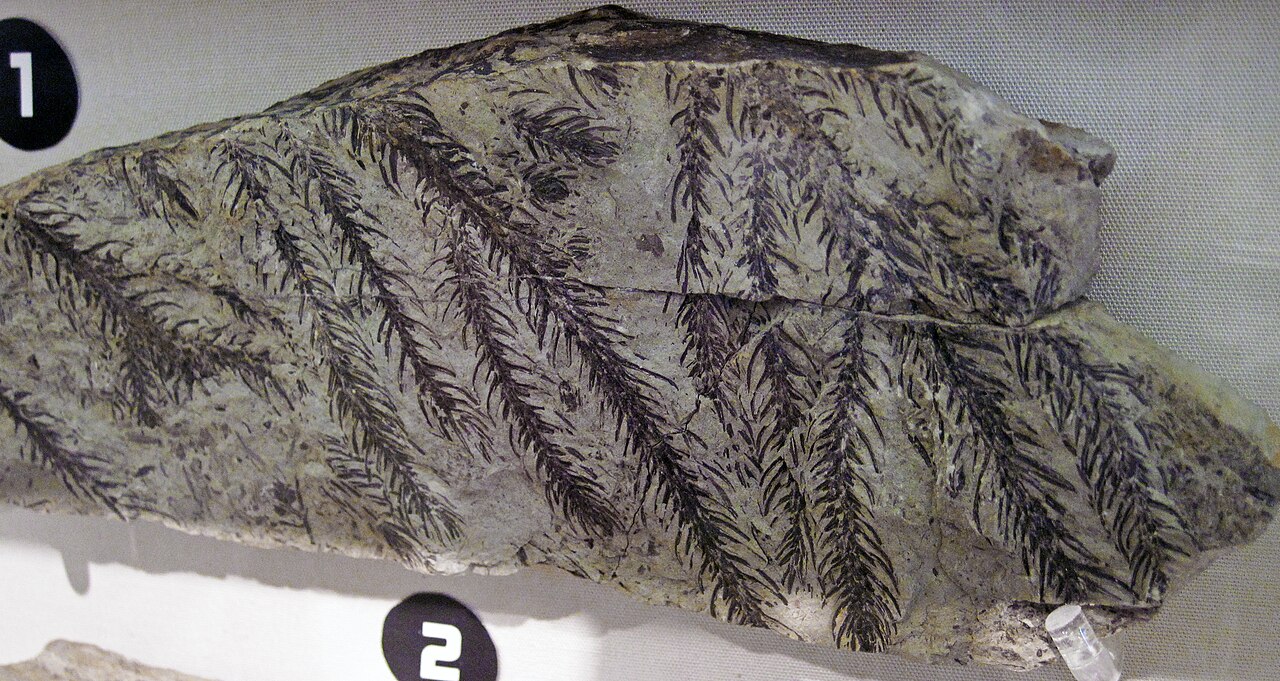
Flowering plants first appeared during the Early Cretaceous and rapidly diversified, becoming the dominant plant group by the period’s close, coinciding with the decline of many gymnosperm groups. The Cretaceous ended with the Cretaceous–Paleogene extinction event, a major mass extinction that wiped out non-avian dinosaurs, pterosaurs, and large marine reptiles, widely attributed to a large asteroid impact that formed the Chicxulub crater in the Gulf of Mexico. The abrupt Cretaceous–Paleogene boundary, marked by an iridium-rich layer, defines this transition between the Mesozoic and Cenozoic Eras.
Lore & Background
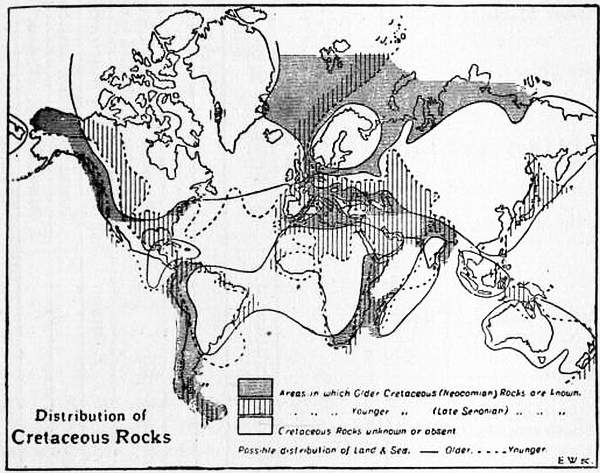
The Cretaceous was a period with a relatively warm climate, resulting in high eustatic sea levels that created numerous shallow inland seas. These oceans and seas were populated with now-extinct marine reptiles, ammonites and rudists; while on land, dinosaurs continued to dominate. The world was largely ice-free – although there is some evidence of brief periods of glaciation during the cooler first half – and forests extended to the poles.
Many of the dominant taxonomic groups present in modern times can be ultimately traced back to origins in the Cretaceous. During this time, new groups of mammals and birds appeared, including the earliest relatives of placentals and marsupials (Eutheria and Metatheria respectively), with the earliest crown group birds appearing towards the end of the Cretaceous. Teleost fish continued to diversify during the Cretaceous with the appearance of their most diverse subgroup Acanthomorpha.
During the Early Cretaceous, flowering plants appeared and began to rapidly diversify, becoming the dominant group of plants across the Earth by the end of the Cretaceous, coincident with the decline and extinction of previously widespread gymnosperm groups. The Cretaceous (along with the Mesozoic) ended with the Cretaceous–Paleogene extinction event, a large mass extinction in which many groups, including non-avian dinosaurs, pterosaurs, and large marine reptiles, died out; it is widely thought to have been caused by the impact of a large asteroid that formed the Chicxulub crater in the Gulf of Mexico. The end of the Cretaceous is defined by the abrupt Cretaceous–Paleogene boundary (K–Pg boundary), a geologic signature associated with the mass extinction that lies between the Mesozoic and Cenozoic Eras.
A Name Carved in Chalk
The Cretaceous takes its name from the Latin word creta, meaning chalk, a nod to the extensive beds of calcium carbonate deposited by the shells of marine invertebrates, principally coccoliths, found in the upper Cretaceous of Western Europe. Belgian geologist Jean d'Omalius d'Halloy first delineated it as a distinct geological period in 1822, calling it Terrain Crétacé based on strata in the Paris Basin. The period is commonly abbreviated K, drawn from the German word Kreide.
Spanning from about 143.1 to 66 million years ago, the Cretaceous stands as the third and final period of the Mesozoic Era. At approximately 77.1 million years in length, it also claims the title of the ninth and longest geological period across the entire Phanerozoic. Its internal structure is divided into Early and Late Cretaceous epochs, or Lower and Upper Cretaceous series, with a worldwide framework of twelve stages all originating from European stratigraphy, though local subdivisions persist in various regions.
A Warm World of Shallow Seas
The Cretaceous unfolded under a notably warm climate that drove eustatic sea levels to heights producing countless shallow inland seas across the continents. These vast marine environments teemed with now-extinct creatures: marine reptiles patrolled the waters alongside ammonites and rudists, while on land the dinosaurs maintained their unchallenged dominance. The planet was largely free of ice, though some evidence points to brief glaciation episodes during the cooler first half of the period. Forests stretched all the way to the poles, a testament to the mild global temperatures.
The lower boundary of the Cretaceous remains uniquely problematic in stratigraphy—it is the only system boundary in the entire Phanerozoic to lack a formally defined Global Boundary Stratotype Section and Point. The difficulty stems from the strong regionality of biostratigraphic markers and the absence of clear chemostratigraphic events such as isotope excursions that could anchor a global correlation. Calpionellids, enigmatic planktonic protists with urn-shaped calcitic tests, have been proposed as the most promising candidates for fixing this boundary, with the first appearance of Calpionella alpina serving as a leading candidate marker.
Cradle of Modern Life
Many of the dominant biological groups we recognize today trace their deepest origins to the Cretaceous. New lineages of mammals emerged during this interval, including the earliest relatives of placentals (Eutheria) and marsupials (Metatheria), while the earliest crown-group birds appeared toward the period's close. Among vertebrates, teleost fish—now the most diverse group of modern vertebrates—continued their diversification, with their most varied subgroup, Acanthomorpha, making its appearance during the Cretaceous. Perhaps the most transformative botanical event was the arrival of flowering plants in the Early Cretaceous.
These angiosperms diversified at a remarkable pace, ultimately becoming the dominant plant group across the entire Earth by the period's end. This rise coincided with the decline and extinction of previously widespread gymnosperm groups. The Cretaceous thus represents a pivotal window in which the biological architecture of the modern world was assembled, laying the groundwork for the ecosystems that would follow the great extinction at the period's close.
The Day the World Ended
The Cretaceous, and with it the entire Mesozoic Era, was brought to an abrupt close by the Cretaceous–Paleogene extinction event. The upper boundary of the period is sharply defined by an iridium-rich layer found worldwide, dated at 66.043 million years ago, and widely attributed to the impact of a large asteroid that formed the Chicxulub crater, whose boundaries circumscribe parts of the Yucatán Peninsula and extend into the Gulf of Mexico. The catastrophe eliminated three-quarters of Earth's plant and animal species, wiping out non-avian dinosaurs, pterosaurs, and large marine reptiles. Species dependent on photosynthesis suffered the most, as atmospheric particles blocked solar energy and collapsed the food chains built upon phytoplankton and land plants.
Herbivores that relied on those primary producers perished alongside them. Despite the severity of the event, extinction rates varied significantly between and within different clades. Earth's biodiversity required substantial time to recover, even though an abundance of vacant ecological niches presumably existed in the aftermath.
Reader's Guide
The Cretaceous as a separate period was first defined by Belgian geologist Jean d'Omalius d'Halloy in 1822 as the Terrain Crétacé, using strata in the Paris Basin and named for the extensive beds of chalk (calcium carbonate deposited by the shells of marine invertebrates, principally coccoliths), found in the upper Cretaceous of Western Europe. The name 'Cretaceous' was derived from the Latin creta, meaning 'chalk'. The twofold division of the Cretaceous was implemented by Conybeare and Phillips in 1822. Alcide d'Orbigny in 1840 divided the French Cretaceous into five étages (stages): the Neocomian, Aptian, Albian, Turonian, and Senonian, later adding the Urgonian between Neocomian and Aptian and the Cenomanian between the Albian and Turonian.
The Cretaceous is divided into Early and Late Cretaceous epochs, or Lower and Upper Cretaceous series. In older literature, the Cretaceous is sometimes divided into three series: Neocomian (lower/early), Gallic (middle) and Senonian (upper/late). A subdivision into 12 stages, all originating from European stratigraphy, is now used worldwide.
The lower boundary of the Cretaceous is currently undefined, and the Jurassic–Cretaceous boundary is currently the only system boundary to lack a defined Global Boundary Stratotype Section and Point (GSSP). The boundary is officially considered by the International Commission on Stratigraphy to be approximately 145 Ma, but other estimates have been proposed based on U-Pb geochronology, ranging as young as 140 Ma. The upper boundary of the Cretaceous is sharply defined, being placed at an iridium-rich layer found worldwide that is believed to be associated with the Chicxulub impact crater, with its boundaries circumscribing parts of the Yucatán Peninsula and extending into the Gulf of Mexico. This layer has been dated at 66.043 Ma.
More in Geology
Sources
Compiled from Wikipedia and the sources listed below. Text from Wikipedia is available under CC BY-SA 4.0; this entry is adapted from it.
- Wikipedia: Cretaceous (CC BY-SA 4.0).
- Word definitions: the Codexery glossary, each quoted from its Wikipedia article.
Spotted an error? Know more?
Reader corrections go straight into our review queue. Suggest an edit · How this site is sourced