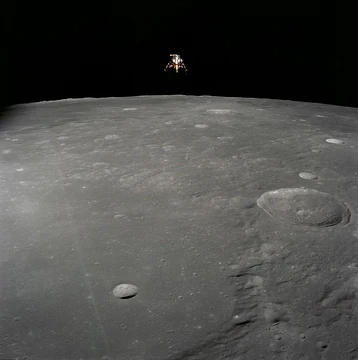
Google Lunar X Prize
Privately funded race to land a rover on the Moon.

Steve Jurvetson from Los Altos, USA · CC BY 2.0
The Google Lunar X Prize was a space competition that ran from 2007 to 2018, run by the X Prize Foundation and paid for by Google. It asked private teams to be the first to put a rover on the Moon, drive it 500 meters, and send high-definition video and pictures back to Earth. The total prize pool was US$30 million. The top prize was US$20 million, and the second-place team would get US$5 million. Extra money was available for bonus goals, like driving ten times the required distance or photographing old Apollo mission hardware.
The competition was announced in September 2007 at the Wired Nextfest. It was inspired by the earlier Ansari X Prize, with the idea of sparking private investment and cheaper space technology. The original deadline was the end of 2014, with a bigger prize if a team landed by 2012. In 2015, the organizers said they would push the deadline to December 2017 if any team had a verified launch contract by the end of 2015. Two teams got those contracts, so the deadline moved. In August 2017, it was extended again to 31 March 2018.
By the start of 2018, five teams were still in the running: SpaceIL, Moon Express, Synergy Moon, TeamIndus, and Team Hakuto. They had launch contracts with Spaceflight Industries, Rocket Lab, Interorbital Systems, and ISRO (the last two teams shared an ISRO launch). On 23 January 2018, the X Prize Foundation announced that no team could launch by the March deadline, so the US$30 million prize would not be awarded. On 5 April 2018, the foundation announced that while the Lunar XPRIZE had officially ended with no winner, they would support teams' efforts in other ways, but not as a formal competition.
On 11 April 2019, SpaceIL’s Beresheet spacecraft crashed while trying to land on the Moon. The foundation gave the team a US$1 million "Moonshot Award" because the craft had touched the lunar surface.
The prize had a rule that the grand prize would drop from US$20 million to US$15 million if a government-led mission landed on the Moon first. In November 2013, the teams and organizers agreed to drop that rule because China’s Chang’e 3 was about to land in December 2013. There was also a US$1 million diversity award for teams that promoted ethnic diversity in STEM fields.
- Announced
- 13 September 2007
- Expired
- 31 March 2018
- Total prize purse
- US$30 million
- Grand prize
- US$20 million
- Second prize
- US$5 million
- Sponsor
- Organizer
- X Prize Foundation
Lore & Background
The Google Lunar X Prize was announced at the Wired Nextfest on 13 September 2007. Its goal was to inspire private investment in cost-effective space technologies, similar to the Ansari X Prize. Initially, NASA was the planned sponsor with a US$20 million prize, but budget setbacks prevented that. Peter Diamandis then presented the idea to Google co-founders Larry Page and Sergey Brin, who agreed to sponsor it and increased the prize purse to US$30 million, allowing for a second place prize and bonus prizes.
The original deadline was the end of 2014, with additional prize money for a landing by 2012. The deadline was extended multiple times: in 2015 to December 2017 if at least one team secured a verified launch contract by 31 December 2015; two teams did so. In August 2017, the deadline was extended again to 31 March 2018. The competition officially ended on 31 March 2018 with no winner. On 5 April 2018, the X Prize Foundation announced they would support teams' efforts in other ways, but not as a formal competition.
Reader's Guide
The Google Lunar X Prize was significant as a major inducement prize that aimed to spur private investment in lunar exploration, much like the Ansari X Prize did for suborbital spaceflight. Although no team claimed the US$30 million prize, the competition fostered the development of multiple private lunar programs and kept public and private interest in Moon missions alive during a period of limited government activity. The prize's structure—with bonuses for heritage site imaging and surviving a lunar night—encouraged technical innovation and raised ethical questions about preserving Apollo landing sites. The competition's legacy includes the continued efforts of teams like SpaceIL, which, despite crashing, achieved the first privately funded lunar landing attempt and received a Moonshot Award. The GLXP demonstrated both the potential and the challenges of privately funded space exploration, influencing subsequent lunar initiatives and prize competitions.
Did You Know?
- The prize expired on 31 March 2018 with no team able to launch, and the US$30 million went unclaimed.
- On 11 April 2019, the SpaceIL Beresheet spacecraft crashed while attempting to land on the Moon, but the team received a US$1 million Moonshot Award.
- Some archaeologists objected to the Heritage Bonus Prize, calling for a ban on targeting landing zones within 100 kilometers of previous lunar landing sites.
Origins: From BlastOff! to a Google-Backed Moon Race
The Google Lunar X Prize traces its roots to Peter Diamandis's earlier venture, BlastOff! Corporation, a commercial effort to land a robotic spacecraft on the Moon that blended entertainment, internet culture, and space exploration. Though BlastOff! ultimately failed, it laid the conceptual groundwork for what would become the GLXP. Diamandis initially envisioned NASA as the sponsoring body with a $20 million purse, but because NASA is a federal agency funded by U.S. taxpayers, the prize would have been restricted to American teams. He had hoped to recruit the European Space Agency and Japan's space agency to mirror the offer in their own countries. When budget constraints prevented NASA from moving forward, Diamandis pitched the concept to Google co-founders Larry Page and Sergey Brin at an XPRIZE fundraiser. They agreed to sponsor the competition and bumped the total purse to $30 million, enabling a second-place award and additional bonus prizes. The competition was formally unveiled at the Wired Nextfest on 13 September 2007.
Prize Architecture and the Rules of the Game
The GLXP offered a total of $30 million to the first privately funded team to land a robotic rover on the Moon, drive it more than 500 meters, and beam back high-definition video and still images to Earth. The first qualifying team would collect a $20 million grand prize, while the second would receive $5 million. Beyond the baseline, teams could earn bonus money for ambitious feats: traveling over 5,000 meters, photographing Apollo-era hardware or other human-made artifacts on the lunar surface, confirming the presence of water ice from the Moon, or surviving an entire lunar night. A separate $1 million diversity award targeted teams that made meaningful progress in promoting ethnic diversity within STEM. An early rule stipulated that the grand prize would shrink from $20 million to $15 million each time a government-led mission touched down on the Moon, but organizers and teams mutually agreed to scrap that provision in November 2013 as China's Chang'e 3 probe prepared for its December landing.
A Decade of Slipping Deadlines and Narrowing Fields
The original timeline was aggressively optimistic: land a rover by 2012 for the full $20 million prize, dropping to $15 million by the end of 2014. As the 2012 target approached, no team appeared close to a credible bid. The deadline was pushed to the end of 2015, and in that same year XPRIZE offered an extension to December 2017 provided at least one team locked in a verified launch contract by 31 December 2015. Two teams did so, triggering the extension. By January 2017, five finalists remained—SpaceIL, Moon Express, Synergy Moon, Team Indus, and Team Hakuto—each holding verified launch contracts through SpaceX, Rocket Lab, Interorbital Systems, and ISRO. The deadline was stretched once more to 31 March 2018. On 23 January 2018, XPRIZE declared that no team could attempt a lunar launch by that date, and the $30 million went unclaimed. Google declined to extend the deadline further.
Legacy: Beresheet, the Moonshot Award, and a Lasting Spark
Although the cash prize expired unclaimed, the competition's spirit endured. On 5 April 2018, XPRIZE announced the Lunar XPRIZE would continue as a non-cash competition, keeping the dream alive for the remaining teams. That persistence paid off in a bittersweet way: on 11 April 2019, SpaceIL's Beresheet spacecraft touched the lunar surface before crashing during its landing attempt. In recognition of that historic contact, the X Prize Foundation awarded the SpaceIL team a $1 million Moonshot Award. The episode echoed the broader philosophy Diamandis articulated in 2007—that decades had passed since humanity last explored the Moon from its surface, and government returns would be slow, expensive, and largely invisible to the public. By mirroring the Ansari X Prize's model of inspiring private investment, the GLXP demonstrated that even an unclaimed purse could catalyze a new generation of lunar ambition and push the boundaries of what small, privately funded teams could achieve in deep space.
Gallery
Frequently Asked Questions
What was the Google Lunar X Prize?
It was a privately funded competition that challenged independent teams to land a robotic rover on the lunar surface. The X Prize Foundation organized it with funding from Google, running from 2007 until it expired in March 2018.
What did a team have to accomplish to win?
A winning rover needed to reach the Moon, travel at least 500 meters across the surface, and beam high-resolution video and images back to Earth. Additional bonus challenges included covering ten times the required distance or photographing leftover Apollo-era hardware.
How much money was on the table?
The total prize purse stood at US$30 million, with US$20 million earmarked for the first team to hit every core objective. A second-place finisher could take home US$5 million, and further bonus goals offered extra monetary rewards.
Why did the Google Lunar X Prize end without a winner?
The competition's deadline fell on 31 March 2018, and no team had completed all the required milestones by that date. Neither the X Prize Foundation nor Google extended the window, so the full prize money was never awarded.
When and where was the competition announced?
The Google Lunar X Prize was publicly unveiled on 13 September 2007 at the Wired Next event. It represented one of the first major private-sector attempts to send a vehicle to the Moon in the decades following the Apollo program.
More in Exploration of the Moon 1-24
Spotted an error? Know more?
Reader corrections go straight into our review queue. Suggest an edit · How this site is sourced