Colonization of the Moon
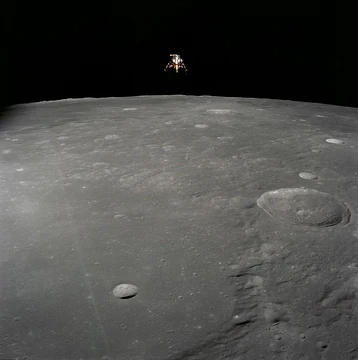
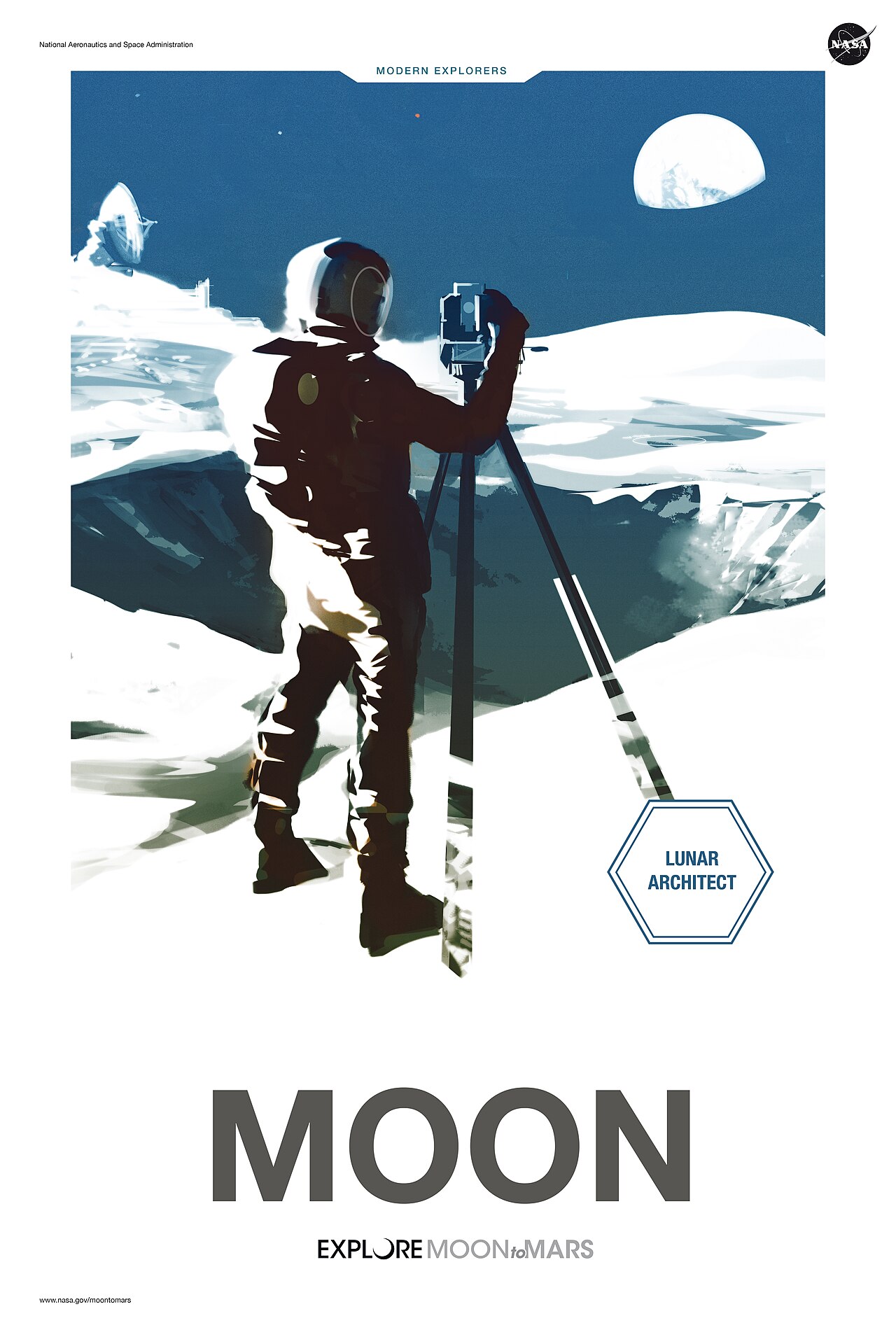
Concept for human and robotic presence on the Moon.

NASA/Moon2Mars · Public domain
The idea of colonizing the Moon involves proposals for robotic or human mining and settlement there, though the term "colonization" is now disputed for reinforcing colonial mindsets in space. International space law forbids any nation from claiming ownership of the Moon, and no state has done so, even though various probes and human-made objects remain on its surface.
**History**
The concept of lunar colonization dates back to the early 1600s, when John Wilkins wrote about it in *A Discourse Concerning a New Planet*. The physical process began after 1959, when the first artificial objects reached the Moon. Soviet Luna landers left pennants, and U.S. Apollo astronauts planted flags at their landing sites, but no country claims any part of the lunar surface. Russia, China, India, and the U.S. are signatories to the 1967 Outer Space Treaty, which designates the Moon and outer space as the "province of all mankind," restricts use to peaceful purposes, and bans military bases and weapons of mass destruction there.
The Apollo landings were viewed as a symbol of the free-market socioeconomic model's superiority and a model for spaceflight, exploration, and eventual colonization. By the 1970s, NASA discouraged the term "colonization," and funding and focus shifted from the Moon to Mars. The U.S. later opposed the 1979 Moon Agreement, which aimed to limit lunar resource exploitation. As of September 2024, only 18 states are parties to that treaty, none of which conduct their own human spaceflight.
Interest in the Moon revived after U.S. missions in the 1990s hinted at lunar water ice, and its actual discovery in polar soil by India's Chandrayaan-1 in 2008–2009. Numerous moonbases have since been proposed by governments and private actors. The U.S.-led Artemis program, with private contractors, plans an orbital lunar way-station by the late 2020s. China and Russia have proposed the International Lunar Research Station for the 2030s, aiming for an Earth-Moon Space Economic Zone by 2050. Current proposals focus on exploration but increasingly target resource exploitation or commercialization.
- First imagined
- First half of the 17th century by John Wilkins in A Discourse Concerning a New Planet
- First material process
- Since 1959 with artificial objects reaching the Moon
- First crewed landing
- 1969, Apollo 11, Tranquility Base
- Key treaty
- 1967 Outer Space Treaty, defining Moon as 'province of all mankind'
- Key discovery
- Lunar water ice confirmed by Chandrayaan-1 (ISRO) in 2008–2009
- Current major projects
- Artemis program (U.S.-led) and International Lunar Research Station (China-Russia)
Lore & Background
Colonization of the Moon has been imagined as early as the first half of the 17th century by John Wilkins in A Discourse Concerning a New Planet. As a material process, it has been taking place since the first artificial objects reached the Moon after 1959. Luna landers scattered pennants of the Soviet Union on the Moon, and U.S. flags were symbolically planted at their landing sites by the Apollo astronauts, but no nation claims ownership of any part of the Moon's surface. Russia, China, India, and the U.S. are party to the 1967 Outer Space Treaty, which defines the Moon and all outer space as the 'province of all mankind', restricting the use of the Moon to peaceful purposes and explicitly banning military installations and weapons of mass destruction from the Moon.
The landing of U.S. astronauts was seen as a precedent for the superiority of the free-market socioeconomic model of the U.S., and in this case as the successful model for space flight, exploration and ultimately human presence in the form of colonization. In the 1970s the word and goal of colonization was discouraged by NASA and funds as well as focus shifted away from the Moon and particularly to Mars. But the U.S. eventually nevertheless opposed the 1979 Moon Agreement which aimed to restrict the exploitation of the Moon and its resources. Subsequently, only 17 states are parties to the treaty as of September 2026, none of which engage in self-launched human space exploration.
After U.S. missions in the 1990s suggested the presence of lunar water ice, its actual discovery in the soil at the lunar poles by Chandrayaan-1 (ISRO) in 2008–2009 renewed interest in the Moon. A range of moonbases have been proposed by states and public actors. Currently the U.S.-led international Artemis program seeks to establish with private contractors a state run orbital lunar way-station in the late 2020s, and China proposed with Russia the so-called International Lunar Research Station to be established in the 2030s and aim for an Earth-Moon Space Economic Zone to develop by 2050.
Reader's Guide
The colonization of the Moon represents a long-standing concept that has evolved from early 17th-century imagination to contemporary projects focused on exploration and resource exploitation. While no state claims ownership of any part of the Moon, international space law, particularly the 1967 Outer Space Treaty, restricts the Moon to peaceful purposes and prohibits military installations. The term 'colonization' itself has become contested for perpetuating colonial frameworks in space. Current major projects, such as the Artemis program and the International Lunar Research Station, aim to establish moonbases for exploration and, increasingly, for in-situ resource utilization and commercialization. The discovery of lunar water ice by Chandrayaan-1 in 2008–2009 renewed interest, and proposals for mining helium-3 and lunar water for propellant have emerged. However, the move toward exploitation has been criticized as colonialist, with alternative proposals for conservation and collaborative stewardship, such as the Declaration of the Rights of the Moon, drawing on the concept of the Rights of Nature. The Moon's potential for supplying space-based construction materials and solar power satellites has also been explored, though economic viability remains uncertain.
Legal Framework and the Question of Ownership
The legal architecture governing lunar activity rests on a single foundational principle: no nation may assert sovereignty over the Moon or any fragment of its surface. The 1967 Outer Space Treaty, ratified by Russia, China, India, and the United States among others, designates the Moon and all of outer space as the shared province of all mankind, restricting its use to peaceful purposes and explicitly barring military installations and weapons of mass destruction from the lunar surface. Despite decades of probes, landers, and artificial debris accumulating on the terrain, no state has ever lodged a formal territorial claim. The 1979 Moon Agreement attempted to go further by restricting the exploitation of lunar resources, yet the United States opposed ratification, and as of September 2026 only seventeen states are parties—none of which conduct self-launched human spaceflight. This legal landscape generates a persistent tension: the very word "colonization" has grown contested for echoing colonial frameworks in space, while the commercialization of lunar materials remains a fiercely debated issue under both national and international regulatory regimes.
From Imagination to Material Reality
The dream of settling the Moon stretches back to the early seventeenth century, when John Wilkins speculated about a new planet in his 1639 discourse. Yet the idea remained purely literary for over three centuries until artificial objects finally touched the lunar surface after 1959. Soviet Luna landers scattered small pennants across the terrain, and Apollo astronauts planted U.S. flags at their landing sites—gestures that were symbolic rather than sovereign. The American crewed landings were widely read as a triumph of the free-market model, reinforcing the notion that open competition was the correct path toward eventual human settlement. By the 1970s, however, NASA itself discouraged the language of colonization, and funding and scientific attention pivoted toward Mars. Interest in the Moon was reignited in 2008–2009 when ISRO's Chandrayaan-1 confirmed water ice in polar soils, a discovery first hinted at by U.S. missions in the 1990s. Today, the U.S.-led Artemis program targets a state-run orbital way-station in the late 2020s, while China and Russia propose an International Lunar Research Station in the 2030s, with an Earth-Moon Space Economic Zone envisioned by 2050.
Economic and Industrial Potential
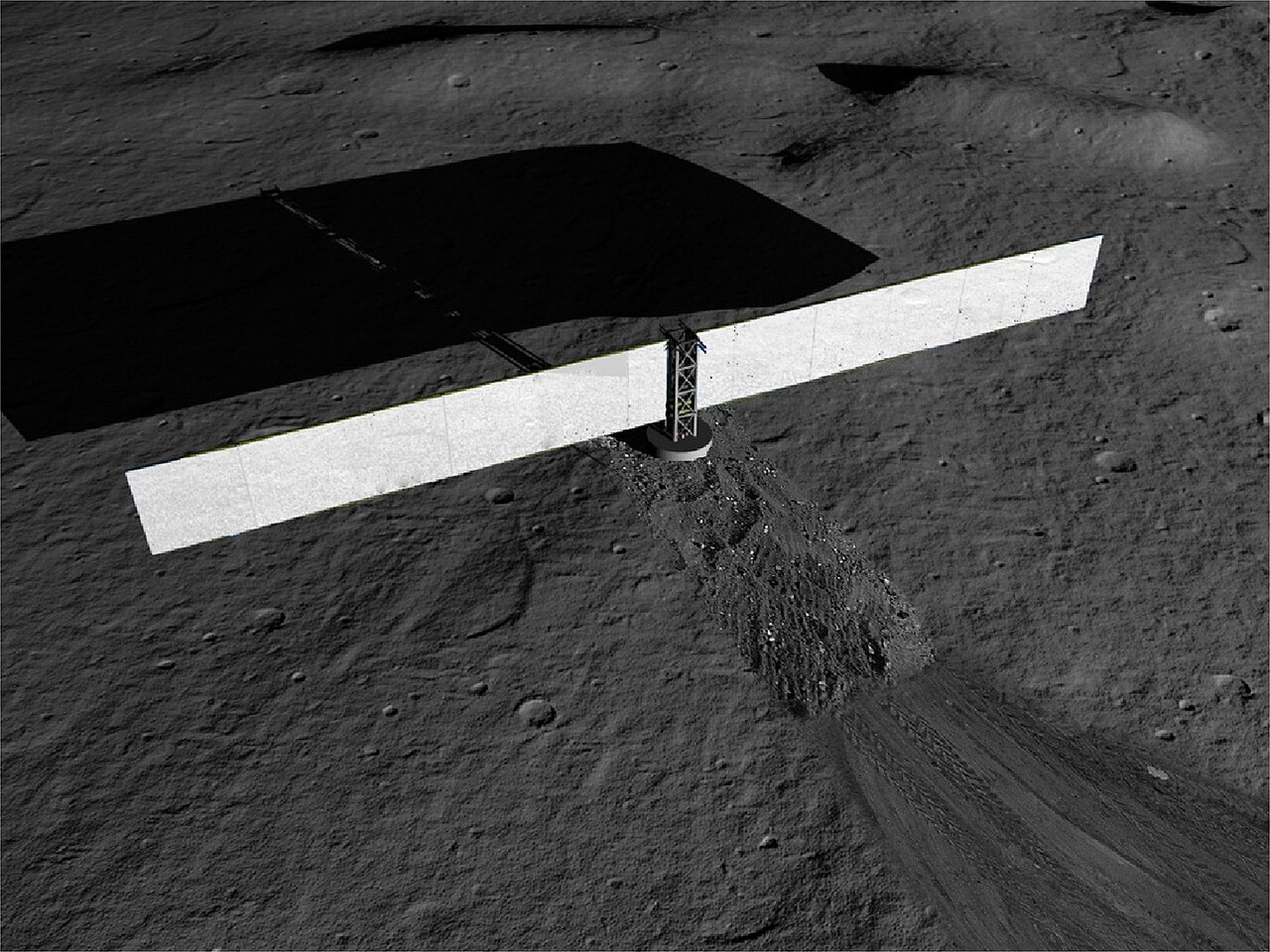
For any long-term lunar presence to be viable, a degree of self-sufficiency is essential, and the Moon's position offers a genuine energy advantage. Launching cargo into space from the lunar surface requires far less energy than lifting it from Earth's deep gravity well, making on-site mining and refining of lunar materials potentially far cheaper than shipping everything from the planet. In the twenty-first century, if large quantities of cargo must be sent into deep space for interplanetary exploration, the lower transportation cost from the Moon could become a decisive economic factor. Beyond simple extraction, microgravity enables manufacturing processes that are impractical on Earth. Metals can be foamed by injecting gas into molten material and then slowly annealing it; on Earth, buoyancy causes gas bubbles to rise or sink, but in zero gravity they remain suspended, producing uniform structures. The annealing step, which demands prolonged high temperatures, is also more efficient in the lunar vacuum because heat transfer is reduced to radiative loss alone. One proposed trade commodity is helium-3, accumulated on the surface by solar wind over billions of years and exceedingly rare on Earth, though the transportation costs of exporting any material back to the planet remain a significant barrier.
Contested Visions: Exploitation versus Stewardship
The trajectory of lunar activity is no longer a single narrative. While states have deliberately avoided the language of colonization and territorial claims in compliance with international law, current programs increasingly incorporate in-situ resource utilization and commercial exploitation alongside exploration. This shift has drawn sharp criticism. Advocates argue that framing lunar development in terms of mining and settlement perpetuates the same extractive, colonial logic that shaped centuries of terrestrial imperialism. In response, a growing counter-movement has emerged. The organization For All Moonkind has proposed conservation frameworks for the lunar surface, treating it as a heritage site rather than a resource frontier. The Open Lunar Foundation, chaired by astronaut Chris Hadfield, champions collaborative stewardship as an alternative to competitive exploitation. A more radical proposal, the Declaration of the Rights of the Moon, draws on the legal concept of Rights of Nature to argue that the Moon itself should possess a legal personality as a non-human entity in space. These competing visions—industrial development, conservation, shared governance, and intrinsic rights—now define the central debate over what humanity's relationship with the Moon should ultimately be.
Gallery

Frequently Asked Questions
Who first imagined colonizing the Moon?
The earliest known written proposal for a lunar colony came from John Wilkins in the early 1600s, where he outlined the concept in his work *A Discourse Concerning a New Planet*.
Can a nation legally claim the Moon as its territory?
No. The 1967 Outer Space Treaty explicitly designates the Moon as a shared province of all humanity, and no government has ever filed a sovereignty claim over it.
When did humans first set foot on the Moon?
Apollo 11 touched down at Tranquility Base in 1969, marking the first crewed lunar landing in history.
What key discovery made sustained lunar settlement more realistic?
ISRO's Chandrayaan-1 probe confirmed the presence of water ice on the Moon in 2008–2009, a resource that could support long-term habitation and in-situ fuel production.
Which programs are currently working toward lunar settlement?
The U.S.-led Artemis program and the China-Russia International Lunar Research Station are the two flagship initiatives actively pushing toward a sustained human presence on the Moon.
More in Exploration of the Moon 1-24
Spotted an error? Know more?
Reader corrections go straight into our review queue. Suggest an edit · How this site is sourced