Fallen Astronaut
A small aluminum sculpture on the Moon honoring fallen space explorers.

Wikimedia Commons · Public domain
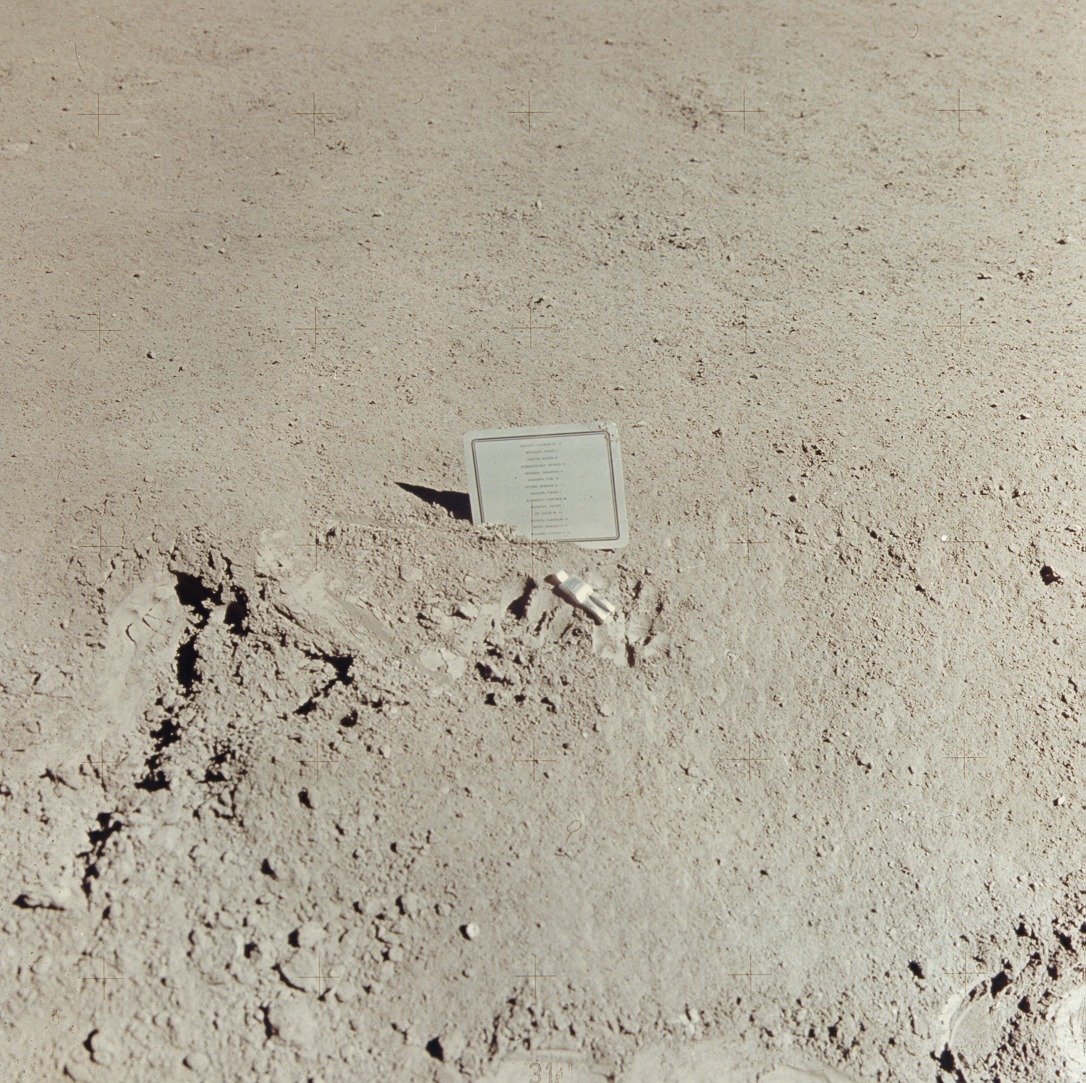
A small aluminum figure, just 3.5 inches tall, lies on the Moon among footprints at Hadley Rille. Created by Belgian artist Paul Van Hoeydonck, the stylized spacesuited form was meant to honor astronauts and cosmonauts who died advancing space exploration. Apollo 15’s crew secretly placed it there on August 2, 1971, alongside a plaque bearing 14 names of the fallen up to that time.
The sculpture’s origin began when astronaut David Scott met Van Hoeydonck at a dinner party before the mission. Scott wanted a lightweight, sturdy statuette that could endure lunar temperature extremes, with no identifiable gender or ethnicity. He designed the plaque himself, listing eight American and six Soviet names. According to Scott, Van Hoeydonck agreed to remain anonymous to avoid commercial exploitation of the government program. Scott secured NASA management’s permission to carry the statue but only revealed its existence in a post-mission press conference. Van Hoeydonck later gave a different account: he told a Belgian newspaper the figure was meant to represent all humanity, not just fallen space travelers; he claimed he didn’t know it would be a memorial, didn’t approve the name, and intended it to stand upright. He also denied agreeing to anonymity. In 2021, Scott wrote a memorandum stating the figurine was actually designed and fabricated by NASA personnel, based on stick-figure bathroom symbols.
After the public disclosure, the National Air and Space Museum requested a replica for display. The crew agreed, stipulating it be shown “with good taste and without publicity.” They gave a replica to the Smithsonian on April 17, 1972. Controversy erupted when Van Hoeydonck planned to sell up to 950 signed copies, advertising them in *Art in America* for $750 each. He retracted after NASA complained, but one had already sold. In 2007, Van Hoeydonck wrote that only 50 copies had been made, most unsigned and still in his possession. A sale was later confirmed after a piece surfaced on eBay in 2015, bought by a UK collector.
In January 2019, Van Hoeydonck and Apollo 15 pilot Al Worden announced a limited edition replica encased in blue acrylic, as originally intended to allow the figure to stand upright, symbolizing humanity’s rise through space travel.
- Artist
- Paul Van Hoeydonck
- Medium
- Aluminum sculpture
- Dimensions
- 3.5 inches (8.9 cm)
- Location
- Moon (Hadley Rille)
- Date placed
- August 2, 1971
- Commissioned by
- Apollo 15 crew (David Scott)
- Associated plaque
- 14 names of fallen astronauts and cosmonauts
Lore & Background
Before his Apollo 15 lunar mission, astronaut David Scott met Belgian painter and printmaker Paul Van Hoeydonck at a dinner party. They agreed that Van Hoeydonck would create a small statuette for Scott to place on the Moon, though their recollections of the details differ. Scott's purpose was to commemorate those astronauts and cosmonauts who had died in the furtherance of space exploration. He designed and separately made a plaque listing 14 American and Soviet names. Van Hoeydonck was given a set of design specifications: the sculpture was to be lightweight but sturdy, capable of withstanding the temperature extremes of the Moon; it could not be identifiably male or female, nor of any identifiable ethnic group. According to Scott, it was agreed Van Hoeydonck's name would not be made public to avoid the commercial exploitation of the US government's space program. Scott got permission from top NASA management before the mission to take the statue aboard his spacecraft. Still, he only disclosed it publicly in a post-mission press conference.
Van Hoeydonck gives a different account of the agreement: according to an interview in the Belgian newspaper Le Soir, the statue was supposed to represent all mankind, not only fallen astronauts or cosmonauts. He claimed he did not know the statue would be used as a memorial for the fallen space-goers, and the name given to the work was neither chosen nor approved by him; he had intended the figure to be left standing upright. He also denies it was agreed he would remain anonymous. Both his and Scott's versions of events are given in an article in Slate magazine in 2013. In 2021, Scott wrote a document entitled 'Memorandum for the Record', however, in which he stated that the figurine left on the Moon was designed and fabricated by NASA personnel, with the design based on stick figures used as location symbols of bathrooms.
Reader's Guide
Fallen Astronaut is significant as the only art installation on the Moon, placed during the Apollo 15 mission in 1971. It serves as a memorial to 14 astronauts and cosmonauts who died in space exploration up to that time, though the artist and astronaut disagreed on its intended meaning. The sculpture sparked controversy when Van Hoeydonck attempted to sell replicas, leading to conflict with NASA's policy against commercial exploitation. The dispute highlights tensions between artistic intent, memorialization, and government oversight. The work's legacy includes its role in space art and as a symbol of human loss in exploration. It remains on the lunar surface, a silent tribute among footprints at Hadley Rille.
Did You Know?
- The sculpture is only 3.5 inches (8.9 cm) tall and made of aluminum.
- It was placed on the Moon secretly by the Apollo 15 crew and only disclosed after the mission.
- The artist Paul Van Hoeydonck attempted to sell up to 950 replicas, but NASA pressured him to stop.
- Two Soviet cosmonauts, Valentin Bondarenko and Grigori Nelyubov, were omitted from the plaque because their deaths were unknown to the West at the time.
The Commission and Its Disputed Terms
Belgian painter and printmaker Paul Van Hoeydonck first crossed paths with Apollo 15 commander David Scott at a dinner party held before the lunar mission. The two struck a deal: Van Hoeydonck would sculpt a small aluminum figure for Scott to leave behind on the Moon. Scott provided specific design constraints—the piece had to be light yet durable enough to survive lunar temperature swings, and it could not be read as belonging to any particular gender or ethnicity. Scott separately crafted a plaque bearing fourteen names of deceased space travelers. He secured approval from senior NASA officials before boarding his spacecraft. Yet the two men's memories of their conversation diverge sharply. Van Hoeydonck later told Belgian newspaper Le Soir that he understood the figure to represent all of humanity rather than serving as a memorial, that he never approved the title 'Fallen Astronaut,' and that he had envisioned it standing upright. He also disputes that anonymity was part of the arrangement. In a 2021 document, Scott went further, asserting that NASA staff actually designed and built the figurine using bathroom stick-figure symbols as a starting point.
A Secret Memorial on the Lunar Surface
Near the close of his extravehicular work on August 2, 1971, David Scott quietly set the three-and-a-half-inch aluminum figure down beside Hadley Rille, positioning it among footprints on the lunar surface. Beside it he placed a hand-made plaque listing eight American astronauts and six Soviet cosmonauts who had lost their lives in pursuit of spaceflight. Scott captured photographs of the arrangement but said nothing publicly until a post-mission press conference, where he revealed the memorial's existence. He acknowledged that two Soviet names—Valentin Bondarenko and Grigori Nelyubov—were absent because the secrecy of the Soviet program had kept their deaths hidden from Western knowledge. Two others were also missing: Robert Henry Lawrence Jr., the first Black astronaut selected for the Manned Orbiting Laboratory program who perished in a 1967 training accident, and Michael J. Adams, an X-15 test pilot killed in a 1967 flight above fifty miles. The small, genderless, ethnically neutral figure thus became a silent tribute to fourteen individuals whose names had been lost to history or to political opacity.
The Replica Controversy
Once the crew publicly disclosed the statuette, the National Air and Space Museum asked for a replica for public display, and the astronauts agreed on the condition it be shown 'with good taste and without publicity.' The piece was formally handed to the Smithsonian on April 17, 1972—the day after CBS anchor Walter Cronkite, during the Apollo 16 launch broadcast, dubbed the Fallen Astronaut and its plaque the first art installation on the Moon. Tensions erupted in May 1972 when Scott learned that Van Hoeydonck intended to produce and sell additional copies. By July, the Belgian sculptor had placed a full-page advertisement in Art in America magazine offering 950 signed replicas through New York's Waddell Gallery at $750 apiece, along with a cheaper second edition and a $5 catalog version. NASA, enforcing its strict prohibition on commercial exploitation of the space program, pressed Van Hoeydonck to withdraw. He relented, but not before one figure—boxed as number 200 of 950—was purchased by a Morgan Stanley investment banker. The piece resurfaced on eBay in 2015 and was acquired by a collector in the United Kingdom.
Legacy and Unresolved Questions
Decades after its lunar placement, the Fallen Astronaut continues to generate both new artifacts and fresh disputes. In January 2019, Van Hoeydonck joined Apollo 15 Command Module Pilot Al Worden in announcing a limited-edition replica encased in a blue acrylic block—a presentation Van Hoeydonck had originally proposed for the Moon itself, where the upright figure would have 'symbolized humanity rising' through space travel. NASA had vetoed the acrylic enclosure as a fire hazard. A smaller run of enlarged sculptures was also slated for sale. Meanwhile, the question of authorship remains unsettled. A 2013 Slate article laid out both Scott's and Van Hoeydonck's conflicting narratives side by side, and in 2021 Scott filed a 'Memorandum for the Record' claiming the figurine was actually designed and fabricated by NASA personnel using bathroom stick-figure icons as a template. When art journalist Jan Stalmans queried Van Hoeydonck in 2007 about the total number of replicas, the sculptor replied by hand that fifty had been made, most still sitting unsigned in his own collection. The original, lying among footprints near Hadley Rille, endures as a quiet, contested monument.
Gallery



Frequently Asked Questions
What is the Fallen Astronaut?
It is a 3.5-inch aluminum figurine of a spacesuited figure resting on the lunar surface, left at Hadley Rille by the Apollo 15 crew on August 2, 1971. The piece serves as a memorial to space explorers who lost their lives in the pursuit of spaceflight.
Who created the Fallen Astronaut sculpture?
Belgian artist Paul Van Hoeydonck designed and cast the piece after astronaut David Scott approached him at a dinner party before the Apollo 15 launch. Scott asked for a compact, sturdy statuette that could survive the Moon's extreme temperature swings.
Where exactly is the Fallen Astronaut located?
The figurine sits among the crew's footprints in the Hadley Rille region, the area the Apollo 15 landing party explored. It was positioned on August 2, 1971, and has remained undisturbed in that spot ever since.
Who does the Fallen Astronaut memorial honor?
A small plaque placed beside the sculpture lists the names of fourteen astronauts and cosmonauts who had perished in spaceflight by that time. The memorial was intended as a tribute to all who died advancing humanity's reach beyond Earth.
Why was aluminum chosen for the Fallen Astronaut figure?
David Scott specifically requested a lightweight material that would endure the harsh lunar environment without degrading. Aluminum satisfied both needs, keeping the statuette easy to carry aboard the lunar module while remaining structurally sound in the vacuum.
More in Exploration of the Moon 1-24
Spotted an error? Know more?
Reader corrections go straight into our review queue. Suggest an edit · How this site is sourced