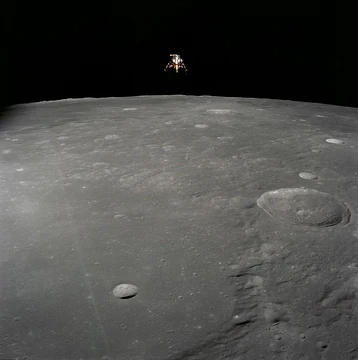
Artemis Project
Private venture to establish a self-supporting Moon base by 2002.

Josh Valcarcel · Public domain
The Artemis Project was a private spaceflight venture organized by the Lunar Resources Company, which formed the Artemis Society as a non-profit NGO in 1994. The project aimed to establish a permanent, self-supporting base on the Moon by 2002, named after Artemis, the goddess of the hunt and twin sister of Apollo. Its creators planned to cover costs by exploiting the entertainment value of creating a lunar colony, believing their expenses would be a small fraction of what a government agency like NASA would have spent.
- Founded
- 1994 (Artemis Society formed)
- Field
- Private spaceflight venture
- Goal
- Permanent, self-supporting lunar base by 2002
- Organizer
- Lunar Resources Company
- Named after
- Artemis, goddess of the hunt and twin sister of Apollo
Lore & Background
Future plans included establishing a lunar hotel once a base was built, but the economic feasibility was uncertain because low-cost access to space—possibly involving single-stage-to-orbit or two-stage-to-orbit vehicles—had yet to be developed.
Reader's Guide
The Artemis Project represents an early private-sector attempt at lunar colonization, predating later commercial space initiatives. Its significance lies in its ambitious goal of a self-supporting Moon base by 2002, funded through entertainment value rather than government budgets. The project's reliance on existing Spacehab modules and its detailed Reference Mission, though never realized, demonstrated a cost-conscious approach to space settlement. The venture also highlighted the challenges of economic viability, particularly the need for low-cost space access, which remained unresolved. While no hardware was built, the Artemis Project contributed to the broader discourse on lunar colonization and inspired later organizations like the Moon Society. Its legacy is as a pioneering, if unfulfilled, vision of private lunar development.
Did You Know?
- No flight hardware was ever built for the Artemis Project.
- The ascent stage concept would not have maintained a breathable atmosphere, requiring astronauts to wear space suits throughout the flight.
- Future plans included a lunar hotel, but economic feasibility was uncertain due to the lack of low-cost space access.
Political Genesis & Institutional Roots
The Artemis program did not emerge from a blank slate. Its DNA is woven from the wreckage of earlier ambitions. The Constellation program, legislated in 2005 as the Space Shuttle fleet neared retirement, envisioned Ares I and Ares V rockets alongside the Orion spacecraft. By 2009, the Augustine Committee had concluded Constellation was hopelessly underfunded and a 2020 lunar landing was unattainable. President Obama formally suspended the non-Orion elements in April 2010 at Kennedy Space Center, redirecting NASA's focus toward Mars. Yet the Orion capsule survived that cancellation, becoming a seed that would germinate years later. The program as we know it was formally launched in 2017 when President Donald Trump issued Space Policy Directive-1, recommitting the United States to crewed lunar return and permanent base construction. This political pivot transformed a stranded spacecraft and a handful of surviving booster concepts into a full-fledged exploration architecture.
A Patchwork of Legacy and Innovation
Artemis is built from an unusual mosaic of hardware generations. The Space Launch System borrows directly from the retired Space Shuttle era: its core stage, the four RS-25 engines, and the solid rocket boosters all trace their lineage to Shuttle development. The Orion spacecraft, paired with a European-built Service Module, survived the Constellation program's cancellation to become Artemis's crew capsule. Booster upgrades initially designed for the never-flown Ares V also found a second life in the architecture. Meanwhile, the most critical new element—the Human Landing System that will actually set boots on the Moon—is being developed by private companies under NASA contract, with SpaceX's Starship HLS and Blue Origin's Blue Moon both in the running. This blend of repurposed government hardware, international partnership, and commercial competition gives the program a uniquely layered engineering identity.
Two Flights, One Historic First
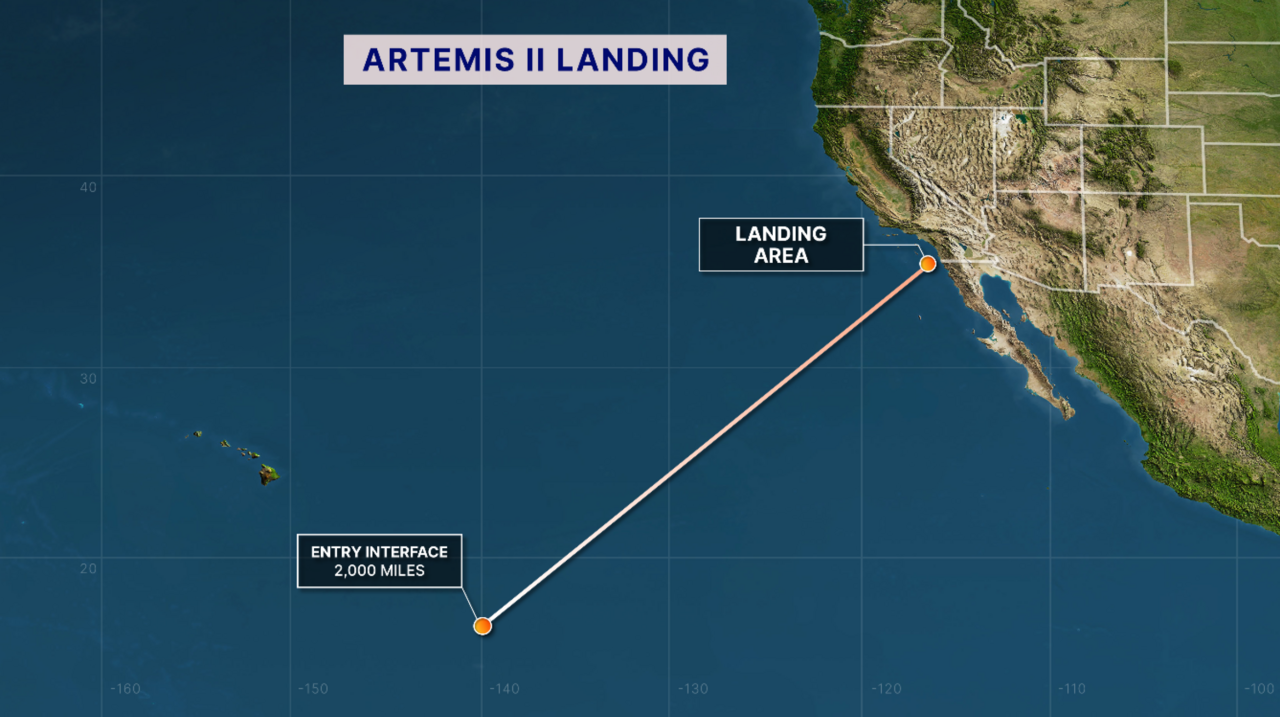
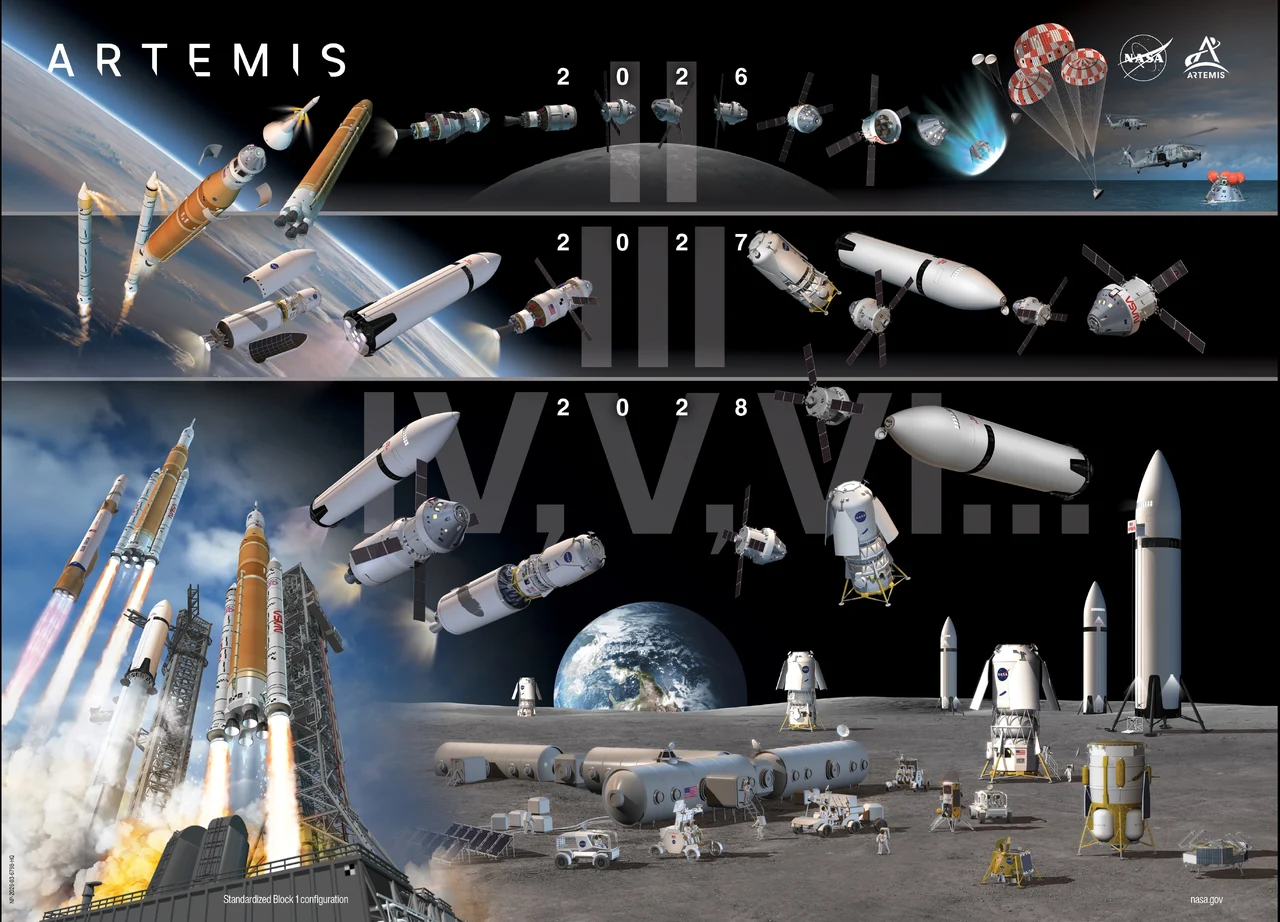
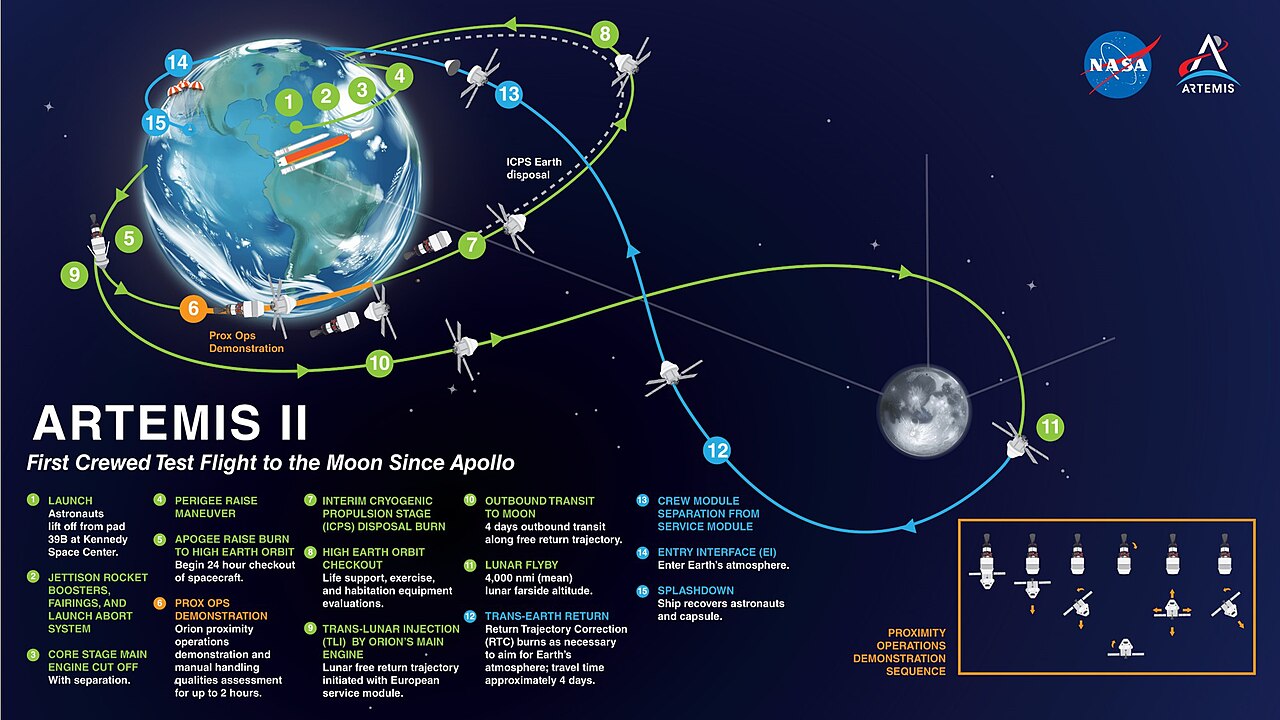
As of 2026, Artemis has completed two missions, each a milestone in its own right. Artemis I, launched November 16, 2022, was the uncrewed proving flight. Orion, carrying mannequins and robotic payloads, was injected into a polar distant retrograde lunar orbit for roughly six days before re-entering Earth's atmosphere and splashing down in the Pacific under parachutes. The flight was successful overall, though the ablative heat shield shed more material than engineers had modeled. Artemis II, which lifted off April 1, 2026, placed four astronauts aboard SLS and Orion for a free-return trajectory around the Moon. The crew conducted extensive systems testing in high Earth orbit before the trans-lunar injection. The mission drew comparisons to Apollo 7 and Apollo 8, though Artemis II flew a more distant flyby and never entered lunar orbit. It stands as the only crewed flight beyond low Earth orbit outside the Apollo era.
The Road to a Permanent Presence
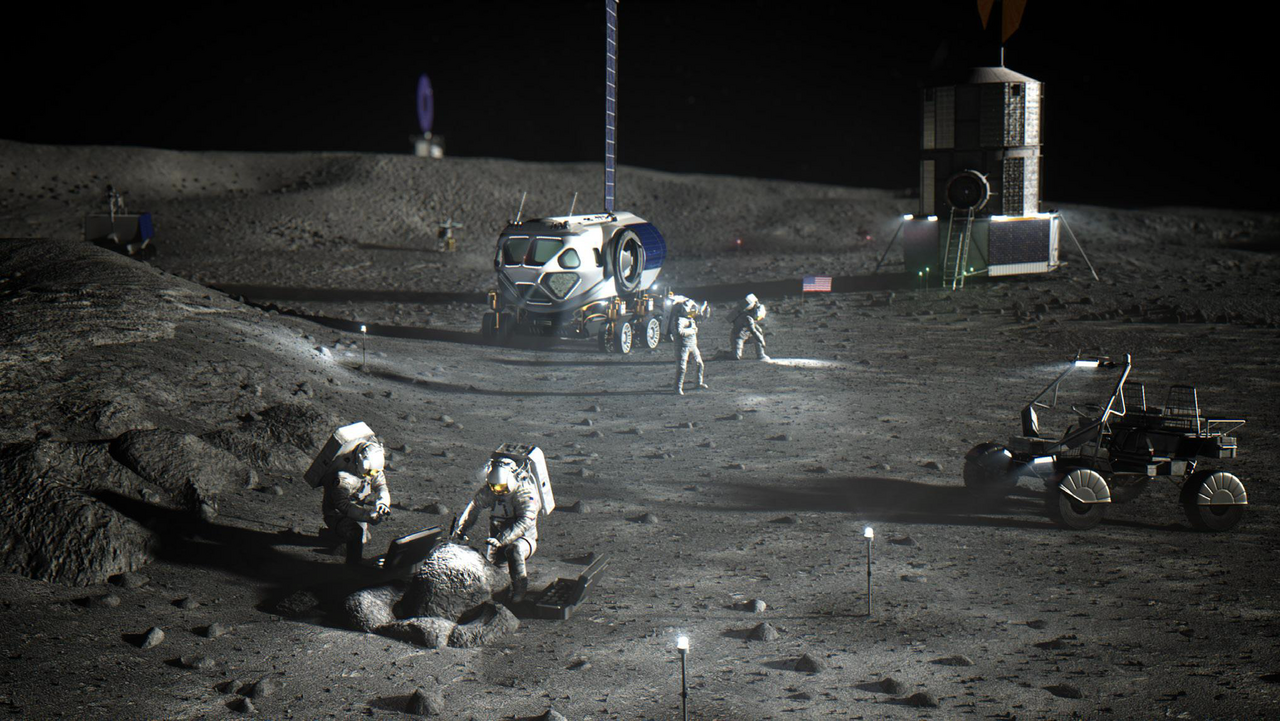
The program's stated endgame extends well beyond a single landing. Artemis IV, targeted for early 2028, would mark the first American crewed lunar surface mission since Apollo 17 in December 1972, with astronauts performing at least two spacewalks. Artemis V, no earlier than late 2028, is expected to kick off construction of a permanent lunar base. From Artemis V onward, NASA envisions approximately annual landings to sustain and expand that infrastructure. Supporting elements include the Artemis Base Camp, a Lunar Terrain Vehicle, the AxEMU spacesuit, and Commercial Lunar Payload Services for cargo delivery. International partners are bound by the Artemis Accords, and planners have even floated sending a Lunar Codex—an archive of cultural works from creators worldwide—to the Moon. All of this is framed as a stepping stone toward eventual crewed missions to Mars.
Gallery

Frequently Asked Questions
What is the Artemis Project?
The Artemis Project was a privately funded spaceflight initiative that sought to build a permanent, self-sustaining colony on the Moon. It was organized under the umbrella of the Lunar Resources Company and its associated non-profit, the Artemis Society.
Who founded the Artemis Project?
The Artemis Society, a non-profit NGO, was established in 1994 by the Lunar Resources Company to serve as the organizational backbone for the lunar base venture.
What was the Artemis Project's main goal?
The project aimed to have a fully self-supporting human base established on the Moon by the year 2002. Its creators believed their private approach would cost a small fraction of what a government program like NASA would have required.
Why is it called the 'Artemis' Project?
The name references Artemis, the Greek goddess of the hunt and twin sister of Apollo, tying the venture to the earlier Apollo program in a playful nod to mythology.
How did the Artemis Project plan to pay for itself?
The team intended to monetize the spectacle of building a lunar colony, treating the entertainment and public-interest value of the endeavor as their primary revenue source. They calculated that this approach would keep their total expenses well below government-scale spending.
More in Exploration of the Moon 1-24
Spotted an error? Know more?
Reader corrections go straight into our review queue. Suggest an edit · How this site is sourced