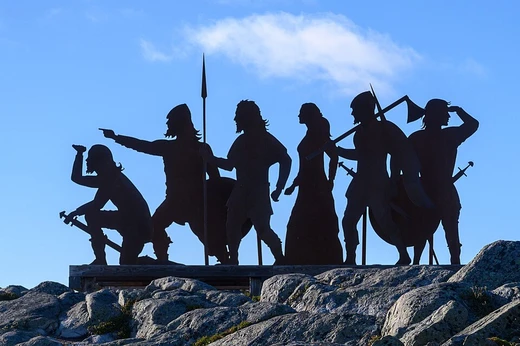
Vasco da Gama
The Portuguese explorer who opened the sea route to India.
Last updated

Diego Delso · CC BY-SA 4.0
Vasco da Gama (born around 1460 or 1469 in Sines, Portugal; died 24 December 1524) was a Portuguese mariner, explorer, and nobleman. He is best known for being the first to find a direct ocean route from Europe to India, sailing around the southern tip of Africa—the Cape of Good Hope—and crossing the Indian Ocean from Malindi in present-day Kenya to Kozhikode in India. This achievement is seen as a major turning point in world history, as it opened the way for European exploration and trade with India.
Exploration before da Gama
Da Gama’s first voyage, from 1497 to 1499, was the first to connect Europe and Asia by rounding Africa’s southern cape, though earlier Portuguese sailors had already passed that point. By using this sea route, the Portuguese could avoid sailing through the contested Mediterranean Sea and bypass the Arab-controlled ports in the eastern Mediterranean, which handled goods brought overland across the Arabian Peninsula.
This voyage marked the start of a sea-based phase in international eastern trade and the beginning of a global age of imperialism. Portugal went on to build a long-lasting colonial empire along the route from Africa to Asia, at the expense of the existing Arab trade networks. At the time, da Gama’s outward and return trips were the longest ocean voyages ever completed.
For decades, sailors had tried to reach the Indies, losing thousands of lives and dozens of ships to wrecks and attacks. Da Gama finally succeeded when he landed at Kozhikode on 20 May 1498.
Gaining unchallenged access to the spice routes of the Indian Ocean boosted Portugal’s economy, which had previously relied on trade along the coast of West Africa and North Africa. The main spices first brought from Southeast Asia were pepper and cinnamon, but other goods new to Europe soon followed. Portugal kept a commercial monopoly on these items for several decades, and it was not until a century later that other European powers could challenge Portugal’s control and naval strength on the Cape Route.
Da Gama commanded two of the Portuguese India Armadas: the first and the fourth. The fourth was the largest and set sail for India three years after he returned from his first voyage.
As a reward for his achievements, he was appointed Governor of India in 1524, with the title of Viceroy, and was made Count of Vidigueira in 1519. He remains a key figure in the history of exploration, with honors and monuments around the world celebrating his journeys. The Portuguese national epic poem, Os Lusíadas, was written in his honor by Luís de Camões.
Early life
Da Gama was born in the town of Sines, a seaport on the Alentejo coast of southwest Portugal. According to historian Teixeira de Aragão, he was born in a house near the church of Nossa Senhora das Salas. Some sources say he was born around 1460, while others give 1469.
His paternal grandfather, also named Vasco da Gama, was born in Olivença. His father, Estêvão da Gama, served in the 1460s as a knight in the household of Ferdinand, Duke of Viseu, and rose through the ranks of the military Order of Santiago. Estêvão was appointed civil governor of Sines in the 1460s, a post he held until 1478, and later worked as a tax receiver and held the Order’s commendas in the region.
Estêvão married Isabel Sodré, daughter of João Sodré (also known as João de Resende), who came from a well-connected family of English descent. Her father and her brothers, Vicente Sodré and Brás Sodré, were linked to the household of Infante Diogo, Duke of Viseu, and were prominent in the military Order of Christ. Vasco da Gama was the third of five sons: Paulo da Gama, João Sodré, Vasco da Gama, Pedro da Gama, and Aires da Gama. He also had a sister, Teresa da Gama, who married Lopo Mendes de Vasconcelos.
Little is known about da Gama’s early life. Teixeira de Aragão suggests he studied in the inland town of Évora, where he may have learned mathematics and navigation. Some near-contemporary writers, like Gaspar Correia, claim he studied under the astrologer and astronomer Abraham Zacuto, but biographer Sanjay Subrahmanyam considers this doubtful. Around 1480, da Gama followed his father and joined the Order of Santiago.
The master of the Order was Prince John, who became King John II of Portugal in 1481. John II favored the Order, and the da Gama family’s prospects improved. In 1492, King John sent da Gama to the port of Setúbal and the Algarve to seize French ships in retaliation for peacetime attacks on Portuguese shipping—a task he carried out quickly and effectively.
Before da Gama’s voyage, Portuguese expeditions organized by Prince Henry the Navigator had been exploring the African coastline since the early 1400s, mainly seeking West African gold and slaves. These efforts greatly expanded Portuguese maritime knowledge but brought little profit. After Henry’s death in 1460, the Crown lost interest, and in 1469 it licensed the African enterprise to a private Lisbon merchant consortium led by Fernão Gomes.
Within a few years, Gomes’s captains extended Portuguese knowledge across the Gulf of Guinea, trading in gold dust, melegueta pepper, ivory, and sub-Saharan slaves. When Gomes’s charter came up for renewal in 1474, Prince John (the future king) asked his father, King Afonso V, to transfer the African charter to him. After becoming king in 1481, John II launched many reforms.
Lore & Background
Da Gama's first voyage (1497–1499) was the first to link Europe and Asia using an ocean route that rounded the southern tip of Africa, although he was not the first Portuguese mariner to round the Cape. He led two of the Portuguese India Armadas, the first and the fourth.
The latter was the largest, and departed for India three years after his return from the first. As reward, da Gama was appointed Governor of India in 1524, with the title of Viceroy, and was ennobled the Count of Vidigueira in 1519. He remains a leading figure in the history of exploration; the Portuguese national epic poem, Os Lusíadas, was written in his honor by Luís de Camões.
Noble Roots and a Sailor's Making
Vasco da Gama was born in the small coastal town of Sines on Portugal's Alentejo shore, sometime in the 1460s—scholars place the year anywhere between 1460 and 1469. His father, Estêvão da Gama, had served as a household knight for Ferdinand, Duke of Viseu, before rising through the military Order of Santiago to become civil governor of Sines. His mother, Isabel Sodré, came from a well-connected family of English origin with strong ties to the Order of Christ.
Vasco was the third of five sons. Hardly any concrete detail survives about his youth, though the historian Teixeira de Aragão speculates he may have studied mathematics and navigation in the inland city of Évora. A later claim linking him as a pupil of the astronomer Abraham Zacuto has been called into question by modern biographers.
Around 1480, Vasco followed his father into the Order of Santiago, whose master at the time was Prince John, the future King John II. That royal patronage proved decisive. By 1492, the young da Gama was already entrusted with a naval mission to Setúbal and the Algarve, where he swiftly seized French vessels in retaliation for peacetime attacks on Portuguese shipping—early evidence of the tactical sharpness that would one day carry him across oceans.
The Voyage That Redrew the Map
For decades, sailors had risked their lives trying to reach the Indies by sea, losing thousands of men and dozens of ships to shipwrecks and hostile attacks. When Vasco da Gama finally made landfall at Kozhikode on 20 May 1498, he completed what no European mariner had achieved before: a direct oceanic link between Europe and Asia that rounded the southern tip of Africa. He was not the first Portuguese to round the Cape, but his 1497–1499 expedition was the first to thread the entire route from the Atlantic, around the Cape of Good Hope, across the Indian Ocean from Malindi in present-day Kenya, and on to the Malabar Coast.
The strategic logic was clear—by bypassing the contested Mediterranean and the Arab trading ports of the eastern Mediterranean, Portugal could cut out the overland middlemen who had long funneled Indian goods through the dangerous Arabian Peninsula. The outward and return legs of this journey constituted the longest ocean voyages ever completed up to that point. In a single stroke, da Gama's voyage inaugurated a sea-based phase of international eastern trade and set the stage for an age of global imperialism.
Spice, Monopoly, and the Architecture of Empire
The unchallenged access to Indian spice routes that da Gama's voyage unlocked transformed the Portuguese economy, which had previously depended on trade along North and coastal West Africa. The first major commodities to flow westward were pepper and cinnamon from Southeast Asia, but soon a wider array of goods new to European markets entered the flow. Portugal held a commercial monopoly over these products for several decades; it was not until roughly a century later that rival European powers could meaningfully challenge its naval supremacy along the Cape Route.
The Portuguese built a long-lasting colonial empire stretching from Africa to Asia, constructed at the direct expense of the existing Arab eastern trade network that had dominated the region for centuries. Da Gama himself led two of the great Portuguese India Armadas—the first and the fourth, the latter being the largest fleet to sail for India. In recognition of his service, he was ennobled as Count of Vidigueira in 1519 and, in 1524, appointed Governor of India with the title of Viceroy, the highest colonial office the Crown could bestow.
Immortalized in Verse and Stone
Vasco da Gama's achievement is widely regarded as a landmark event and a genuine turning point in world history, opening the door to European exploration of and commerce with India on a scale previously unimaginable. His name endures as one of the leading figures in the entire history of exploration, and homages around the globe have celebrated his voyages and accomplishments across the centuries.
Perhaps the most enduring tribute is literary: the Portuguese national epic poem, Os Lusíadas, was composed by Luís de Camões specifically in da Gama's honor, weaving his deeds into the mythic fabric of Portuguese national identity. The poem elevated a single mariner's feat into a foundational narrative for a nation, ensuring that the memory of the Cape Route and the spice trade would outlast the political structures that had exploited them. Da Gama died on 24 December 1524, but the cultural and historical reverberations of his voyages—reshaping trade networks, redrawing political boundaries, and igniting a century of imperial competition—continue to shape how the modern world understands the origins of globalization.
Reader's Guide
Da Gama was born in Sines, Portugal. His father was Estêvão da Gama, and his mother was Isabel Sodré. He was the third of five sons.
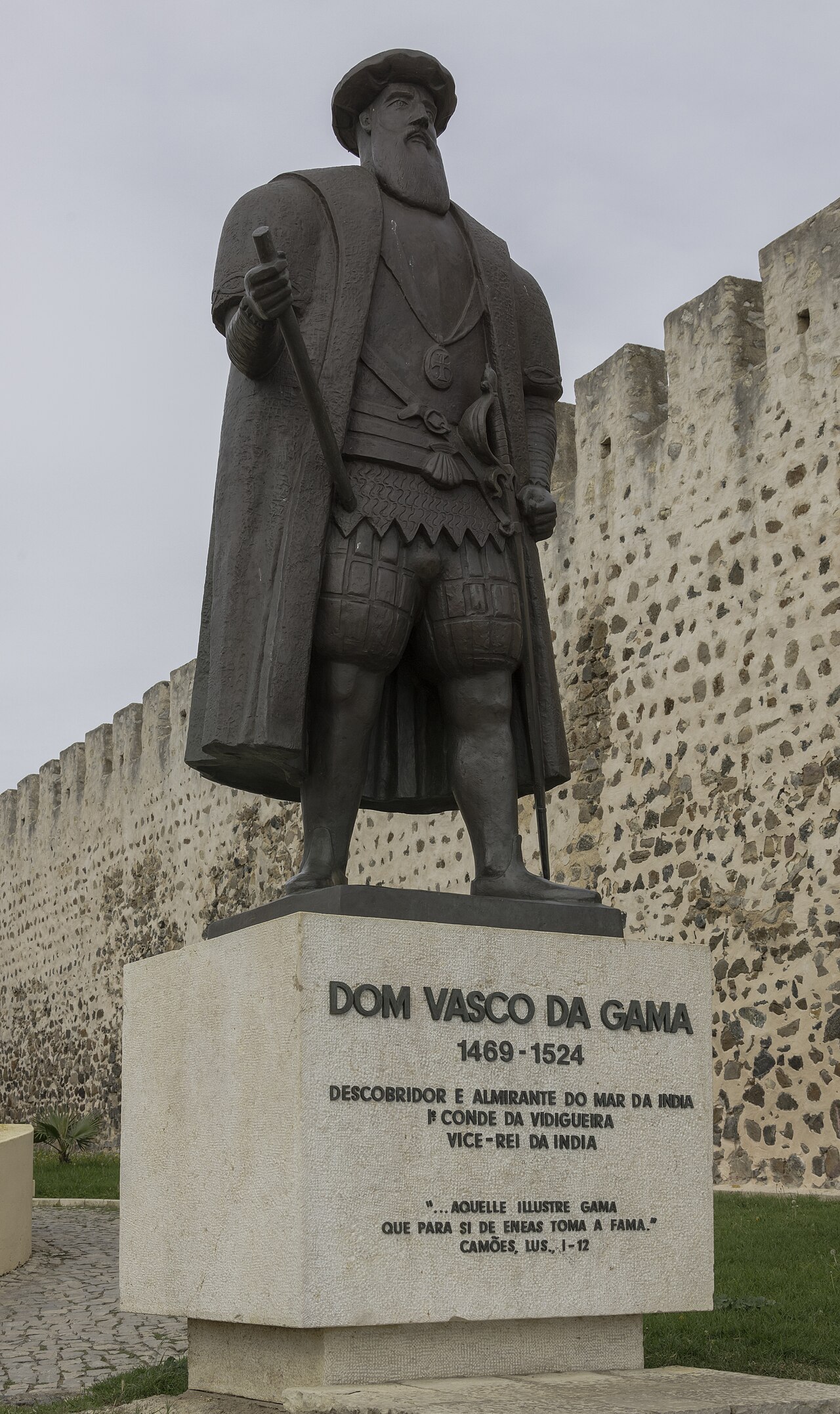
Little is known of his early life; he may have studied at Évora. Around 1480, he joined the Order of Santiago. In 1492, King John II dispatched him to seize French ships.
On 8 July 1497, da Gama led a fleet of four ships from Lisbon: São Gabriel, São Rafael, Berrio, and a storage ship. The journey to India and back was greater than the length of the equator. He landed at Kozhikode on 20 May 1498.
Also in the Codexery
More in Exploration & Colonization
Sources
Compiled from Wikipedia and the sources listed below. Text from Wikipedia is available under CC BY-SA 4.0; this entry is adapted from it.
- Wikipedia: Vasco da Gama (CC BY-SA 4.0).
Spotted an error? Know more?
Reader corrections go straight into our review queue. Suggest an edit · How this site is sourced