Hampshire
A ceremonial county in South East England, home to the New Forest and historic Winchester.
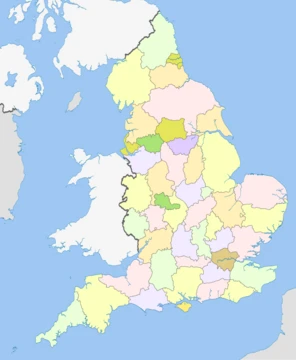
Hampshire (, ; abbreviated to Hants.) is a ceremonial county in South East England. It is bordered by Berkshire to the north, Surrey and West Sussex to the east, the Isle of Wight across the Solent to the south, Dorset to the west, and Wiltshire to the north-west. The city of Southampton is the largest settlement.
- area
- 3,769 km² (1,455 sq mi)
- population_2024_estimate
- 1,920,959
- largest_settlement
- Southampton
- county_town_historic
- Winchester
- abbreviation
- Hants
- ceremonial_county
- South East England
Lore & Background
The county has an area of 3769 km2. Settled about 14,000 years ago, Hampshire's recorded history dates to Roman Britain, when its chief town was Venta Belgarum (now Winchester). The county was recorded in Domesday Book as divided into 44 hundreds. From the 12th century, the ports settlements grew due to increasing trade with the European mainland resulting from the wool and cloth, fishing, and shipbuilding industries. By the 16th century, Southampton had become more populous than Winchester. In 20th century conflicts, including World War One and Two, Hampshire played a crucial military role due to its ports. The Saxon settlement at Southampton was known as , while the surrounding area or was called . The old name was recorded in the Domesday Book as , and it is from this spelling that the modern abbreviation 'Hants' derives. From 1889 until 1959, the administrative county was named the County of Southampton. It has also been called Southamptonshire. Hampshire was a departure point for several groups of colonists who left England to settle on the east coast of North America during the 17th century, and many inhabitants of Hampshire settled there, naming the land New Hampshire in honour of their original homeland.
Reader's Guide
For local government purposes Hampshire comprises a non-metropolitan county, with eleven districts, and two unitary authority areas: Portsmouth and Southampton. The county historically contained the towns of Bournemouth and Christchurch, which are now in Dorset, and the Isle of Wight. Undulating hills characterise much of the county. A belt of chalk crosses the county from north-west, where it forms the Hampshire Downs, to south-east, where it is part of the South Downs. The county's major rivers rise in these hills; the Loddon and Wey drain north, into the Thames, and the Itchen and Test flow south into Southampton Water, a large estuary. In the south-east are Portsmouth Harbour, Langstone Harbour, and the western edge of Chichester Harbour, three large rias. The south-west contains the New Forest, which includes pasture, heath, and forest and is one of the largest expanses of ancient woodland remaining in England.
Did You Know?
- Southampton is in the south of the county and the city of Portsmouth in the south-east; both are part of a larger conurbation.
- A second conurbation in the north-east includes Farnborough and Aldershot and extends into Berkshire and Surrey.
- The remainder of the county is rural, and its principal settlements include Basingstoke in the north, Andover in the north-west, and the city of Winchester in the centre.
More in English Counties 1-24
Spotted an error? Know more?
This is a living reference — every entry is fact-audited, and reader corrections feed straight into our audit queue. Suggest an edit · See this site's audit record