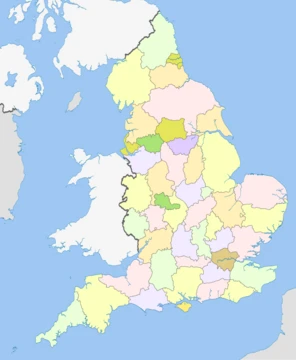
Berkshire
The Royal County of Berkshire
Berkshire, officially the Royal County of Berkshire, is a ceremonial county in South East England. It is bordered by Oxfordshire to the north, Buckinghamshire to the north-east, Greater London to the east, Surrey to the south-east, Hampshire to the south, and Wiltshire to the west. Reading is the largest settlement and the county town.
- area
- 1,263 km² (488 sq mi)
- estimated_population_2024
- 992,327
- county_town
- Reading
- largest_settlement
- Reading
- highest_point
- Walbury Hill at 297 m (974 ft)
- royal_title_granted
- 1957
- flag_registered
- 2017
Quick Facts
- Official Name
- Berkshire
- Other Name
- Royal County of Berkshire
- Locator Map
- Ceremonial Berkshire · Historic Berkshire
- Region
- South East
- Established Date
- Ancient
- Mps
- 9 MPs
- Police
- Thames Valley Police
- Fire
- Royal Berkshire Fire & Rescue Service
- Lord Lieutenant Office
- Lord Lieutenant of Berkshire
- Lord Lieutenant Name
- Andrew Try
- High Sheriff Office
- High Sheriff of Berkshire
- Districts Key
- #FEFE77 Unitary
Facts from the source article.
Lore & Background
According to Asser's biography of King Alfred, written in 893 AD, Berkshire takes its name from a wood of box trees, which was called Bearroc (a Celtic word meaning 'hilly'). This wood, perhaps no longer extant, was west of Frilsham, near Newbury. Much of the county's early history is recorded in the Chronicles of the Abingdon Abbey. Berkshire and Oxfordshire had a common sheriff until the reign of Henry VIII; the common sheriff was abolished in 1542, and the shire court was held at Abingdon. The assizes were formerly held at Reading, Abingdon, and Newbury, but by 1911 were held entirely at Reading. Berkshire has been the scene of notable battles, including Alfred the Great's campaign against the Danes (Englefield, Ashdown, and Reading), the First and Second Battles of Newbury (1643 and 1644), and another Battle of Reading on 9 December 1688, which ended in a decisive victory for forces loyal to William of Orange. Reading became the new county town in 1867, taking over from Abingdon. Under the Local Government Act 1888, Berkshire County Council took over functions of the Berkshire Quarter Sessions, covering the administrative county of Berkshire, which excluded the county borough of Reading. Boundary alterations included ceding parts of the borough of Oxford south of the Thames in 1889, and gaining Caversham from Oxfordshire in 1911. The administrative county's full legal name was 'Berks' until 1967, when the government changed it to Berkshire. Berkshire received the title 'Royal County' in 1957 due to the presence of Windsor Castle. On 1 April 1974, Berkshire's boundaries changed under the Local Government Act 1972, taking over administration of Slough and Eton from Buckinghamshire, while parts of the north went to Oxfordshire. On 1 April 1998, Berkshire County Council was abolished, and the districts became unitary authorities. A flag for the historic county of Berkshire was registered with the Flag Institute in 2017.
Reader's Guide
Berkshire comprises six unitary authority areas: Bracknell Forest, Reading, Slough, West Berkshire, Windsor and Maidenhead, and Wokingham. The population is concentrated in the east, including the largest towns: Reading, Slough, Bracknell, and Maidenhead. The west is rural, with its largest town being Newbury. The Berkshire Downs, a chalk downland and area of outstanding natural beauty, occupy the west. The River Kennet flows east through Newbury before meeting the Thames at Reading. The Thames forms Berkshire's northern border, flowing past Maidenhead, Slough, and Windsor. The south-east contains Swinley Forest, a remnant of Windsor Forest. The highest point is Walbury Hill at 297 m.
Did You Know?
- The Uffington White Horse, now in Oxfordshire, is an Iron Age hill figure originally in Berkshire.
- Alfred the Great was born in Wantage, now in Oxfordshire.
- Windsor Castle, built after the Norman Conquest, became the official country residence of the British monarch.
- 94 (Berkshire Yeomanry) Signal Squadron still keep the Uffington White Horse in their insignia, even though it is now in Oxfordshire.
More in English Counties 1-24
Spotted an error? Know more?
This is a living reference — every entry is fact-audited, and reader corrections feed straight into our audit queue. Suggest an edit · See this site's audit record