Traction motor
Electric motor for vehicle propulsion, used since 1875.

N509FZ · CC BY-SA 4.0
A traction motor is an electric motor designed to propel a vehicle. This includes locomotives, electric multiple unit trains, and electric or hydrogen-powered vehicles. Beyond railways, these motors are found in electric milk floats, trolleybuses, elevators, roller coasters, conveyor systems, and vehicles using electrical transmission—such as diesel-electric locomotives, hybrid electric vehicles, and battery electric cars.
The term "traction" derives from the Latin *trahere* (to pull), via its past participle *tractus*. It was first applied to traction engines developed around 1870. The first experimental electric traction motor tramway appeared in 1875, and the technology quickly spread to cities worldwide. By the late 19th century, passenger cars driven by traction motors were competing with the horse-drawn railways that then dominated urban transport.
The oldest type of traction motor is the direct-current (DC) motor with a series field winding. Its speed-torque characteristic is ideal for propulsion: high torque at low speeds for acceleration, with torque dropping as speed increases. By adding multiple taps to the field winding, the speed characteristic can be varied, giving the operator smooth control over acceleration. Further control comes from using pairs of motors in series-parallel arrangements: for slow operation or heavy loads, two motors run in series across the DC supply; for higher speeds, they are switched to parallel, making a higher voltage available to each motor. Rail systems sometimes use different voltages—higher voltages on long runs between stations, lower voltages near stations where only slower speeds are needed.
A variant is the AC series motor, or universal motor, which operates on alternating current. Because both the armature and field current reverse simultaneously, its behavior is similar to that on DC. To improve performance, AC railways often use a lower frequency than the standard commercial supply (e.g., 25 Hz or 16⅔ Hz instead of 50 or 60 Hz). This requires special traction current power stations or rotary converters. The AC system allows simple use of transformers for efficient power distribution along a rail line and permits speed control via switchgear on the vehicle.
- First experimental traction motor tramwa
- 1875
- Typical railway dc voltage
- approximately 600 volts
- One hour rating vs continuous rating
- about 10% higher
- Horsepower rating ratio diesel electric
- 81% of prime mover
- Maximum individual traction motor rating
- up to 1,600 kW (2,100 hp)
- Maximum temperature dc motor armature cl
- 160 °C
- Maximum temperature dc motor stator clas
- 180 °C
Lore & Background
The word traction comes from the Latin trahere, 'to pull', by way of its past participle tractus, and was applied to the traction engines developed around 1870. The first experimental electric traction motor tramway appeared in 1875, and the technology was rapidly taken up for city use internationally. During the 19th century, companies running passenger cars driven by traction motors began to compete with the horse-drawn railways that dominated city transport.
Direct-current motors with series field windings are the oldest type of traction motors. These provide a speed-torque characteristic useful for propulsion, providing high torque at lower speeds for acceleration and declining torque as speed increases. By arranging the field winding with multiple taps, the speed characteristic can be varied. A further measure of control is provided by using pairs of motors in series-parallel control. A variant is the AC series motor, also known as the universal motor, which operates on alternating current. AC railways are often supplied with current at a lower frequency than the commercial supply, using special traction current power stations or rotary converters.
AC induction motors and synchronous motors are simple and low maintenance, but up until the advent of power semiconductors, were awkward to apply because of their fixed speed characteristic. The advent of power semiconductors has made it possible to fit a variable frequency drive on a locomotive, allowing a wide range of speeds and the use of rugged induction motors without brushes and commutators. Traditionally, road vehicles used diesel and petrol engines, but in the latter part of the 20th century, vehicles with electrical transmission systems began to be developed.
Reader's Guide
Traction motors are significant because they enabled the electrification of transport, starting with the first experimental tramway in 1875, and rapidly replaced horse-drawn railways in cities. Their development allowed for efficient propulsion of locomotives, electric multiple units, trolleybuses, and other vehicles. The evolution from series-wound DC motors to AC induction motors, made practical by power semiconductors, improved reliability and reduced maintenance by eliminating brushes and commutators. The ability to recover energy through regenerative braking increased overall efficiency. Mounting methods evolved from single large motors driving multiple wheels via connecting rods to individual motors per axle, with frame-mounted designs improving high-speed dynamics. Ratings are defined by continuous and one-hour limits, with temperature rise as the key constraint. Cooling systems using forced air, water, or dielectric liquids are necessary due to high power levels. The technology also enabled diesel-electric and gas turbine-electric locomotives, where traction motor horsepower is typically about 81% of the prime mover's output.
Did You Know?
- AC induction motors became practical for traction only after the advent of power semiconductors.
- Bird-nesting can occur when a traction motor armature overspeeds, throwing windings outward.
Fundamental Operating Principle
An electric motor is fundamentally a device that transforms electrical energy into mechanical motion. At its core, the mechanism relies on the interaction between a magnetic field and electric current flowing through wire windings. This interaction produces what is known as Lorentz force, which manifests as torque applied to the motor's shaft. The motor can produce either linear or rotary force, making it a type of actuator designed to propel an external mechanism. Unlike solenoids, which convert electrical power to mechanical motion over only a limited distance, electric motors are generally engineered for continuous rotation or for linear movement spanning a significant distance relative to their physical size. Interestingly, the same machine can operate in reverse: a generator is mechanically identical to a motor but converts mechanical energy back into electrical energy. This duality is particularly relevant in traction applications, where the motor can switch roles to recover energy during braking.
Internal Architecture and Magnetic Circuit
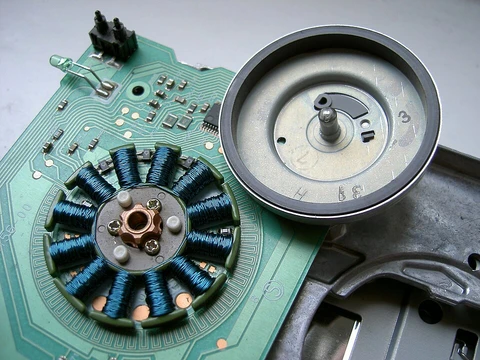
Every electric motor contains two primary mechanical elements: a rotor that spins and a stator that remains fixed. Electrically, the machine divides into field magnets and an armature, one mounted on the rotor and the other on the stator, together forming a closed magnetic circuit. The stator typically houses the field magnets—either electromagnets wound around a ferromagnetic iron core or permanent magnets—whose magnetic field threads through the rotor's armature windings. The stator core is constructed from numerous thin, mutually insulated metal sheets called laminations, made of electrical steel with specified magnetic permeability, hysteresis, and saturation properties. These laminations prevent energy losses from eddy currents that would occur in a solid core. The air gap between stator and rotor must be kept as narrow as practical; a wide gap weakens electrical performance, while an excessively narrow one introduces friction and noise. The rotor, supported by bearings that transfer axial and radial loads to the housing, carries conductors through which current flows, and the stator's field exerts force on these conductors to rotate the shaft.
Classification, Power Sources, and Pole Configurations
Electric motors are categorized along multiple axes. By power source, they may draw from direct current supplies such as batteries or rectifiers, or from alternating current sources including the power grid, inverters, and electrical generators. Construction-wise, motors can be brushed or brushless, single-phase, two-phase, or three-phase, and they may employ axial or radial flux geometries. Cooling arrangements range from air-cooled designs to liquid-cooled systems. In terms of pole configuration, machines come in salient-pole form, where the ferromagnetic cores carry distinct projections called poles that face each other, or in nonsalient-pole round-rotor form, where the core is a smooth cylinder with windings distributed evenly in slots around its circumference. Supplying alternating current to these distributed windings creates continuously rotating magnetic poles. A specialized variant, the shaded-pole motor, incorporates a winding around part of a pole that delays the phase of the local magnetic field. For mains-powered AC motors, windings are typically immobilized by impregnating them with varnish in a vacuum to prevent wire vibration and insulation abrasion, while resin-packed motors used in submersible pumps, washing machines, and air conditioners encapsulate the stator in plastic resin to resist corrosion and reduce conducted noise.
Applications and Regenerative Braking in Traction
Standardized electric motors serve as the workhorses of industrial power, spanning an enormous range of sizes and duties. At the upper extreme, the largest units drive marine propulsion systems, pipeline compression, and pumped-storage facilities, with outputs exceeding one hundred megawatts. More commonly, they power industrial fans, blowers, pumps, machine tools, household appliances, power tools, vehicles, and disk drives. At the opposite end of the scale, tiny motors can be found inside electric watches. A particularly important application in the traction domain is regenerative braking. In this mode, the traction motor operates in reverse as a generator, capturing energy that would otherwise be lost as heat and friction and converting it back into usable electrical power. This capability is made possible by the fundamental symmetry between motors and generators: both are mechanically identical machines, differing only in the direction of energy flow. The ability to recover energy during deceleration makes traction motors uniquely suited to applications where repeated acceleration and braking cycles occur, such as in vehicle propulsion.
Gallery
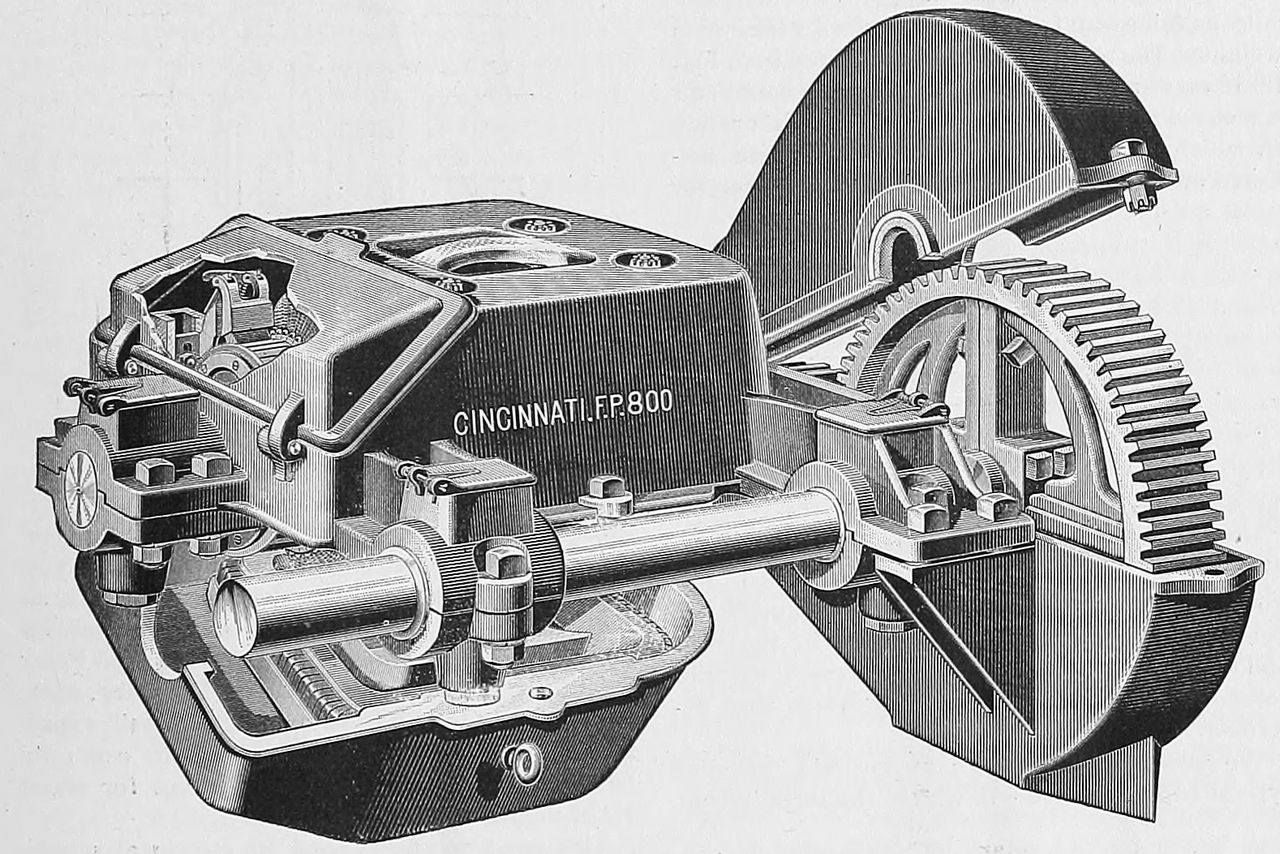
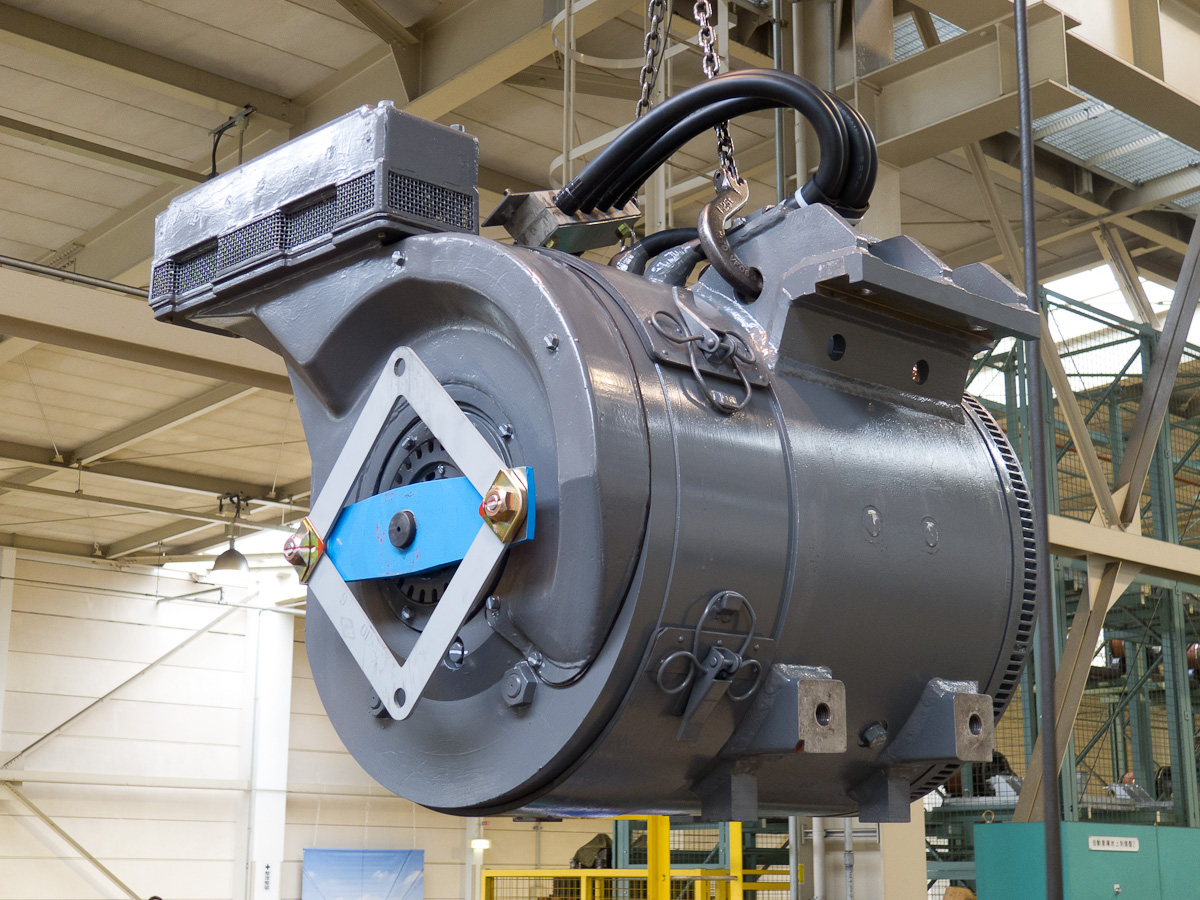
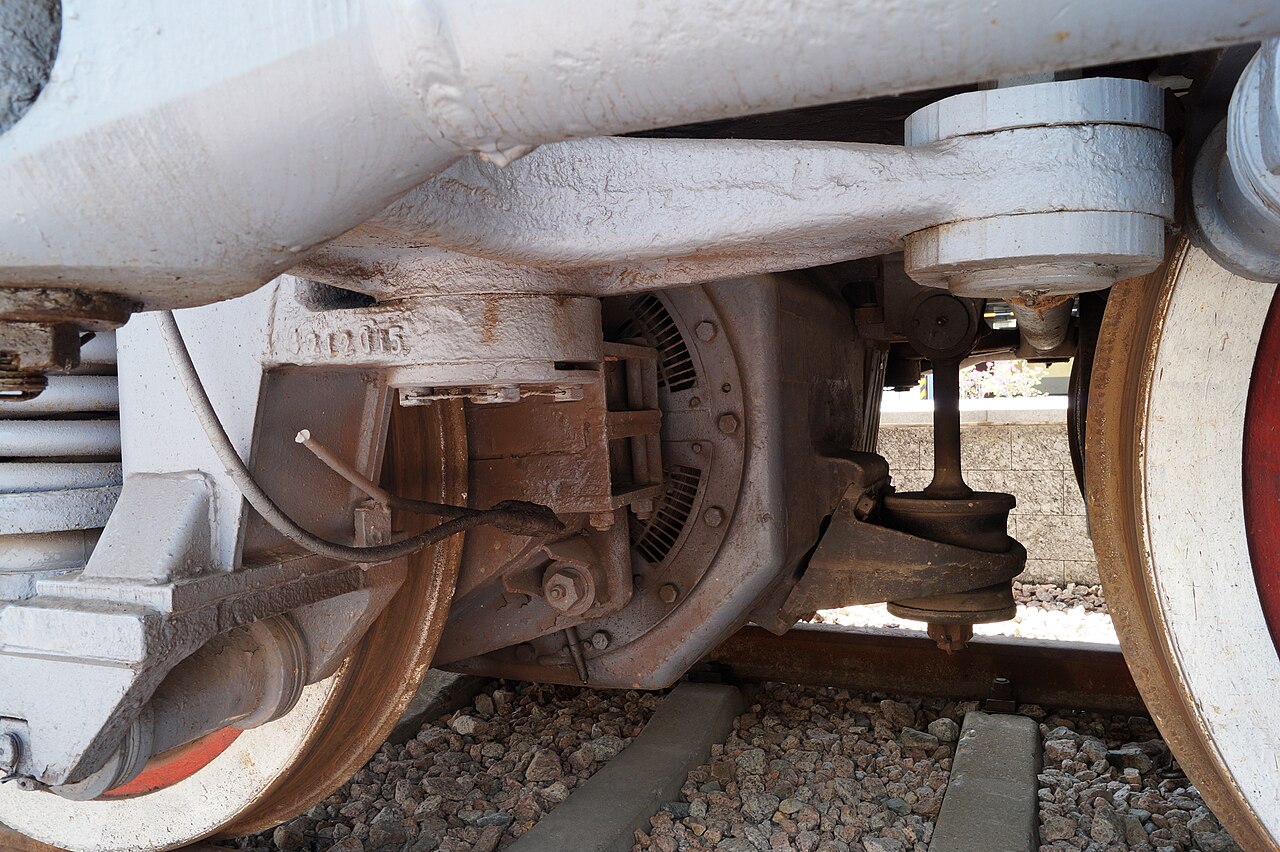
More in Electric Motors, Part 3 1-24
Spotted an error? Know more?
Reader corrections go straight into our review queue. Suggest an edit · How this site is sourced