Regenerative braking
Regenerative braking recovers kinetic energy by reversing electric motors.

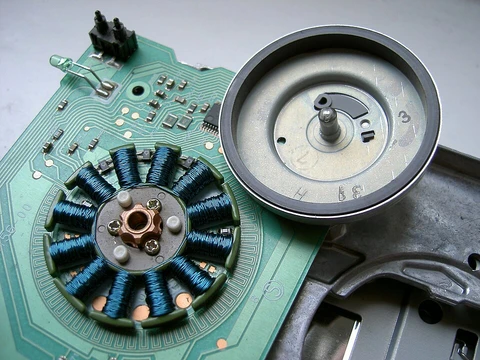
Regenerative braking is a system that recovers energy when a vehicle or object slows down. Instead of letting kinetic or potential energy dissipate as heat, it converts that energy into a form that can be used right away or stored for later. The core mechanism involves running an electric motor backwards, which turns it into a generator. This captured energy is then fed back through the system and stored in a battery, capacitor, or other storage device, ready to help propel the vehicle again. Because this setup requires an electrified drivetrain, it is most common in hybrid and electric vehicles.
This approach is fundamentally different from conventional friction brakes, which waste kinetic energy as heat. It also differs from rheostatic braking, where the motor acts as a generator but immediately dumps the recovered energy as heat in resistors. Beyond improving overall efficiency, regenerative braking can greatly extend the lifespan of traditional mechanical brake parts—discs, calipers, and pads—since those components are only used when regenerative braking alone cannot safely stop the vehicle.
In electric railways, the electricity generated is typically fed back into the traction power supply. In battery-electric and hybrid vehicles, it is stored chemically in a battery, electrically in capacitors, or mechanically in a spinning flywheel. Hydraulic hybrids use hydraulic motors to store energy as compressed air, while hydrogen fuel cell vehicles store the electrical energy in a battery, much like other electric vehicles.
Regenerative braking alone cannot reliably bring a vehicle to a complete stop or slow it enough in all situations, so it must work alongside a friction-based system. The regenerative effect weakens at low speeds, and with current technology, it cannot halt a vehicle quickly on its own. That said, some cars—like the Chevrolet Bolt—can stop completely on level ground if the driver knows the braking distance, a feature called one-pedal driving (OPD). Regenerative brakes also do not lock a stationary vehicle; physical parking brakes are still needed to prevent rolling on hills, though some models like the Bolt can hold position on slight slopes using the motor alone.
Because regenerative braking only works on wheels that have drive motors, vehicles without motors on all wheels (such as two-wheel-drive cars) cannot use it on every wheel.
- Maximum recuperative braking force
- 750 kN
- Deceleration threshold for brake lights
- 1.3 m/s2
- First commercial car with blended brakin
- GM EV-1
- Year of wädenswil accident
- 1948
- Fatalities in wädenswil accident
- 21
- Year of gb 21670-2025 standard
- 2025
Lore & Background
The most common form of regenerative brake involves an electric motor functioning as an electric generator. In electric railways, the electricity generated is fed back into the traction power supply. In battery electric and hybrid electric vehicles, the energy is stored chemically in a battery, electrically in a bank of capacitors, or mechanically in a rotating flywheel. Hydraulic hybrid vehicles use hydraulic motors to store energy as compressed air. In a hydrogen fuel cell powered vehicle, the electrical energy is stored chemically in a battery.
Regenerative braking is not sufficient as the sole means of safely stopping a vehicle; it must be used with another braking system such as friction-based braking. The regenerative braking effect drops off at lower speeds and cannot bring a vehicle to a complete halt reasonably quickly with current technology, though some cars like the Chevrolet Bolt can stop on level surfaces in one-pedal driving mode. Many road vehicles with regenerative braking do not have drive motors on all wheels; regenerative braking is normally only applicable to wheels with motors. Early applications suffered from a serious safety hazard: in many early electric vehicles, the same controller positions applied power and regenerative brake, swapped by a manual switch, leading to accidents such as the 1948 runaway train accident in Wädenswil, Switzerland, which killed twenty-one people.
In the 2020s, most vehicles with regenerative braking can completely halt reasonably quickly in one-pedal driving mode. Some car models do not illuminate the braking light during regenerative braking, leading to safety concerns. The GB 21670-2025 vehicle standard later mandated that brake lights must turn on during regenerative braking when deceleration exceeds 1.3 m/s2.
Reader's Guide
Regenerative braking is notable for improving overall vehicle efficiency and significantly extending the life of the braking system, as traditional mechanical parts like discs, calipers, and pads wear out less quickly. The article describes its history beginning in 1886 with the Sprague Electric Railway & Motor Company, which introduced regenerative braking. Early road vehicle examples included the Krieger electric landaulet in Paris in the 1890s and the Orwell Electric Truck during WW1. In England, 'automatic regenerative control' was introduced to tramway operators by John S. Raworth's Traction Patents 1903–1908, with systems at Devonport (1903), Rawtenstall, Birmingham, and Crystal Palace-Croydon (1906). Following a serious accident at Rawtenstall, an embargo was placed on this form of traction in 1911, but it was reintroduced twenty years later. Regenerative braking has been in extensive use on railways for many decades, notably on the Baku-Tbilisi-Batumi railway in the early 1930s and the Kiruna to Narvik electrified railway, where trains generate large amounts of electricity, with a maximum recuperative braking force of 750 kN. The regenerated energy is sufficient to power empty trains back up the border, and any excess is pumped into the power grid, making the railway a net generator of electricity. Improvements in electronics allowed the process to be fully automated, starting with the 1967 AMC Amitron experimental electric car, whose motor controller automatically began battery charging.
Did You Know?
- The GM EV-1 was the first commercial car to blend regenerative and friction braking using brake-by-wire technology.
- The Kiruna to Narvik railway is a net generator of electricity, with trains using only a fifth of the power they regenerate on the descent.
- Early electric vehicles required a manual switch to swap between power and regenerative braking modes, leading to accidents such as the 1948 Wädenswil train crash.
- The GB 21670-2025 standard mandates brake lights during regenerative braking when deceleration exceeds 1.3 m/s2.
More in Electric Motors, Part 2 1-24
Spotted an error? Know more?
Reader corrections go straight into our review queue. Suggest an edit · How this site is sourced