
Heat syncope
A heat illness causing fainting from reduced blood flow to the brain.

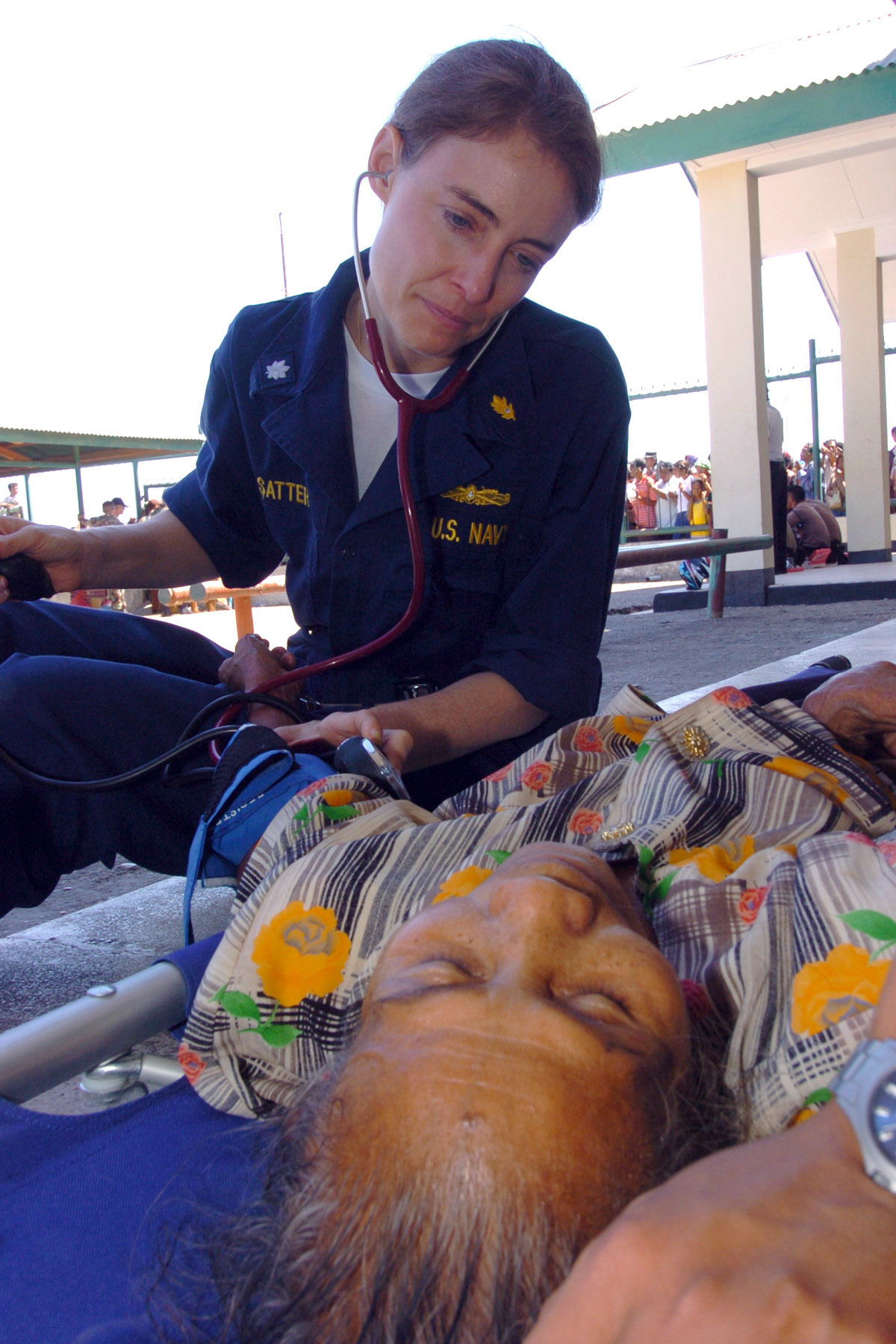
U.S. Navy photo by Chief Mass Communication Specialist Edward G. Martens · Public domain
Heat syncope is a form of heat illness that causes fainting or dizziness, sometimes without confusion, due to overheating. It happens when peripheral blood vessels widen, reducing blood flow to the brain, and is worsened by dehydration. This condition often develops within the first five days of adjusting to a hotter environment, before the body has increased its blood volume.
**Signs and symptoms** Symptoms can include faintness, dizziness, headache, a fast pulse, restlessness, nausea, vomiting, pale or clammy skin, and brief loss of consciousness.
**Causes** In warm conditions, the body widens small skin blood vessels to release heat, which lowers blood pressure. This effect is strongest during the first five days of heat exposure, before blood volume expands. The reduced blood flow to the brain causes light-headedness or fainting, especially when standing up quickly or standing for long periods. People doing strenuous outdoor work in hot climates are at higher risk.
**Diagnosis** A physical exam is used to diagnose heat syncope. The practitioner checks blood pressure (which will be low) and pulse (which will be elevated). Heavy sweating is another key sign. The doctor also asks about the patient’s symptom history—if symptoms began during physical activity in high heat, it is likely heat syncope.
**Prevention** Avoid physical activity in extremely hot weather. If overheating or symptoms start, move to a shaded or cool area. Do not drink alcohol in hot weather, as it causes dehydration and can worsen symptoms. Drink plenty of water with electrolytes when active in heat.
**Treatment** Treatment is similar to that for other fainting: place the patient sitting or lying down with legs raised. Give salted water or an electrolyte drink slowly, and move them to a cooler spot like shade. Rest and recovery are important, as heat syncope can lead to heat stroke or heat exhaustion if untreated.
Quick Facts
- Field
- Emergency medicine
Facts from the source article.
Lore & Background
Heat syncope occurs in a warm environment when blood pressure is lowered as the body dilates arterioles in the skin to radiate heat. This condition typically arises within five days of acclimatization to higher temperatures, before the blood volume expands. The result is less blood to the brain, causing light-headedness and fainting when a person stands up quickly or stands for a long period of time. Those who perform strenuous work outside in warm climates are at particular risk.
Diagnosis is done during a physical examination, where the practitioner tests blood pressure and pulse. In heat syncope, blood pressure is low and pulse is elevated. Observation of excess sweating is a key sign, and the practitioner asks about the history of symptoms—if symptoms developed while engaging in physical activity in high temperatures, it is considered a true case of heat syncope.
Prevention includes avoiding physical activity in extremely hot weather, moving to a shaded or cool area if overheating occurs, avoiding alcoholic beverages in hot weather (as they cause dehydration), and drinking plenty of water with electrolytes during physical activity in hot weather. Treatment involves positioning the patient in a seating or supine position with legs raised, administering water containing salt or another electrolyte drink slowly, and moving the patient to a cooler area. The affected person should rest and recover, as heat syncope can lead to heat stroke or heat exhaustion.
Reader's Guide
Heat syncope is significant as a common but potentially serious heat illness that can progress to heat stroke or heat exhaustion if not properly managed. The article emphasizes that it occurs specifically within the first five days of heat acclimatization, before the body has expanded blood volume to compensate for peripheral vessel dilation. This makes it a particular risk for individuals new to hot environments or those returning after a break. The condition is diagnosed through physical examination, with low blood pressure and elevated pulse as key indicators, along with excess sweating and a history of physical activity in high temperatures. Prevention strategies are straightforward: avoid strenuous activity in extreme heat, seek shade, avoid alcohol, and maintain hydration with electrolytes. Treatment mirrors that for other fainting types, focusing on rest, rehydration with salt or electrolytes, and cooling. The article underscores that heat syncope is not merely a transient faint but a warning sign that requires attention to prevent more severe heat illnesses. Its legacy lies in highlighting the importance of gradual acclimatization and proper hydration for anyone working or exercising in hot climates.
Did You Know?
- Heat syncope is caused by peripheral vessel dilation, resulting in diminished blood flow to the brain and dehydration.
- Symptoms may include faintness, dizziness, headache, increased pulse, restlessness, nausea, vomiting, pale/clammy skin, and brief loss of consciousness.
The Underlying Mechanism
Heat syncope sits at the intersection of thermoregulation and cardiovascular function. When the body is exposed to a warm environment, it attempts to shed excess heat by widening the tiny arterioles in the skin — a process known as peripheral vessel dilation. While this mechanism is essential for cooling, it simultaneously diverts blood away from the brain and lowers overall blood pressure. The net effect is a measurable reduction in cerebral perfusion, which manifests as light-headedness, dizziness, or outright fainting, particularly when a person stands up abruptly or remains upright for an extended period. Dehydration compounds the problem by further shrinking the circulating blood volume available to reach the brain. Crucially, this vulnerability is most pronounced during the first five days of exposure to higher temperatures, a window before the body has had time to expand its blood volume as part of the acclimatization process. The combination of vasodilation, reduced blood volume, and gravitational pooling when upright creates a perfect storm for transient loss of consciousness.
Recognizing and Confirming the Condition
The clinical picture of heat syncope presents a recognizable constellation of signs that a trained practitioner can identify during a focused physical examination. Patients commonly report faintness, dizziness, and headache, while others exhibit restlessness, nausea, or vomiting. On inspection, the skin often appears pale and clammy, and the individual may experience a brief episode of lost consciousness. Vital signs tell a consistent story: blood pressure reads low while the pulse is elevated, and excess sweating is frequently observed. The diagnostic process also hinges on careful history-taking. A practitioner will ask when and under what circumstances the symptoms arose. If the patient developed these signs while engaged in physical activity under high ambient temperatures, the case is confirmed as true heat syncope rather than a different etiology of fainting. This contextual information is what separates heat syncope from other causes of syncope and guides the clinician toward the appropriate management pathway.
Who Is Most Vulnerable
Not everyone in a hot environment is equally at risk for heat syncope. The condition is most likely to strike individuals who perform strenuous outdoor labor in warm climates, where the demands of physical exertion combine with elevated ambient temperatures to push the cardiovascular system to its limits. The acclimatization timeline adds another layer of vulnerability: during the first five days of exposure to higher temperatures, the body has not yet expanded its blood volume to compensate for the increased vasodilation, leaving cerebral blood flow particularly precarious. Postural changes matter as well — standing up quickly or remaining upright for prolonged stretches can tip a borderline circulation into outright fainting. Dehydration, whether from insufficient fluid intake or from the diuretic effects of alcohol consumed in hot weather, further diminishes the blood volume available to the brain. Together, these factors — occupational heat exposure, the narrow acclimatization window, gravitational blood pooling, and fluid deficits — create a specific profile of susceptibility that public-health guidance and workplace safety protocols aim to address.
Prevention, Immediate Care, and the Stakes
Preventing heat syncope centers on a few practical principles. The most straightforward measure is to avoid strenuous physical activity when temperatures are extreme. If early warning signs appear — dizziness, nausea, clammy skin — the person should immediately move into shade or a cooler space. Hydration is critical: drinking water supplemented with electrolytes during and after exertion in the heat is essential, while alcoholic beverages should be avoided because they promote dehydration and can worsen symptoms. When heat syncope does occur, basic first aid mirrors the approach for other forms of fainting. The individual is laid down or seated with legs elevated to restore cerebral blood flow, and a salt- or electrolyte-containing drink is given slowly. The person is relocated to a cooler area and allowed to rest and recover. This rest period is not optional; left unmanaged, the same physiological cascade that produced a brief faint can progress into heat exhaustion or even life-threatening heat stroke, making prompt and complete recovery a matter of genuine medical importance.
Gallery
Frequently Asked Questions
Who is Heat syncope?
Heat syncope is a heat-related illness characterized by fainting or lightheadedness caused by insufficient blood reaching the brain. It typically strikes when peripheral vessels dilate in warm conditions and the body has not yet expanded its circulating blood volume to compensate.
What are Heat syncope's powers/role?
Its 'power' lies in triggering a cascade of symptoms—dizziness, rapid heartbeat, nausea, pale clammy skin, and brief unconsciousness—by dropping blood pressure while the pulse races. It is aggravated by dehydration and by prolonged standing or strenuous outdoor labor in hot climates.
When does Heat syncope first appear in the timeline?
The condition most commonly surfaces within the first five days of a person's exposure to a hotter environment, before their body has had time to acclimatize and increase blood volume. It is essentially an early-stage heat illness that can precede more severe forms like heat exhaustion.
Why is Heat syncope important to the overall heat-illness saga?
It serves as the earliest recognizable warning sign in the heat-illness progression, often catching people off guard during the acclimatization window. Spotting its key markers—low blood pressure, elevated pulse, and excess sweating—can help prevent escalation to more dangerous conditions.
More in Effects of External Causes 1-24
Spotted an error? Know more?
Reader corrections go straight into our review queue. Suggest an edit · How this site is sourced