
Chilblains
Cold- and humidity-induced capillary damage causing itching and inflammation.

Wikimedia Commons · CC BY 4.0
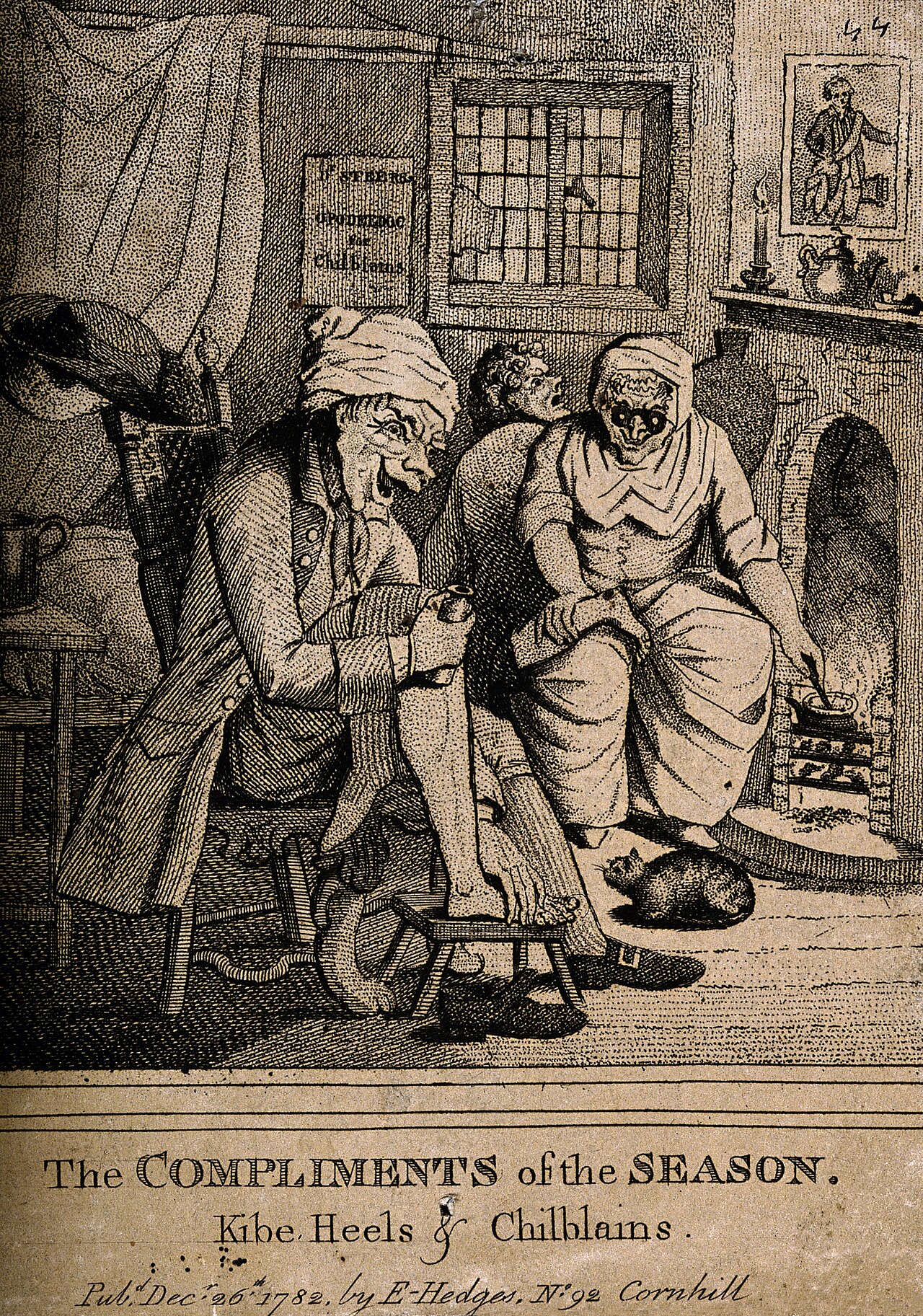
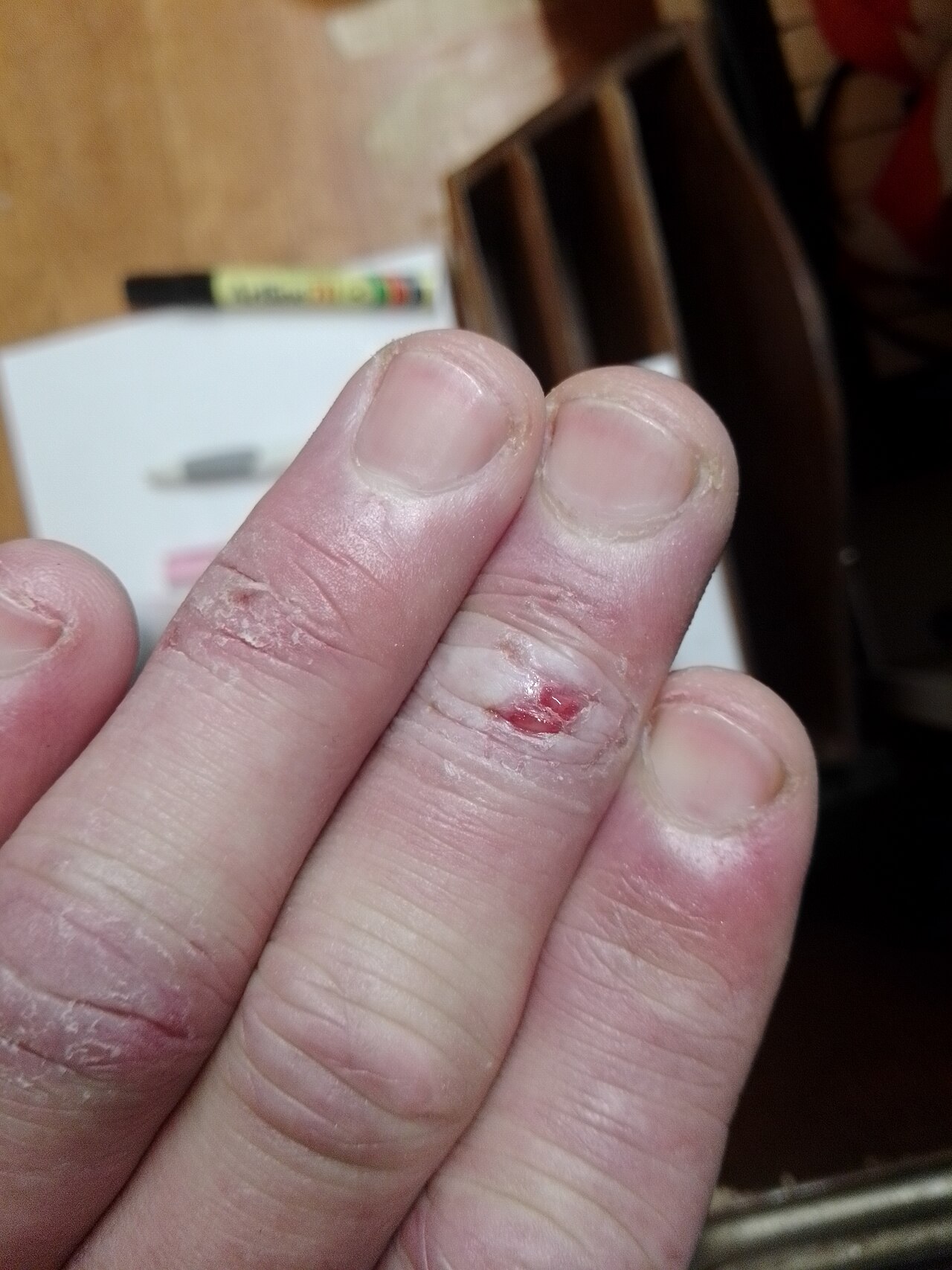
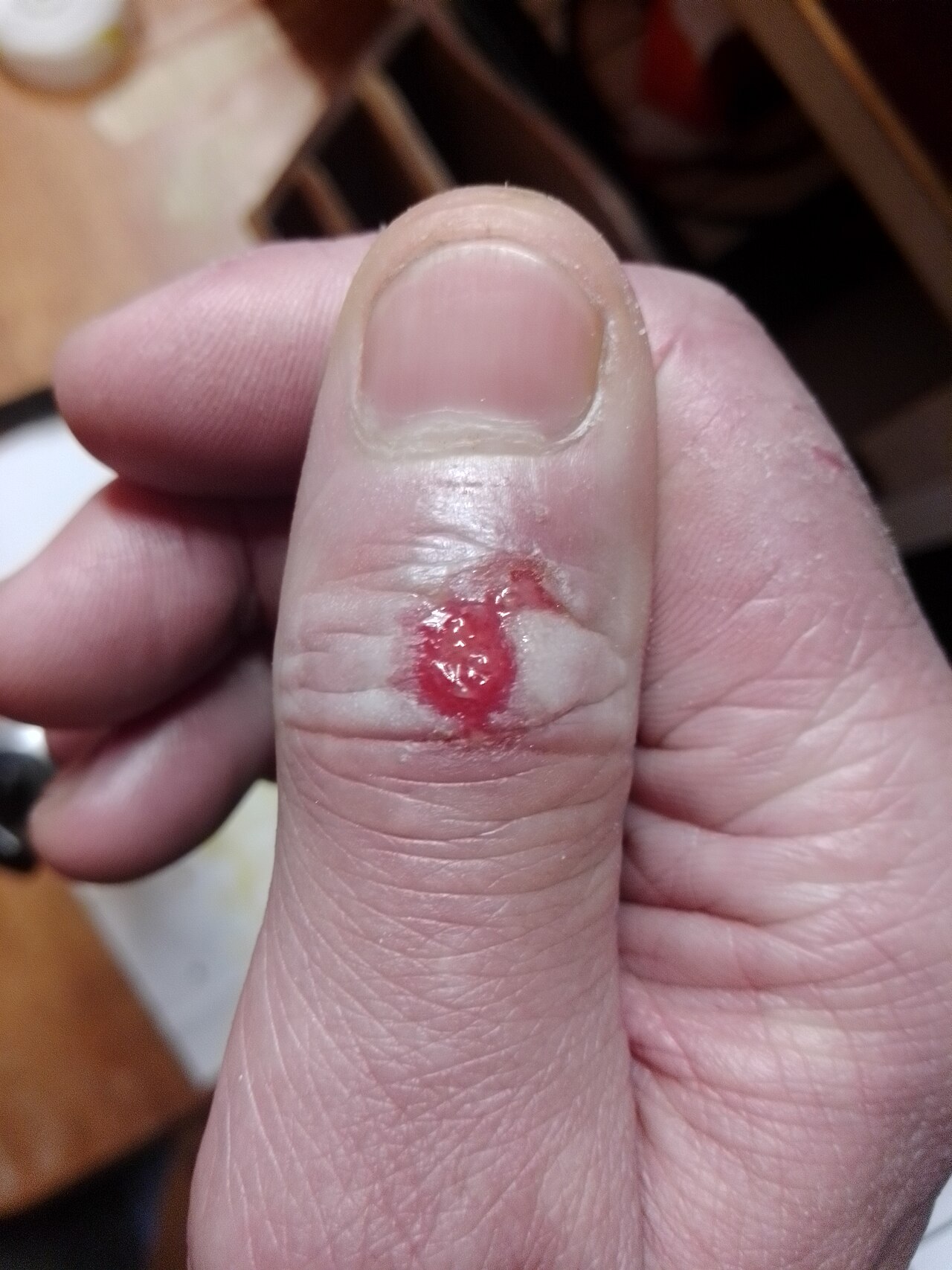
Chilblains, or pernio, happen when small blood vessels in the skin—usually on the hands or feet—get damaged as blood leaks into nearby tissue. This causes redness, itching, swelling, and sometimes blisters. The condition most often affects people who are prone to it, especially women, when they are exposed to cold, damp conditions. When chilblains become ulcerated, they are called kibes.
To prevent temperature-related chilblains, keep hands and feet warm in cold weather and avoid sudden temperature changes. Once diagnosed, the main treatment is to stay away from cold, damp environments and wear gloves and warm socks. Chilblains can appear on their own (idiopathic), but similar symptoms might also point to a more serious underlying illness that needs checking. Related conditions include Raynaud syndrome, erythromelalgia, frostbite, trench foot, and connective tissue diseases like lupus or vasculitis. In infants with Aicardi–Goutières syndrome—a rare inherited nervous system disorder—chilblain-like symptoms occur alongside severe neurological problems and unexplained fevers.
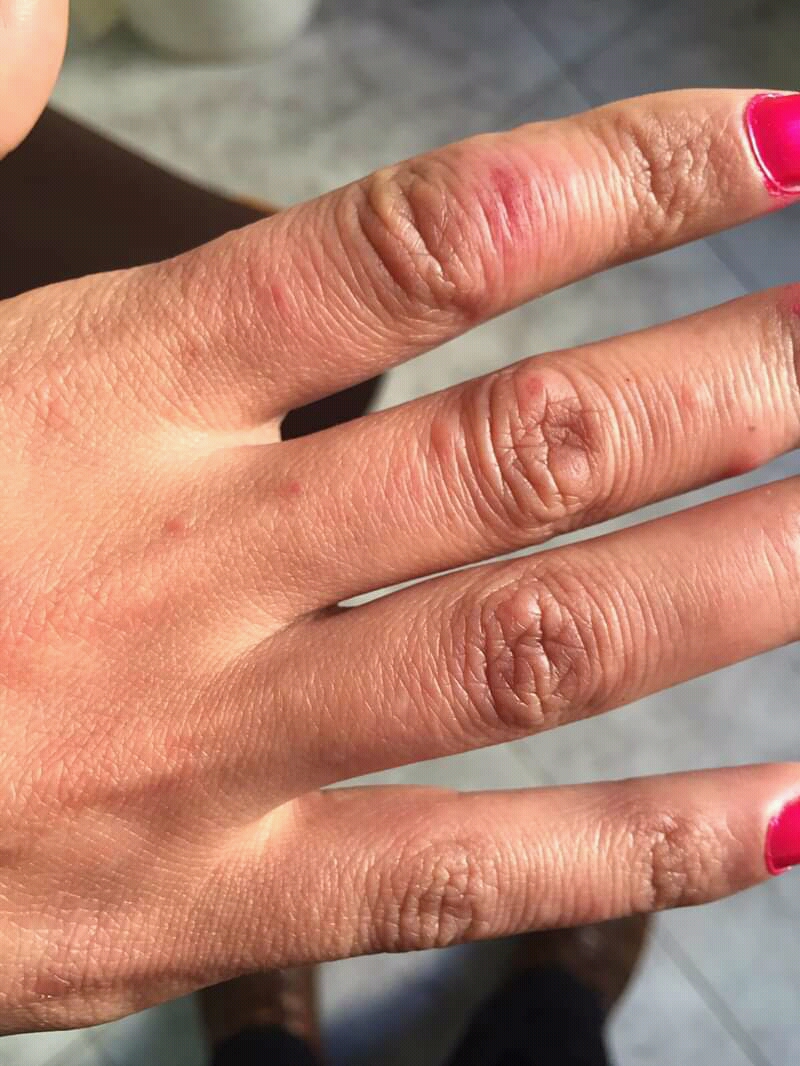
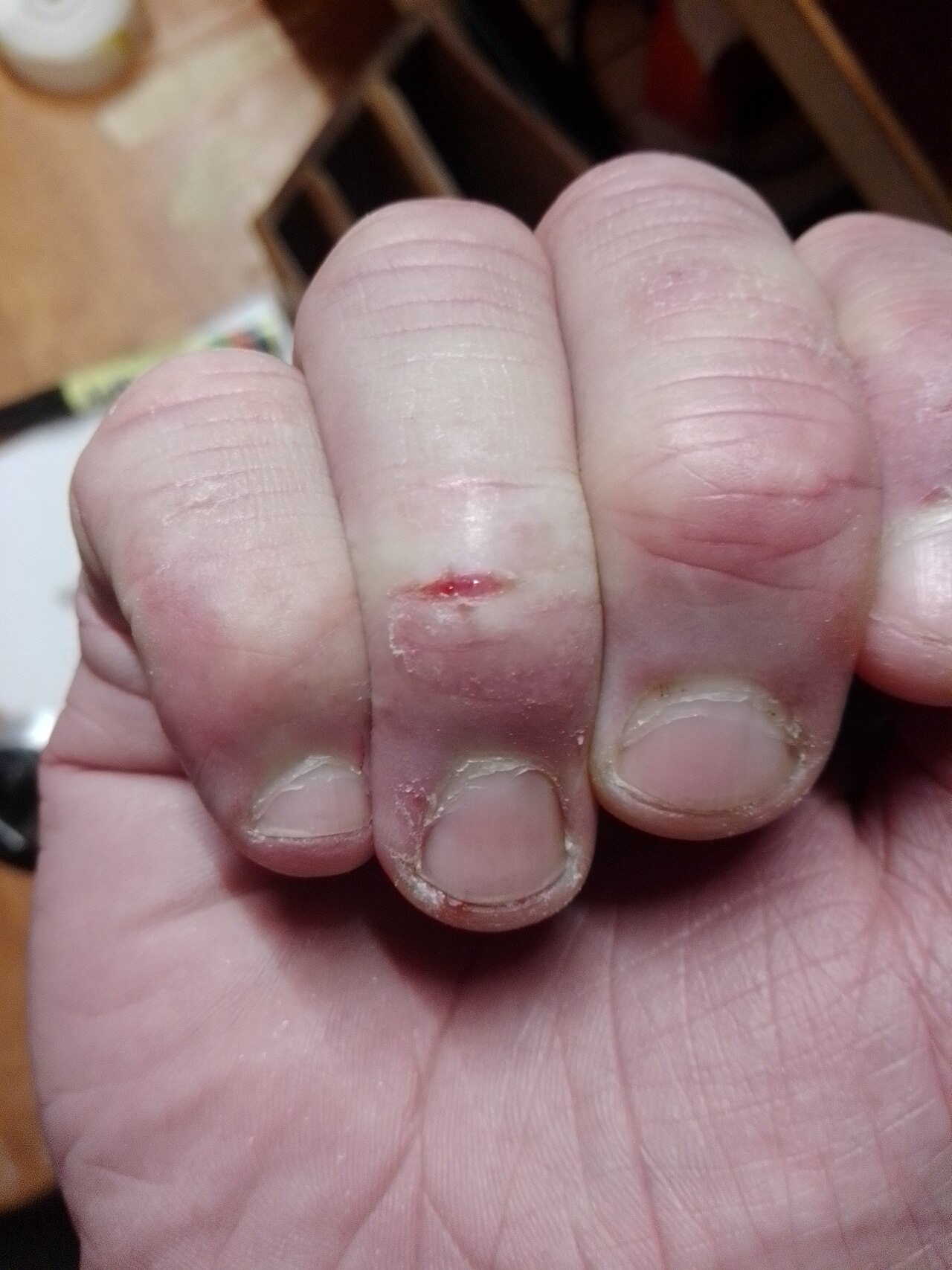
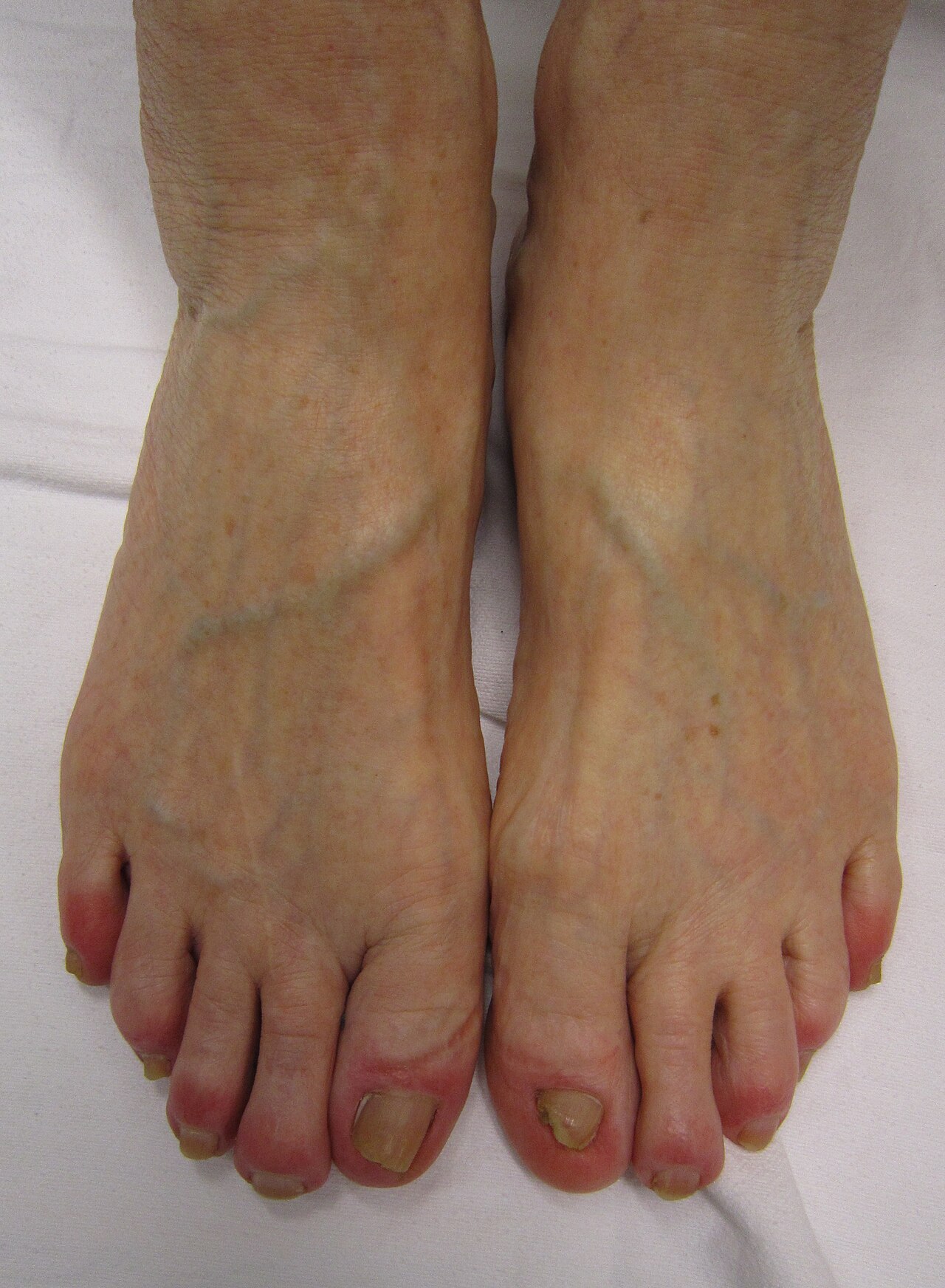
**Signs and symptoms** Symptoms show up as dermatitis on toes, fingers, earlobes, nose, and other extremities. These can include: burning and itching, throbbing pain, skin color changes (red to dark blue) with blanchable redness, blistering, and—only in severe cases—ulceration. Chilblains caused by cold and humidity usually heal within 7 to 14 days.
**Treatment** Doctors may prescribe vasodilators like nifedipine, amlodipine, or diltiazem—calcium channel blockers that widen blood vessels. These can reduce pain, speed healing, and prevent recurrences. They are typically taken as oral pills but can also be made into a topical formula.
**Etymology** The word combines Modern English *chill* (cold) with the archaic word *blain*, meaning a swelling, blister, or sore. *Blain* comes from Old English *bleġen* or *bleġene*, with the same meaning.
**Alternative remedies** The medieval Bald’s Leechbook recommended a mixture of eggs, wine, and fennel root for chilblains. A modern home remedy involves putting garlic on the affected areas. Other herbal remedies thought to be vasodilating, rubifacient, or warming have also been suggested.
Quick Facts
- Pronounce
- ˈ · tʃ · ɪ · l · b · l · eɪ · n · z
- Field
- Internal medicine, podiatry
Facts from the source article.
Lore & Background
The word 'chilblains' is a compound of Modern English 'chill' meaning cold and the archaic word 'blain' meaning swelling, blister, or sore, derived from Old English 'bleġen' or 'bleġene'. The medieval Bald's Leechbook recommended treating chilblains with a mixture of eggs, wine, and fennel root. A modern-day home remedy is to put garlic on the chilblains, and other herbal remedies supposed to be vasodilating, rubifacient, and warming have been recommended.
Chilblains can be idiopathic, but similar symptoms may also be a manifestation of another serious medical condition that must be investigated. Related medical conditions include Raynaud syndrome, erythromelalgia, frostbite, trench foot, and connective tissue diseases such as lupus or vasculitis. In infants affected by Aicardi–Goutières syndrome, chilblain-like symptoms occur together with severe neurologic disturbances and unexplained fevers.
Chilblain-like symptoms have also been linked to COVID-19, commonly known as COVID toes, mostly reported in older children and adolescents who often have not had other symptoms of COVID-19. Their cause is debated: it is uncertain whether they are a delayed consequence of the viral infection itself or are connected to environmental factors during the pandemic. In a study at the dermatology department of Saint-Louis Hospital in Paris, researchers found that most study participants carried high levels of autoantibodies and showed high activity of type 1 interferons.
Reader's Guide
Chilblains are notable as a common cold- and humidity-induced condition that primarily affects predisposed individuals, predominantly women, causing capillary damage in extremities. The condition typically heals within 7–14 days, but its significance extends beyond simple cold exposure: similar symptoms can indicate serious underlying diseases such as lupus, vasculitis, or Raynaud syndrome, requiring medical investigation. The condition has historical roots, with treatments recorded in medieval texts like Bald's Leechbook and modern home remedies such as garlic. Medically, vasodilators like nifedipine, amlodipine, and diltiazem are used to reduce pain, facilitate healing, and prevent recurrences. More recently, chilblain-like symptoms have been linked to COVID-19, particularly in older children and adolescents, though the cause remains debated—whether from the virus itself or environmental factors. Research at Saint-Louis Hospital in Paris found high levels of autoantibodies and type 1 interferon activity in affected individuals, suggesting an immune-mediated mechanism. The condition's legacy includes its role as a potential indicator of systemic disease and its emergence as a possible sign of COVID-19 infection.
Did You Know?
- Ulcerated chilblains are referred to as kibes.
- The word 'chilblains' combines 'chill' and the archaic 'blain' meaning swelling or blister.
- The medieval Bald's Leechbook recommended treating chilblains with eggs, wine, and fennel root.
- COVID toes, linked to COVID-19, have mostly been reported in older children and adolescents.
Clinical Presentation & Pathophysiology
Chilblains, also called pernio, is a condition in which the tiny capillary networks beneath the skin become damaged as blood floods into surrounding tissue. The result is a cascade of local inflammation—redness, persistent itching, swelling, and in more severe cases, blistering or even ulceration (the latter specifically termed kibes). The condition strikes the hands and feet most often, though the ears, nose, and other extremities can also be affected. Women are disproportionately represented among those who develop it, and the typical trigger is a combination of cold and dampness rather than extreme freezing alone. Affected skin may shift from bright red to a dark blue hue, accompanied by a blanchable erythema, a burning or throbbing pain, and a general dermatitis-like appearance. The encouraging news is that when chilblains are straightforwardly caused by cold-humidity exposure, the lesions generally resolve on their own within roughly one to two weeks, leaving no lasting damage behind.
Treatment & Prevention
Once a clinician confirms the diagnosis, the cornerstone of management is straightforward: stay out of cold, damp environments and keep the vulnerable digits insulated with warm socks and gloves. This simple behavioral shift is considered first-line care and, for many patients, is all that is needed. For those who experience recurrent or particularly painful episodes, pharmacological options enter the picture. Calcium channel blockers such as nifedipine and amlodipine work as vasodilators, widening the small blood vessels to reduce the painful congestion, speed up healing, and lower the chance of future flare-ups. These medications are most commonly taken as oral tablets but can also be compounded into a topical cream for direct application to the affected skin. Diltiazem, another agent in the vasodilator family, is occasionally prescribed as an alternative. Prevention, meanwhile, centers on two principles: maintaining consistent warmth on the hands and feet during cold weather and avoiding sudden, extreme swings in temperature that can shock the delicate capillary beds.
Diagnostic Complexity & Associated Conditions
While many cases of chilblains are idiopathic—arising spontaneously with no underlying disease—the condition is far more diagnostically nuanced than a simple winter nuisance. A clinician who encounters chilblain-like lesions must rule out a range of serious systemic conditions that can mimic or produce identical symptoms. These include Raynaud syndrome, erythromelalgia, frostbite, and trench foot, as well as autoimmune connective tissue diseases such as lupus and vasculitis. In the pediatric population, the picture becomes even more alarming: infants with Aicardi–Goutières syndrome, a rare inherited disorder that damages the nervous system, can present with chilblain-like skin changes alongside severe neurologic disturbances and fevers of unknown origin. Because the external appearance of the lesions may be indistinguishable from a routine cold-exposure case, a thorough medical investigation is essential whenever the presentation is atypical, persistent, or accompanied by systemic symptoms. The stakes of missing an underlying condition can be significant, making careful differential diagnosis a critical part of managing what might initially seem like a minor dermatologic complaint.
The COVID-19 Link & Historical Remedies
The pandemic years brought an unexpected twist to chilblain medicine. A cluster of chilblain-like lesions, widely dubbed 'COVID toes,' surfaced predominantly in older children and adolescents who often had no other signs of SARS-CoV-2 infection. The episodes were typically mild and self-resolving, yet their origin remains debated—researchers have not settled whether they represent a delayed vascular consequence of the virus itself or are partly tied to the environmental conditions of lockdown winters. Notably, some of these lesions share microscopic features with chilblains triggered by lupus. A study conducted at Saint-Louis Hospital in Paris found that most affected participants carried elevated levels of autoantibodies and showed heightened activity of type 1 interferons, proteins that activate pathogen-fighting genes in immune cells. This finding suggests an autoimmune component. On the historical side, the medieval Bald's Leechbook prescribed a poultice of eggs, wine, and fennel root, while modern folk practice favors rubbing garlic directly on the affected skin or applying herbal preparations believed to be vasodilating and warming.
Gallery
Frequently Asked Questions
What is Chilblains and what does it actually do to the body?
Chilblains (pernio) is a cold- and humidity-triggered reaction in which tiny skin capillaries rupture and leak blood into surrounding tissue, producing redness, intense itching, swelling, and in worse cases small blisters.
Who is most at risk of getting Chilblains?
Women are the demographic hit hardest by this condition, especially when they are repeatedly exposed to cold, damp settings without adequate protection.
Where on the body does Chilblains most often show up?
The favorite strike zones are the toes, fingers, earlobes, and nose—essentially any extremity where micro-vessels sit close to the skin surface and are most vulnerable to temperature shifts.
What is the go-to first-line treatment for Chilblains?
The core strategy is simply staying out of cold, wet environments and keeping hands and feet insulated with gloves and warm socks; for more stubborn cases, doctors may prescribe calcium-channel blockers such as nifedipine, amlodipine, or diltiazem to help the vessels recover.
How long does a typical Chilblains episode take to heal?
Once the cold exposure is removed, most lesions resolve within seven to fourteen days, though if the skin breaks down into open sores the condition is reclassified as kibes and demands further medical attention.
More in Effects of External Causes 1-24
Spotted an error? Know more?
Reader corrections go straight into our review queue. Suggest an edit · How this site is sourced