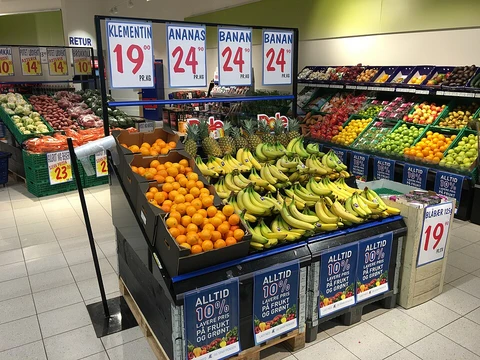
Cooking banana
Starchy banana cultivars used in cooking worldwide.
Last updated

Apinanaivot · CC0
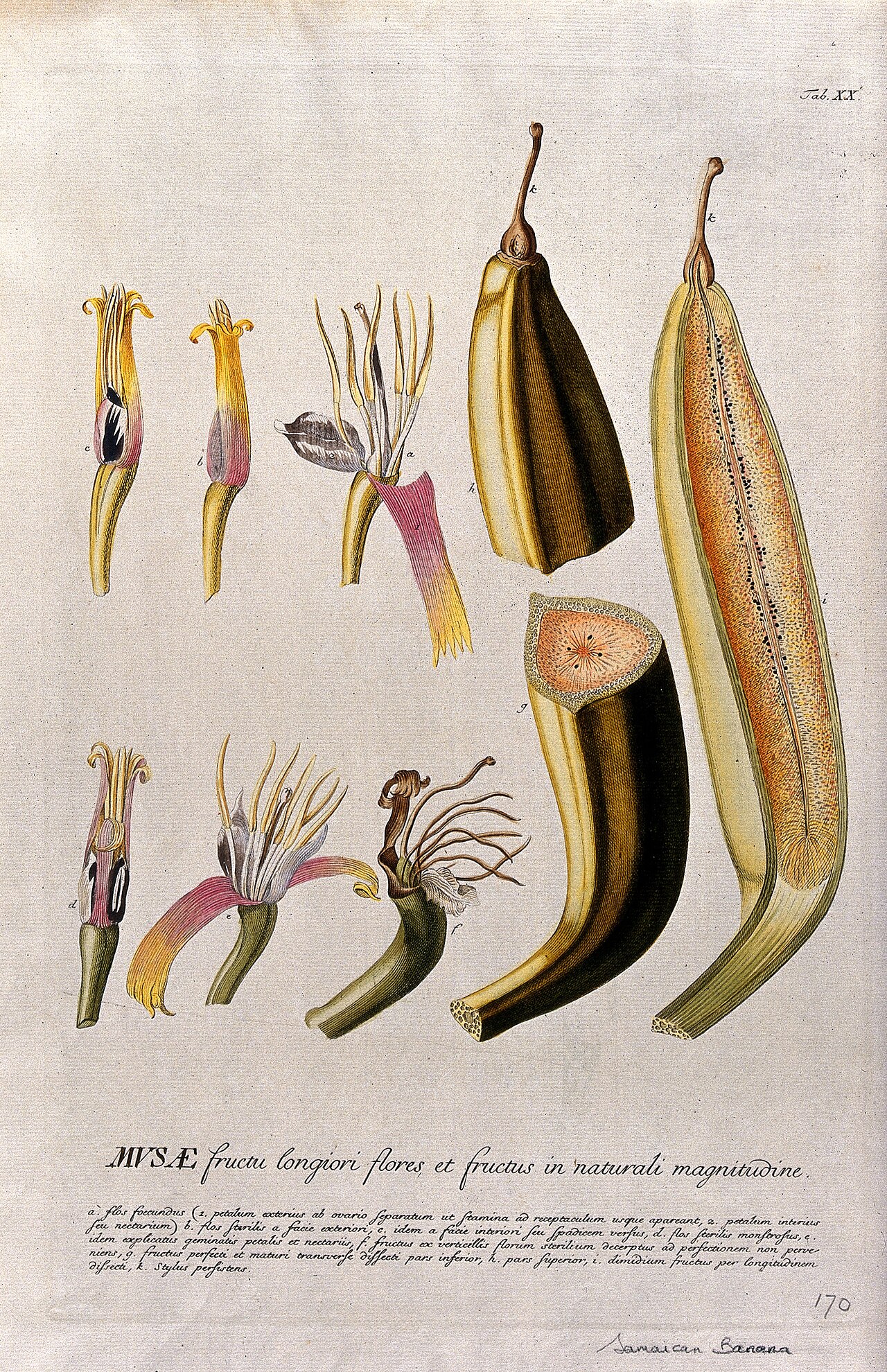
Cooking bananas are a category of banana cultivars from the genus Musa that are typically cooked rather than eaten raw, due to their starchy texture. While often called plantains or green bananas, the botanical definition of "true plantains" is narrower, referring only to specific cooking cultivars in the AAB group. Other starchy cooking cultivars fall into the AAB, AAA, ABB, or BBB groups, and all such hybrids are scientifically classified as Musa × paradisiaca.
Fe'i bananas (Musa × troglodytarum), found in the Pacific Islands, are sometimes informally called mountain plantains because they are commonly roasted or boiled, but they are not descended from the same species as modern banana cultivars. These cooking bananas are a key staple across West and Central Africa, the Caribbean, Central America, and northern South America, though the Musa genus originally comes from tropical Southeast Asia and Oceania. Because bananas can fruit throughout the year, they serve as a dependable, all-season food source.
Description
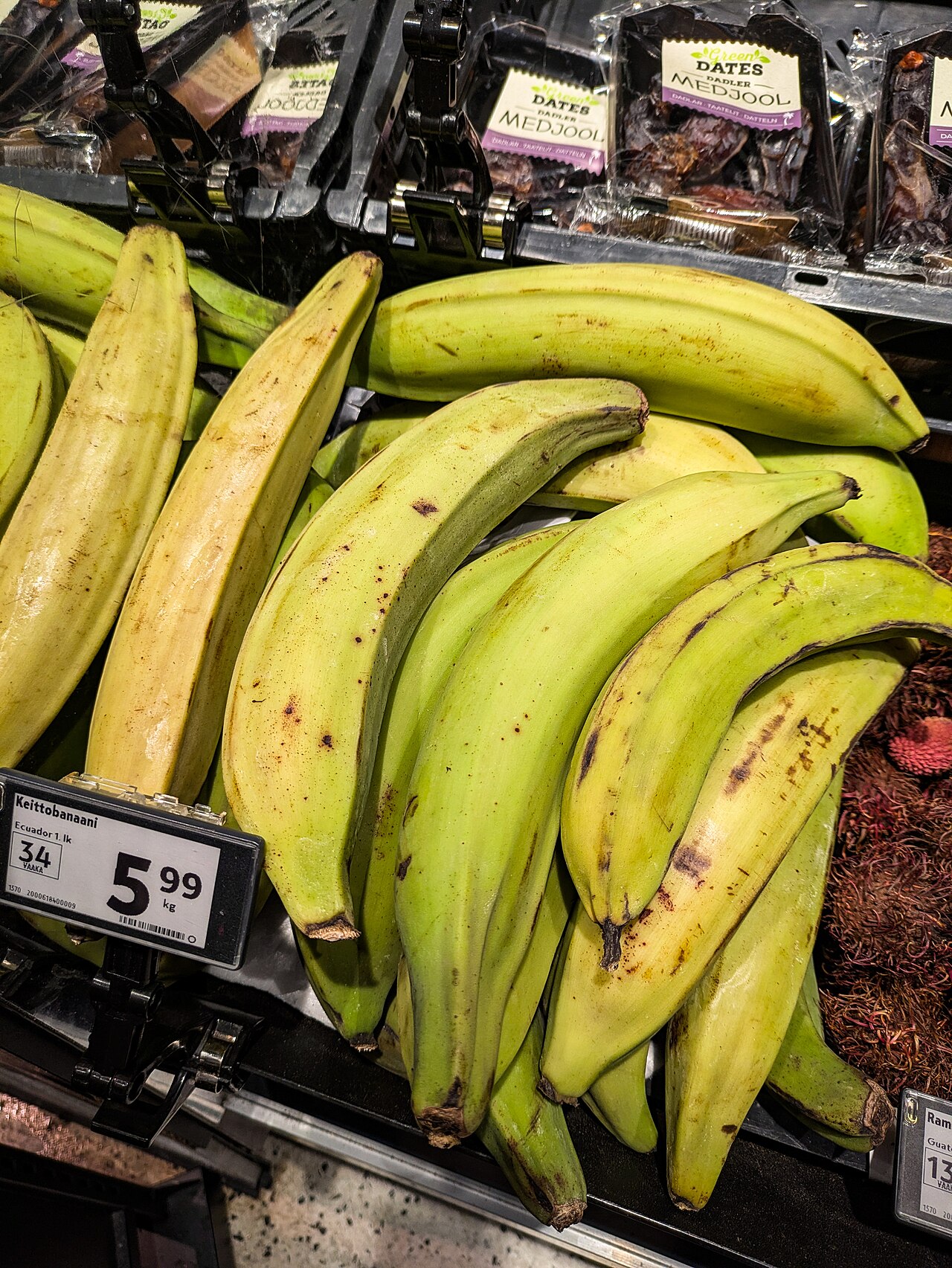
Plantains contain more starch and less sugar than dessert bananas, which is why they are usually cooked. Green plantains are typically boiled or fried, and can be processed into flour for baked goods like cakes, bread, and pancakes. Their pulp is hard, and the peel is often so stiff it requires a knife to remove. When boiled and pureed, green plantains can thicken soups.
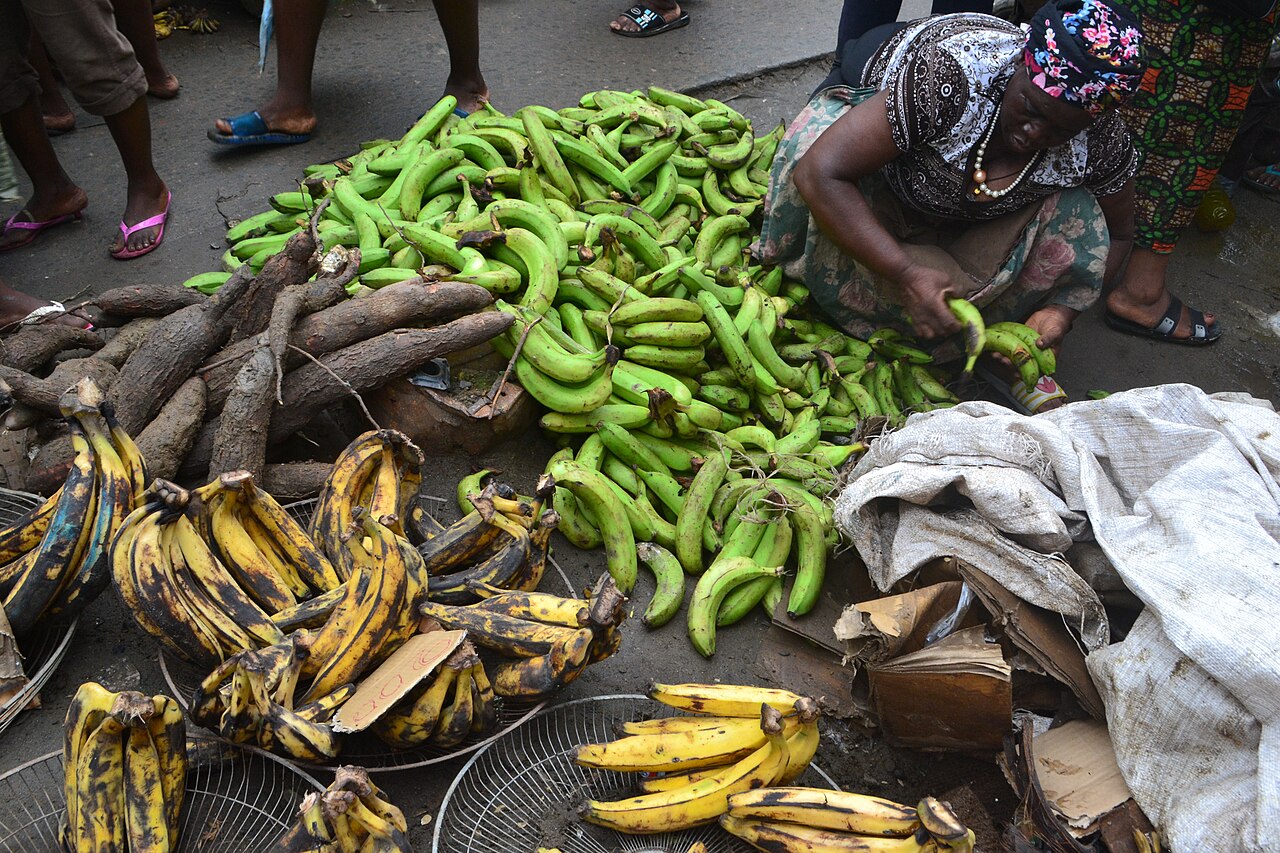
Mature yellow plantains, on the other hand, have softer pulp and some starch converted to sugar, making them peelable like dessert bananas. Though they can be eaten raw, they are less flavorful than dessert bananas and are usually cooked. Frying yellow plantains causes them to caramelize into a golden-brown color; they can also be boiled, baked, microwaved, or grilled over charcoal, either peeled or unpeeled.
Globally, plantains rank as the tenth most important staple food, especially in tropical regions. Their neutral flavor and texture when cooked—by steaming, boiling, or frying—make them comparable to potatoes. Because they fruit year-round, they are particularly valuable in developing countries where food storage, preservation, and transportation are limited. In Africa, plantains and bananas supply over 25 percent of the daily calories for more than 70 million people.
However, plantain plantations are vulnerable to hurricanes, as Musa species cannot withstand strong winds. An average plantain provides roughly 220 kcal and is a good source of potassium and dietary fiber. The sap from the fruit peel and the entire plant can stain clothing and hands and is difficult to remove.
Taxonomy
Taxonomically, Carl Linnaeus originally split bananas into two species based on use: Musa paradisiaca for plantains and Musa sapientum for dessert bananas. Both are now known to be hybrids of Musa acuminata (A genome) and Musa balbisiana (B genome), and the earlier name Musa × paradisiaca is used for all such hybrids. Most modern plantains are sterile triploids of the AAB Group, also called the "Plantain group." Other economically important cooking banana groups include the East African Highland bananas (Mutika/Lujugira subgroup) of the AAA Group and the Pacific plantains (including Popoulo, Maoli, and Iholena subgroups), also of the AAB Group.
Fried
Various dishes feature cooking bananas. In Indonesia and Malaysia, pisang goreng is a deep-fried plantain snack, sometimes coated in batter, popular in Indonesia, Malaysia, Singapore, and Brunei. In Kerala, India, fried plantain is called ethakka appam, pazham boli, or pazham pori, where the plantain is dipped in sweetened rice and white flour batter before frying in coconut or vegetable oil.
In southern Indian states, it is also known as bajji and served as a savory fast food. In Andhra Pradesh, aritikaya kura or vepudu refers to deep-fried or cooked plantain dishes, often served with steamed white rice and yogurt, and is a favorite at weddings. In the Philippines, fried bananas accompany arroz a la cubana and are considered a defining ingredient.
In Ivory Coast, aloco features fried plantains topped with an onion-tomato sauce and often a grilled fish. In Nigeria, boli or bole is roasted plantain, grilled and served with roasted fish, ground peanuts, and a hot palm oil sauce—a dish native to the Yoruba people and popular as an inexpensive midday meal. In West and Central Africa, including Cameroon, Democratic Republic of Congo, Benin, Ghana, and Nigeria, ripe fried plantain is called dodo, typically sliced diagonally before frying.
Lore & Background
Cooking bananas are a group of banana cultivars in the genus Musa whose fruits are generally used in cooking. They are not eaten raw and are generally starchy. Many cooking bananas are referred to as plantains or green bananas.
In botanical usage, the term plantain is used only for true plantains, which are a specific subset of the AAB group (the Plantain subgroup), while other starchy cultivars used for cooking are called cooking bananas. Cooking bananas can belong to the AAB, AAA, ABB, or BBB groups. The currently accepted scientific name for all such cultivars in these groups is Musa × paradisiaca. Fe'i bananas (Musa × troglodytarum) from the Pacific Islands are often eaten roasted or boiled, and are more accurately called Fe'i bananas or Pacific plantains, although they do not belong to any of the species from which all modern banana cultivars are descended.
Cooking bananas are a major food staple in West and Central Africa, the Caribbean islands, Central America, and northern South America. Members of the genus Musa are indigenous to the tropical regions of Southeast Asia and Oceania. While bananas can be harvested throughout the year in many regions, individual plants have a specific fruiting cycle (typically 9–12 months), so availability varies by location and cultivar.
Reader's Guide
They are treated as a starchy fruit with a relatively neutral flavor and soft texture when cooked. Cooking bananas may be eaten raw; however, they are most commonly prepared either fried, boiled, or processed into flour or dough. Plantains have more starch and less sugar compared to regular bananas, which is why they are mostly cooked before eating. They are typically boiled or fried when eaten green, and when processed, they can be made into flour and turned into baked products such as cakes, bread and pancakes.
Green plantains can also be boiled and pureed and then used as thickeners for soups. The pulp of green plantain is typically hard, with the peel often so stiff that it must be cut with a knife to be removed. Mature, yellow plantains can be peeled like typical dessert bananas; the pulp is softer than in immature, green fruit and some of the starch has been converted to sugar. They can be eaten raw, but are not as flavorful as dessert bananas, so are usually cooked.
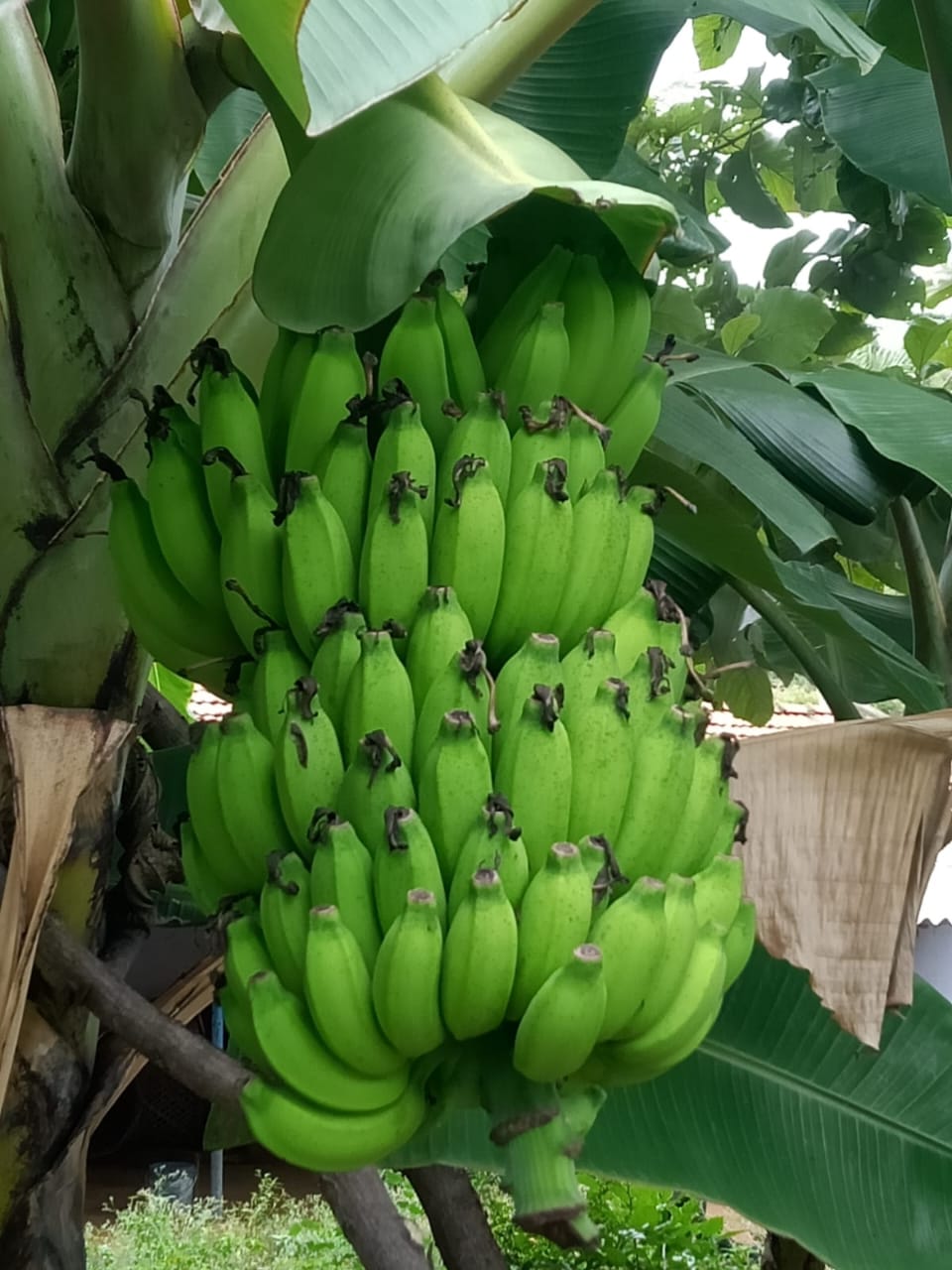
When yellow plantains are fried, they tend to caramelize, turning a golden-brown color. They can also be boiled, baked, microwaved, or grilled over charcoal, either peeled or unpeeled. Plantains are a staple food in the tropical regions of the world, ranking as the tenth most important staple food in the world. As a staple, plantains are treated in much the same way as potatoes, with a similar neutral flavor and texture when the unripe fruit is cooked by steaming, boiling, or frying.
Since they fruit all year, plantains are a reliable staple food, particularly in developing countries with inadequate food storage, preservation, and transportation technologies. In Africa, plantains and bananas provide more than 25 percent of the caloric requirements for over 70 million people. Plantain plantations are vulnerable to destruction by hurricanes, because Musa spp. do not withstand high winds well. The sap from the fruit peel, as well as the entire plant, can stain clothing and hands, and can be difficult to remove.
Frequently Asked Questions
What's the difference between a cooking banana and a plantain?
In casual conversation the two terms are often swapped, but botanically 'plantain' applies only to true AAB-group cultivars. 'Cooking banana' is the wider umbrella that also covers AAA, ABB, and BBB genome groups.
Can you eat a cooking banana raw?
Generally no—these bananas are high in starch and low in sugar, so they taste bland and feel mealy when uncooked. They are intended to be boiled, fried, baked, or otherwise cooked before eating.
Also in the Codexery
More in Edible Fruits & Vegetables
Sources
Compiled from Wikipedia and the sources listed below. Text from Wikipedia is available under CC BY-SA 4.0; this entry is adapted from it.
- Wikipedia: Cooking banana (CC BY-SA 4.0).
- Word definitions: the Codexery glossary, each quoted from its Wikipedia article.
Spotted an error? Know more?
Reader corrections go straight into our review queue. Suggest an edit · How this site is sourced