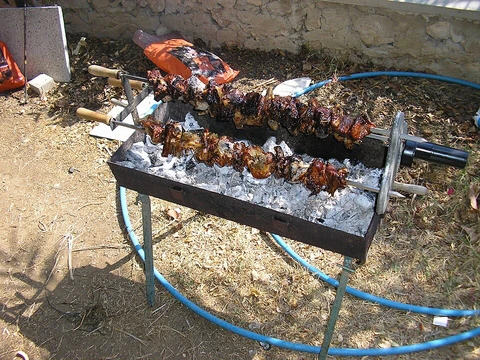
Mahleb
Aromatic spice from cherry seeds used in Middle Eastern baking.

MrEksh · CC BY-SA 4.0
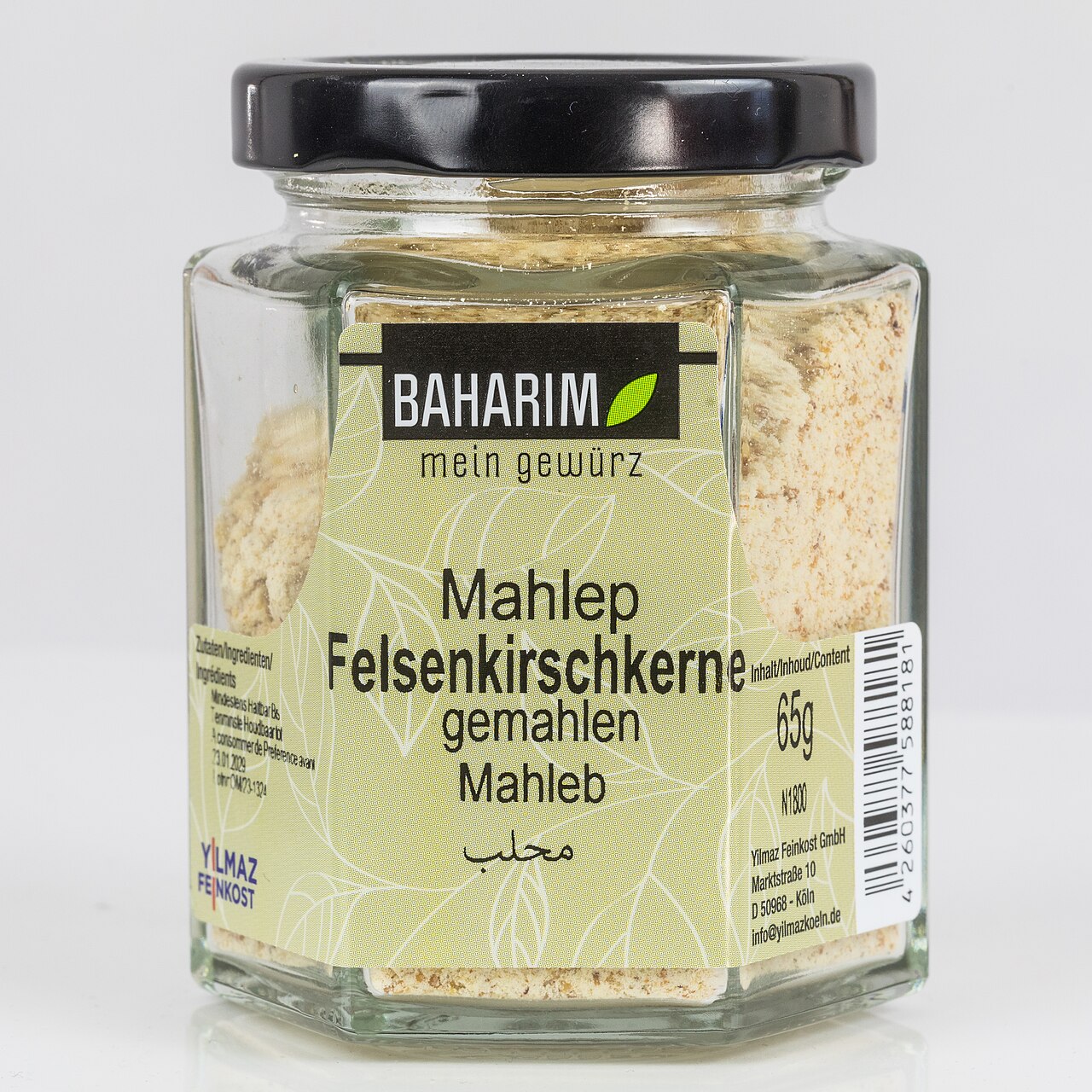
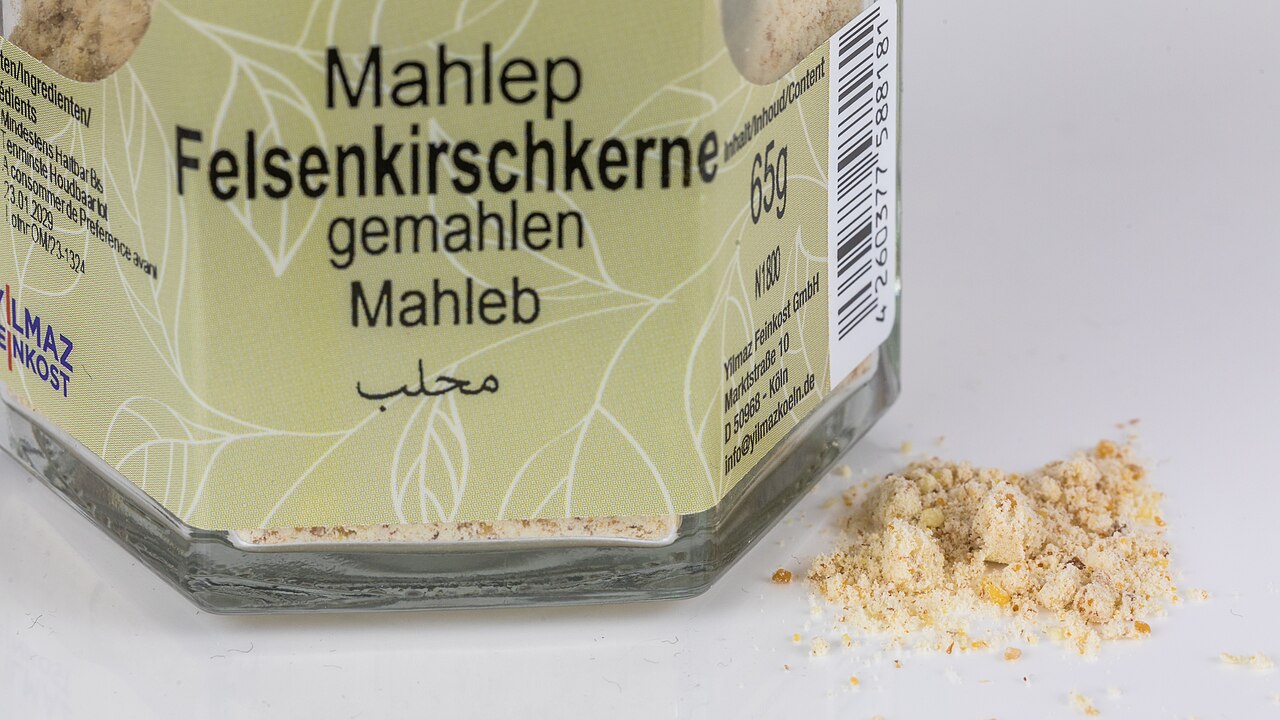
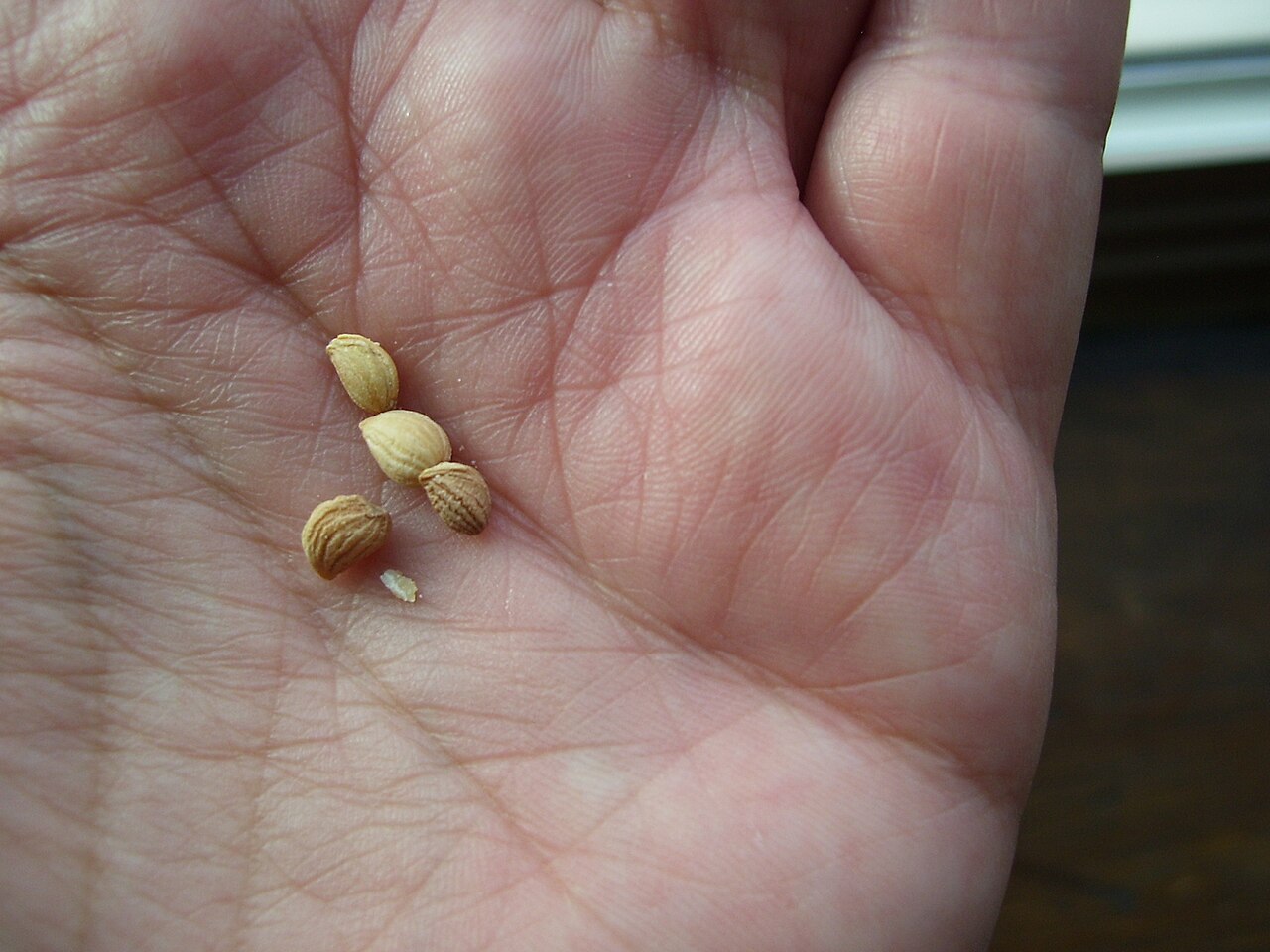
Mahleb, also known as mahlepi, is an aromatic spice derived from the seeds of the Prunus mahaleb cherry, also called the Mahaleb or St Lucie cherry. The seed kernel, about 5 mm in diameter and soft and chewy when extracted, is ground into a powder and used to flavor sweet foods and cakes. Its flavor is similar to a combination of bitter almond and cherry, and also similar to marzipan.
- Type
- spice
- Source plant
- Prunus mahaleb (Mahaleb or St Lucie cherry)
- Flavor profile
- bitter almond, cherry, marzipan
- Primary use
- flavoring sweet foods and cakes
- Regions
- Middle East, Greece, Turkey, Egypt
Lore & Background
Mahleb has been used for centuries in the Middle East and surrounding areas as a flavoring for baked goods. In recent decades, it has been slowly entering mainstream cookbooks in English.
Reader's Guide
Mahleb is a distinctive spice that bridges ancient and modern culinary traditions. Its use in ancient Sumer demonstrates its long history in the region, while its gradual appearance in English-language cookbooks marks a growing global awareness. In Greek cuisine, mahlep is added to holiday breads such as Christopsomo for Christmas, vasilopita for New Year's Day, and the braided tsoureki for Easter. In Turkey, it appears in poğaça scones and other pastries, and in the Arabic Middle East, it is used in ma'amoul scones. In Egypt, powdered mahlab is made into a paste with honey, sesame seeds and nuts, eaten as a dessert or snack with bread. The spice is also used in the production of tresse cheese. Its flavor, reminiscent of bitter almond, cherry, and marzipan, makes it a subtle but essential ingredient in many traditional sweets.
Botanical Origins & the Extraction Process
Mahleb is a fragrant spice derived from the inner seed of a particular cherry species known as Prunus mahaleb, also referred to as the Mahaleb or St Lucie cherry. The process begins with the hard outer stones of the fruit, which are cracked open to reveal the kernel nestled inside. At the moment of extraction, this kernel measures roughly five millimeters across and possesses a soft, chewy texture that distinguishes it from the hard shell it was encased in. Before it can be incorporated into any recipe, the kernel must be ground down into a fine powder, transforming its physical form entirely. This powdered state is what bakers and home cooks actually work with, dispersing the spice's aromatic compounds evenly through doughs, batters, and other preparations. The entire journey—from living cherry tree to cracked stone to tender kernel to finely milled powder—underscores that mahleb is not a simple leaf or bark spice but a deeply processed botanical product, one that requires careful handling at every stage to preserve its delicate character.
Flavor Profile & Kitchen Applications
The taste of mahleb occupies a distinctive space in the world of aromatics. It carries a quality that evokes bitter almond blended with the sweetness of cherry, while simultaneously recalling the dense, nutty richness of marzipan. This layered profile means that even a modest pinch can shift the character of a baked good, which is precisely why it is called for in small quantities rather than liberal measures. In the kitchen, its primary role is as a flavoring agent for sweet preparations—cakes, pastries, and confections of various kinds. Beyond the realm of baked goods, mahleb also finds a place in the production of tresse cheese, demonstrating that its aromatic contribution extends into savory-adjacent dairy preparations as well. The spice's versatility within the sweet-food category is remarkable: it can be folded into a dough, stirred into a batter, or worked into a filling, each application allowing its almond-cherry-marzipan triad to emerge subtly rather than dominate. For a cook who has never encountered it, mahleb offers a flavor experience that sits comfortably between familiar notes yet remains unmistakably its own.
Ancient Lineage & Regional Traditions
The story of mahleb stretches back further than most spice histories. Recipes referencing the fruit or seed of the "ḫalub" appear in ancient Sumerian records, placing this ingredient among the earliest documented flavorings in human culinary history. For centuries, it has been a staple in the Middle East and the surrounding regions, where it served as a go-to aromatic for baked goods across cultures. In Greek tradition, mahlep is woven into holiday breads and cakes with specific seasonal significance: Christopsomo for Christmas, vasilopita for New Year's Day, and the braided tsoureki for Easter—a bread that carries the name cheoreg in Armenian and paskalya çöreği in Turkish. Turkish bakers incorporate it into poğaça scones and an array of pastries, while across the Arabic Middle East it flavors the beloved ma'amoul. In Egypt, the spice takes on a different form entirely: powdered mahlab is combined with honey, sesame seeds, and nuts to create a paste enjoyed as a dessert or a simple snack alongside bread. These diverse applications reveal a spice that adapts to local tastes while retaining its essential character.
Naming & the Slow March into English Kitchens
One of the most telling aspects of mahleb's identity is the sheer variety of ways it is spelled in English: mahleb, mahalab, mahlep, mahaleb, and numerous other variations all circulate in print. This orthographic instability reflects the spice's long journey through multiple languages and culinary traditions before settling into Western awareness. For the better part of its recorded history, mahleb remained largely confined to the Middle East, the Balkans, and the broader Mediterranean world, where its name was embedded in local recipes and household knowledge. Only in recent decades has it begun a gradual infiltration of mainstream English-language cookbooks, moving from a regional curiosity to an ingredient that curious home bakers might actually seek out. This slow adoption mirrors the broader pattern of spices traveling from their cultural heartlands into global kitchens. Today, a cook in London or New York might encounter mahleb in a recipe for tsoureki or ma'amoul, tasting for the first time a flavor that Sumerian bakers recognized millennia ago. The spice's arrival in English kitchens is not a sudden conquest but a quiet, ongoing translation.
Gallery


Frequently Asked Questions
What is Mahleb?
Mahleb is an aromatic spice produced by grinding the seed kernels of the Mahaleb cherry (Prunus mahaleb) into a fine powder. It is a beloved staple in Cypriot and broader Middle Eastern baking traditions.
What does Mahleb taste like?
Its flavor blends notes of bitter almond and cherry, closely evoking the taste of marzipan. The raw kernel itself is soft, chewy, and roughly 5 mm in diameter before it gets ground.
What is Mahleb primarily used for?
It is added to sweet foods and cakes to lend them a distinctive almond-cherry aroma. You will encounter it most often in traditional pastries across Cyprus, Greece, Turkey, Egypt, and the wider Middle East.
Where does Mahleb come from?
It is harvested from the seeds of the Prunus mahaleb tree, commonly called the Mahaleb or St Lucie cherry. The small kernels are dried and then ground into the powder used in cooking.
Why is Mahleb important in Cypriot cuisine?
It gives heritage Cypriot sweets and baked goods their signature warm, marzipan-like depth that sets them apart from plain vanilla or almond-flavored desserts. Without it, many traditional recipes lose the aromatic identity that defines them.
More in Cypriot cuisine 1-24
Spotted an error? Know more?
Reader corrections go straight into our review queue. Suggest an edit · How this site is sourced