Greek salad
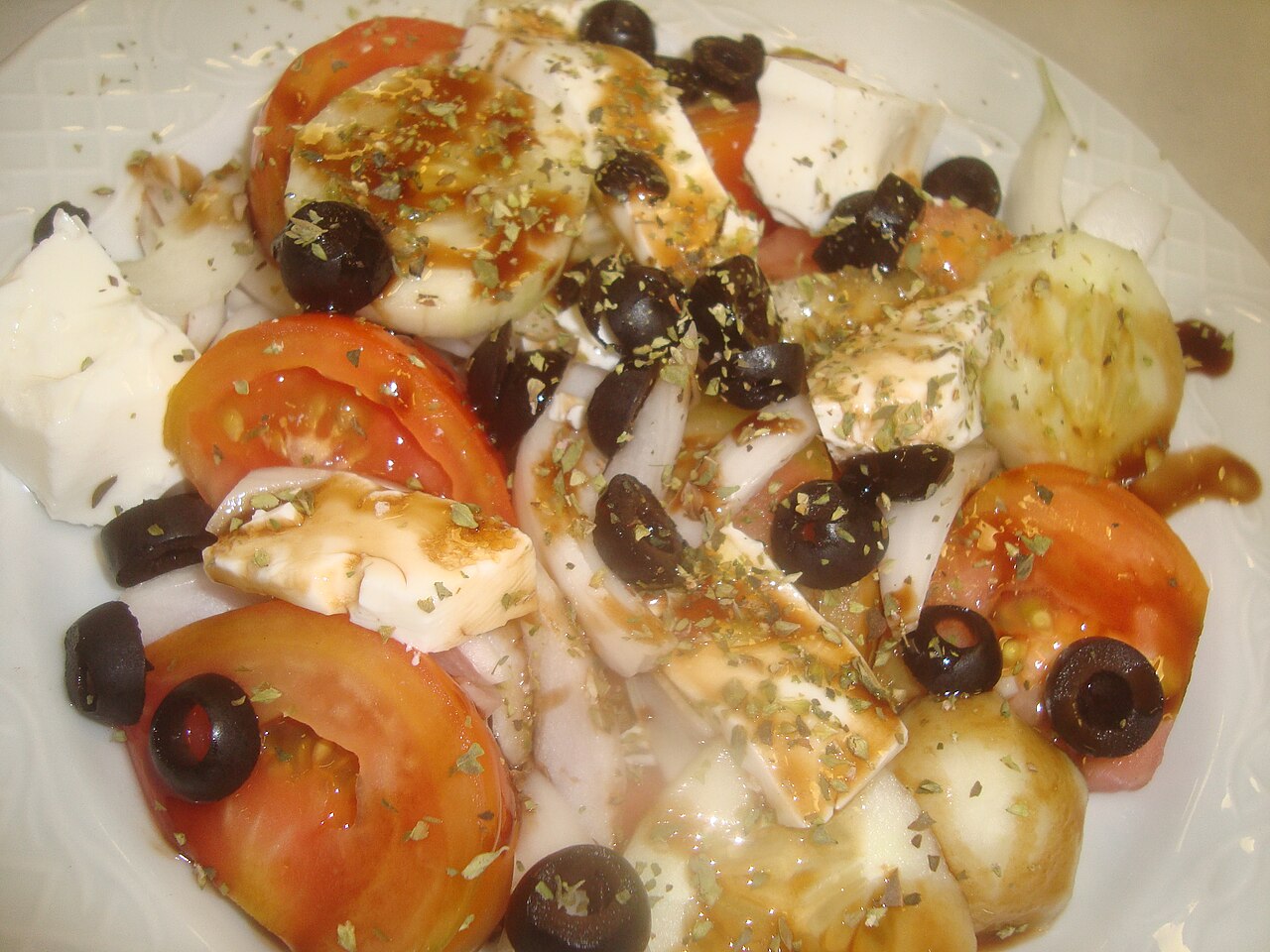
A traditional Greek salad without lettuce, dressed with olive oil and oregano.

Myfri9694 · CC BY-SA 3.0
In Greece, the salad known as *choriatiki* or *horiatiki* (χωριάτικη σαλάτα), also called *therini salata* (θερινή σαλάτα), is a simple dish built from tomatoes, cucumbers, onion, feta cheese, and olives—often Kalamata olives. It’s dressed with salt, Greek oregano, lemon juice, and olive oil. Green bell pepper or caper berries are sometimes added, especially on the Cyclades islands. The combination is thought of as a farmer’s breakfast or lunch, since the ingredients are what a Greek farmer might have readily available.
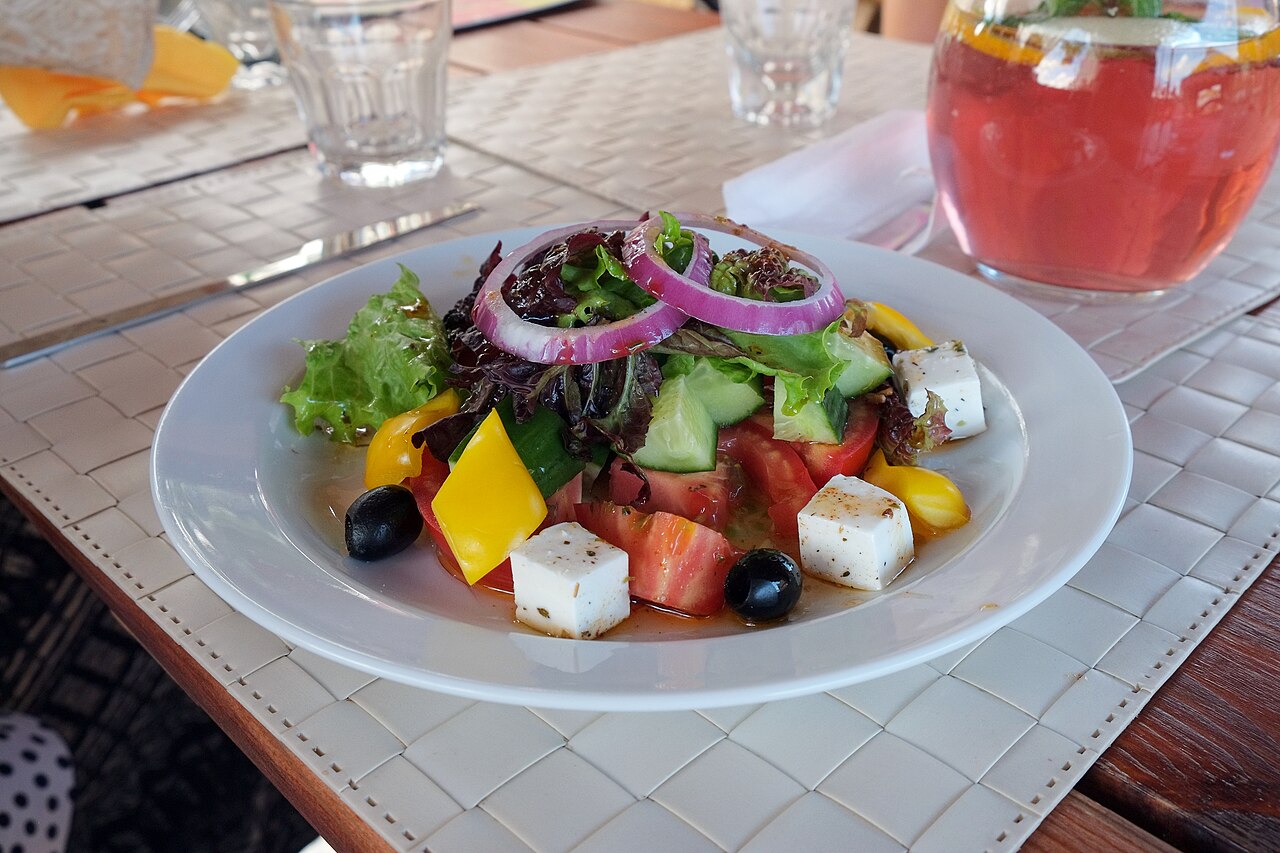
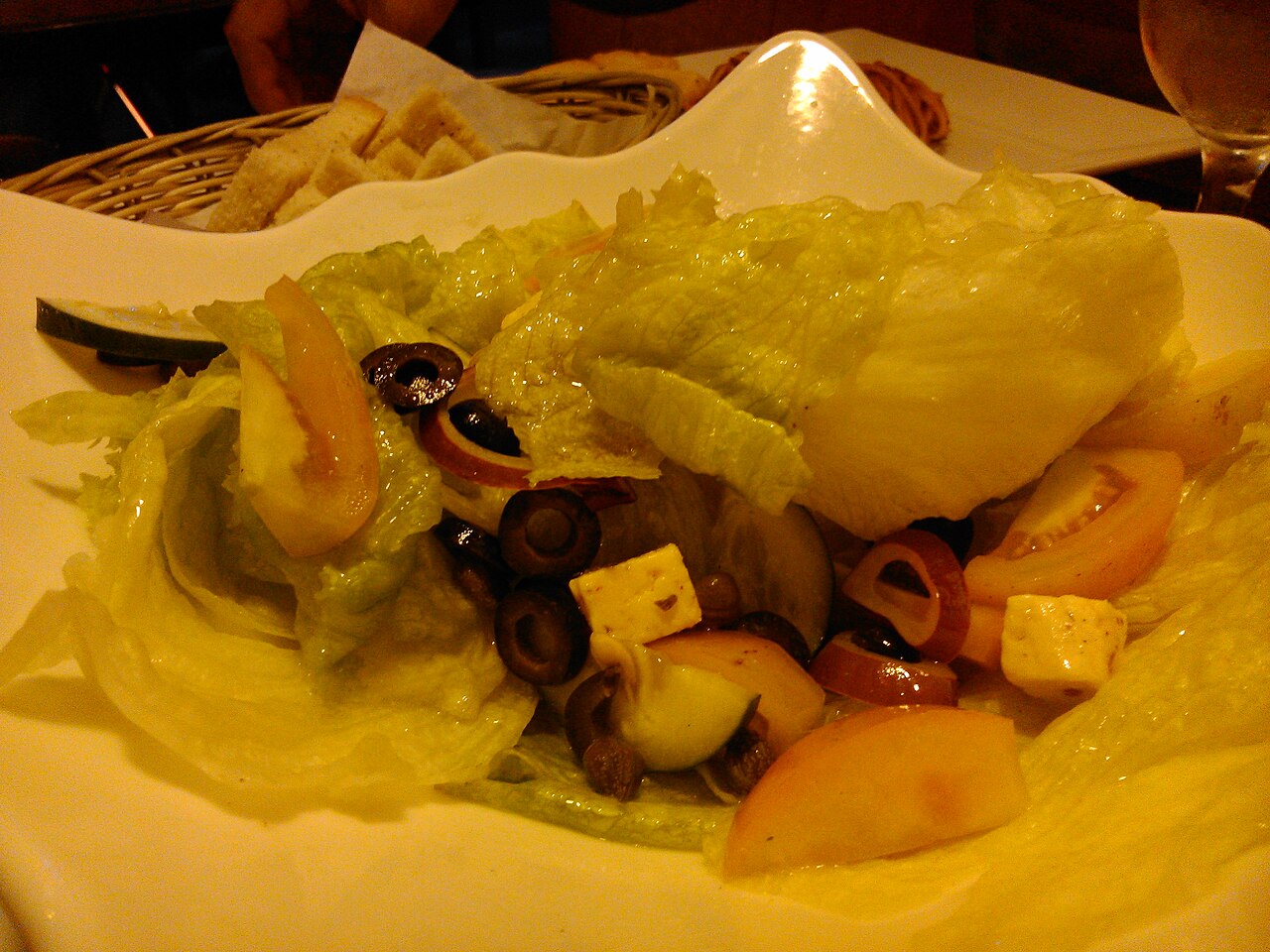
Outside Greece, the name “Greek salad” often refers to a lettuce-based salad with Greek-style ingredients, even though the original contains no lettuce. When lettuce is omitted, it may be called *horiatiki*, “peasant salad,” or “village salad.” In most European countries, including the UK, the dish stays close to the original. In the United States, an American-style Greek salad typically includes lettuce, tomatoes, feta (often cubed and mixed in), and olives, with common additions like cucumbers, peperoncini, bell peppers, onions, radishes, dolmades, or anchovies and sardines. Regional twists appear, such as beets in Detroit or potato salad in the Tampa Bay area, and dressings with various herbs are common. These American versions are rarely found in Greece. Historically, other salads have been called “Greek” in English, like a 1925 Australian recipe for boiled squash with sour milk, or a 1934 American one with mayonnaise-dressed lettuce, cabbage, and carrots—neither tied to Greek cuisine.
Greek and Cypriot cuisines include many other salads: *marouli* (lettuce, onion, dill), *lahanosalata* (shredded cabbage with olive oil, lemon, garlic), *pantzarosalata* (boiled beets with olive oil and red wine vinegar), *salata roka* (arugula with olive oil and lemon or vinegar, sometimes anchovies), *patatosalata* (potato salad with olive oil, onion, lemon or vinegar), *revithosalata* (chickpea salad), and *maintanouri* (parsley salad used as a condiment). Cypriot salad, from Cyprus, uses finely chopped tomatoes, capers, cucumbers, onions, flat-leaf parsley, and feta, dressed with olive oil and lemon or red wine vinegar—very close to the Greek original. Some spreads and dips in Greek meze, like *melitzanosalata*, *taramasalata*, and *tzatziki*, are also called salads in Greek.
- Type
- Salad
- Origin
- Greece
- Main ingredients
- Tomatoes, cucumbers, onion, feta cheese, olives, olive oil, lemon juice, oregano
- Common additions
- Green bell pepper, caper berries
- Alternative names
- Choriatiki, horiatiki, therini salata, peasant salad, village salad
Lore & Background
Greek salad is deeply rooted in rural Greek life, often described as a farmer's breakfast or lunch because its ingredients—tomatoes, cucumbers, onion, feta cheese, olives, and herbs—are items a Greek farmer might have readily available. The salad is distinguished by the absence of lettuce, a point that sets it apart from many international adaptations. Outside Greece, the dish has evolved into various forms: in the United States, an American-style Greek salad often includes lettuce, tomatoes, feta in cube-shaped cuttings, olives, and sometimes cucumbers, peperoncini, bell peppers, onions, radishes, dolmades, or anchovies. Regional U.S. variants can include unusual components, such as beets in Detroit or potato salad in the Tampa Bay area. These styles are rarely encountered in Greece.
Reader's Guide
Greek salad holds significance as a staple of Greek cuisine and a symbol of simple, fresh Mediterranean eating. Its core ingredients—tomatoes, cucumbers, onion, feta cheese, olives, olive oil, lemon juice, and oregano—reflect the agricultural products of the region. The salad's international adaptations, particularly in the United States and Europe, demonstrate its global appeal, though these versions often diverge from the original by including lettuce or other non-traditional ingredients. In many European countries, including the UK, the dish broadly resembles the original Greek salad. The term 'Greek salad' has also been applied historically to unrelated dishes, such as a 1925 Australian newspaper's description of boiled squash dressed with sour milk, or a 1934 American newspaper's mayonnaise-dressed lettuce salad with shredded cabbage and carrots. Within Greece and Cyprus, numerous other salads exist, including marouli (lettuce salad), lahanosalata (cabbage salad), and pantzarosalata (beetroot salad), as well as spreads like melitzanosalata, taramasalata, and tzatziki that are also called 'salads' in Greek.
Did You Know?
- Greek salad is traditionally made without lettuce, a key difference from many international versions.
- In the Cyclades islands, caper berries are a common addition to Greek salad.
- An American-style Greek salad in Detroit may include beets, while in the Tampa Bay area it may include potato salad.
- Other Greek salads include marouli (lettuce with onion and dill) and pantzarosalata (boiled beetroots with olive oil and vinegar).
The Authentic Plate: A Farmer's Simple Meal
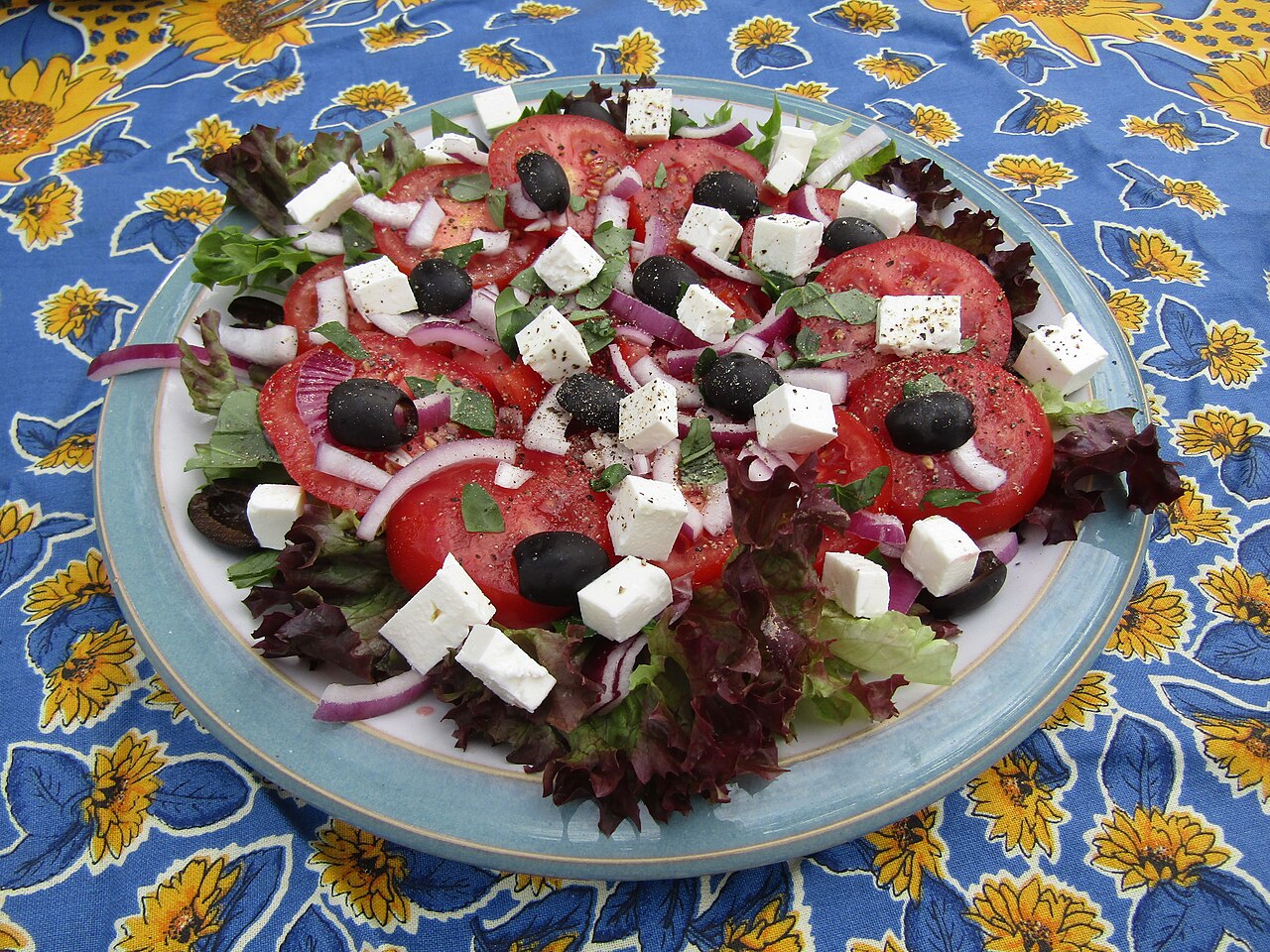
Greek salad—known in its homeland as choriatiki, horiatiki, or therini salata—carries the spirit of a rural kitchen. Its core is deceptively simple: chunks of ripe tomato, sliced cucumber, raw onion, a generous portion of feta, and Kalamata olives, all brought together with salt, dried Greek oregano, a squeeze of lemon, and a pour of olive oil. On the Cyclades islands, cooks sometimes add caper berries or a strip of green bell pepper to the mix. The dish is frequently described as the kind of meal a Greek farmer might assemble for breakfast or lunch from whatever was already in the pantry or garden. Crucially, the authentic version contains no lettuce at all; the vegetables are cut into pieces and served as a chunky, unadorned plate rather than a leafy bed. This absence of leafy greens is, in fact, the single most reliable marker that distinguishes the original from the countless interpretations that have since spread across the globe.
The Transatlantic Reinvention
Once the dish crossed into English-speaking kitchens, it underwent a dramatic transformation. In the United States, the name "Greek salad" now most often refers to a lettuce-based bowl in which feta is cut into small cubes and scattered among the vegetables, a presentation rarely encountered in Greece itself. Standard American versions layer lettuce, tomato, cubed feta, and olives, then pile on cucumbers, peperoncini, bell peppers, onion, radishes, dolmades, or even anchovies and sardines. Regional quirks push the boundaries further: Detroit diners expect beets, while Tampa Bay restaurants toss in potato salad. Herbed, seasoned dressings replace the simple oregano-and-lemon finish of the original. The confusion runs even deeper historically. A 1925 Australian newspaper printed a recipe calling a boiled-squash-and-sour-milk mixture a "Greek salad," and a 1934 American paper described a mayonnaise-dressed lettuce salad with shredded cabbage and carrots under the same label. In most of continental Europe and the UK, however, the dish still closely mirrors the original chunky, lettuce-free plate.
A Broader Greek Salad Tradition
The word "salad" in Greek cuisine reaches far beyond the famous tomato-and-feta plate. Greek kitchens produce a rich array of vegetable and legume preparations: marouli pairs lettuce with onion and dill; lahanosalata shreds fresh cabbage and dresses it with olive oil, lemon, and garlic; pantzarosalata slices boiled beetroots—sometimes with their greens—over a red-wine-vinegar and olive-oil base; salata roka dresses rocket with olive oil and either red wine vinegar or lemon, occasionally adding anchovies; patatosalata combines potatoes with olive oil, finely sliced onion, and lemon juice or vinegar; revithosalata is a chickpea preparation; and maintanouri is a parsley salad used as a condiment. Cyprus contributes its own closely related salad of finely chopped tomato, capers, cucumber, onion, flat-leaf parsley, and feta, dressed with olive oil and lemon or red wine vinegar. Even meze spreads such as melitzanosalata, taramasalata, and tzatziki are colloquially called "salads" in Greek, blurring the line between a plated dish and a dip.
A Global Family of Chopped-Vegetable Salads
The Greek salad does not exist in isolation; it belongs to a wide international family of similar chopped-vegetable preparations that share a common logic of fresh, raw ingredients tossed with a simple dressing. Afghanistan, the Arab world, Armenia, Turkey (where the equivalent is called çoban salatası), Israel, East Africa (kachumbari), India (kachumber), Mexico (pico de gallo), Serbia, Iran (shirazi salad), and the Balkans (shopska salad) all have their own versions of this concept. Each culture adapts the basic idea—diced or chopped vegetables combined with a light oil-and-acid dressing—to local produce and taste. The Greek version, with its feta, Kalamata olives, and oregano, is one expression among many of a universal impulse to combine crisp raw vegetables into a quick, uncooked plate. Recognizing these parallels helps situate the dish not as a singular national invention but as part of a shared culinary vocabulary stretching from the Mediterranean to South Asia and beyond.
Gallery
Frequently Asked Questions
What is Greek salad in the Cypriot/Greek canon?
Greek salad—known locally as choriatiki, horiatiki, or therini salata—is a simple, lettuce-free dish of chopped tomatoes, cucumbers, onion, feta cheese, and olives, finished with olive oil, lemon juice, salt, and dried oregano. It is sometimes called the 'peasant salad' or 'village salad' because it mirrors what a farmer could grab for a quick midday meal.
What are Greek salad's core ingredients and optional additions?
The base lineup is tomatoes, cucumbers, onion, feta, and Kalamata olives, dressed with olive oil, lemon juice, salt, and Greek oregano. On the Cyclades islands and in some Cypriot kitchens, a slice of green bell pepper or a few caper berries are folded in for extra bite.
Where does Greek salad originate, and why is it tied to Cypriot cuisine?
The dish traces back to rural Greek farming communities, and Cyprus—sharing deep culinary roots with mainland Greece—adopts it as a staple of village tables. Its 'farmer's lunch' heritage makes it a natural fixture in Cypriot home cooking alongside other island salads.
How does the authentic Greek salad differ from the 'Greek salad' served in Western restaurants?
The true choriatiki contains no lettuce; it is a chunky, oil-and-oregano-dressed mix of vegetables and feta. The lettuce-bed version popular abroad is a separate, lighter dish that most Greeks and Cypriots would not recognize as a 'Greek salad' at all.
Why is Greek salad considered a cultural touchstone rather than just a side dish?
Because it is built entirely from ingredients a farmer could pick or pour from his own store, it symbolizes self-sufficiency and the simplicity of village life. In Cypriot and Greek food culture, serving it signals a return to honest, unpretentious eating rather than a restaurant garnish.
More in Cypriot cuisine 1-24
Spotted an error? Know more?
Reader corrections go straight into our review queue. Suggest an edit · How this site is sourced