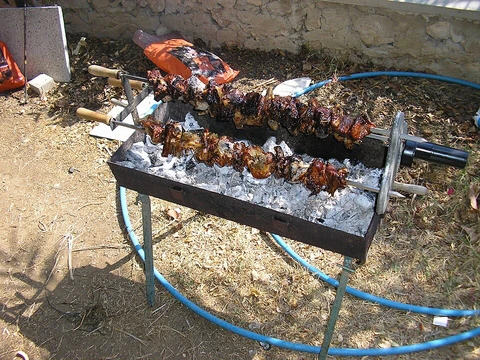
Ayran
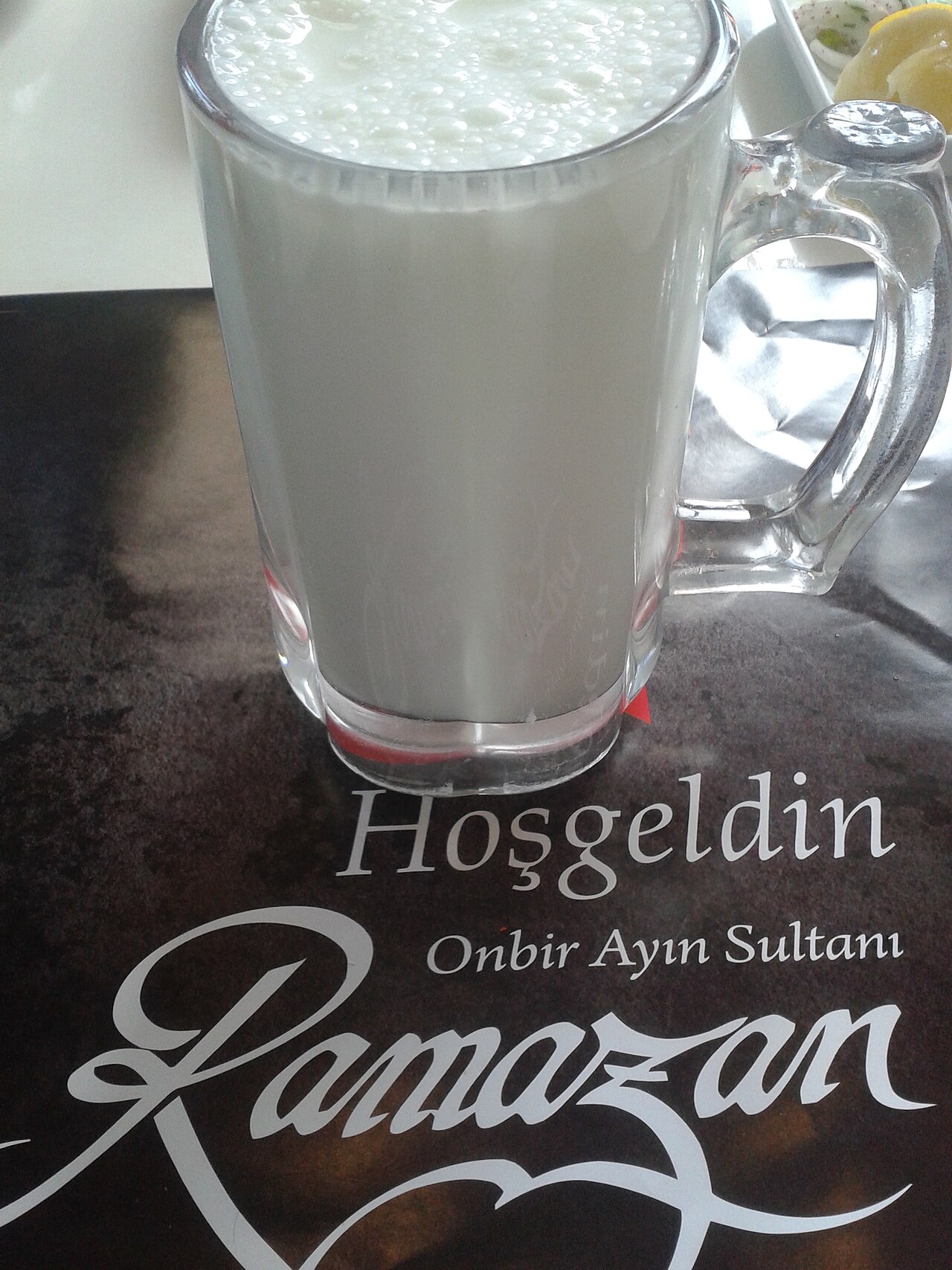
Cold savory yogurt beverage, national drink of Turkey.

E4024 · CC BY-SA 4.0
Ayran (pronounced eye-rahn or ayryan) is a cold, savory yogurt-based drink found across Central Asia, the Balkans, and the Middle East. It is made from yogurt, water, and salt, with optional additions like mint. Some versions are carbonated. It is considered Turkey’s national drink and is also very popular in Bulgaria. As a mixture of water and yogurt, ayran is a heterogeneous beverage.
The word “ayran” appears in Mahmud al-Kashgari’s 11th-century Turkic dictionary, though he did not describe how it was made. It comes from the Old Turkic root *adır-* (“to separate”), related to the Turkish *ayır-* (“to separate”). The term is also linked to Mongolian *airag* (mare’s milk) and Chuvash *uyran* (buttermilk).
Ayran is served chilled, often alongside grilled meat, bread, or rice, especially in summer. It is made by mixing yogurt with cold or iced water, sometimes carbonated or flavored with mint. It has been called “diluted yogurt” and “a most refreshing drink made by mixing yogurt with iced water.” Among some Iranic peoples, traditional preparation involves pouring yogurt into a waterskin (called *mashk* in Persian, Luri, and Kurdish, or *maskah* in Afghanistan) and shaking it vigorously to separate butter from liquid. This process is time-consuming and often aided by suspending the waterskin from a wooden frame (*malār*) with wool ropes. After butter is removed, the remaining liquid—called *doogh*—is drunk. In Pakistan, ayran is known as *Namkeen Lassi*.
Ayran originated in Central Asia among Turkic tribes. A circa 1000 CE Turkic dictionary defines it as “a drink made out of milk.” Similar but not identical drinks include Iran’s *doogh*, Armenia’s *t’an*, and the Indian subcontinent’s *lassi*, though these can differ from *doogh* as well.
Variations may include salt, black pepper, dried mint, lime juice, or diced cucumbers for crunch. Some versions are carbonated. In Balkan countries, ayran is often consumed at breakfast or lunch with pastries like *banitsa* or *börek*. In Turkey, three registered ayran variations exist. *Susurluk Ayranı* is made by drawing ayran from a vat and rapidly pouring it back through a narrow pipe, creating foam from the fat. In eastern Turkey, a mixing method yields a frothy drink called *Yayık Ayranı*. In the Malatya region, *Malatya Spicy Ayran* is a spicy version that received registration and a patent in 2022. In 2015, Turkey'
- Type
- Beverage
- Origin
- Central Asia (developed by Turkic tribes)
- Main ingredients
- Yogurt, water, salt
- Also known as
- Doogh (Iran), T’an (Armenia), Lassi (Indian subcontinent), Namkeen Lassi (Pakistan), Dhallë (Albania), Ayrani (Southern Cyprus)
- National drink of
- Turkey
Lore & Background
Ayran was developed in Central Asia by Turkic tribes. The word is mentioned in Mahmud al-Kashgari's 11th century Dīwān Lughāt al-Turk, which defines ayran as a 'drink made out of milk' but gives no information on how it was made. The term derives from the Old Turkic root adır- ('to separate'), related to Turkish ayır- ('to separate').
Traditional preparation among Iranic peoples involves pouring yogurt into a waterskin (mashk in Persian, Luri, and Kurdish; maskah in Afghanistan) and shaking it vigorously to separate butter from liquid. The remaining liquid, called doogh, is consumed as a refreshing beverage. In Turkey, variations include Susurluk Ayranı, which is circulated through a narrow pipe to create foam, and Yayık Ayranı, a very frothy drink made by a mixing method. Malatya Spicy Ayran, a spicy version from the Malatya region, received a registration and patent in 2022.
Turkish politician Recep Tayyip Erdoğan promoted ayran as a national drink, contrasting it with beer at a 2013 WHO conference. In 2015, Turkey's Ministry of Customs and Trade fined state-owned Çaykur manufacturers for an advertisement that 'insulted' ayran. Despite its status, ayran sales in Turkey lag behind other non-alcoholic beverages, with consumption during Ramadan declining from 2010 to 2015.
Reader's Guide
Ayran holds cultural significance as a traditional beverage across a wide geographic area, from Central Asia to the Balkans and the Middle East. Its status as Turkey's national drink, promoted by political figures, underscores its role in national identity. The beverage's preparation methods vary regionally, from the labor-intensive waterskin shaking of Iranic peoples to the mechanized foaming techniques of Turkish variations like Susurluk Ayranı. The 2022 patenting of Malatya Spicy Ayran reflects ongoing efforts to preserve and formalize regional recipes. Ayran's legacy is also evident in its influence on similar drinks such as doogh, t’an, and lassi, though the article notes these can differ from doogh. The 2015 fine against Çaykur illustrates the sensitivity around the drink's public image, while declining sales data suggest challenges in maintaining its popularity against modern alternatives.
Did You Know?
- Ayran is a heterogeneous mixture made from water and yogurt.
- The word 'ayran' is derived from the Old Turkic root adır- meaning 'to separate'.
- In Afghanistan, ayran is known as doogh or shromba and is sometimes carbonated.
Ancient Roots and Linguistic Heritage
Ayran traces its origins to the Turkic tribes of Central Asia, where it was crafted as a simple yet vital refreshment from milk. The earliest documented reference appears in the Dīwān Lughāt al-Turk, an eleventh-century Turkic dictionary compiled by Mahmud al-Kashgari around 1000 CE, which describes ayran merely as a "drink made out of milk" without elaborating on its preparation. The very name carries a functional meaning: it derives from the Old Turkic root adır-, meaning "to separate," a concept echoed in modern Turkish as ayır-. This etymological thread connects the beverage to a broader linguistic family, with cognates appearing in Mongolian as airag (referring to mare's milk) and in Chuvash as uyran (meaning buttermilk). These parallel terms suggest that the act of separating or diluting dairy was a shared cultural practice across steppe and plateau civilizations. Despite its ancient pedigree, the drink's identity has remained remarkably stable—yogurt, water, and salt forming its unchanging core—while the languages surrounding it have diversified into dozens of distinct expressions of the same basic concept.
The Art of Preparation
At its simplest, ayran is a heterogeneous mixture of yogurt, chilled or iced water, and salt, sometimes brightened with mint or given a slight carbonation. It is traditionally served cold and pairs naturally with grilled meats, flatbread, or rice, making it a staple accompaniment during the heat of summer. Yet the preparation methods vary dramatically across cultures. Among various Iranic peoples, the traditional approach is far more laborious: yogurt is poured into a waterskin—called mashk in Persian, Luri, and Kurdish, or maskah in Afghanistan—and shaken vigorously to separate the butter from the liquid. This process demands considerable time and physical effort, so the waterskin is often hung from a wooden frame known as a malār using woollen ropes, allowing it to swing freely as the maker works. Once the butter is drawn off, the remaining liquid, referred to as doogh, is collected and enjoyed as a refreshing drink. In Pakistan, the same concept appears under the name Namkeen Lassi. The drink has been variously characterized as "diluted yogurt" and as a most refreshing creation born from the union of yogurt and iced water.
National Identity and Cultural Politics
In Turkey, ayran holds the formal distinction of being the country's national drink, a status actively championed by political leaders. In 2013, President Recep Tayyip Erdoğan took the stage at the WHO Global Alcohol Policy Conference in Istanbul to promote ayran, deliberately contrasting it with beer, which he characterized as a recent foreign import. This rhetorical positioning framed the yogurt drink as a symbol of authentic Turkish heritage. Yet the commercial reality tells a more complex story. A 2015 joint statement from Turkey's Soft Drink Producers Association, the Sparkling Water Producers Association, and the Milk Producers and Exporters Union revealed that ayran consumption during Ramadan had fallen every single year between 2010 and 2015, lagging behind other non-alcoholic beverages. The drink's cultural weight was further underscored in 2015 when Turkey's Ministry of Customs and Trade fined state-owned Çaykur manufacturers 220,000 TL (roughly $70,000), ruling that an iced-tea advertisement featuring rapper Ceza—whose lyrics implied ayran made him sleepy—had "insulted" the national beverage without justification. The ministry ordered the competing iced-tea ads pulled. In the Balkans, ayran occupies a different but equally cherished role, typically enjoyed at breakfast or lunch alongside pastries such as banitsa and börek.
A Mosaic of Regional Variations
Across the regions where ayran thrives, local traditions have produced a rich tapestry of distinct preparations. In Turkey alone, three registered variations exist; Susurluk Ayranı is drawn from a large vat and rapidly poured back through a narrow overhead pipe, a circulation process that causes the fat to rise and form a distinctive foam. In eastern Turkey, a churning method yields the exceptionally frothy Yayık Ayranı, while the Malatya region claims a spicy variant that earned a formal registration and patent on April 11, 2022. In Afghanistan, the drink—known as doogh or shromba—is a summer staple made with yogurt, salt, mint, diced cucumbers, and lime, sometimes carbonated, and sipped alongside bolani and flatbread at picnics. Albania's version, called dhallë (a word meaning "mixed and shaken"), uses only yogurt, salt, and water, served cold. In Southern Cyprus, ayrani incorporates sour sheep yogurt, water, salt, and mint. Russia and parts of Eastern Europe know a close relative called kefir, made from fermented milk and kefir grains, a name possibly rooted in the Turkic köpür, meaning "to froth." Additional seasonings like black pepper, dried mint, lime juice, and even diced cucumbers for crunch can be folded into any of these preparations.
Gallery
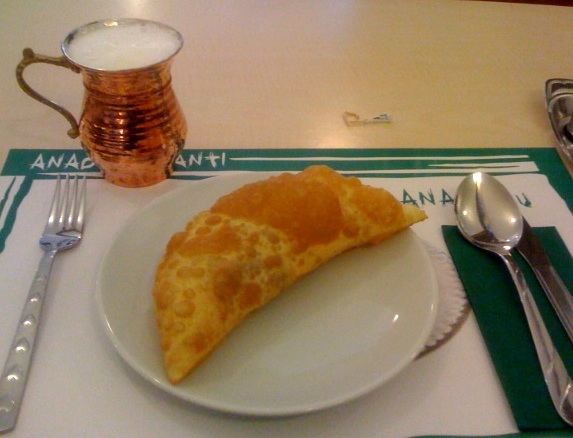
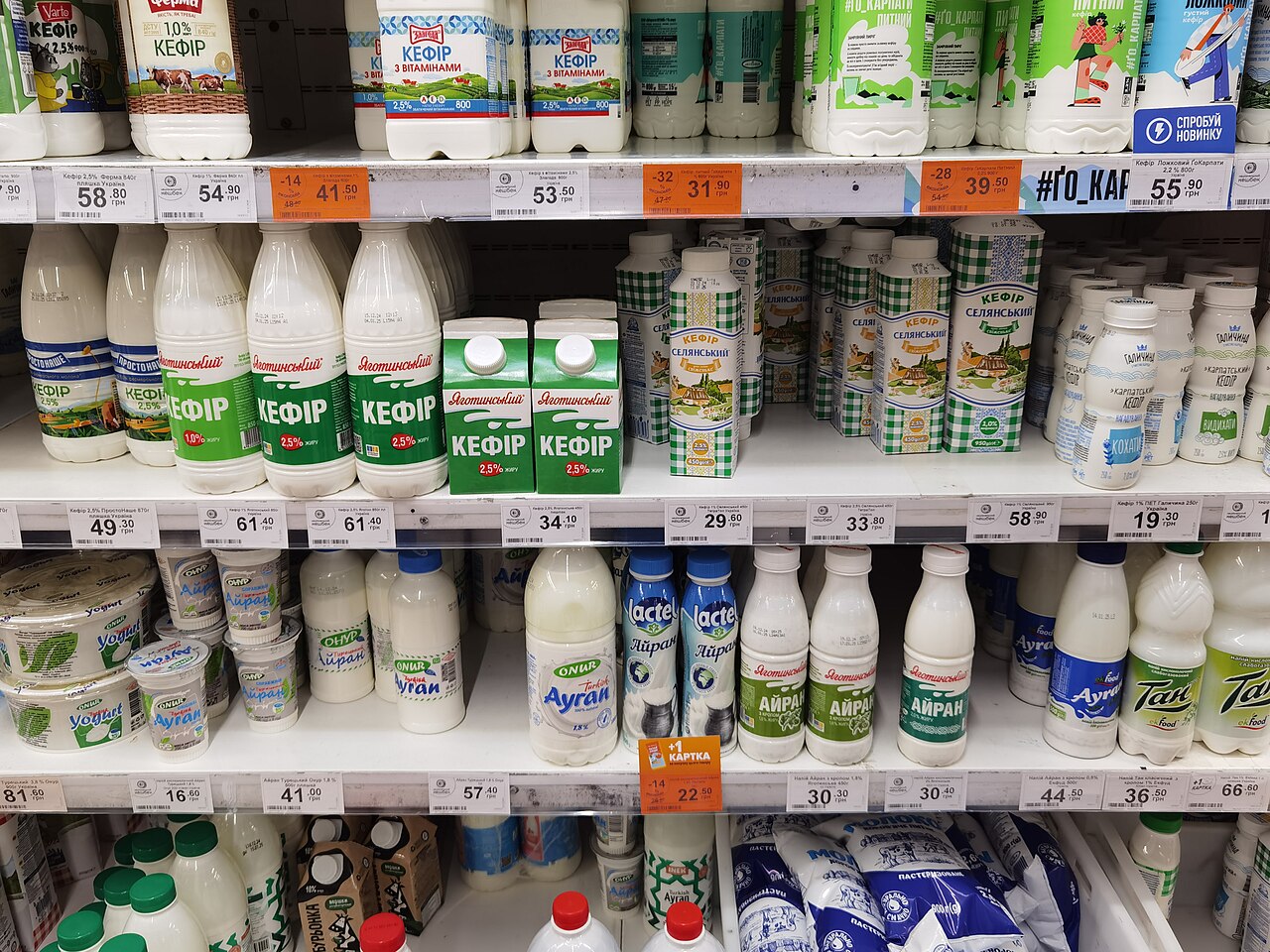
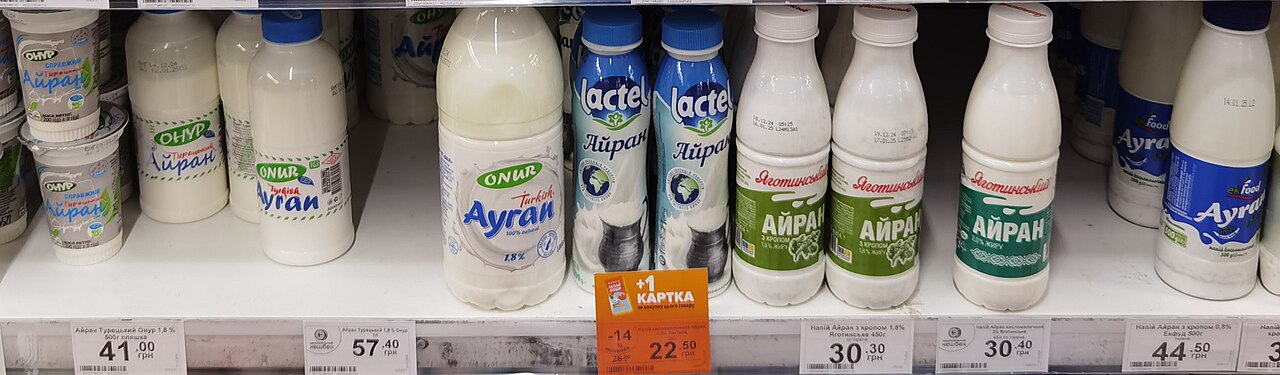
Frequently Asked Questions
What is Ayran in Cypriot cuisine?
Ayran is a chilled, tangy drink made by whisking yogurt into water with a pinch of salt, sometimes finished with mint or a light carbonation. In Southern Cyprus it is commonly called Ayrani, while Northern and broader Cypriot usage keeps the name Ayran.
Where did Ayran originate?
The beverage was developed by Turkic tribes in Central Asia, and the name itself shows up in Mahmud al-Kashgari's 11th-century Turkic lexicon. Its etymology traces to the Old Turkic root *adır-*, meaning 'to separate,' reflecting the straining of yogurt.
What are the core ingredients of Ayran?
At its simplest, Ayran is just yogurt, water, and salt blended together. Some regional versions add a sprig of mint or a touch of carbonation for a fizzy finish, but the three base components remain constant.
Is Ayran a national drink anywhere?
Yes—Turkey officially regards Ayran as its national drink. It is also a staple across Bulgaria and the wider Balkan and Middle Eastern food scenes, though no other country has formally adopted it in the same way.
What other names does Ayran go by around the world?
The same yogurt-water-salt concept appears as Doogh in Iran, T'an in Armenia, Lassi or Namkeen Lassi in the Indian subcontinent, and Dhallë in Albania. In Southern Cyprus, locals most often refer to it as Ayrani.
More in Cypriot cuisine 1-24
Spotted an error? Know more?
Reader corrections go straight into our review queue. Suggest an edit · How this site is sourced