Dakos
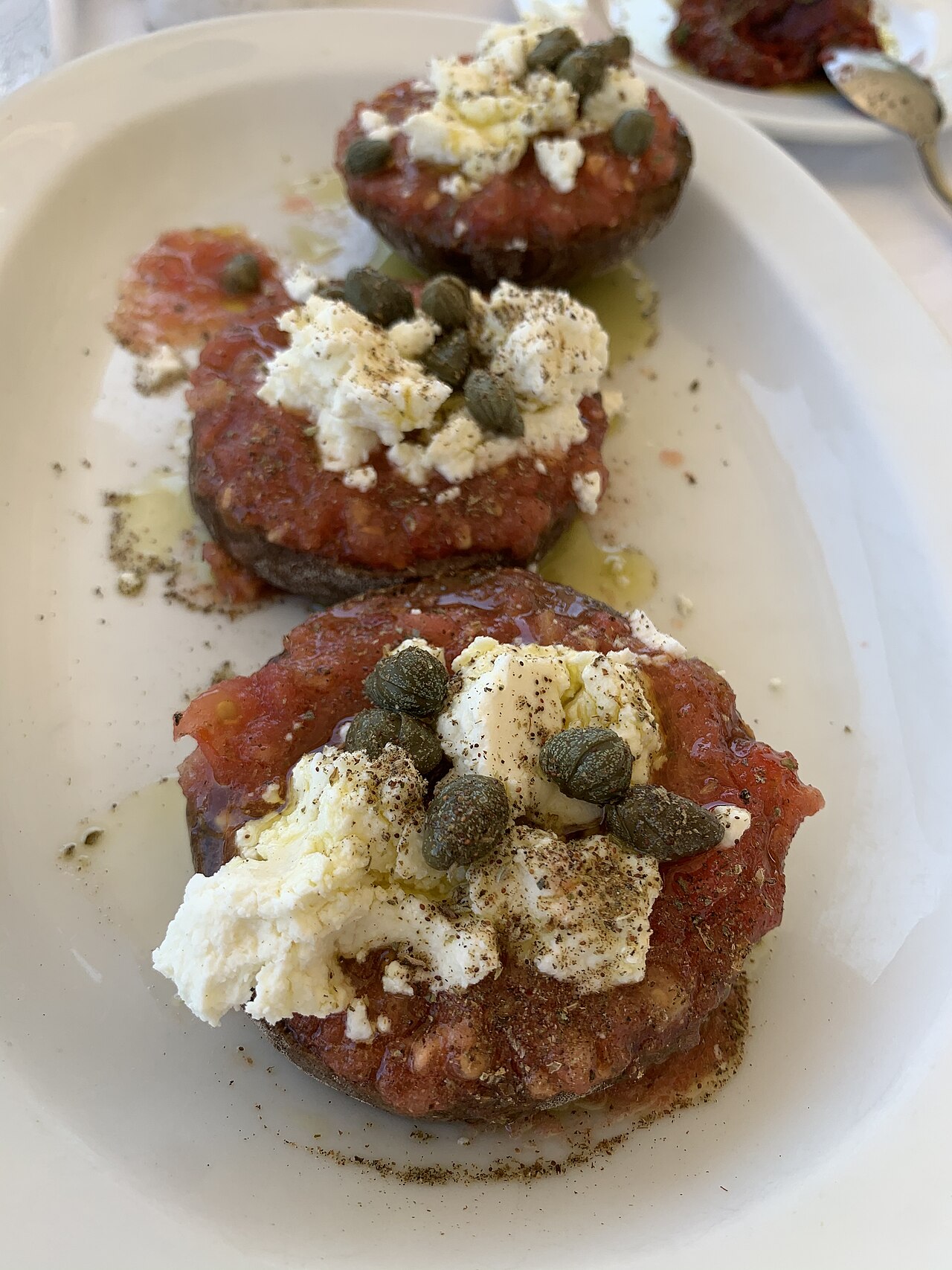
A Cretan salad of soaked barley rusk with tomatoes and cheese.

Benoît Prieur · CC0
Dakos, also spelled ntakos and known as koukouvagia or kouloukopsomo, is a Cretan horiatiki (salad) consisting of a slice of soaked paximadi bread topped with tomatoes and cheeses such as feta or mizithra, flavored with herbs like dried oregano. It is a traditional dish from Crete, often compared to other Mediterranean preparations such as Italian panzanella and Catalan pa amb tomàquet.
- Type
- Cretan salad
- Also known as
- ntakos, koukouvagia, koukouvayia, kouloukopsomo
- Main ingredients
- paximadi bread, tomatoes, feta or mizithra cheese, olive oil, oregano
- Common additions
- olives, capers, caper berries, peppers
- Cuisine
- Cretan (Greek)
- Similar dishes
- panzanella, pa amb tomàquet, frisella
Lore & Background
Dakos is a traditional Cretan dish that uses paximadi, a barley rusk, which is soaked in water or olive oil before being topped with chopped tomatoes and crumbled feta or mizithra cheese. The rusk is often rubbed with garlic and seasoned with sea salt, then finished with olive oil and dried oregano. Additional ingredients such as olives, capers, caper berries, and peppers are frequently added.
Reader's Guide
Dakos represents a staple of Cretan cuisine, a simple yet flavorful salad that highlights local ingredients like barley rusks, tomatoes, and sheep's milk cheeses. Its preparation—soaking the hard rusk to soften it—reflects a practical method of using preserved bread. The dish has been likened to other Mediterranean bread-based salads, such as Italian panzanella and Catalan pa amb tomàquet, as well as Italian frisella. In 2025, TasteAtlas, a food guide, reported it as the best salad in the world, underscoring its global recognition. The alternative names koukouvagia (meaning 'owl') and kouloukopsomo (from 'pup bread') add folkloric layers to its identity.
Did You Know?
- Dakos is also called koukouvagia, which means 'owl' in Greek.
- The name kouloukopsomo allegedly refers to bread given to puppies under a table.
- The dish uses paximadi, a barley rusk that is soaked in water or olive oil.
Composition & Ingredients
Dakos is a Cretan horiatiki, a traditional Greek salad, built around a single foundational element: a slice of paximadi, a barley rusk softened by soaking in either plain water or olive oil. Before any toppings are applied, the rusk is often rubbed with garlic and dusted with sea salt, giving the base a savory, aromatic foundation. Upon this soaked bread, the cook layers chopped tomatoes and a generous scattering of crumbled cheese, typically feta or the milder mizithra. A drizzle of olive oil binds the components together, while dried oregano provides the herbal backbone of the seasoning. The dish frequently welcomes additional ingredients that add brine and bite: whole olives in varieties such as Koroneiki, Lianes, and Tsounates, along with capers and caper berries. Peppers may also appear, contributing a gentle sweetness. Together, these elements create a layered, texturally rich salad that balances the crunch of the rusk with the softness of tomatoes and the tang of aged cheese.
Naming & Etymology
The dish carries several names across Cretan and broader Greek usage, each revealing a different facet of its identity. The most common appellations are dakos and its variant spelling ntakos, written in Greek as ντάκος. In some regions and contexts, it is called koukouvagia or koukouvayia, a word that translates literally to "owl," an evocative nickname whose precise origin in the culinary tradition is not further elaborated in available records. A third name, kouloukopsomo, is more descriptive in its construction: it derives from koulouki (pup) and psomi (bread), and is said to reference the bread that was traditionally given to puppies beneath a table. This etymology paints a vivid domestic picture, suggesting the rusk's humble, everyday character. The multiplicity of names underscores that dakos is not a single fixed recipe but a living, regionally flexible preparation that different communities have claimed and renamed over time, each label encoding local memory and affection.
Mediterranean Parallels
Dakos does not exist in isolation within the broader Mediterranean culinary landscape. Its fundamental concept—soaked or dried bread served as a base for tomatoes, cheese, and oil—echoes in several well-known dishes from neighboring food cultures. In Italy, the salad has been compared to panzanella, a preparation pairing bread with tomatoes and olive oil, as well as to frisella, a similar form of dried bread dressed with vegetables. In Catalonia, the parallel is pa amb tomàquet, the simple yet iconic combination of bread rubbed with ripe tomato and drizzled with olive oil. These comparisons highlight a shared Mediterranean logic: the transformation of humble, often stale bread into a vehicle for fresh, seasonal produce. Dakos distinguishes itself within this family through its specific use of Cretan paximadi rusk, the inclusion of crumbled feta or mizithra, and the characteristic seasoning with dried oregano, giving it a distinctly island character while remaining part of a wider regional conversation about bread, tomato, and oil.
Recognition & Cultural Standing
Rooted in the island of Crete, dakos occupies a place of pride within the horiatiki tradition of Greek cuisine, representing a distinctly Cretan interpretation of the broader Greek salad concept. Its identity is inseparable from the local ingredients it showcases: the dense barley paximadi rusk, the specific olive varieties it features, and the particular cheeses of the island. In 2025, the food guide TasteAtlas reported dakos as the best salad in the world, a distinction that brought international attention to a dish that had long been a staple of Cretan tables. This accolade situates the salad within a global conversation about regional food heritage, validating the idea that a straightforward combination of soaked bread, tomato, cheese, and oregano can represent the pinnacle of its category. For Cretans, the recognition likely feels like a homecoming acknowledgment of a preparation whose simplicity is itself a form of sophistication, a dish passed through generations of island kitchens.
Gallery
Frequently Asked Questions
What is Dakos?
Dakos is a traditional Cretan salad built around a slice of paximadi (a hard barley rusk) that has been soaked in water, then layered with ripe tomatoes, crumbled cheese, and a drizzle of olive oil. It is essentially a savory, open-faced preparation that highlights the texture contrast between the chewy bread and the fresh toppings.
What are the core ingredients in Dakos?
The base is paximadi bread soaked in water, topped with tomatoes and a cheese such as feta or mizithra, finished with olive oil and dried oregano. Common additions include olives, capers, caper berries, or peppers for extra depth of flavor.
What other names is Dakos known by?
Depending on the region or family tradition, the same dish may be called ntakos, koukouvagia (or koukouvayia), or kouloukopsomo. These variations reflect local Cretan dialects and the specific type of bread used.
How does Dakos compare to Italian panzanella or Catalan pa amb tomàquet?
All three are Mediterranean preparations pairing bread with tomatoes and olive oil, but Dakos specifically uses a hard barley rusk rather than soft bread and typically includes crumbled cheese and oregano as standard. The result is drier and more texturally distinct than the softer, oil-soaked Italian or Catalan versions.
Where does Dakos come from?
Dakos is a Cretan dish rooted in the Greek island's tradition of stretching hard, long-lasting bread into a complete meal. It belongs to the horiatiki (village-style) salad family in Cretan cuisine and is widely served across Greece and the broader Mediterranean.
More in Cypriot cuisine 1-24
Spotted an error? Know more?
Reader corrections go straight into our review queue. Suggest an edit · How this site is sourced