Kefalotyri
Hard, salty Greek cheese from sheep or goat milk.

J.P.Lon · CC BY-SA 4.0
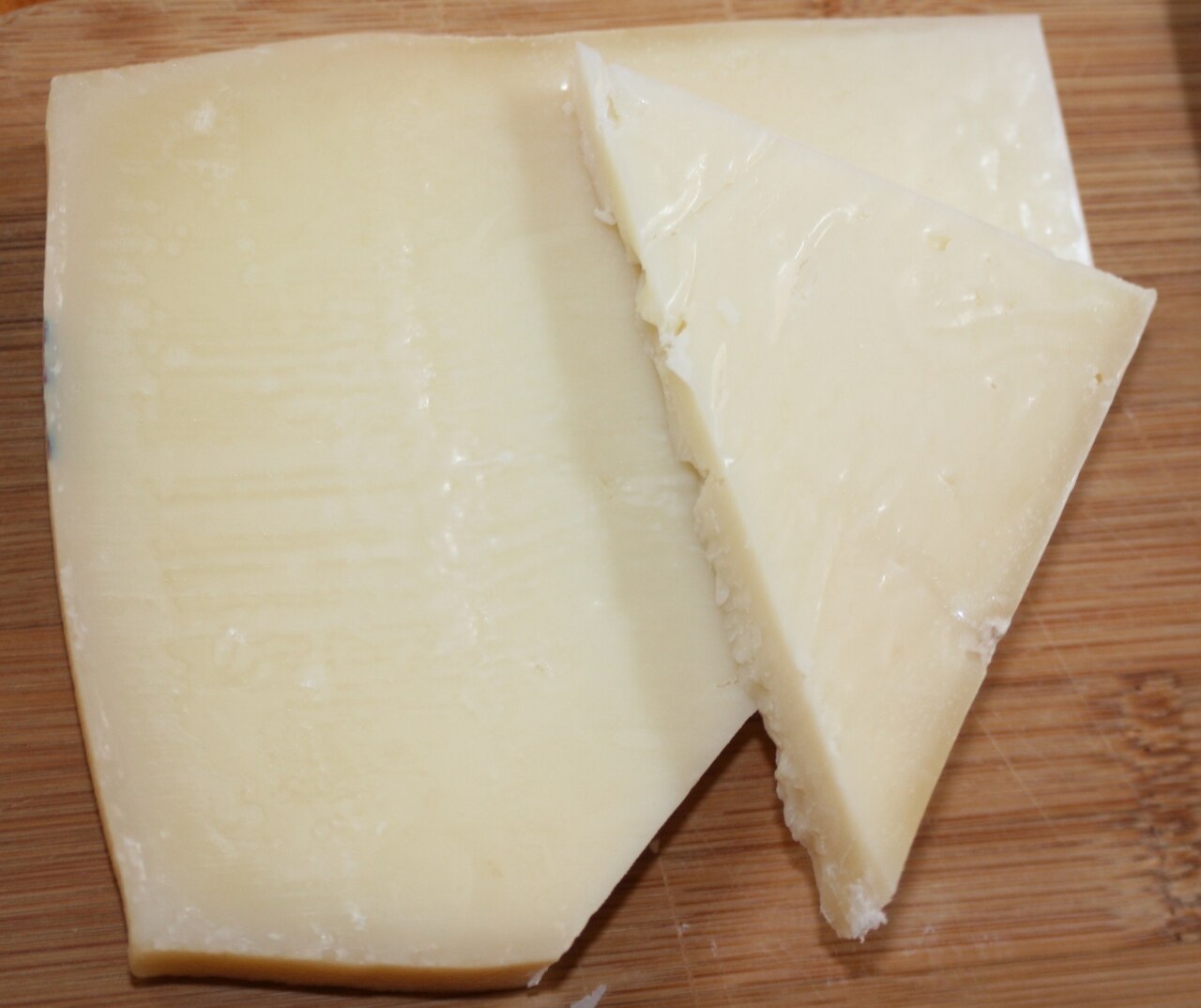
Kefalotyri (also spelled kefalotiri) is a hard, salty white cheese from Greece and Cyprus, made from sheep’s milk, goat’s milk, or a combination of both. Its color can range from yellow to white, depending on the milk mixture. This cheese has been produced since the Byzantine era and remains widely known. It can be eaten plain, fried in olive oil for the dish saganaki, or added to pasta, meat, or cooked vegetables—it is especially good for grating. Alongside feta, it is a common ingredient in spanakopita, though sometimes replaced by similar Italian cheeses like Romano or Parmesan. Young kefalotyri ripens in two to three months; aged versions, a year or older, are drier and stronger in flavor, often served as a meze with ouzo or grated over food. Outside Greece and Cyprus, a similar cheese called Kefalograviera is sometimes sold as Kefalotyri. The name comes from the Greek words for “head” (kephali) and “cheese” (tyri), likely referring to the head-like shape of the wheel.
- Type
- Cheese
- Origin
- Greece and Cyprus
- Milk source
- Sheep milk or goat's milk (or both)
- Texture
- Hard, very hard
- Flavor
- Salty
- Ripening time
- Young: 2–3 months; aged: 1 year or more
Lore & Background
Kefalotyri is a hard, salty white cheese produced in Greece and Cyprus from sheep milk, goat milk, or a mixture of both. Its color can vary between yellow and white depending on the milk mixture used. The cheese is very hard and can be consumed as is, fried in olive oil for a dish called saganaki, or added to pasta, meat, or cooked vegetables, and is especially suited for grating. It is also used along with feta cheese in the vast majority of recipes for spanakopita, though sometimes substituted with Romano or Parmesan.
Reader's Guide
Kefalotyri is a significant cheese in Greek and Cypriot cuisine, with roots established during the Byzantine era. Its versatility allows it to be eaten fresh, fried as saganaki, or grated over dishes. The cheese is also a key ingredient in spanakopita, often paired with feta. A similar cheese, Kefalograviera, is sometimes sold outside Greece and Cyprus as Kefalotyri. Young cheeses ripen in two to three months, while aged kefalotyri (a year or more) is drier with a stronger flavor and may be eaten as a meze with ouzo or grated on food. It can be found in gourmet or specialty stores in other countries.
Did You Know?
- Kefalotyri is made from sheep milk, goat milk, or both.
- It is used in the dish saganaki when fried in olive oil.
- The cheese's name combines Greek words for 'head' and 'cheese,' possibly referring to the headlike shape of the wheel.
- Aged kefalotyri (a year or more) is drier and stronger in flavor, often eaten as a meze with ouzo.
Origins & Production
Kefalotyri is a firm, salt-forward white cheese produced in Greece and Cyprus from the milk of sheep, goats, or a blend of both. The specific combination of milks used during production influences the final hue, which can range from a pale white to a warmer yellow tone. The cheese is notably hard in texture, a quality that makes it particularly well-suited to grating over dishes. Young wheels require a ripening period of roughly two to three months before they are ready for consumption. However, the cheese rewards patience: when aged for a year or longer, kefalotyri develops a drier texture and a considerably more intense, assertive flavor profile. Aged versions are traditionally enjoyed as a meze alongside ouzo, or shaved generously over prepared foods. The production process centers on the careful handling of sheep and goat milks to produce a cheese that is both enduring and deeply rooted in the culinary traditions of Greece and Cyprus.
Culinary Versatility
One of kefalotyri's most remarkable qualities is its range of applications in the kitchen. The cheese can be savored on its own, simply sliced and appreciated for its salty, assertive character. In the pan, it stars in saganaki, a beloved preparation in which the cheese is fried in olive oil until golden and crisp. It also shines as a grating cheese, melting or sprinkling over pasta dishes, seasoned meats, and cooked vegetables to add depth and a sharp, salty finish. In the context of Greek baking, kefalotyri frequently appears alongside feta in the vast majority of spanakopita recipes, contributing a firmer, more concentrated flavor to the spinach-and-dough classic. That said, in some kitchens—particularly outside Greece and Cyprus—cooks may reach for Italian-derived alternatives such as Romano or Parmesan when kefalotyri is unavailable, though these substitutes carry their own distinct characteristics. The cheese's hard structure and pronounced salinity make it a versatile workhorse across both everyday home cooking and more elaborate preparations.
Name & Identity
The name kefalotyri is a straightforward Greek compound: kephalí, meaning head, joined with turí, meaning cheese. The most commonly cited explanation for this pairing is the headlike shape of the traditional cheese wheel, a form that has likely persisted through centuries of production. This etymological detail offers a small window into the visual and tactile world of the cheese as it was shaped by hand in small workshops. However, the identity of kefalotyri in the broader market is not without complication. A closely related cheese called Kefalograviera, also produced from sheep or goat milk or a mixture of both, is sometimes marketed and sold under the kefalotyri label in countries outside Greece and Cyprus. This overlap can create confusion for consumers abroad who encounter the name on a package and assume they are purchasing the traditional Greek product, when the actual cheese may differ in texture, aging, or flavor. For those seeking an authentic experience, understanding this distinction becomes important.
Heritage & Global Footprint
Kefalotyri's story stretches back to the Byzantine era, a period that saw the consolidation of many of the culinary traditions that define the Greek and Cypriot food landscape today. Its establishment during that long historical span speaks to a cheese that was not a passing novelty but a staple woven into the daily rhythm of households and markets. Over the centuries, it grew into a widely recognized and popular cheese within its native regions, becoming so well-known that its name is instantly familiar to anyone with even a passing acquaintance with Greek cuisine. In more recent decades, kefalotyri has crossed borders, finding a place in gourmet shops and specialty food stores in countries well beyond the Mediterranean. This global availability, while welcome to diaspora communities and curious food lovers, also brings the challenges of substitution and mislabeling noted in its market identity. Still, for those who seek it out, kefalotyri remains a tangible link to a culinary heritage that spans many centuries.
Gallery
Frequently Asked Questions
Who is Kefalotyri?
Kefalotyri is a hard, salty white cheese originating from Greece and Cyprus, crafted from sheep's milk, goat's milk, or a blend of the two. Its hue shifts from pale yellow to pure white depending on which milks go into the batch.
What are Kefalotyri's powers/role?
This cheese shines when grated over pasta, stirred into meat dishes, or tossed with cooked vegetables, and it takes centre stage in saganaki where it's fried in olive oil. It also holds its own inside spanakopita alongside feta, though some cooks swap in Romano or Parmesan as substitutes.
Why is Kefalotyri important?
Production of this cheese dates back to the Byzantine era, making it one of the oldest continuously made dairy products in the region. It remains a staple of Cypriot and Greek kitchens to this day, never losing its place on the table.
Who are Kefalotyri's allies?
Its most famous partner is feta, the two teaming up inside spanakopita, and it also bonds closely with olive oil in the classic saganaki preparation. On the other side, it is frequently replaced by Italian hard cheeses like Romano or Parmesan when the original isn't available.
More in Cypriot cuisine 1-24
Spotted an error? Know more?
Reader corrections go straight into our review queue. Suggest an edit · How this site is sourced