Freedom: The Underground Railroad
A co-operative board game about the Abolitionist Movement.

Freedom: The Underground Railroad is a cooperative board game from 2013, designed by Brian Mayer and released by Academy Games as the first title in their Freedom Series. The game has received favorable notice for how it addresses its subject matter.
Set in early American history, the game is card-driven and cooperative. Players work together as part of the Abolitionist Movement to help end slavery in the United States. They use cards depicting historical figures and events from the period between early independence and the Civil War; these cards provide action tokens and character benefits that affect gameplay. The game supports one to four players, each taking on one of six possible archetypes from the abolitionist movement: agent, conductor, preacher, shepherd, station master, or stockholder. Several small card expansions, also designed by Mayer, were released with the Kickstarter version, each adding new cards to the Abolitionist Deck.
**Gameplay**
Players have two main goals. First, they must help a certain number of slaves escape northward to freedom in Canada; the exact number depends on the player count and difficulty level. Second, the group must collectively raise the strength of the Abolitionist Movement by acquiring all support tokens in the game, which brings about more permanent change.
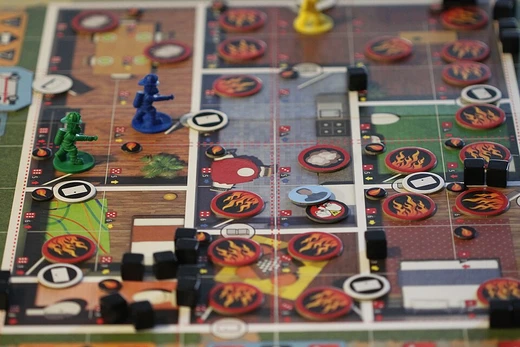
The game components include a board showing connections between cities and spaces on a map of the United States, three decks of cards (Role cards, Abolitionist cards, and Slave Market cards), five slave catcher tokens, 110 wooden cubes representing enslaved men, women, and children, slave catcher movement dice, action tokens (support, fundraising, and conductor), money, and a lead player token. The Abolitionist cards are divided into two eras (1800–1839 and 1840–1865) and feature historical events and individuals from those periods that affected the fight for freedom, both positively and negatively. General Abolitionist cards are used when acquired, Reserve Abolitionist cards can be saved for later, and Opposition cards work against the players in various ways. At the start of the game, Opposition cards are placed throughout the two era decks. Each player receives a random role at the beginning.
The game consists of eight rounds, each with five phases:
1.
Quick Facts
- Subject Name
- Freedom: The Underground Railroad
- Designer
- Brian Mayer
- Publisher
- Academy Games (U.S.)
- Illustrator
- Jarek Nocoń (graphics and illustration), Steve Paschal (cover painting)
- Players
- 1-4
- Ages
- 10+
- Setup Time
- 10 min
- Playing Time
- 90 min
- Skills
- strategy, cooperation, logic, logistics
Facts from the source article.
Lore & Background
Freedom: The Underground Railroad is a card-driven, co-operative game set in early American History. Players work together for the Abolitionist Movement to help bring an end to slavery in the United States. The game uses a combination of cards featuring historical figures and events spanning from early independence until the Civil War, containing action tokens and character benefits which impact the game. It can be played solo or with up to four players, each taking one of six archetypes: agent, conductor, preacher, shepherd, station master, or stockholder.
Reader's Guide
Freedom: The Underground Railroad is significant as a board game that addresses the historical topic of slavery and the Underground Railroad through cooperative gameplay. Its design by Brian Mayer and publication by Academy Games marked the first entry in the Freedom Series. The game has received numerous awards and nominations, including winning Best Co-op Game, Best New Designer, and Best Game Theming from the Dice Tower Awards in 2013. It also won Game of the Year from Drive-Thru Review and Board Game of the Year from The Wargamer in the same year. The game's educational potential is highlighted by its being the subject of a first book in a series published by Rosen Publishing, focusing on games as educational resources. Several small card expansions were released with the Kickstarter version, adding new cards to the Abolitionist Deck. The game's legacy includes its recognition for handling a difficult historical subject with care, as noted by the positive attention it drew.
Did You Know?
- The game was designed by Brian Mayer and published by Academy Games as their first game in the Freedom Series.
- The game includes three eras of Abolitionist cards: 1800-1839, 1840–1859, and 1860–1865.
- Several small card expansions were released with the Kickstarter version, including Abolitionist Cards, Opposition Cards, and Reserve Cards.
More in Cooperative board games 1-24
Spotted an error? Know more?
Reader corrections go straight into our review queue. Suggest an edit · How this site is sourced