Battlestar Galactica: The Board Game
A semi-cooperative board game of hidden traitors and survival.

Battlestar Galactica: The Board Game is a semi-cooperative board game created by Corey Konieczka and first published by Fantasy Flight Games in 2008. Based on the 2004 Battlestar Galactica series, it places players in the roles of characters from the show, tasking them with guiding the Galactica and its fleet to safety while contending with hidden enemy agents known as Cylons. The game is noted for its hidden-traitor mechanic, which simulates the series' themes of paranoia and betrayal.
Quick Facts
- Designer
- Corey Konieczka
- Publisher
- Fantasy Flight Games
- Date
- 2008
- Genre
- Board game
- Language
- English, German, French, Spanish, Polish, Italian, Chinese
- Players
- Base game: 3–6 players (additional possible with certain expansions)
- Setup Time
- Base game: 10 minutes (+ 5 minutes with expansions)
- Playing Time
- Base game: 120–240 minutes (first time could be double)
- Random Chance
- Some
- Skills
- Bluffing, Co-operative Play, Deduction, Dice Rolling, Negotiation, Hand Management
Facts from the source article.
Lore & Background
Battlestar Galactica: The Board Game was created by Corey Konieczka and first published by Fantasy Flight Games in 2008. Players take the roles of characters from the 2004 television series, classed as Political Leaders, Military Leaders, Pilots, or Support, each with unique benefits and drawbacks. The game is semi-cooperative for 3–6 players, with one or more players secretly dealt loyalty cards at the start designating them as Cylons, who win if the humans fail to achieve their objective. Midway through, players draw a second loyalty card, which may turn them to the Cylon side, simulating the sleeper agent concept from the show.
Reader's Guide
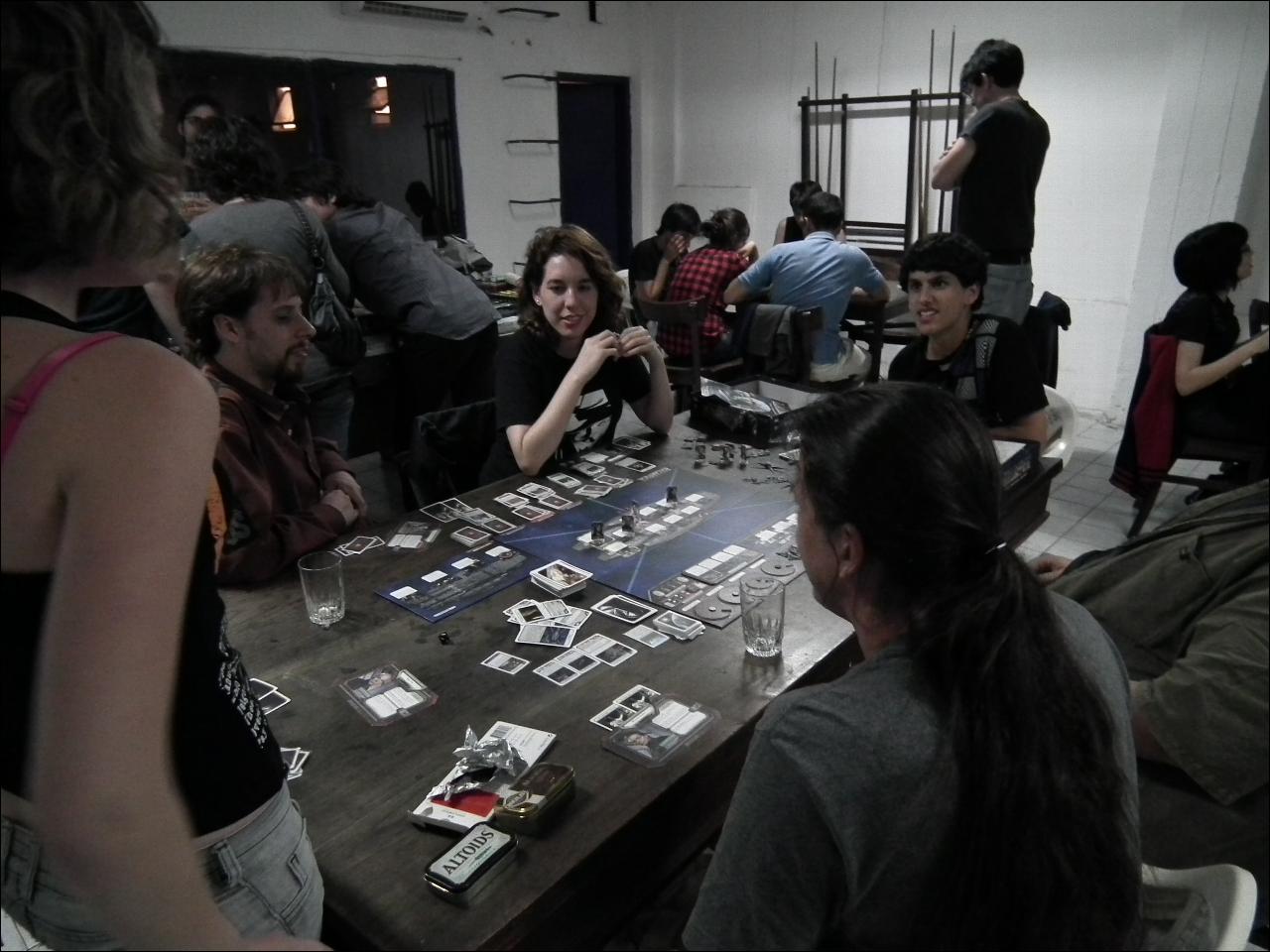
Battlestar Galactica: The Board Game is significant for popularizing the hidden-traitor mechanic in modern board gaming, drawing directly from the paranoia and deception central to the television series. Its gameplay involves moving characters around Galactica and Colonial One, piloting Vipers, and managing resources such as fuel, food, morale, and population while fending off Cylon ships. The game also features titles of Admiral and President, which grant additional powers. Three expansions—Pegasus (2009), Exodus (2010), and Daybreak (2013)—added new cards, characters, endgame scenarios, and mechanics, each thematically tied to later seasons of the show. In 2021, Fantasy Flight Games published Unfathomable, a horror-themed reimplementation of many of the game's mechanics. The game remains a benchmark for cooperative play with hidden traitors, influencing later designs in the genre.
Did You Know?
- Players draw a second loyalty card midway through the game, which may turn them to the Cylon side.
- Three expansions were released: Pegasus (2009), Exodus (2010), and Daybreak (2013).
- In 2021, Fantasy Flight Games published Unfathomable, which reimplemented many of the game's mechanics.
The Cooperative Imperative
Battlestar Galactica: The Board Game belongs to a design tradition where the table is united against a single, shared adversary. In this framework, there is no individual champion; the group either reaches a predetermined objective together or the entire table falls when a terminal event closes the window for success. This all-or-nothing structure is what separates true cooperative design from other multiplayer formats. Players do not accumulate personal points, eliminate rivals, or claim a solo victory. Instead, every decision ripples across the group's collective fate, and the tension of the game lives in whether the crew can coordinate before the clock runs out or the threat overwhelms them. The genre's defining promise is simple: no one wins alone, and no one loses alone. That shared vulnerability is the emotional engine that drives the table to communicate, strategize, and sacrifice individual advantage for the group's survival.
A Century of Shared Fates
The cooperative impulse in tabletop gaming stretches back further than most players realize. In 1903, Elizabeth Magie patented The Landlord's Game with two distinct rule sets: a competitive version where players crushed each other for revenue, and a cooperative version meant to demonstrate that shared prosperity was morally superior. That dualistic teaching tool planted a seed that would grow slowly. In 1971, teacher Jim Deacove published Together, and the following year he founded Family Pastimes in Perth, Ontario, a company dedicated exclusively to cooperative titles that would go on to release over a hundred games. By 1976, Ken and Jann Kolsbun were inventing titles like Save the Whales and Nectar Collector through their California-based Animal Town. The 1980s brought a wave of cooperative adventures with role-playing elements, from HeroQuest to the Sherlock Holmes: Consulting Detective mystery series, establishing that players could trace evidence together or battle dungeon horrors as a united front. Each era added a new layer to the cooperative vocabulary that modern titles inherit.
Drawing the Line
Not every game with shared elements qualifies as cooperative, and the boundaries matter. Noncompetitive titles like The Ungame, which simply lack victory conditions or a set objective, sit outside the category entirely. Team-based conflicts such as Axis & Allies, or card games like Bridge and Spades, involve temporary alliances but ultimately pit groups against each other, so they do not count. Multiplayer conflict games like Diplomacy may feature brief periods of cooperation, yet players are eliminated and only one individual can claim victory. Pure tabletop role-playing games with persistent characters and potentially infinite victory conditions, such as Descent: Journeys in the Dark, are also excluded. The cooperative label demands a specific architecture: a fixed, shared goal that the entire table must achieve before a terminal condition ends the game, with no individual winner. Battlestar Galactica: The Board Game operates squarely within this narrow definition, where the fate of the colony is a single, collective outcome rather than a ladder of individual triumphs.
The Modern Renaissance
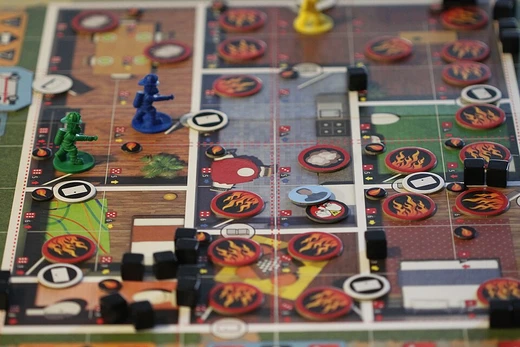
The twenty-first century unleashed a flood of cooperative designs that would feel almost unimaginable to the 1980s generation. Reiner Knizia's 2000 Lord of the Rings game let players unite against Sauron's forces, and its influence rippled into later titles like Shadows over Camelot. Then 2008 arrived as a watershed year: Matt Leacock's Pandemic cast players as medical experts racing to contain global outbreaks, while Vlaada Chvátil's Space Alert thrust a crew of space explorers into a teamwork-focused survival mission against system malfunctions and alien threats. The momentum continued through the early 2010s with Star Trek: Expeditions, Sentinels of the Multiverse, Flash Point: Fire Rescue, Robinson Crusoe, Freedom: The Underground Railroad, Zombicide, and Hanabi. Each title proved that the cooperative framework could carry survival, history, superheroics, and even a fireworks display. The genre had become a versatile canvas, and the shared-fate table had never been more alive.
Gallery




Frequently Asked Questions
What is Battlestar Galactica: The Board Game?
It is a semi-cooperative strategy board game released in 2008 by Fantasy Flight Games, designed by Corey Konieczka. Players step into the shoes of characters from the 2004 television series and must steer the Galactica and its fleet to safety while uncovering hidden Cylon infiltrators within their own ranks.
How many players can play Battlestar Galactica: The Board Game?
The game supports a table of three to six players. Each participant takes on a distinct character from the show, so the group size directly influences the ratio of loyal crew members to potential hidden Cylon agents.
How does the hidden Cylon traitor mechanic work in Battlestar Galactica: The Board Game?
Certain players are secretly designated as Cylon agents whose goals run counter to the fleet's survival, and they must hide that allegiance throughout play. This forces every decision to be weighed against the possibility of betrayal, recreating the paranoia that defines the 2004 series.
Who designed Battlestar Galactica: The Board Game?
Corey Konieczka is the designer, and Fantasy Flight Games published the title in 2008. The game was crafted to translate the narrative tension and thematic weight of the 2004 Battlestar Galactica show into a tabletop experience.
Is Battlestar Galactica: The Board Game fully cooperative?
No; it is classified as semi-cooperative because the hidden Cylon players actively work against the rest of the group toward their own objectives. This means the cooperative framework is constantly undermined by genuine betrayal, making trust a core gameplay element rather than a given.
More in Cooperative board games 1-24
Spotted an error? Know more?
Reader corrections go straight into our review queue. Suggest an edit · How this site is sourced