
Keyboard Monument
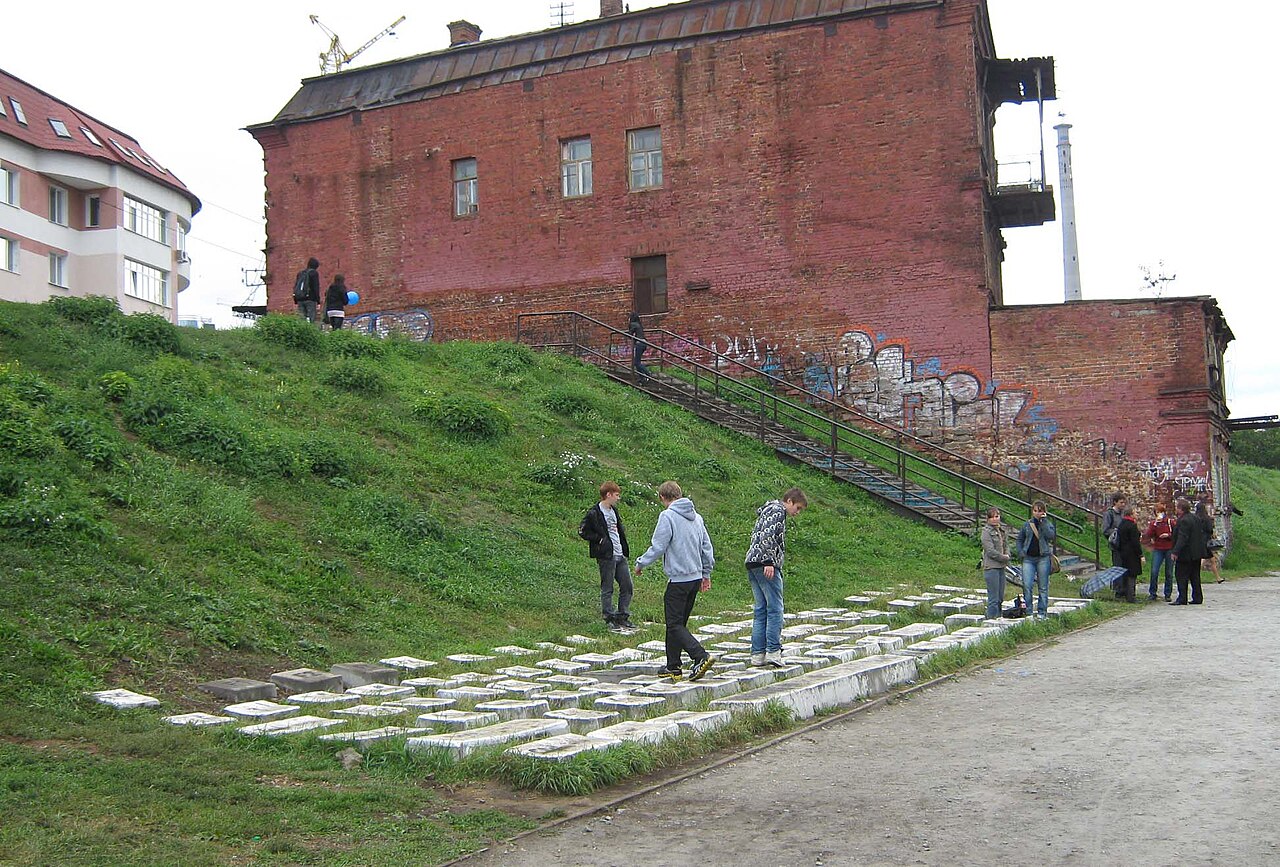
A giant concrete keyboard monument in Yekaterinburg, Russia.

Marie D Martel · CC BY-SA 4.0
The Keyboard Monument (Russian: Памятник клавиатуре) is an outdoor sculpture featuring a QWERTY/ЙЦУКЕН keyboard, located in the Russian city of Yekaterinburg on the embankment of the Iset River. It is popular among tourists and is considered one of the city's top sights, also referred to as 'one of the miracles of Russia' by some researchers.
- Created by
- Anatoly Vyatkin
- Installed
- October 5, 2005
- Location
- Yekaterinburg, embankment of the Iset River
- Scale
- 30:1
- Area
- 16 m × 4 m
- Number of keys
- 104
- Weight per regular key
- 180 pounds
- Weight of space bar
- 1000 pounds
Lore & Background
The Keyboard Monument was created by Anatoly Vyatkin and installed on October 5, 2005 on the embankment of the Iset River in the city centre. The landmark depicts a Cyrillic computer keyboard at a 30:1 scale, covering an area of 16 m × 4 m, with 104 concrete keys. Each regular key weighs 180 pounds, while the space bar alone weighs 1,000 pounds. Niklaus Wirth, the Pascal programming language designer, evaluated the object while it was being constructed and found it to be fascinating.
Keys F1, F2, F3, and Y were once stolen and were rebuilt in 2011. In 2018, during the Russia FIFA World Cup, the New York Times published a long article about the object. In 2019, a survey by the national search engine Yandex found that the Keyboard Monument was the second most searched monument among all of Russia's numerous famous monuments, after the Bronze Horseman and before the Monument to Minin and Pozharsky.
In May 2019 it became known that the monument was facing threat of demolition after the nearby stairway was destroyed. In 2025, the monument was cleaned and restored (with the paint removed from the keys) at a cost of 600,000 rubles donated by local residents and businesses.
Reader's Guide
The Keyboard Monument has become a significant cultural landmark in Yekaterinburg, attracting many visitors and being considered one of the city's top sights. Its notability is underscored by a 2019 Yandex survey that ranked it the second most searched monument in all of Russia, behind only the Bronze Horseman. The monument has also received international attention, including a long article in the New York Times during the 2018 Russia FIFA World Cup. Regular events are held near the object, most notably the annual internationally recognised Sysadmin Day on the last Friday in July, which has been officially permitted by Yekaterinburg authorities since 2010 with support from IT companies. During these celebrations, participants engage in 'sysadmin competitions' such as throwing defunct PC mice for distance, tossing mice (with their 'tails' cut out) into a distant empty computer case used as a basket, and powerlifting a bundle of unused HDDs. In 2016, a memorial plaque was set up at the monument to honour Eugene Zorin, the Yekaterinburg FidoNet organiser and Internet pioneer who died recently. Additionally, 'Keyboard Subbotniks' are held at the end of April, where people clean and re-paint the monument and hold sports competitions; two volunteers from the USA took part in the 2017 procedure.
Did You Know?
- The monument covers an area of 16 m × 4 m and has 104 concrete keys.
- In 2019, a Yandex survey ranked it the second most searched monument in Russia.
Design & Physical Construction
The Keyboard Monument is an outdoor sculpture depicting a Cyrillic QWERTY/ЙЦУКЕН computer keyboard, created by sculptor Anatoly Vyatkin. Installed on October 5, 2005, along the embankment of the Iset River in Yekaterinburg's city centre, the piece renders a standard keyboard at a 30-to-1 scale, covering a ground area of 16 metres by 4 metres. The monument comprises 104 individual concrete keys, each regular key weighing approximately 180 pounds. The space bar, in contrast, is a massive 1,000-pound slab, a deliberate exaggeration that gives the structure a sense of monumental weight and presence. The choice of the Cyrillic layout rather than the Latin one anchors the work firmly in its Russian context, making it a playful yet serious tribute to the everyday technology that has become inseparable from modern professional life. Its location on the river embankment ensures it is visible and accessible to both residents and passing tourists, functioning as an open-air landmark rather than a museum piece.
Cultural Recognition & Global Attention
Over the years the Keyboard Monument has accumulated a remarkable level of recognition both domestically and internationally. Some researchers have gone so far as to call it 'one of the miracles of Russia,' a testament to its unusual place in the national cultural landscape. During its construction, Niklaus Wirth, the designer of the Pascal programming language, visited the site and reportedly found the object fascinating, lending it an early endorsement from a figure of genuine stature in computer science. The monument's international profile surged in 2018, when the New York Times published a lengthy feature about it in the context of Russia hosting the FIFA World Cup, introducing the sculpture to a vast English-language readership. Domestically, a 2019 survey conducted by the national search engine Yandex ranked the Keyboard Monument as the second most searched monument in all of Russia, trailing only the Bronze Horseman in St. Petersburg and edging out the Monument to Minin and Pozharsky in Moscow. For a city of Yekaterinburg's size, these achievements underscore how a single concrete keyboard has become a genuine point of civic pride.
Community Rituals & Sysadmin Celebrations
The Keyboard Monument is more than a static sculpture; it anchors recurring community events that blend humour, sport, and remembrance. The most prominent is the annual Sysadmin Day, held on the last Friday of July and internationally recognised as a celebration of IT professionals. Before 2010, Yekaterinburg's technicians gathered at separate locations, but from that year onward the city authorities granted official permission to hold the event at the monument, with support from local IT companies. The festivities include lighthearted competitions in which participants hurl defunct computer mice as far as they can, or lob mice with their cables severed into a distant empty computer case used as a target. Another event involves powerlifting a bundle of unused hard drives. In 2016, a memorial plaque was dedicated at the site honouring Eugene Zorin, a Yekaterinburg FidoNet organiser and Internet pioneer who had recently passed away. In late April, 'Keyboard Subbotniks' bring volunteers together to clean and repaint the monument, a tradition that in 2017 even drew two volunteers from the United States, according to local press reports.
Threats, Loss, and Restoration
The monument's history is marked by episodes of damage, loss, and determined community restoration. In an early incident, the keys F1, F2, F3, and Y were stolen, but they were subsequently rebuilt and returned to the structure by 2011. A far more serious crisis emerged in May 2019, when reports surfaced that the Keyboard Monument faced the threat of demolition; the nearby stairway that provided access to the site was destroyed, raising alarm among locals and visitors alike. The monument's survival through that period speaks to the strength of public attachment to the sculpture. In 2025, a significant restoration effort was completed: the keys were cleaned and the accumulated paint was stripped away, returning the concrete to a more authentic appearance. The entire project, costing 600,000 rubles, was funded not by municipal or state budgets but by donations from local residents and businesses, a collective act of stewardship that reinforced the monument's status as a shared civic treasure rather than a government asset.
Gallery
Frequently Asked Questions
What is the Keyboard Monument?
It is a large outdoor concrete sculpture shaped like a full QWERTY/ЙЦУКЕН keyboard, standing on the Iset River embankment in Yekaterinburg, Russia. Tourists and some researchers even call it one of the 'miracles of Russia.'
Who created the Keyboard Monument and when was it unveiled?
Sculptor Anatoly Vyatkin designed the piece, and it was officially installed on October 5, 2005.
How big is the Keyboard Monument in real terms?
The sculpture spans roughly 16 metres by 4 metres and reproduces a standard 104-key layout at a 30-to-1 scale, making each key several metres across.
Where exactly can visitors find the Keyboard Monument?
It sits on the river embankment along the Iset River in Yekaterinburg, Sverdlovsk Oblast, making it one of the city's most-visited landmarks.
Why is the Keyboard Monument considered important or notable?
Beyond its sheer size, it is widely regarded as one of Yekaterinburg's top tourist sights and a quirky cultural symbol that draws visitors from across Russia and abroad.
More in Computer Keyboards 1-24
Spotted an error? Know more?
Reader corrections go straight into our review queue. Suggest an edit · How this site is sourced