
Chiclet keyboard
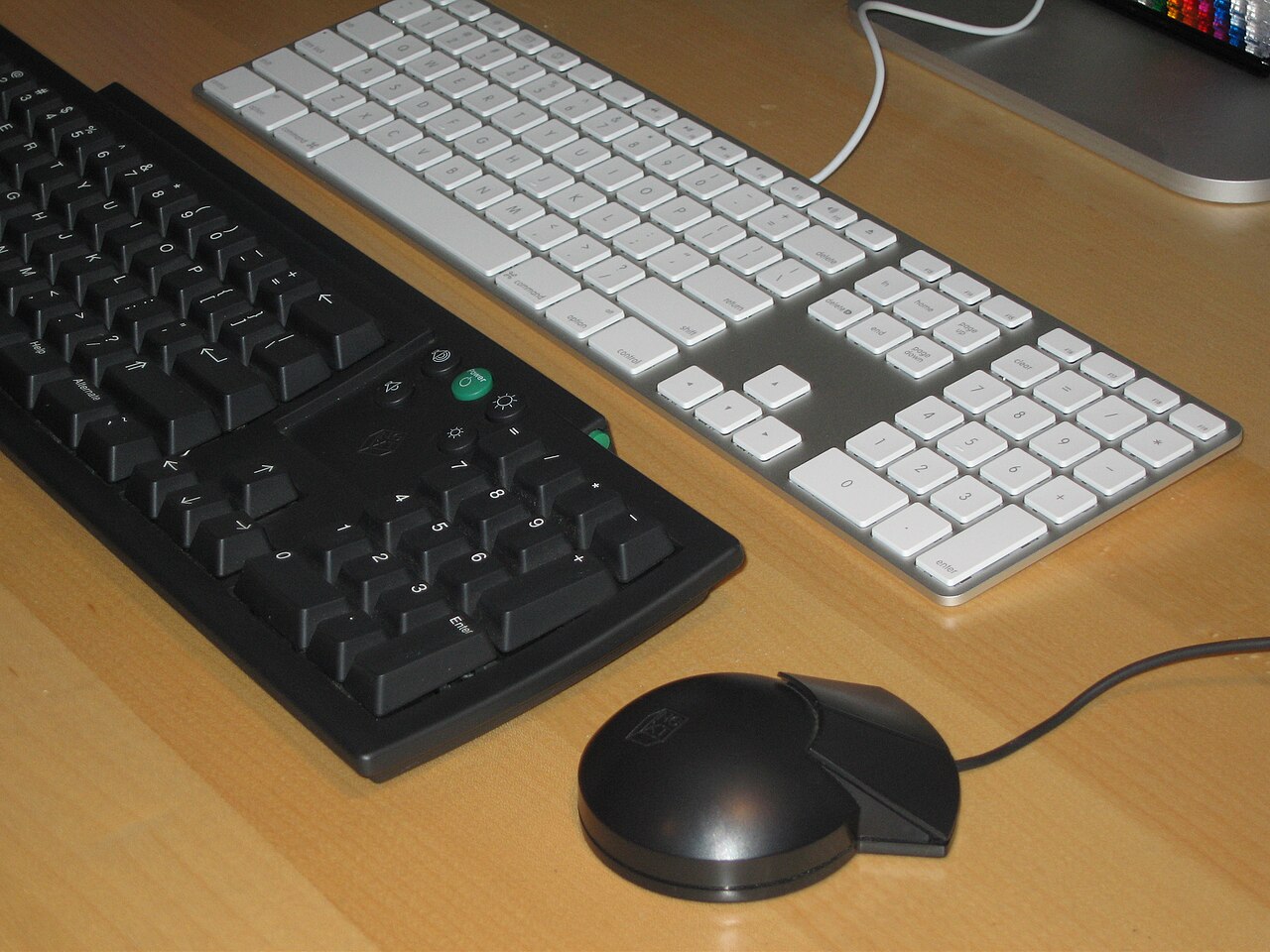
A membrane-derived keyboard with small, flat keys resembling chewing gum.

Mk2010 · CC BY-SA 3.0
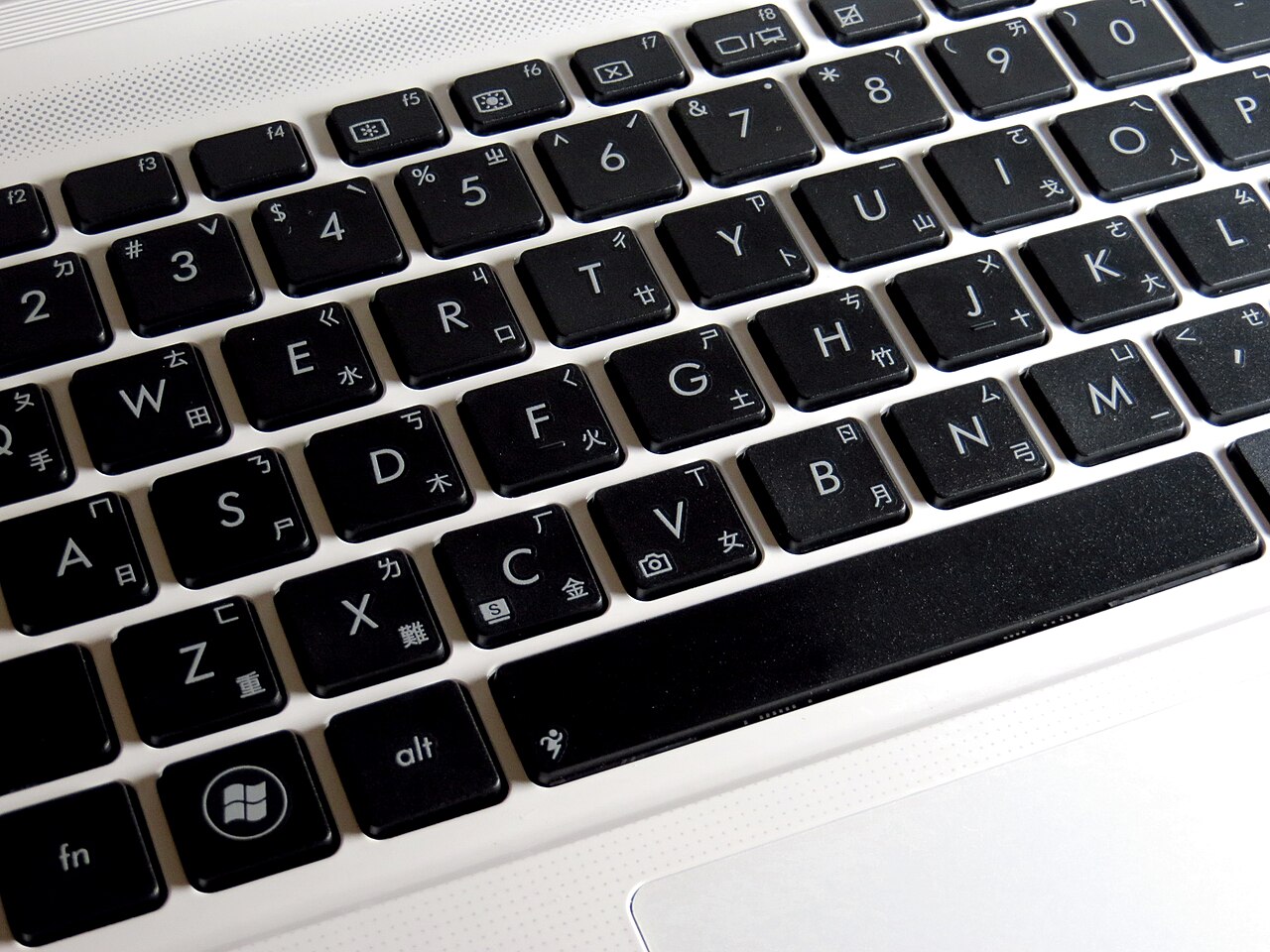
A chiclet keyboard features an array of small, flat keys—rectangular or lozenge-shaped, made of rubber or plastic—that resemble erasers or the chewing gum squares called Chiclets. This design builds on the membrane keyboard, relying on a single rubber sheet with separate electrical switches under each key, but adds an upper layer that improves tactile feedback via a buckling mechanism. The term is often misapplied to island-style keyboards.
Since the mid-1980s, these keyboards have mostly appeared in low-cost electronics like handheld calculators, cheap PDAs, and many remote controls. However, the name also describes scissor-switch keyboards with a similar look.
The term emerged during the home computer era of the late 1970s to mid-1980s. Machines such as the TRS-80 Color Computer, TRS-80 MC-10, and Timex Sinclair 2068 were marketed as having "chiclet keys." This keyboard style received poor reviews, especially from touch typists. Columnist John Dvorak linked it to "$99 el cheapo computers." The ZX Spectrum's rubber dome keys were sometimes called "dead flesh," while the IBM PCjr's chiclet keyboard was likened to "massaging fruit cake." Its quality so surprised a Tandy executive—whose own company had released a similarly unpopular keyboard—that he asked, "How could IBM have made that mistake with the PCjr?"
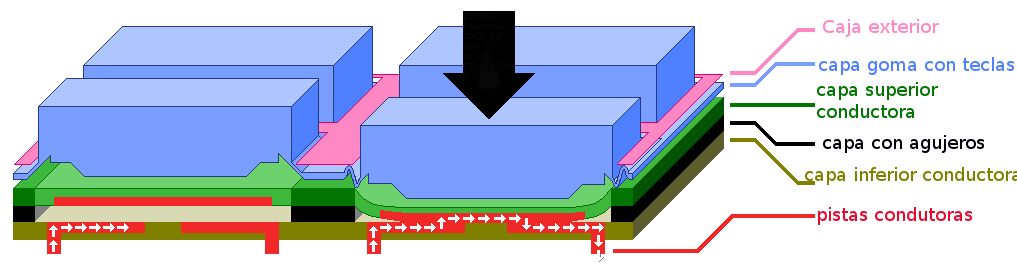
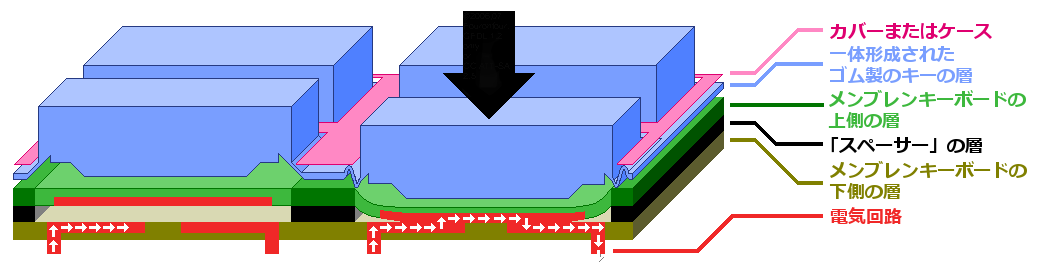
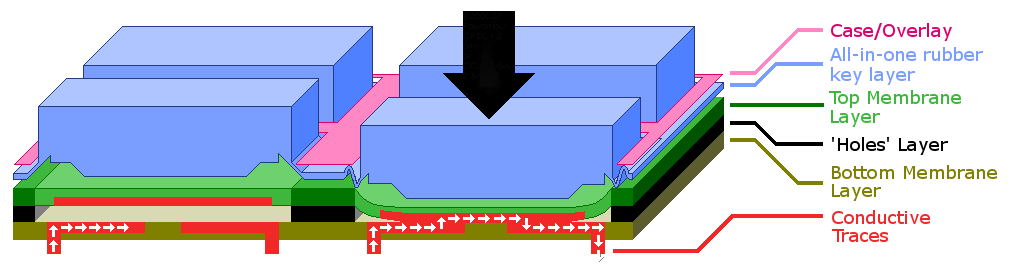
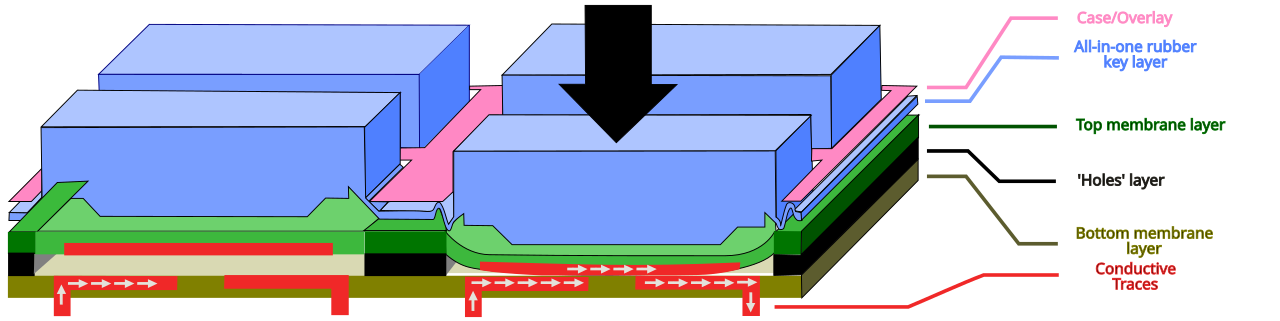
Mechanically, chiclet keyboards work like membrane keyboards: pressing a key forces the top layer through a hole to contact the bottom layer. Conductive traces on the bottom layer are normally separated by a non-conductive gap, keeping the switch open. When pushed, conductive material on the top layer's underside bridges that gap, closing the switch and registering a keypress. All such keyboards have keys surrounded and held by a perforated plate, leaving spaces between them.
Unlike a membrane keyboard, where the user presses directly on the top membrane, this chiclet type places molded rubber keys above it. In some designs, pressing the key causes the thin sides of the rubber key to suddenly collapse; in others, the weak point is where the key joins the rubber sheet. Either way, the collapse lets the solid rubber center push the top membrane against the bottom layer, completing the circuit. This sudden collapse and key movement give better tactile feedback than a flat membrane keyboard.
- First appeared
- late 1970s to mid-1980s
- Associated computers
- TRS-80 Color Computer, TRS-80 MC-10, Timex Sinclair 2068
- Notable critic
- John Dvorak
- First laptop with chiclet style
- Mitsubishi Pedion (1997), rebranded as OmniBook Sojourn by Hewlett-Packard
- Popularized in laptops by
- Sony Vaio X505 (2004)
Lore & Background
The term 'chiclet keyboard' first appeared during the home computer era of the late 1970s to mid-1980s. The TRS-80 Color Computer, TRS-80 MC-10, and Timex Sinclair 2068 were all described as having 'chiclet keys'. This style of keyboard has been met with poor reception, especially derided by touch typists. John Dvorak wrote that it was 'associated with $99 el cheapo computers'. The keys on ZX Spectrum computers are 'rubber dome keys' which were sometimes described as 'dead flesh', while the feel of the IBM PCjr's chiclet keyboard was reportedly compared to 'massaging fruit cake'. Its quality was such that an amazed Tandy executive asked 'How could IBM have made that mistake with the PCjr?'
Chiclet keyboards operate under essentially the same mechanism as the membrane keyboard. A keypress is registered when the top layer is forced through a hole to touch the bottom layer. Unlike the membrane keyboard, where the user presses directly onto the top membrane layer, this form of chiclet keyboard places a set of moulded rubber keys above this. With some key designs, the user pushes the key, and under sufficient pressure the thin sides of the rubber key suddenly collapse. This collapse provides greater tactile feedback than a simple flat membrane keyboard. Other versions omit the upper membrane and hole/spacer layers; instead the underside of the rubber keys themselves have a conductive coating.
Reader's Guide
Since the mid-1980s, chiclet keyboards have been mainly restricted to lower-end electronics, such as small handheld calculators, cheap PDAs and many remote controls, though the name is also used to refer to scissor keyboards with superficially similar appearance. The dome switch keyboards used with a large proportion of modern PCs are technically similar to chiclet keyboards, with rubber domes and hard plastic keytops that align almost perfectly with only a minimal gap. The term 'chiclet' has also been used to describe low-profile, low-travel scissor keyboards with simplified, flat keycaps separated by a bezel. The first laptop to feature this style of chiclet keyboard was the Mitsubishi Pedion in 1997 (rebranded as the OmniBook Sojourn by Hewlett-Packard). Sony popularized the chiclet keyboard in laptops with the release of the Vaio X505 in 2004. Notable uses include all of the computers listed from the early home computer era, except the OLPC XO-1.
Did You Know?
- The term 'chiclet' comes from a brand of chewing gum shaped like small squares with rounded corners.
- John Dvorak associated chiclet keyboards with '$99 el cheapo computers'.
- The IBM PCjr's chiclet keyboard feel was reportedly compared to 'massaging fruit cake'.
- The first laptop with a chiclet-style keyboard was the Mitsubishi Pedion in 1997.
Origins in the Home Computer Era
The term "chiclet keyboard" emerged during the home computer boom of the late 1970s and into the mid-1980s, a period when personal computing was still finding its footing. Early machines like the TRS-80 Color Computer, the TRS-80 MC-10, and the Timex Sinclair 2068 were all described as featuring "chiclet keys," establishing the vocabulary that would stick to this style of input device. The name itself drew a visual comparison to Chiclets, the brand of chewing gum sold as small squares with rounded corners, capturing the look of the small, flat, rectangular or lozenge-shaped rubber or plastic keys arranged in a grid. These keys resembled tiny erasers, and their distinctive appearance set them apart from the more traditional mechanical keyboards of the era. The term has since been loosely applied to other keyboard styles, including scissor keyboards that share a superficial resemblance, though purists note this is technically an incorrect usage.
A Reputation for Poor Reception
Chiclet keyboards have consistently drawn sharp criticism, particularly from touch typists who found the typing experience unsatisfying. The journalist John Dvorak famously associated the design with "$99 el cheapo computers," cementing a perception of low quality. The ZX Spectrum's rubber dome keys were sometimes derisively called "dead flesh," while the IBM PCjr's chiclet keyboard was compared to the sensation of "massaging fruit cake." The PCjr's keyboard was so poorly received that a Tandy executive, whose own company had previously shipped a computer with a similarly unpopular keyboard, reportedly asked in disbelief how IBM could have made such a mistake. By the mid-1980s, chiclet keyboards had become largely confined to budget electronics — small handheld calculators, inexpensive PDAs, and various remote controls — reinforcing their association with the lowest tiers of consumer technology. This negative reputation persisted for decades, even as the underlying technology continued to evolve.
Engineering the Tactile Bump
At its core, a chiclet keyboard is an evolution of the membrane keyboard, sharing the fundamental principle of a single rubber sheet with individual electrical switches beneath each key. In both designs, a keypress is registered when the top layer is forced through a hole to make contact with the bottom layer, bridging a non-conductive gap between conductive traces and closing the electrical circuit. What distinguishes the chiclet variant is an additional upper layer of moulded rubber keys that provides superior tactile feedback through a buckling mechanism. When sufficient pressure is applied, the thin sides of the rubber key suddenly collapse, allowing the solid center to push downward and force the membrane layers together. In some designs, the weak point is where the key joins the rest of the sheet rather than the sides. This sudden collapse, combined with the key's movement, delivers a more pronounced tactile response than a flat membrane keyboard. Most key tops were hard, though some matched the rubber dome material. Alternative versions skip the upper membrane entirely, instead coating the underside of the rubber keys with conductive material that directly contacts the bottom traces when pressed.
From Budget Niche to Laptop Standard
The legacy of the chiclet keyboard extends well beyond its humble origins in cheap calculators and remote controls. The term has been extended to describe low-profile, low-travel scissor keyboards with simplified, flat keycaps separated by a bezel — a usage that, while technically imprecise, has become widespread. The first laptop to feature this style of chiclet keyboard was the Mitsubishi Pedion in 1997, later rebranded as the OmniBook Sojourn by Hewlett-Packard. Sony then played a pivotal role in popularizing the design across the laptop market with the release of the Vaio X505 in 2004. Even the dome switch keyboards found in a large proportion of modern PCs are technically similar to chiclet keyboards, replacing the rubber keys with rubber domes topped by hard plastic keycaps that align almost perfectly with only a minimal gap between them. This evolution transformed a design once mocked as a hallmark of budget computing into a mainstream standard in portable devices.
Gallery
Frequently Asked Questions
What is a chiclet keyboard?
A chiclet keyboard is a keyboard layout made up of small, flat, rubber or plastic keys—usually rectangular or lozenge-shaped—that sit closely together in a grid. The name comes from their visual resemblance to the little squares of chewing gum sold under the Chiclets brand.
How does a chiclet keyboard differ from a plain membrane keyboard?
While both rely on a single rubber sheet with individual electrical contacts beneath each key, a chiclet keyboard adds an upper structural layer that introduces a buckling mechanism. This extra layer gives the user noticeably better tactile feedback when a key is pressed.
Which early computers are associated with chiclet-style keyboards?
The design first appeared in the late 1970s through the mid-1980s on machines such as the TRS-80 Color Computer, the TRS-80 MC-10, and the Timex Sinclair 2068. These were among the first consumer devices to adopt the small, flat-key layout.
When did chiclet keyboards become mainstream in laptops?
The Mitsubishi Pedion, released in 1997 and later rebranded by Hewlett-Packard as the OmniBook Sojourn, is credited as the first laptop to ship with a chiclet-style layout. Sony's Vaio X505 in 2004 is widely regarded as the model that truly popularized the design across the laptop industry.
Are chiclet keyboards the same as island-style keyboards?
Not strictly—the term "chiclet" refers specifically to the small rubber or plastic key caps on a membrane-derived mechanism, whereas "island-style" is a broader visual descriptor for any keyboard with separated, flat keys. In practice the two terms are often used interchangeably, but the technical chiclet definition includes the buckling-layer construction.
More in Computer Keyboards 1-24
Spotted an error? Know more?
Reader corrections go straight into our review queue. Suggest an edit · How this site is sourced