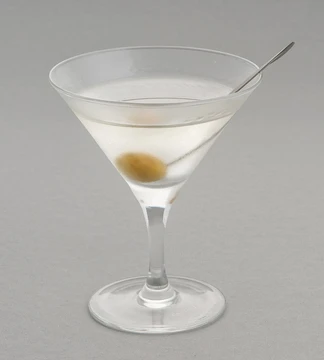
Sazerac
A New Orleans cocktail of cognac or rye, absinthe, and bitters.

The Sazerac is a cocktail originally from New Orleans, named for the Sazerac de Forge et Fils brand of cognac brandy that served as its main ingredient. It is a local variation of a cognac or whiskey cocktail, traditionally combining cognac or rye whiskey, absinthe, Peychaud's Bitters, and sugar, though bourbon whiskey or Herbsaint are sometimes substituted. Some claim it is the oldest known American cocktail, with origins in antebellum New Orleans, though drink historian David Wondrich disputes this, and published usage of the word 'cocktail' to describe a mixture of spirits, bitters, and sugar dates to the early 19th century.
Quick Facts
- Base
- Cognac
- Ingredients
- 50 ml cognac / 10 ml absinthe / One sugar cube / Two dashes Peychaud's Bitters
- Served
- Straight up: chilled, without ice
- Garnish
- lemon zest
- Drinkware
- Old fashioned glass
Facts from the source article.
Lore & Background
Around 1850, Sewell T. Taylor sold his New Orleans bar, the Merchants Exchange Coffee House, to become an importer of spirits, and began importing Sazerac-de-Forge et Fils cognac. Aaron Bird then assumed proprietorship, renamed it the Sazerac Coffee House, and began serving the 'Sazerac Cocktail' using that cognac and bitters allegedly made by local apothecary Antoine Amedie Peychaud. The bar was sold several times until around 1870, when Thomas Handy became proprietor; around this time, the primary ingredient changed from cognac to rye whiskey—often attributed to the Great French Wine Blight, though this is a disputed simplification, as the blight's impact on cognac came later and other factors like changing tastes and whiskey availability also played a role.
Reader's Guide
The Sazerac's defining feature is its method of preparation, using two chilled old-fashioned glasses: one swirled with absinthe for flavor and scent, the other used to combine remaining ingredients stirred with ice, then strained into the first glass. After absinthe was banned in the U.S. in 1912, substitutes like Herbsaint (first appearing in 1934) became common. The drink's creation is also credited to Antoine Amédée Peychaud, a Creole apothecary, though the myth that the word 'cocktail' derived from his use of an egg cup (coquetier) was debunked, as the term appeared in print by 1803. In 2008, the Louisiana Legislature proclaimed the Sazerac as New Orleans' official cocktail. Its significance lies in its enduring association with New Orleans culture, its disputed claim as the oldest American cocktail, and its role in reviving simple cocktails in the early 20th century.
Origins in the Merchants Exchange
The Sazerac cocktail takes its name from a specific French cognac brand—Sazerac de Forge et Fils—rather than from any single inventor. Around 1850, Sewell T. Taylor sold his New Orleans bar, the Merchants Exchange Coffee House, and turned to importing spirits, bringing that cognac into the city. Aaron Bird, who assumed the bar, renamed it the Sazerac Coffee House and began serving what he called the 'Sazerac Cocktail,' built around Taylor's brandy and bitters reportedly crafted by local apothecary Antoine Amedie Peychaud. The establishment changed hands several more times before Thomas Handy took over around 1870. During Handy's tenure, the base spirit shifted from cognac to rye whiskey, a change driven by the Great French Wine Blight disrupting French production. Handy recorded his recipe before dying in 1889; it eventually appeared in print in 1908 in William T. Boothby's bartending manual, though that version specified Selner Bitters rather than Peychaud's. While some hail the drink as the oldest known American cocktail from antebellum New Orleans, historian David Wondrich disputes this, noting the word 'cocktail' was already defined in print by 1806 as a mixture of spirits, water, sugar, and bitters.
The Two-Glass Ritual
The Sazerac's most distinctive trait is not what goes into it but how it is assembled. The traditional method calls for two chilled old-fashioned glasses. The first is swirled with a small wash of absinthe, leaving behind a thin film that imparts the drink's signature anise aroma and flavor. The second glass serves as the mixing vessel: the base spirit—cognac or rye whiskey, with bourbon as a common alternative—is combined with Peychaud's Bitters and sugar, then stirred over ice and strained into the absinthe-coated glass. When absinthe is unavailable, bartenders reach for anisettes such as pastis, Pernod, or Herbsaint. In New Orleans, Herbsaint became the go-to substitute after absinthe was banned in the United States in 1912 and did not return to the market until 2007. Regional variations also exist: the 'New Orleans style' relies entirely on whiskey, while the 'New York-style Sazerac' splits the base evenly between rye whiskey and brandy, a formulation that has become the standard version served in Australia.
Cultural Emblem of New Orleans
By the early twentieth century, straightforward cocktails like the Sazerac had fallen out of favor, only to see a gradual revival in later decades. That resurgence helped propel the drink into the cultural spotlight. In March 2008, Louisiana state senator Edwin R. Murray introduced Senate Bill 6, which would have designated the Sazerac as the official cocktail of the entire state of Louisiana. The measure was defeated on April 8, 2008, but after further legislative debate, the Louisiana Legislature ultimately proclaimed the Sazerac as New Orleans' official cocktail on June 23, 2008. The drink's symbolic weight in the city was vividly captured in 2011, when Anthony Bourdain, writing for HBO's series Treme, scripted a scene in which chef Janette Desautel hurls a Sazerac directly into the face of food critic Alan Richman, who appeared as himself. Richman had drawn widespread local ire in 2006 with a GQ article criticizing New Orleans' food culture in the aftermath of Hurricane Katrina. Despite their long-running feud, Richman agreed to the scene and quipped that the Sazerac was 'a good choice of weaponry, because it symbolizes the city.'
Variants, Rivals, and the Brand
The Sazerac's legacy extends well beyond a single recipe. In the 1910 edition of Jack's Manual, an early bartender's reference authored by Jacob 'Jack' Grohusko, head bartender at Baracca's restaurant in New York, a nearly identical drink appeared under the spelling 'Zazarac,' calling for bourbon in place of cognac. Later iterations of the Zazarac incorporated rum, and while some believe it evolved from the Sazerac, others think it may have developed entirely independently. The absinthe ban of 1912 also reshaped the drink's profile in American bars, pushing bartenders toward anise-flavored liqueurs; the most prominent local alternative, Herbsaint, first appeared in 1934 and became deeply associated with New Orleans preparations. Beyond the cocktail itself, the name Sazerac now belongs to a brand of rye whiskey produced by the Sazerac Company, creating a full-circle connection between the original French cognac that inspired the drink and the modern American spirit that has largely replaced it. The cocktail remains, at its core, a New Orleans creation—a local variation of a broader cognac-and-whiskey tradition that has traveled far beyond its origins.
Frequently Asked Questions
What is a Sazerac?
The Sazerac is a classic New Orleans cocktail built around cognac or rye whiskey, finished with absinthe and a dash of Peychaud's Bitters. It takes its name from the Sazerac de Forge et Fils brand of French brandy that originally served as its base spirit.
What are the core ingredients in a Sazerac?
Traditionally the drink combines cognac or rye whiskey, a simple sugar rinse, Peychaud's Bitters, and a wash of absinthe over the glass. Some modern versions swap in bourbon for the whiskey or use Herbsaint in place of absinthe.
Where did the Sazerac originate?
The cocktail is rooted in antebellum New Orleans, where it evolved as a local twist on the broader cognac-and-whiskey bitters drinks of the era. It remains one of the city's most recognizable signature drinks.
Is the Sazerac the oldest American cocktail?
Popular lore often credits it as the first named American cocktail, but drink historian David Wondrich has challenged that claim. While its New Orleans roots are well established, the 'oldest' title remains debated among cocktail scholars.
When was the Sazerac recipe first published?
The earliest widely cited printed recipe appeared in 1900 in William H. Mahoney's The Hoffman House Bartender's Guide. Some sources point to a possibly earlier mention in George J. Kappeler's 1895 Modern American Drinks.
More in Cocktails with brandy 1-19
Spotted an error? Know more?
Reader corrections go straight into our review queue. Suggest an edit · How this site is sourced