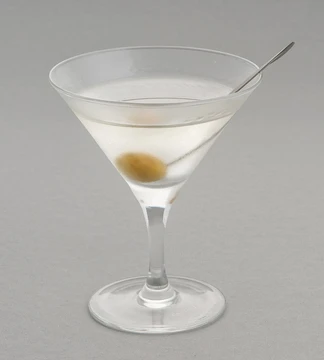
Diki-diki
A 1920s cocktail now served in Tiki bars.

The diki-diki is a cocktail combining calvados, Swedish Punsch, and grapefruit juice. It originated in the 1920s, finding popularity in London’s upscale American bar scene, though today it is most often served as a Tiki drink. The original recipe, shaken with ice, uses a 2:1:1 ratio, but many later versions adjust this to 4:1:1 to highlight the calvados as the primary spirit.
Belgian bartender Robert Vermiere is recognized as the creator of the diki-diki. He included it in his book *Cocktails: How to Mix Them*, noting that he introduced the drink at London’s Embassy Club in February 1922. Fellow cocktail author Harry MacElhone, in his 1923 manual *Harry of Ciro’s ABC of Mixing Cocktails*, remarked that “this is a very popular cocktail in London.” MacElhone’s version used the 4:1:1 ratio, a proportion later adopted by Trader Vic’s *Bartender’s Guide* and Harry Craddock’s *Savoy Cocktail Book*.
Today, the diki-diki is primarily served in Tiki bars; for instance, it has appeared on the menu at the Tiki Ti. Whether it qualifies as a true Tiki drink is debated. Since it was created before the Polynesian-inspired Tiki craze began, it could not have been an intentional Tiki cocktail. However, Vermiere gave the drink a fictional backstory, claiming it was named after the “chief monarch of the Island Ubian (Southern Philippines), who is now 37 years old, weighs 23 pounds, and his height is 32 inches.” Although likely invented, this story echoes the real Philippine leader Lapulapu, who killed Ferdinand Magellan and later lent his name to a Tiki cocktail. The Lapulapu has been served alongside the diki-diki at the Tiki Ti. Another Tiki drink, the Puka-Puka, is named after a Polynesian atoll “discovered” by Magellan in 1521. Thus, the diki-diki’s folklore can be seen as an inspiration for the names of the Lapulapu and Puka-Puka cocktails. Tiki pioneer Victor Bergeron, who named his first restaurant Hinky Dinks, included the diki-diki recipe in his bartender’s guide.
- Created by
- Robert Vermiere
- Year created
- 1922
- Place introduced
- London's Embassy Club
- Original ratio
- 2:1:1 (calvados:Swedish Punsch:grapefruit juice)
- Common modern ratio
- 4:1:1
- Current primary context
- Tiki bars
Lore & Background
Belgian bartender Robert Vermiere is credited with creating the diki-diki, who listed it in his book Cocktails: How to Mix Them, along with a notation that he introduced the cocktail at London's Embassy Club in February 1922. Fellow cocktail book author Harry MacElhone commented that 'this is a very popular cocktail in London' in his 1923 drink manual Harry of Ciro's ABC of Mixing Cocktails. MacElhone's listing employed the more calvados-oriented version with a 4:1:1 ratio. This was also the proportion used in Trader Vic's Bartender's Guide and Harry Craddock's Savoy Cocktail Book.
Reader's Guide
The diki-diki cocktail originated in 1920s London, created by Belgian bartender Robert Vermiere for the Embassy Club. Its original recipe called for shaking calvados, Swedish Punsch, and grapefruit juice in a 2:1:1 ratio, but many later variations—including those by Harry MacElhone, Trader Vic, and Harry Cradock—shifted to a 4:1:1 ratio emphasizing calvados. Though not originally a Tiki drink (the Polynesian-inspired tiki craze had not yet started), the diki-diki is now primarily served in Tiki bars, such as the Tiki Ti. There is some disagreement over whether it should be considered a true tiki drink. Vermiere gave the cocktail a fictional backstory naming it after the 'chief monarch of the Island Ubian (Southern Philippines),' a likely fabrication. This folklore may have inspired the names of later tiki cocktails like the Lapulapu and Puka-Puka. Tiki pioneer Victor Bergeron, who named his first restaurant Hinky Dinks, included the diki-diki recipe in his bartender's guide.
Did You Know?
- The diki-diki was created by Belgian bartender Robert Vermiere and introduced at London's Embassy Club in February 1922.
- The original recipe uses a 2:1:1 ratio of calvados, Swedish Punsch, and grapefruit juice, but many later versions use a 4:1:1 ratio.
- There is disagreement over whether the diki-diki should be considered a true tiki drink, as it predates the Polynesian-inspired tiki craze.
Frequently Asked Questions
Who invented the Diki-diki cocktail?
Belgian bartender Robert Vermiere is credited with creating the Diki-diki, debuting it at London's Embassy Club in February 1922. He later documented the recipe in his book *Cocktails: How to Mix Them*.
What are the ingredients in a Diki-diki?
The drink combines calvados, Swedish Punsch, and grapefruit juice, all shaken with ice. Vermiere's original formula calls for a 2:1:1 ratio across those three components.
How do modern Diki-diki recipes differ from the 1922 original?
Today many bartenders shift the ratio to 4:1:1, giving calvados a much stronger presence as the dominant spirit. This adjustment makes the apple-brandy character far more pronounced than in Vermiere's balanced original.
Where is the Diki-diki usually served these days?
Despite its roots in 1920s London's upscale American bar scene, the Diki-diki has largely migrated into Tiki bars. It is now most commonly encountered in that tropical, rum-adjacent setting rather than in classic cocktail lounges.
Why is the Diki-diki notable in cocktail history?
It stands out as a pre-Prohibition-era London creation that survived into the modern era by reinventing itself as a Tiki staple. The drink also showcases Swedish Punsch and calvados together, a pairing that is rare in most cocktail canon.
More in Cocktails with brandy 1-19
Spotted an error? Know more?
Reader corrections go straight into our review queue. Suggest an edit · How this site is sourced