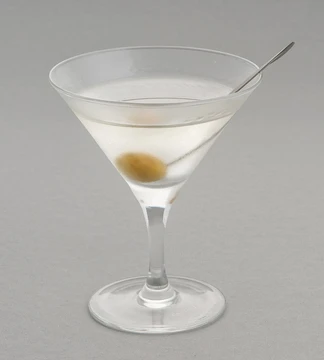
Milk punch
A clarified milk-and-spirit drink popular since the 18th century.

Milk punch is a cold drink made from milk, a spirit such as brandy or bourbon, sugar, and vanilla extract, often topped with a sprinkle of nutmeg. It can be clarified by adding ingredients that curdle the milk, so the solid bits that make it cloudy can be strained out.
The earliest known mention of the drink is generally traced to a 1660s or earlier English source, though an early reference appears in William Sacheverell's travelogue about Iona (published 1688–1690s). Its later popularity, if not its invention, has been credited to Aphra Behn. The first recorded recipe appears in a 1695 cookbook ('The Closet of Sir Kenelm Digby Opened' or similar period sources). Early versions were served from a punch bowl and resembled posset or syllabub, using curdled and strained cream that left only lactic acid. This method was meant to preserve the drink, which made it a popular bottled item. Curdling could be achieved by adding alcohol or acid, by heating, or both—as in a 1763 recipe from Benjamin Franklin that combined brandy and lemon with hot milk.
Milk punch reached its peak popularity around the mid-1700s. Its shelf stability made it a common bottled beverage. In literature, the drink appears in Chapter 50 of *The Pickwick Papers*, where Mr. Pickwick, Mr. Bob Sawyer, and Mr. Benjamin Allen drink it on their way to Tewkesbury.
Today, milk punch is often served in a glass and made with fresh milk or cream. It is a common drink in New Orleans and a traditional Christmas beverage throughout the Deep South. Eggnog, sometimes called egg milk punch, is a variation of milk punch.
Quick Facts
- Ingredients
- Brandy, whiskey, or bourbon
- Served
- Cold
- Garnish
- Nutmeg
- Prep
- Combine liquor and sugar with ice. Shake well. Strain and ice and milk.
- Drinkware
- Collins glass
Facts from the source article.
Lore & Background
The earliest known mention of milk punch is generally traced to a 1660s or earlier English source, though an early reference appears in William Sacheverell's travelogue of the Scottish isle of Iona (published 1688–1690s). Later accounts attributed its spread, if not its origin, to Aphra Behn. The earliest recorded recipe for milk punch dates to a 1695 cookbook ('The Closet of Sir Kenelm Digby Opened' or similar period sources). Originally served in a punch bowl, early recipes resembled posset and syllabub in the use of curdled, strained cream, leaving only lactic acid. This technique aimed at food stability, a quality that made it popular as a bottled drink. Curdling could be accomplished through the addition of alcohol or acid, by heating, or both, such as in a recipe recorded by Benjamin Franklin in 1763 that used brandy and lemon added to hot milk.
Reader's Guide
Milk punch reached the height of its popularity in the middle of the 18th century. Because of its shelf stability, it was popular as a bottled drink. Queen Victoria issued a royal warrant in 1838 to the company of Nathaniel Whisson as 'purveyors of milk punch to Her Majesty'. The beverage appears in literature: it is drunk by Mr Pickwick, Mr Bob Sawyer and Mr Benjamin Allen in Chapter 50 of The Pickwick Papers, while on their way to Tewkesbury. Modern versions are often served in a glass and made with fresh milk or cream. It is common in New Orleans and traditional at Christmastime throughout the Deep South. Eggnog is a variation of milk punch, sometimes called egg milk punch.
Did You Know?
- Benjamin Franklin recorded a recipe in 1763 using brandy and lemon added to hot milk.
- No reliable historical record confirms a royal warrant for milk punch to Nathaniel Whisson in 1838.
Origins & Early Documentation
Milk punch traces its earliest written mention to 1688, when the traveler William Sacheverell described the drink while visiting the Scottish isle of Iona. Though Sacheverell's account predates any known recipe, later writers credited the playwright Aphra Behn with either originating the beverage or at least spreading its popularity across England. The first actual recipe we have on record appears in a 1711 cookbook, confirming that by the early eighteenth century the drink had moved beyond anecdotal reference into the realm of reproducible kitchen craft. In those earliest iterations, milk punch was not a simple stirred drink but a communal affair, served from a large punch bowl. Its preparation closely mirrored the older English traditions of posset and syllabub, both of which relied on curdled and then strained cream. This shared lineage suggests that milk punch grew organically out of a broader culture of spiced, fermented dairy beverages rather than appearing as a sudden innovation.
The Science of Curdling & Clarification
The defining technical challenge of milk punch was its clarification. The goal was to remove the solid proteins that gave the milk its cloudy opacity, leaving behind a smooth, translucent liquid. This was achieved by inducing curdling—either through the addition of alcohol, an acid, direct heat, or some combination of these methods. A well-known example comes from Benjamin Franklin, who in 1763 recorded a method calling for brandy and lemon juice to be introduced into hot milk. The curdling process separated the casein and other solids, which could then be strained away, leaving behind a beverage whose remaining character was largely lactic acid. This was not merely an aesthetic choice; the technique served a practical purpose of food stability. By removing the proteins that would otherwise spoil, the clarified punch could be stored and even bottled without rapid deterioration. This shelf-stable quality would later become one of the drink's most commercially significant attributes, enabling it to travel far beyond the immediate table where it was prepared.
Peak Popularity & Royal Patronage
Milk punch reached the apex of its cultural prominence during the middle decades of the eighteenth century, when its reliable shelf life made it a favorite for bottling and distribution far from its point of preparation. Its appeal extended well beyond the kitchen, into the halls of power and the pages of literature. In 1838, Queen Victoria granted a royal warrant to the firm of Nathaniel Whisson, officially designating them as purveyors of milk punch to Her Majesty—a mark of prestige that underscored how deeply the drink was embedded in English social life. The beverage also found a place in the literary imagination; in Chapter 50 of Charles Dickens's The Pickwick Papers, the characters Mr. Pickwick, Mr. Bob Sawyer, and Mr. Benjamin Allen share a round of milk punch during their journey toward Tewkesbury. This scene captures the drink's role as a convivial, unpretentious companion to travel and fellowship, a far cry from the formal punch-bowl gatherings of earlier centuries yet still rooted in the same spirit of shared indulgence.
Modern Life & Southern Traditions
In contemporary settings, milk punch has shed much of its formal, communal presentation. Where it once poured from a large bowl at a gathering, modern preparations are typically crafted to order and served in an individual glass, often using fresh milk or cream rather than the aged, curdled preparations of earlier centuries. The drink has found a particularly enduring home in the American South, where it remains a common fixture in New Orleans and a traditional staple of Christmastime celebrations throughout the Deep South. Its influence also extends into the broader landscape of dairy-based beverages: eggnog, one of the most widely recognized seasonal drinks in the English-speaking world, is essentially a variation of milk punch, sometimes referred to in older bartending manuals as egg milk punch. Harry Johnson's 1888 Bartenders' Manual includes a dedicated recipe under that very name, linking the modern cocktail tradition directly back to the eighteenth-century original. Thus, while the name milk punch may be less familiar to many drinkers today, its descendants remain deeply woven into everyday ritual.
Frequently Asked Questions
What is Milk punch?
Milk punch is a chilled brandy-based cocktail built on milk, sugar, vanilla, and often a dusting of nutmeg. It traces its origins to English sources from the 1660s or earlier, making it one of the oldest documented spirit-and-dairy drinks.
What are the core ingredients in Milk punch?
The classic recipe calls for milk, a spirit such as brandy or bourbon, sugar, and vanilla extract, with nutmeg sprinkled on top as a finishing touch. The dairy and sweeteners give it a rich, creamy body while the spirit supplies the alcoholic backbone.
How does the clarification process work in Milk punch?
An acid or curdling agent is added to the milk, causing the proteins to clump together and trap the cloudiness and impurities in solid curds. Those curds are then strained out, leaving a clear, shelf-stable liquid that can be stored for extended periods.
When was Milk punch first recorded in writing?
The earliest known mention comes from an English source dating to the 1660s or possibly earlier, and William Sacheverell's late-1680s travelogue also references the drink. The first concrete written recipe appeared in 1695, and Aphra Behn is frequently credited with boosting its later popularity.
Why did Milk punch peak in popularity during the mid-18th century?
Its clarified form offered remarkable shelf stability, which made it practical to store and transport well before modern refrigeration existed. That durability, paired with its smooth, approachable flavor, turned it into a widely favored staple of 18th-century drinking culture.
More in Cocktails with brandy 1-19
Spotted an error? Know more?
Reader corrections go straight into our review queue. Suggest an edit · How this site is sourced