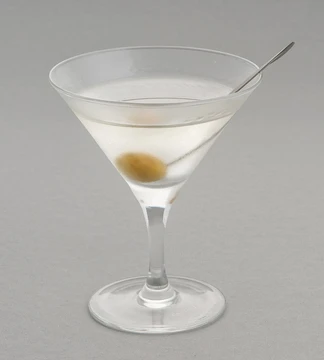
Atomic (cocktail)
A champagne cocktail popularized in 1950s Atomic City Las Vegas.

In the 1950s, the Las Vegas Chamber of Commerce and local casinos helped make the Atomic cocktail a popular champagne drink. Las Vegas was often called the “Atomic City” back then. The name was also applied broadly to other drinks from that era with themes tied to atoms, nuclear fission, or rocket flights.
One recipe, recorded by cocktail historian David Wondrich, uses equal parts vodka and brandy (or Cognac), stirred or shaken with a little sherry, then strained and topped with Brut champagne. An orange wedge is a common garnish. A U.S. Army information film from the time showed versions that bubbled actively, likely from dry ice.
The Atomic Age, Jet Age, and Space Age shaped popular culture in architecture, furniture, fabrics, and style, and inspired many cocktail names. Gideon Bosker’s 1998 book *Atomic Cocktails* discusses the term and includes recipes like the Rocket Man, Apricot Fission, and Cognac Zoom. His Ray Gun cocktail mixes 2 oz. of green Chartreuse with 1 oz. of blue Curaçao and ice, strained, then topped with champagne. The Oppenheimer Martini is said to be a recipe the scientist modified when he couldn’t sneak enough vermouth into top-secret facilities.
Various “atomic” cocktails were served in the Desert Inn’s panoramic Sky Room, which offered the highest view in Las Vegas at the time. Patrons reportedly “drank like fish” and sang while watching atomic bomb tests detonate in the distance. Sven Kirsten, author of *The Book of Tiki*, called tiki bars “the emotional bomb shelter of the Atomic Age.” Jeff Berry’s *Beachbum Berry Remixed* notes that almost every tiki bar served drinks named the Flying Saucer and Star Fire. Earlier tiki drinks had aviation-related names, such as Donn Beach’s Q.B. Cooler and Test Pilot, and Trader Vic’s two-person PB2Y cocktail (named after the Navy’s Coronado plane). Trader Vic’s revised *Bartender’s Guide* later listed newer cocktails like the Space Needle, Panoramic Punch, and Milky Way.
In nuclear medicine, “atomic cocktail” also describes a radioactive mixture drunk by patients with hyperthyroidism, discovered in 1941 through the work of Dr. Saul Hertz and others. The “Atomic Cocktail” song, released by Slim Gaillard in 1945, includes the lyrics: “It’s the drink that you don’t pour, now when you take one sip you won’t need anymore / You’re small as a beetle or big as a whale, Boom!
- Type
- Cocktail
- Era
- 1950s
- Place of origin
- Las Vegas, Nevada
- Key ingredients
- vodka, brandy (or Cognac), sherry, Brut champagne
- Known for
- Atomic Age themed cocktail, associated with Las Vegas atomic tourism
Lore & Background
An Atomic cocktail recipe as described by cocktail historian David Wondrich calls for equal parts vodka and brandy (or Cognac) that is either stirred or shaken with a small amount of sherry, then strained, and finally mixed with Brut (dry) champagne, frequently described as being garnished with an orange wedge. A US Army information film from the era featured some versions that were actively bubbling, likely the effect of dry ice. Various 'atomic' cocktails were served in the panoramic Sky Room of the Desert Inn, which had the highest view in Las Vegas at the time. Patrons reportedly 'drank like fish' and sang songs as they watched atomic bomb tests detonate in the distance.
Reader's Guide
The Atomic cocktail represents a convergence of mid-20th-century popular culture, atomic anxiety, and Las Vegas tourism. Its name and variations reflect the Atomic Age, Jet Age, and Space Age influences on architecture, furniture, fabrics, and style. Gideon Bosker's 1998 book Atomic Cocktails lists themed drinks such as the Rocket Man, Apricot Fission, and Cognac Zoom. The cocktail's legacy extends to historic bars like Atomic Liquors in Las Vegas, renamed in 1952 by owners Joe and Stella Sobchik. The term also appears in nuclear medicine, describing a radioactive mixture drunk by patients with hyperthyroidism, discovered in 1941 through the work of Dr. Saul Hertz and others. Slim Gaillard's 1945 song 'Atomic Cocktail' further embedded the name in popular culture.
Did You Know?
- The Atomic cocktail was popularized by the Las Vegas Chamber of Commerce and local casinos in the 1950s.
- A US Army information film featured versions of the cocktail that were actively bubbling, likely from dry ice.
- Atomic Liquors, a historic bar in Las Vegas, was renamed in 1952 by owners Joe and Stella Sobchik.
- In nuclear medicine, an 'atomic cocktail' refers to a radioactive mixture drunk by patients with hyperthyroidism, discovered in 1941.
The Las Vegas Atomic Age
The Atomic cocktail owes much of its identity to mid-century Las Vegas, a city that briefly earned the nickname "Atomic City." During the 1950s, the local Chamber of Commerce and casino operators embraced the drink as part of a broader branding effort that wove nuclear-age imagery into the Strip's entertainment offerings. Perhaps the most vivid setting for these cocktails was the panoramic Sky Room at the Desert Inn, which at the time offered the highest vantage point in the city. Patrons there reportedly drank enthusiastically and sang along while watching distant atomic bomb tests detonate on the horizon. The cocktail became inseparable from this spectacle of atomic tourism, turning the act of sipping champagne into a participatory experience of Cold War theater. The city's embrace of the Atomic theme extended well beyond the bar, touching architecture, furniture, and fashion, but the cocktail served as a liquid centerpiece of that entire aesthetic movement.
The Recipe and Its Variations
Cocktail historian David Wondrich documented a classic Atomic preparation that calls for equal measures of vodka and brandy or Cognac. The spirit base is either stirred or shaken with a small quantity of sherry, then strained before being topped with Brut champagne. An orange wedge typically serves as the garnish. Beyond the standard barroom version, a US Army information film from the era captured some renditions that were actively bubbling, an effect likely achieved with dry ice rather than natural carbonation. The drink sits firmly in the champagne cocktail family, relying on the effervescence of the wine to lift the heavier spirits and fortified wine. The flexibility of the recipe—whether stirred or shaken, brandy or Cognac—suggests that bartenders of the 1950s treated the Atomic less as a fixed formula and more as a template, adapting it to whatever premium ingredients their establishment stocked.
A Family of Atomic Drinks
The name "Atomic" quickly escaped any single recipe and became a generic umbrella for a wide family of themed cocktails born in the Atomic, Jet, and Space Ages. Gideon Bosker's 1998 book Atomic Cocktails catalogues this proliferation, listing creations such as the Rocket Man, Apricot Fission, and Cognac Zoom. His Ray Gun calls for green Chartreuse and blue Curaçao strained over ice and finished with champagne, while the Oppenheimer Martini is said to have been tweaked by the physicist himself when he could not sneak enough vermouth past security at top-secret facilities. The tiki bar world embraced the same nomenclature: Sven Kirsten described tiki establishments as "the emotional bomb shelter of the Atomic Age," and Jeff Berry noted that nearly every tiki bar poured drinks named Flying Saucer or Star Fire. Earlier aviation-inspired names like Donn Beach's Q.B. Cooler and Test Pilot gave way to Trader Vic's Space Needle, Panoramic Punch, and Milky Way, tracing a clear evolution from propeller to rocket to orbit.
Name Origins and Cultural Echoes
The phrase "atomic cocktail" predates the barroom drink. In nuclear medicine, the term describes a radioactive mixture administered to patients with hyperthyroidism, a practice traced to 1941 and the work of Dr. Saul Hertz and colleagues. Whether the bar cocktail borrowed from this clinical usage or simply shared the era's fascination with atomic imagery remains unclear. Music, too, left its mark: Slim Gaillard released a song titled "Atomic Cocktail" in 1945, with lyrics that painted the drink as something you "don't pour" and that made you feel "small as a beetle or big as a whale." In Las Vegas, the name found a permanent home when Joe and Stella Sobchik renamed their establishment Atomic Liquors in 1952, a bar that still serves the cocktail today. Together, the medical term, the jazz number, and the neon-lit bar illustrate how deeply the atomic lexicon had permeated everyday American culture by the mid-twentieth century.
Frequently Asked Questions
What is the Atomic cocktail?
It is a champagne-based mixed drink that became a staple of 1950s Las Vegas nightlife, blending vodka, brandy or Cognac, a splash of sherry, and Brut champagne. It is typically finished with an orange wedge on the rim.
Where did the Atomic cocktail originate?
It was popularized in Las Vegas, Nevada, during the 1950s, when the city's tourism boards and casino operators leaned into the 'Atomic City' branding to attract visitors. The drink became part of that broader Atomic Age-themed hospitality push.
What does 'Atomic' refer to in the cocktail's name?
The name taps into the mid-century fascination with nuclear science, rocketry, and the space race that defined the 1950s cultural mood. In Las Vegas, the moniker was applied loosely to various themed drinks of that period, not just this one recipe.
Who documented the Atomic cocktail recipe?
Cocktail historian David Wondrich recorded a version calling for equal measures of vodka and brandy (or Cognac), a small pour of sherry, stirred or shaken together, then strained and topped with Brut champagne.
Why is the Atomic cocktail considered notable in cocktail history?
It represents a unique intersection of Cold War-era pop culture and the golden age of Las Vegas cocktail culture, where bars and casinos created themed drinks to match the city's 'Atomic City' identity. It is a reminder of how local tourism marketing shaped what people drank in mid-century America.
More in Cocktails with brandy 1-19
Spotted an error? Know more?
Reader corrections go straight into our review queue. Suggest an edit · How this site is sourced