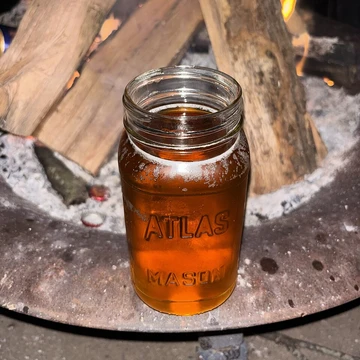
Cider in the United States
American hard cider emerged from colonial apple cultivation and adaptation.
Last updated
In the United States, the term "cider" covers more ground than it does in Europe. It can mean two different things: the alcoholic fermented drink, often called hard cider, or the non-alcoholic sweet or soft cider. In some parts of the country, though, "cider" by itself refers to the alcoholic version (whether from apples or pears), while "apple cider" means the non-alcoholic kind. The story of cider in the U.S. is tightly woven into the story of apple cultivation in the country.
Hard cider
Most immigrants from the British Isles who arrived in the 1600s and 1700s drank hard cider and similar drinks. Apples were among the first crops grown by English-speaking settlers in the New World; ship records show young saplings packed in barrels and many farmers carrying bags of seed, especially among those heading to what is now the Southeast. Within thirty-five years of Jamestown’s founding in 1607, colonists were planting tobacco for profit, which helped make British settlement succeed after earlier failures. But other edible cash crops—rice, maize, and apples—also had value in markets like London, Edinburgh, Dublin, and Cardiff.
Just nine days after the Puritans landed, a man named William Blackstone planted the first apple trees in New England. The first recorded shipment of honeybees to America, crucial for apple pollination, arrived in Virginia in 1622. In New England, John Winthrop, governor of the Massachusetts Bay Colony, noted in 1632 that his tenants paid rent on Governor’s Island with two bushels of apples a year. In 1634, Lord Baltimore told settlers of the new Maryland colony to bring across the sea “kernels of pears and apples, especially of Pipins, Pearemains, and Deesons for making thereafter of Cider and Perry.”
Records show that at least one English cider and cooking apple, Catshead, was grown on Berkeley Hundred Plantation in Virginia around that time; later imports from the UK included Foxwhelp, Redstreak, and the now-extinct Costard. Other records from the Tidewater South indicate that wealthier farmers and plantation owners arranged for French apple varieties like Calville Blanc, Pomme d’Api, and Court Pendu Plat, likely to improve their stock and because keeping early breed-stock alive was difficult.
Quick Facts
- Earliest known successful orchard
- Massachusetts Bay Colony near modern Boston
- Oldest named apple varieties
- Roxbury Russet (1634)
- High Top Sweet (by 1630)
- Rhode Island Greening (1650)
Facts from the source article.
Lore & Background
Most of the 17th- and 18th-century emigrants to America from the British Isles drank hard cider and its variants. Apples were one of the earliest known crops in the English-speaking New World; ships' manifests show young saplings being planted in barrels and many farmers bringing bags of seed with them, with the first settlers headed to what is now the Southeast. Within thirty-five years of the settlement of Jamestown in 1607, the land was put to plow to grow tobacco, but other edible cash crops like apples were grown as they had value in markets of growing cities like London, Edinburgh, Dublin, and Cardiff.
Nine days after the Puritans landed, William Blackstone planted the first apple trees in the New England colonies. The first recorded shipment of honeybees to America, important for the pollination of apples, is recorded in 1622 in Virginia. In New England, John Winthrop, governor of Massachusetts Bay Colony in 1632, recorded his tenants paying their rent on Governor's Island in two bushels of apples a year.
In 1634 Lord Baltimore instructed settlers of the new colony of Maryland to carry across the sea kernels of pears and apples for making cider and perry. There are records of at least one English apple cultivar used for cider and cooking, Catshead, being grown on Berkeley Hundred Plantation in Virginia around this time; later introductions from the UK would have included Foxwhelp, Redstreak, and the extinct Costard. Other records from the Tidewater South show wealthier farmers and plantation owners arranging for the import of French apple varieties, such as Calville Blanc, Pomme d'Api, and Court Pendu Plat.
Diseases, pests, and temperature all presented challenges to growing in Eastern America. Tent caterpillars made no distinction between native Rosaceae and European derived young apple, cherry, quince, plum, and pear trees. Fungi like cedar-apple rust destroyed trees' abilities to produce fruit. In 17th century Britain, orchards had been kept in a relatively open area, but in America, leaving trees without a surrounding fence attracted black bears, woodchucks, skunks, raccoons, elk, and deer.
The climate of the American Southeast had more extremes, with temperatures easily exceeding 26°C in summer but falling below 3°C in winter. Most cider apples brought from Northwest Europe were not bred for high heat and humidity or late season frosts. The earliest known successful orchard in America began in Massachusetts Bay Colony near what is today modern Boston. New England was successful in producing the first viable apples, evidenced by the oldest known and named apple varieties: Roxbury Russet in 1634, High Top Sweet by 1630, and Rhode Island Greening in 1650.
Reader's Guide
The history of cider in the United States is very closely tied to the history of apple growing in the country. By the 1660s regulations on the consumption and distribution of alcohol were being put into place, and court records show fines were being levied for drunkenness on hard cider in Massachusetts Bay Colony, in Maryland, and Virginia, among other places. In 1676, Nicholas Spencer, secretary of the Virginia House of Burgesses, speculated on the cause of riots, attributing them to unripe cider consumed by licentious inhabitants. In 1682, Governor Carteret of New Jersey wrote that at Newark was made great quantities of cider, exceeding any in New England, Rhode Island, or Long Island; a thousand hogsheads (238,481 liters) were filled that year in Newark.
Around this time it became a trend to breed versatile apples that would go well with a joint of pork, could be peeled and baked in a pie or rendered into apple butter, but also had enough juice to ferment into alcohol and could be pressed into cider come autumn harvest. Unbeknownst to the British settlers of central colonies and Appalachia, it is likely some of the cultivars brought by Germans and Swedes introduced genetics that were much hardier to cold weather than the stock they possessed. The crossbreeding of these via pollination introduced genetics valuable to climates like Southern Appalachia. The Endicott family played a role in dispersing cider and perry apples through the nineteenth century; the Endicott Fruit Tree, a pear tree planted in the 1630s, is the oldest living cultivated fruit tree in North America, and the USDA has taken cuttings to examine it for its longevity.
More in Cider
Elsewhere in Cider and Mead
Sources
Compiled from Wikipedia and the sources listed below. Text from Wikipedia is available under CC BY-SA 4.0; this entry is adapted from it.
- Wikipedia: Cider in the United States (CC BY-SA 4.0).
Spotted an error? Know more?
Reader corrections go straight into our review queue. Suggest an edit · How this site is sourced