Boiled cider
A thick, dark apple syrup from colonial New England.
Last updated

Ethanzzzzzz · CC BY-SA 4.0
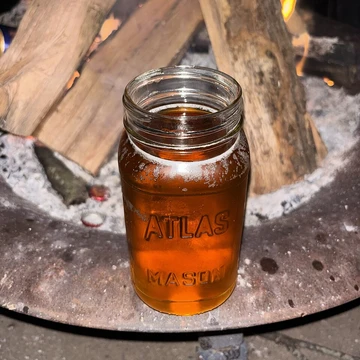
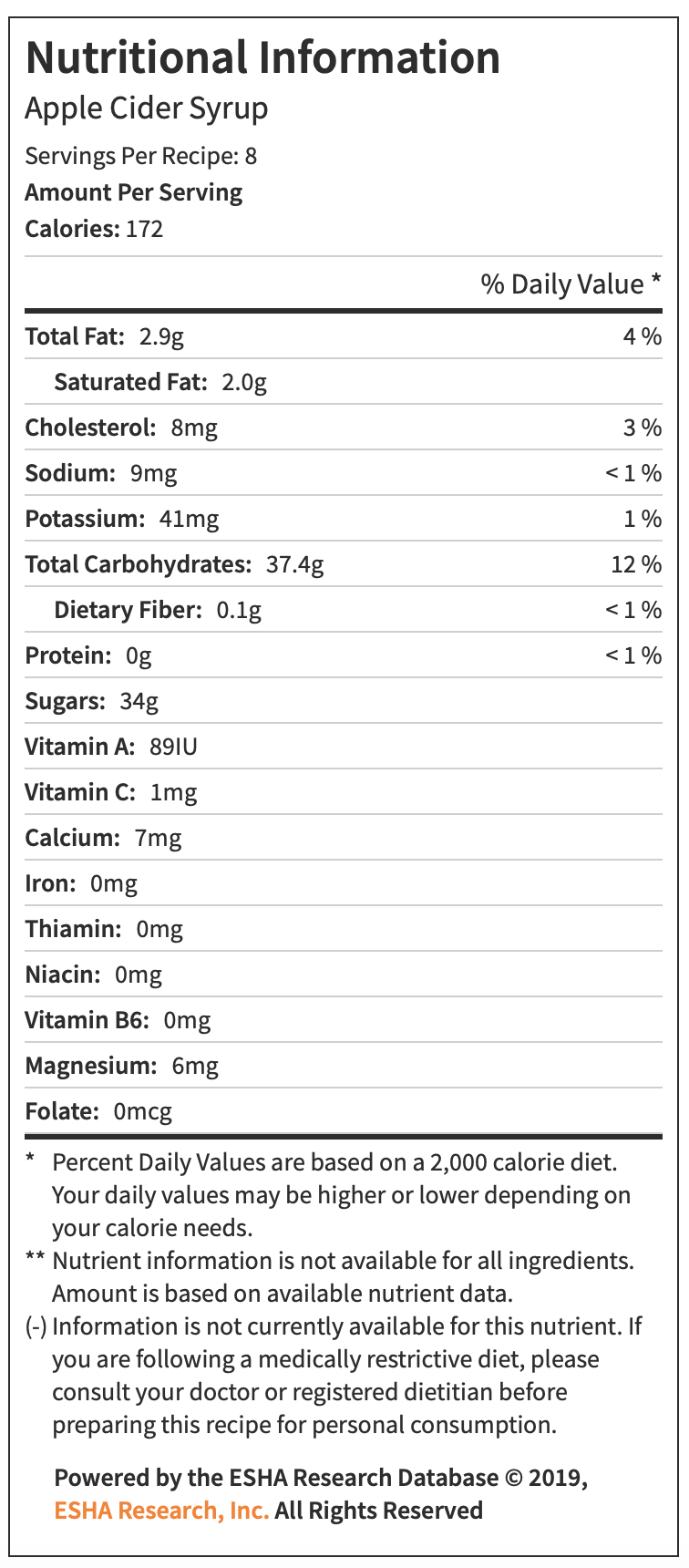
Boiled cider, also known as cider syrup or apple molasses, is a fruit syrup concentrate made by boiling apple cider until most of its water content evaporates. The result is a thick, dark brown, opaque syrup with a concentrated apple flavor. First produced in colonial America, it is still made today in Maine, Massachusetts, and other parts of New England, and is considered an endangered regional food tradition of the United States.
Lore & Background
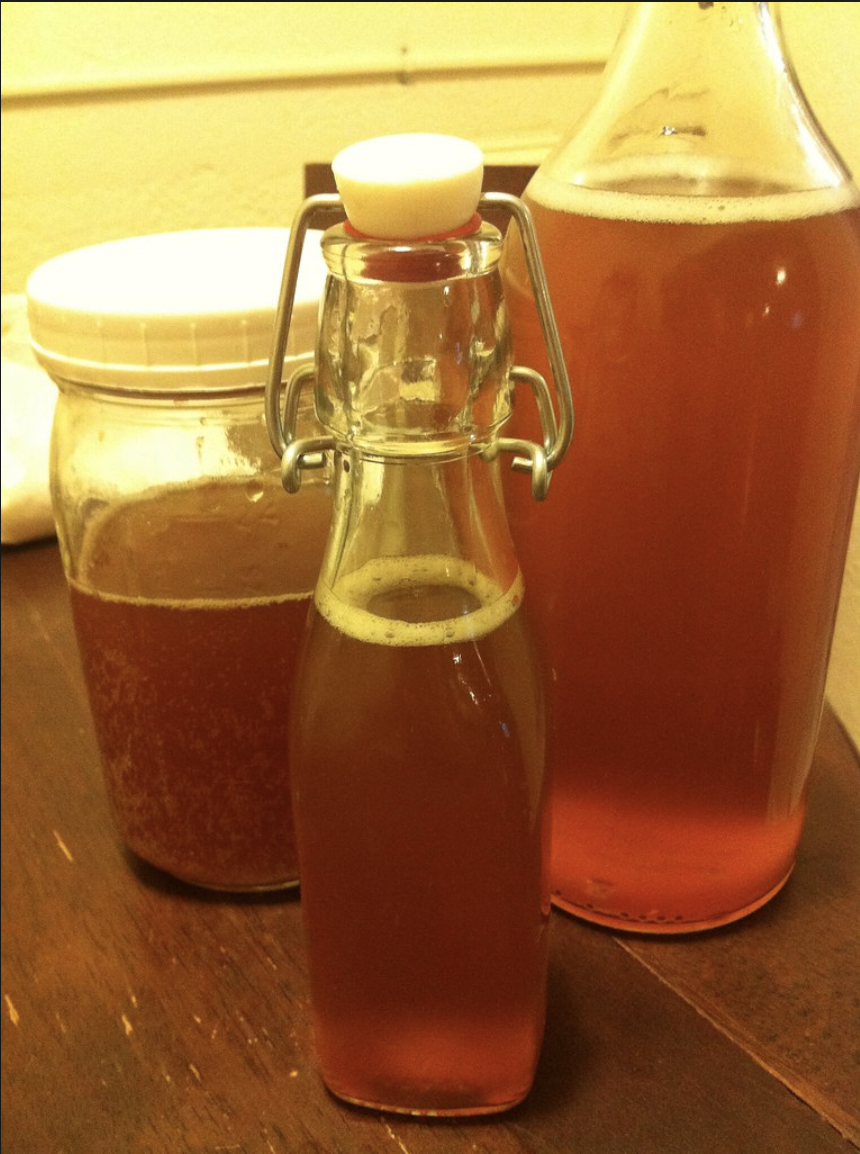
Boiled cider originated in colonial North America, especially in New England, where abundant apples led households to develop methods of preserving the harvest beyond autumn. For backcountry farmers who did not live near central coastal or river routes, boiled cider served as an alternative to maple sugar. During the 18th and 19th centuries, it was mostly produced in rural communities for use as a household sweetener in cooking and baking, appearing in desserts, sauces, and preserves, and sometimes diluted with water when fresh cider was unavailable.
Production traditionally used 'sweeting' apples, which contain less malic acid than other varieties. The juice was boiled in an open, non-reactive metal container, skimmed as it reduced, until its volume was about one-seventh of the original—a labor-intensive and expensive process. One early source describes an alternative method of steam-cooking apples in a container, weighing them down in slatted baskets, pressing the juice through straw, and then reducing that juice. Most manufacturers simply ground, squeezed, and boiled down the apples into fresh juice, fermented them into alcohol, or made cider syrup.
In 1862, Gail Borden Jr. of New York City patented an 'Improvement in Concentrating and Preserving for Use Cider and Other Juices of Fruits' (Patent No. 35,919, dated 22 July 1862), introducing the use of a vacuum pan. Another early method called for treating cider with milk of lime to neutralize malic acid, heating it to boiling, passing it through a filter press, evaporating, and re-filtering to create the final syrup. Modern production boils off the apple cider in evaporator pans similar to those used for maple syrup.
Linguistic Roots of a Fermented Word
The word cider carries a remarkable etymological journey spanning millennia. In Old English, an alcoholic drink made from apples was simply called æppelwīn, meaning apple wine. The term we recognize today first surfaced in Middle English during the 13th century as sicer or ciser, denoting a strong drink, before shifting to sither(e) or cidre in the 14th century.
It was likely borrowed from Old French sizre, a general fermented beverage, and later from cistre or sidre. The Old French form traces back to Gallo-Romance cisera, recorded in Medieval Latin by Alexander Neckam, which is an altered rendering of Church Latin sicera borrowed from Greek sīkéra, ultimately from Hebrew šēkār meaning intoxicating liquor. The specific sense of a fermented apple drink appears in Old French through the Norman chronicler Wace around 1130 to 1140.
Cognates spread across Romance languages such as Spanish and Portuguese sidra and Italian sidro, and into Germanic tongues like German Zider, all flowing from French. Breton chistr and Welsh seidr also trace back through similar pathways. By the 19th century in the United States, cider could denote either pre-fermentation sweet juice or post-fermentation hard cider.
Ancient Origins and the Evolution of Regional Styles
Cider is an ancient beverage whose earliest recorded mention dates to Julius Caesar's first attempt to invade Britain in 55 BCE, where he observed native Celts fermenting crabapples. He carried the discovery back through continental Europe with his retreating troops. Historically, cider was produced from whatever apples were at hand, and style was a minor consideration.
Apples were confined to the cooler climates of Western Europe and Britain, where record-keeping was not yet common. The earliest ciders relied on crab apples, ancestors of the bittersweet and bittersharp varieties used by English makers today. England developed a drier, higher-alcohol version using open fermentation vats and bittersweet crab apples, while France crafted a sweet, low-alcohol cidre by leveraging sweeter apples and the keeving process.
Production evolved through trial and error, with variables spanning spontaneous fermentation, vessel types, environmental conditions, and apple varieties. Refinements arrived later once cider became a commercial product. Today the market divides into standard ciders, made from culinary apples like Gala or heritage and wild varieties like Golden Russet, and a growing range of speciality styles.
Legal Boundaries and the Hard Cider Distinction
Cider's alcohol content spans a wide range, from 1.2% to 8.5% ABV or more in traditional English ciders, and 2.5% to 12% in continental varieties. UK law mandates a minimum of 35% apple juice, whether fresh or from concentrate, while CAMRA argues that real cider must contain at least 90% fresh apple juice. The United States sets a 50% minimum, and France requires cider to be made solely from apples. In Canada, alcoholic cider must fall between 2.5% and 13% ABV.
Across the US and Canada, the term hard cider distinguishes the alcoholic product from non-alcoholic sweet cider sold at cider mills. Perry, a close relative, is produced by fermenting pear juice, and cider itself can be distilled into fruit brandy. Ciders are broadly classified along a spectrum from dry to sweet, and both sparkling and still varieties are produced, with sparkling being the more common form. Adding sugar or extra fruit before a second fermentation can raise the ethanol content of the final beverage.
Appearance, Flavor, and Global Popularity
Cider's visual presentation ranges from cloudy with sediment to completely clear, and its color spans from nearly colorless to amber to brown. These variations stem largely from filtering between pressing and fermentation, though certain apple varieties yield a clear cider without any filtration. Modern mass-produced ciders closely resemble sparkling wine in appearance, whereas more traditional brands tend to be darker and cloudier, often stronger and tasting more intensely of apples. White cider, almost colorless, carries the same apple juice content as conventional cider but is harder to create because the maker must blend various apples to achieve a clearer liquid; these tend to be sweeter and more refreshing, typically sitting at 7 to 8% ABV.
Black cider, by contrast, is a dry amber variety. Cider is widely available in Britain, particularly the West Country, and in Ireland, which together hold the world's highest per capita consumption and the largest cider-producing companies. South West England ciders generally carry higher alcohol content. Cider remains traditionally popular across the Anglosphere, including India, South Africa, Canada, Australia, New Zealand, Hong Kong, and the United States, especially in New England and the Midwest.
Reader's Guide
Boiled cider was historically used as a substitute for imported cane sugar and molasses, serving as a sweetening agent in colonial households. Its significance lies in its role as a regional adaptation to the scarcity of refined sugar and the abundance of apples in New England. During the 18th and 19th centuries, it was a staple sweetener in rural communities, used in desserts, sauces, and preserves, and even diluted with water to approximate fresh cider when the latter was no longer available.
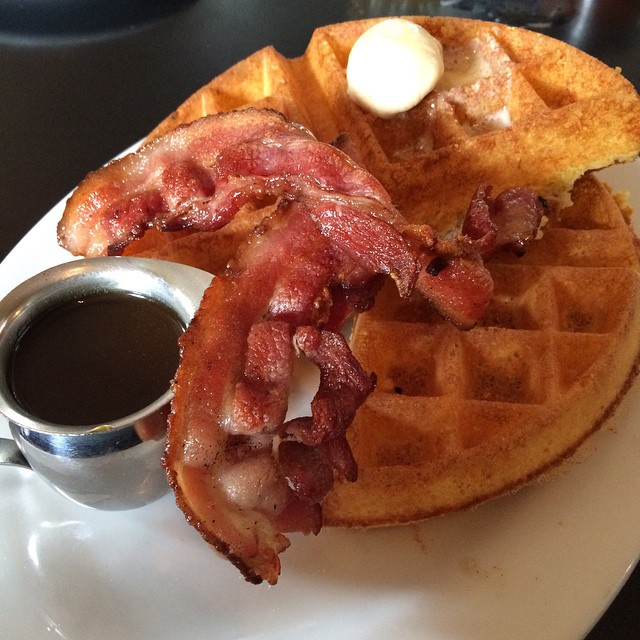
Its decline during the 20th century reflects broader changes: cheaper refined sugars became widely available, refrigeration reduced the need for concentrated fruit products, and traditional cider mills became less common. By the mid-20th century, boiled cider had largely disappeared from everyday household use, surviving primarily as a regional food tradition in parts of New England. Today it is considered an endangered regional food tradition of the United States, still produced in Maine, Massachusetts, and other parts of New England. It is now used as an ingredient in baking and cooking in place of maple syrup or other syrups where an apple flavor is desired, preserving a link to colonial foodways and the ingenuity of early American preservation methods.
More in Cider
Elsewhere in Cider and Mead
Sources
Compiled from Wikipedia and the sources listed below. Text from Wikipedia is available under CC BY-SA 4.0; this entry is adapted from it.
- Wikipedia: Boiled cider (CC BY-SA 4.0).
Spotted an error? Know more?
Reader corrections go straight into our review queue. Suggest an edit · How this site is sourced