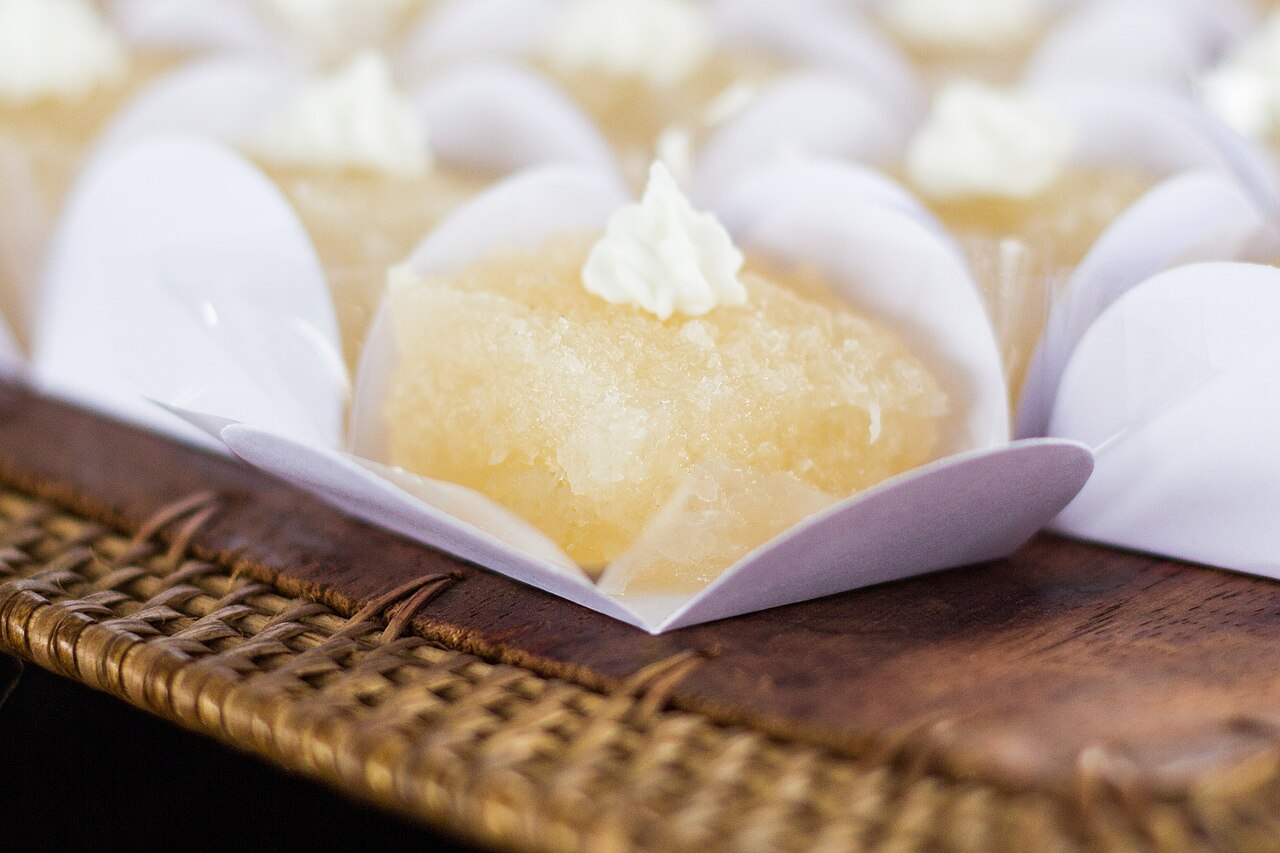
Cocada
A traditional coconut confectionery found across Latin America and Europe.

Libardomm · CC BY-SA 4.0
Cocadas are a traditional coconut sweet found across Latin America and Europe, especially popular in Argentina, Bolivia, Brazil, Colombia, Chile, the Dominican Republic, Cuba, Spain, Mexico, Panama, Venezuela, and Ecuador. These confections are baked in an oven but served at room temperature, giving them a chewy, soft texture. The main ingredients are eggs and shredded coconut. While modern versions use food coloring to create a range of colors, the classic cocada is golden brown. They are frequently topped with whole or chopped almonds. Hundreds of recipes exist, from hard, very sweet balls to versions with a creamy, flan-like consistency. Dried fruits and other ingredients can be added, which also changes the candy’s color.
Quick Facts
- Region
- Latin America, Iberian Peninsula
- National Cuisine
- Spain, Argentina, Bolivia, Brazil, Colombia, Chile, Dominican Republic, Mexico, Panama, Venezuela, Ecuador, Goa / .
- Served
- Room temperature
- Main Ingredient
- Eggs, shredded coconut, food coloring, sugar, brown sugar, coconut milk, condensed milk, fruit syrup
Facts from the source article.
Lore & Background
Cocadas are oven baked but served at room temperature to achieve their chewy and soft texture. Made with eggs and shredded coconut, cocadas come in a variety of colors due to the modern use of food coloring, though traditional variations are golden brown. They are often garnished with almonds, either whole or chopped. There are hundreds of cocada recipes, from typical hard, very sweet balls to cocadas that are almost the creamy texture of flan. Other fruit, often dried, can be added to create variety, which also lends to a wide spectrum of cocada colors.
Reader's Guide
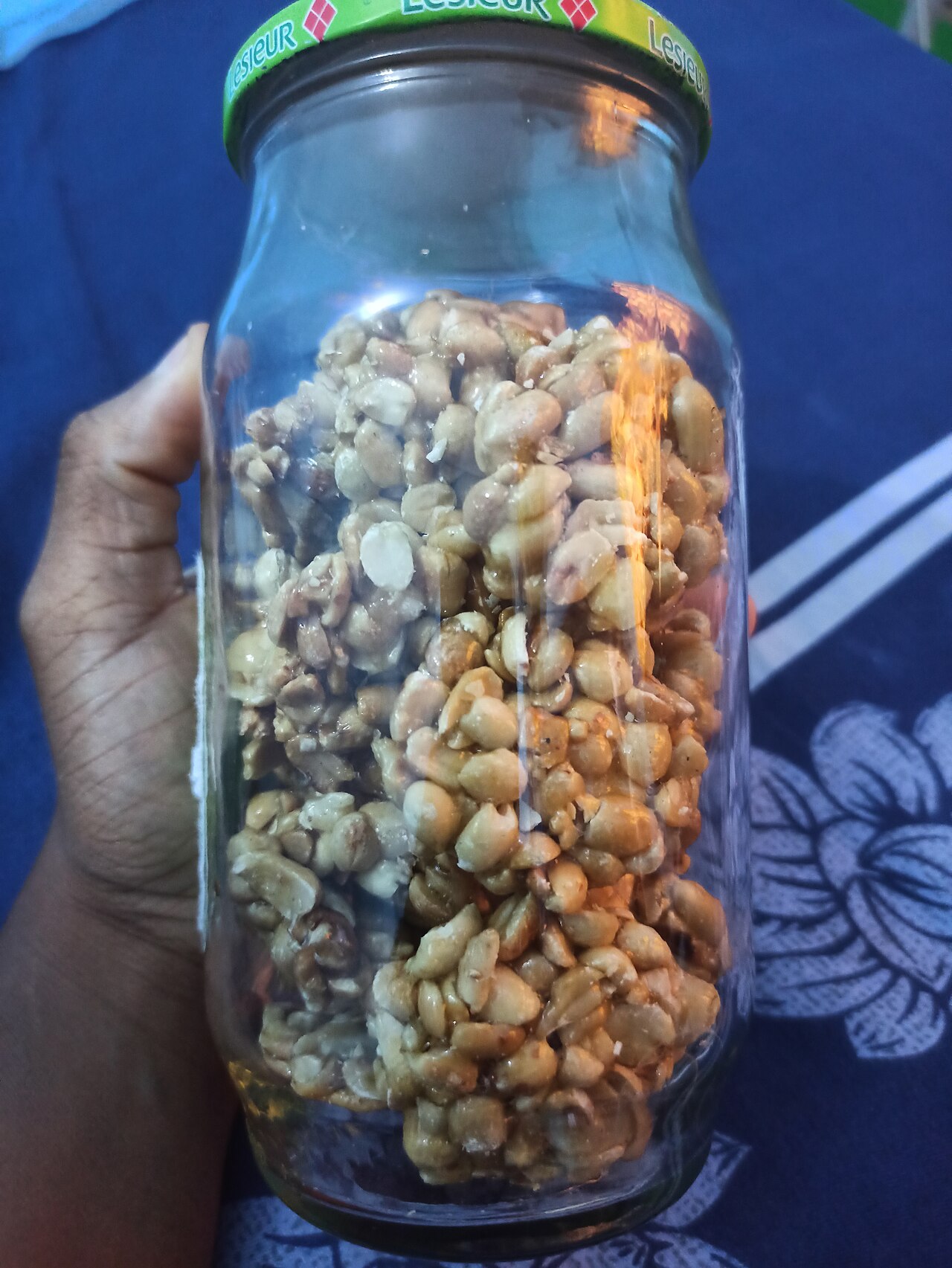
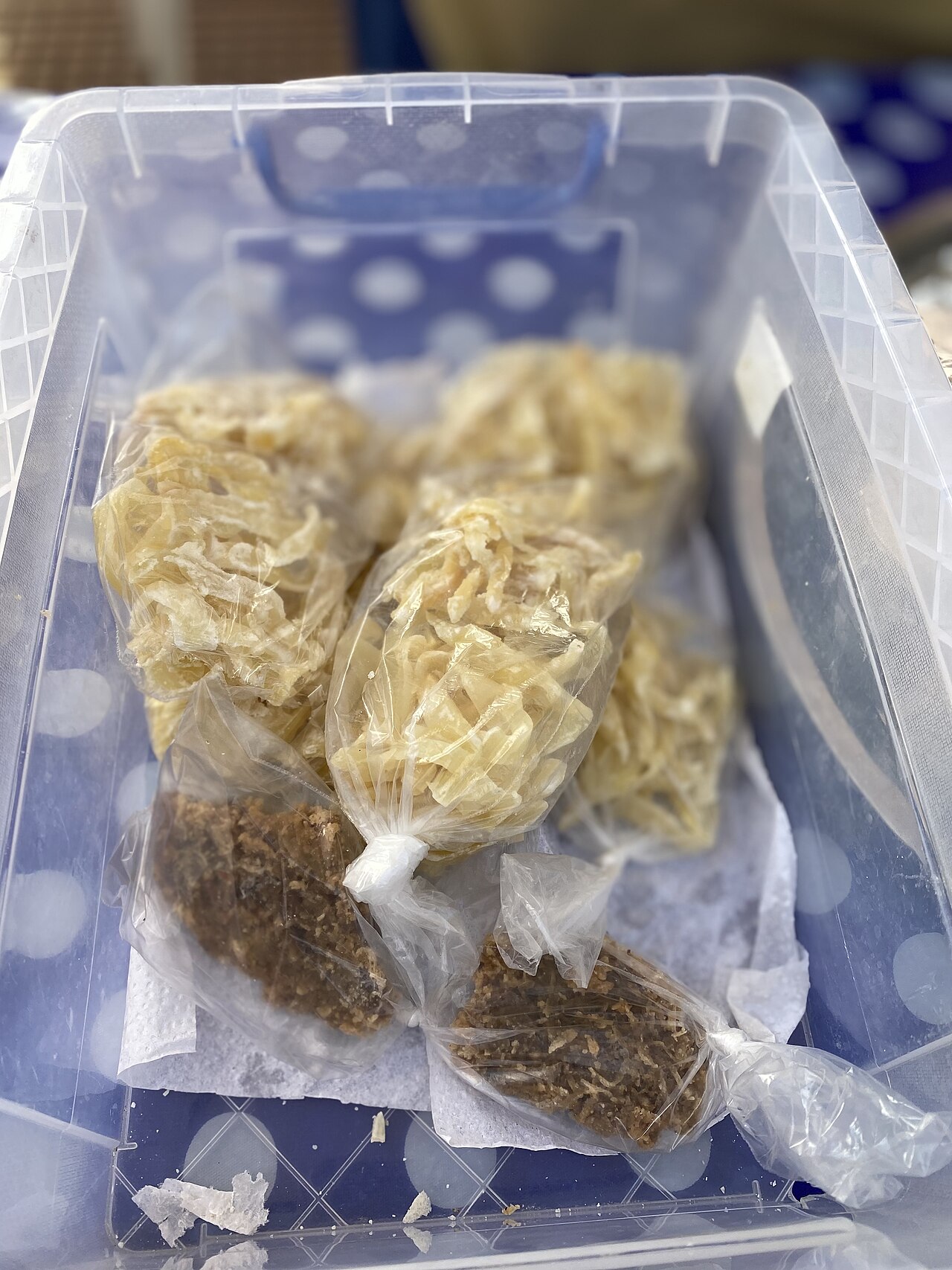
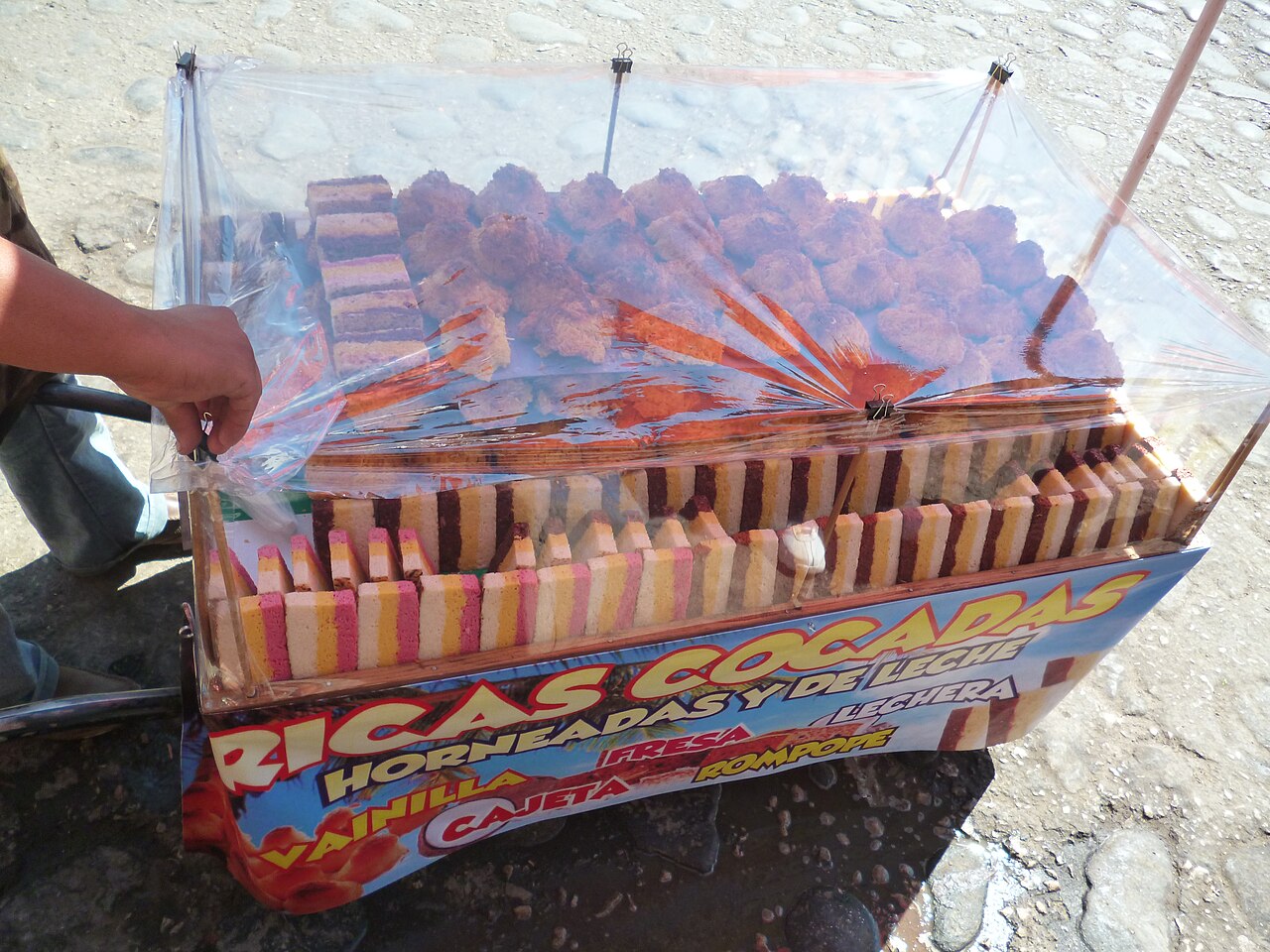
Cocada hold significance as a widespread traditional confectionery across many countries, reflecting regional adaptations and local ingredients. In Colombia and Mexico, conserva de coco are sold as artisan candies from shops, on the streets, out of baskets, and particularly on beaches, carried on large aluminum trays. In Uruguay, they are sold in bakeries as coquitos, with more delicate versions including a cherry on top and syrup coating, sometimes filling boxes of assorted masas. In Brazil, cocada are a traditional confectionery originating from the north-east, often long and thin rather than round, sold on the streets. A variation called 'black cocada' (cocada preta) is made with brown sugar and slightly burnt coconut. The phrase 'rei da cocada preta' (black cocada king) is used in Brazil to refer to an arrogant person who thinks too highly of himself. In Venezuela, conserva de coco is a candy, while cocada is a drink blended with coconut; the candy form is called 'conserva de coco'. Cocada are distinct from queijadinha, which uses more ingredients and gets its shape from the baking tin.
Did You Know?
- In Brazil, 'rei da cocada preta' refers to an arrogant person who thinks too highly of himself.
- In Venezuela, cocada is a drink blended with coconut, while the candy form is called 'conserva de coco'.
- Cocada and queijadinha are not the same; queijadinha uses more ingredients and gets its shape from the baking tin.
A Confection That Crossed Oceans
Cocada is not confined to a single nation or cuisine. This coconut-based treat appears across a remarkable stretch of the globe, from Argentina and Bolivia in South America to Spain in Europe, and even to the former Estado da Índia Portuguesa, a reminder of how colonial trade routes carried recipes far beyond their origins. In the Americas, it holds a place in the culinary traditions of Brazil, Colombia, Chile, Cuba, the Dominican Republic, Ecuador, Mexico, Panama, and Venezuela. The earliest documented reference to the confection dates to 1878 in Peru, suggesting that by the late nineteenth century it was already well established enough to be noted in writing. Its presence on both sides of the Atlantic and across dozens of countries speaks to the universal appeal of combining coconut with sugar and eggs into something simple yet deeply satisfying. Rather than belonging to one culture, cocada functions as a shared dessert language across the Spanish- and Portuguese-speaking world, adapting to local tastes while retaining its essential identity.
Texture, Color, and a Hundred Recipes
At its core, cocada is a marriage of eggs and shredded coconut, baked in an oven and then allowed to cool to room temperature so that the final bite delivers a yielding, chewy softness rather than a crisp snap. The traditional palette is a warm golden brown, but modern bakers have expanded the visual range considerably through the use of food coloring. Almonds, either whole or chopped, are a common garnish that adds both crunch and visual contrast. What makes the confection especially fascinating is the sheer breadth of its recipes. Some versions are hard, intensely sweet balls, while others approach the creamy, custard-like consistency of flan. Dried fruits are frequently folded in, introducing new flavors and pushing the color spectrum even further. The result is a family of treats that can feel almost unrecognizable from one kitchen to the next, yet all trace back to the same humble combination of coconut, sugar, and egg.
Street Stalls, Beaches, and Bakery Counters
In much of Latin America, cocada is as much a street food as it is a home-baked treat. In Colombia and Mexico, the confection—often called conserva de coco—can be found in artisan candy shops, in baskets carried through neighborhoods, and especially along beaches, where vendors balance large aluminum trays on their shoulders or hips. Uruguay offers a slightly different scene: bakeries sell the treat under the name coquitos, and the more delicate versions are crowned with a cherry and dipped in syrup, sometimes filling boxes of assorted masas alongside other pastries. In Brazil, the shape shifts; cocadas tend to be long and thin rather than round, and they are a staple of street vending. The confection's mobility—carried in trays, baskets, and boxes—means it has always been a food of the public sphere, shared in open-air markets and seaside promenades as readily as in private kitchens.
Names, Slang, and What Cocada Is Not
One of the most interesting aspects of cocada is how its very name and identity shift from country to country. In Venezuela, the word cocada refers not to the candy but to a blended coconut drink, while the solid confectionery is called conserva de coco. In Brazil, the confection is clearly distinguished from the queijadinha: cocada is typically just coconut and sugar rolled into an amorphous mass, whereas queijadinha uses additional ingredients and takes its shape from a baking tin. The cultural weight of the treat goes beyond the plate. In Brazilian Portuguese, the phrase "rei da cocada preta" (king of black cocada) is a colorful insult for an arrogant person who overestimates his own importance, a reference to the Cocada Preta, a variation prepared with brown sugar and coconut that has been lightly charred, originating in the country's north-east. A single sweet, then, can be a dessert, a drink, a street snack, and a metaphor for human vanity, depending on where you are and how you say it.
Gallery

Frequently Asked Questions
What is Cocada?
Cocada is a traditional coconut-based confectionery enjoyed widely across Latin America and parts of Europe. In Chile, it's a beloved baked sweet that's served at room temperature rather than hot.
What are the core ingredients in Cocada?
The two essential components are eggs and shredded coconut. Many recipes also call for sugar, and some versions add a topping of whole or sliced almonds.
What does Cocada actually taste and feel like?
It has a soft, chewy texture since it's baked and then cooled to room temperature. The flavor is rich and coconut-forward, with a classic golden-brown appearance in traditional preparations.
Is Cocada a uniquely Chilean dessert?
No, cocadas are shared across many countries including Argentina, Brazil, Colombia, Cuba, Mexico, Spain, and others. Chile is just one of many regions where the treat holds a place in local sweet-making traditions.
What are the main variants of Cocada?
You'll find hard, very sweet ball-shaped versions as well as softer, creamy flan-like preparations. Brazil is known for a distinctive black cocada variant, and modern bakers sometimes use food coloring to produce a range of colors.
More in Chilean cuisine 1-24
Spotted an error? Know more?
Reader corrections go straight into our review queue. Suggest an edit · How this site is sourced