
Brama australis
A pomfret of the southeastern Pacific, heavily fished off Chile.

TUTOXIC · CC BY-SA 4.0
Brama australis, commonly known as the southern rays bream or southern ray's bream, is a species of marine ray-finned fish in the family Bramidae, the pomfrets. It is found in the southeastern Pacific off the coasts of Chile and Argentina, inhabiting subtropical to sub-antarctic waters. This species is notable for its importance to artisanal fisheries off Chile, where it is heavily exploited.
Quick Facts
- Taxon
- Brama australis
Facts from the source article.
Lore & Background
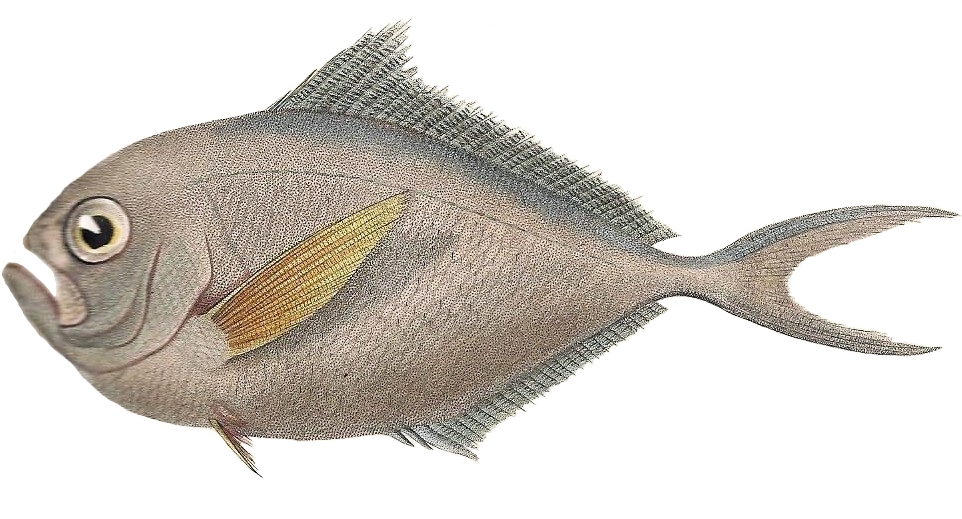
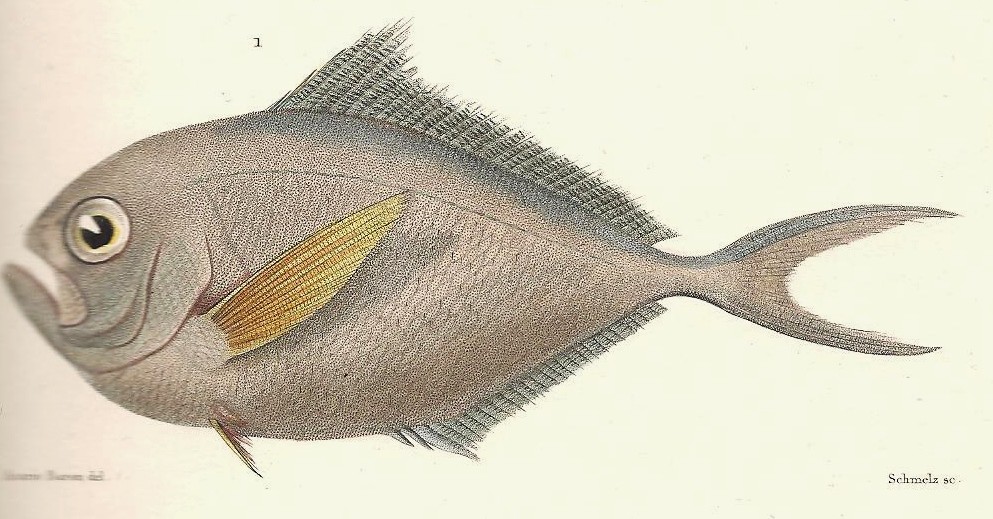
Brama australis has the typical laterally compressed body of a pomfret, with a single dorsal fin lacking spines but containing stiffened fin rays. The anal fin also has no spines and contains fewer than 29 rays, and is similar to the dorsal fin but lacks its high anterior lobe. It grows to a maximum standard length of 53 centimeters. This species is pelagic, living at depths of 15 to 120 meters, and its known range is primarily off the coasts of Chile and Argentina.
Reader's Guide
Brama australis is a carnivorous species that feeds primarily on the krill Euphausia mucronata during the southern summer off Chile, along with other crustaceans such as Pterygosquilla armata and hyperid amphipods. It also consumes crabs, squids, and small fishes. It is a relatively fast-growing species, reaching its full length in 8–9 years. The species is host to 12 species of metazoan parasites, with the copepod Hatschekia conifera being the most common, followed by larvae of the cestode Hepatoxylon trichiuri. Brama australis is mainly caught using long lines and gill nets by artisanal fisheries off Chile, where it is heavily exploited and may be on the verge of being overfished. It is rarely caught elsewhere, usually as bycatch in tuna fisheries.
Did You Know?
- Brama australis is found in the southeastern Pacific off Chile and Argentina.
- The species can attain its full length in 3–5 years.
- It is host to 12 species of metazoan parasites, with Hatschekia conifera being the most common.
Physical Form and Morphology
Brama australis, commonly known as the southern rays bream or southern ray's bream, belongs to the family Bramidae and represents a classic example of the pomfret body plan. Its most striking feature is a strongly laterally compressed silhouette, giving the fish a flattened, disc-like profile that distinguishes it from more elongated marine species. Along its back runs a single dorsal fin that contains no true spines; instead, the fin is supported by stiffened rays that provide structural rigidity. The anal fin mirrors this design in having no spines and fewer than 29 rays, though it differs from the dorsal in lacking the prominent high anterior lobe that gives the upper fin its characteristic shape. In terms of size, this species reaches a maximum standard length of 53 centimetres, roughly 21 inches, making it a moderately sized member of its family. As a marine ray-finned fish, it occupies a distinct ecological niche among the open-water species of the southern hemisphere.
Circumglobal Range and Migratory Nature
The southern rays bream enjoys one of the broadest distributions of any pomfret, spanning the entire Southern Pacific Ocean in a continuous circumglobal band. Its range stretches from the waters off New Zealand all the way to the coast of Chile, threading through subtropical and sub-antarctic seas between latitudes 34°S and 48°S. This latitudinal corridor effectively encircles the globe in the southern hemisphere, making the species a true circumglobal inhabitant of the cold-to-temperate southern seas. As a pelagic fish, it inhabits the open water column rather than the seafloor, typically ranging between depths of 15 and 120 metres. The species is described as highly migratory, meaning individuals and populations move substantial distances across this vast oceanic expanse. This combination of wide geographic spread, open-ocean habitat, and long-distance movement places Brama australis among the most cosmopolitan of southern marine fish, linking ecosystems across thousands of kilometres of Pacific water.
Diet, Growth, and Parasite Community
As a carnivorous pelagic predator, Brama australis occupies a mid-trophic position in the southern ocean food web. Its diet is notably diverse: during the southern summer off Chile, it feeds heavily on the krill species Euphasia mucronata, while other crustaceans such as Pterygosquilla armata and hyperid amphipods also form important components of its meals. Records additionally show it consuming crabs, squids, and small fishes, indicating a flexible feeding strategy across seasons and locations. Growth in this species is relatively rapid for a pomfret, with individuals reaching their full adult length of 53 centimetres within just eight to nine years. The fish also supports a small but measurable community of metazoan parasites, with twelve distinct species documented. The copepod Hatschekia conifera is the most prevalent of these, followed by the larvae of the cestode Hepatoxylon trichiuri. This parasite assemblage, while modest in number, provides a useful biological marker for tracking the movements and population structure of this migratory species across the Southern Pacific.
Fisheries Pressure and Conservation Outlook
The primary human interaction with Brama australis occurs through artisanal fisheries operating off the coast of Chile, where the species is targeted using long lines and gill nets. These small-scale operations represent the bulk of the catch, making Chile the central location of commercial interest for this otherwise rarely encountered fish. Elsewhere in its vast range, the southern rays bream is seldom caught as a primary target; when it does appear in other fisheries, it is typically collected as incidental bycatch in tuna operations. The conservation status of the species is a cause for concern. Heavy exploitation in Chilean waters has placed Brama australis on the verge of overfishing, with current fishing pressure potentially exceeding the population's capacity to replenish itself. Given that the species reaches full size in eight to nine years, sustained heavy harvesting could deplete local stocks before new cohorts mature. The combination of limited geographic exploitation, bycatch vulnerability, and the risk of overfishing in its main fishery makes the long-term outlook for this circumglobal pomfret a matter of ongoing management attention.
Gallery
Frequently Asked Questions
What is Brama australis?
Brama australis is a marine ray-finned fish commonly called the southern rays bream or southern ray's bream. It belongs to the family Bramidae, which makes it a type of pomfret native to the southeastern Pacific.
Where can you find Brama australis in the wild?
This species inhabits subtropical to sub-antarctic waters off the coasts of Chile and Argentina in the southeastern Pacific. It is most closely associated with Chilean coastal fisheries.
What role does Brama australis play in Chilean cuisine?
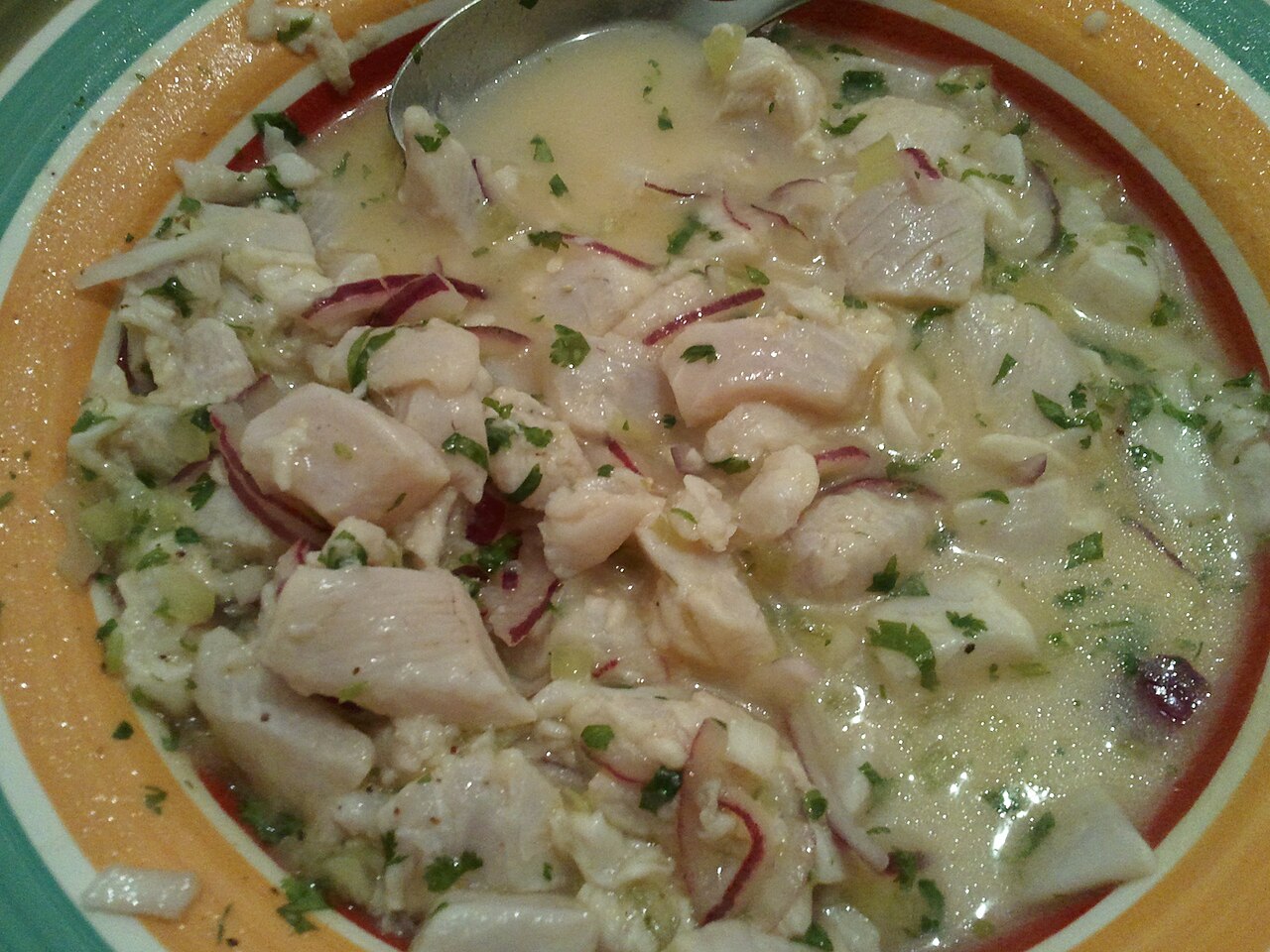
It is a staple catch for artisanal (small-scale, local) fishers along the Chilean coast, making it a familiar ingredient in regional seafood dishes. Its heavy exploitation in those fisheries underscores how central it is to local food traditions.
How is Brama australis related to other pomfrets?
It sits within the Bramidae family, the same group that includes the well-known Atlantic and Pacific pomfrets. What sets it apart is its exclusive range in the southeastern Pacific, distinguishing it from its more northern relatives.
Is Brama australis under pressure from fishing?
Yes — it is heavily exploited by artisanal operations off Chile, which makes sustainable management a recurring concern among those who follow Chilean seafood. Fans of the dish often note that its abundance in local markets reflects that intense harvest.
More in Chilean cuisine 1-24
Spotted an error? Know more?
Reader corrections go straight into our review queue. Suggest an edit · How this site is sourced