
Arroz a la valenciana
A global family of rice dishes from Valencian tradition.

El Mono Español · CC BY-SA 4.0
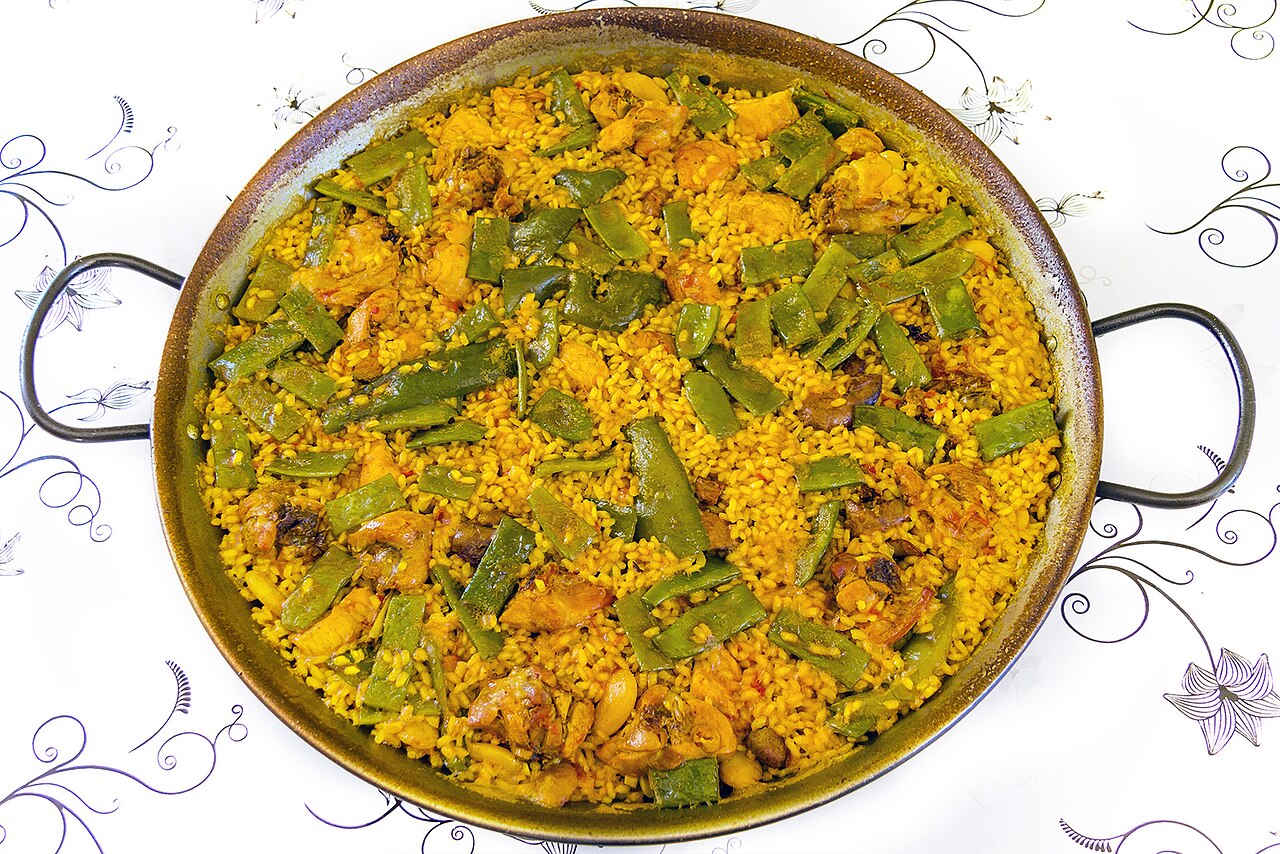
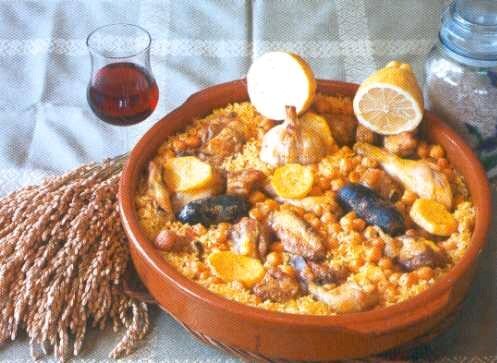
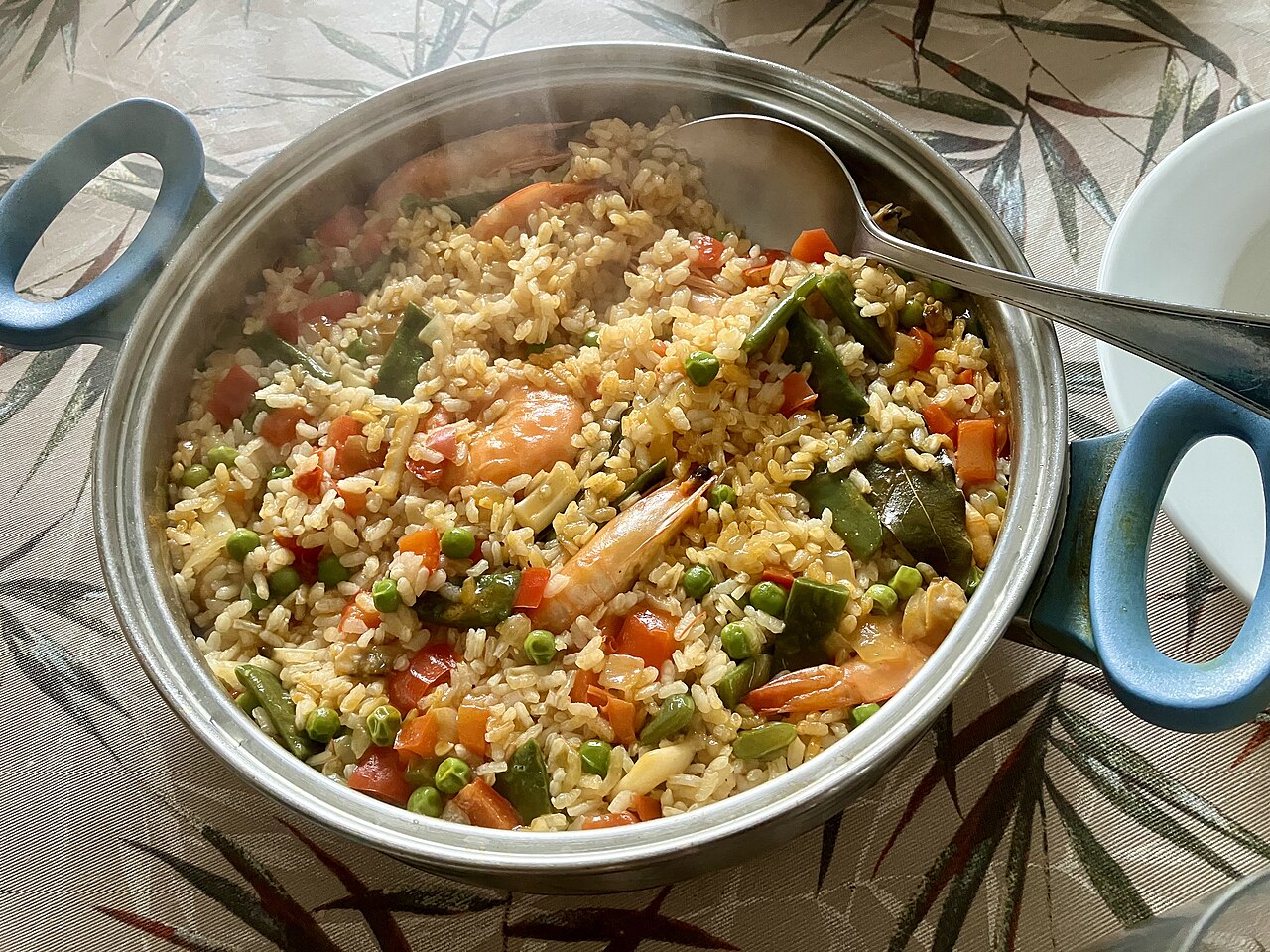
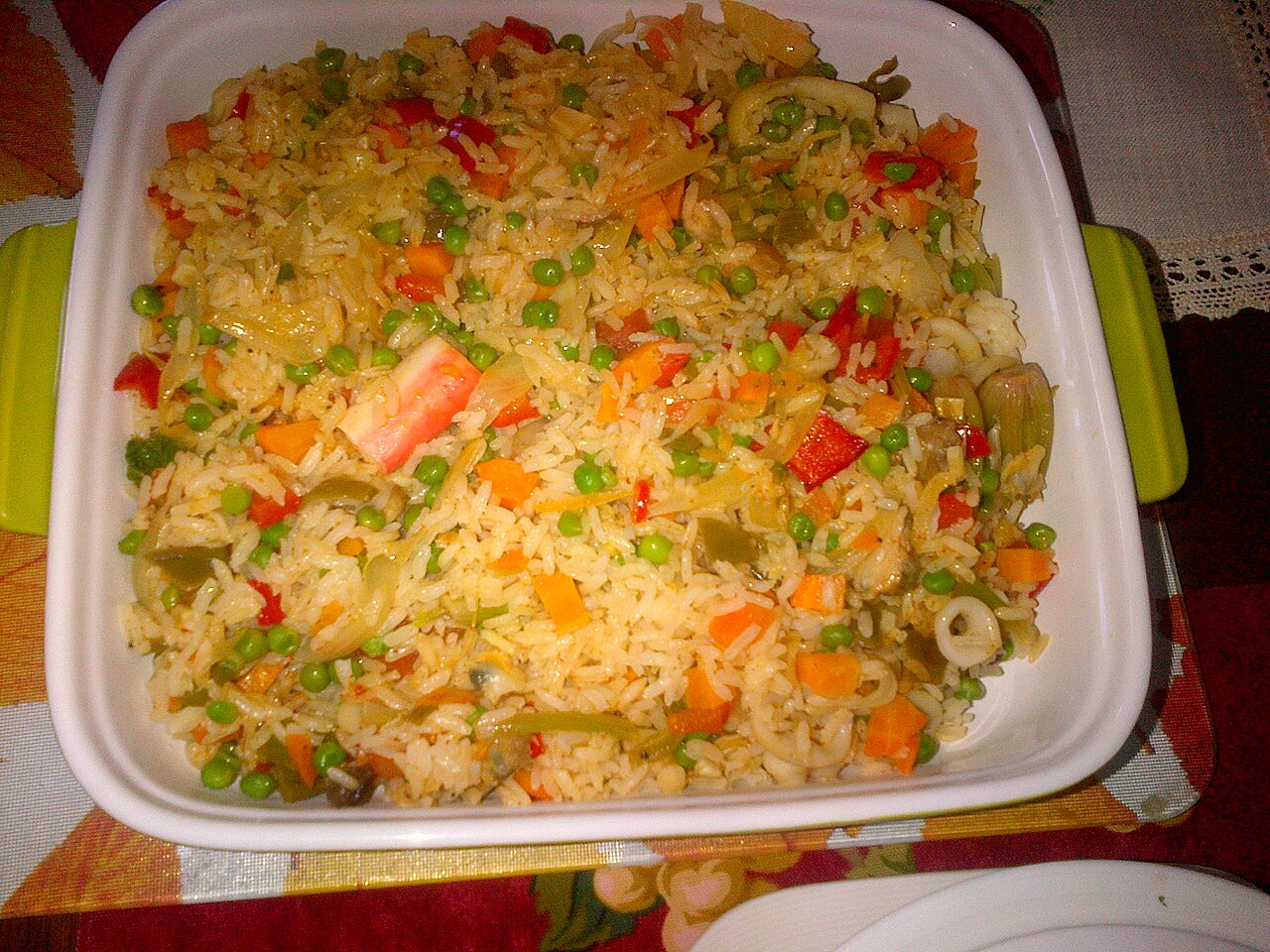
Arroz a la valenciana (also called Valencian rice or, in Valencian, arròs a la valenciana) refers to a broad family of rice dishes found in many world cuisines, all tracing back to the rice-cooking traditions of the Valencian Community in eastern Spain. One well-known descendant of this generic cooking method—developed in the old kingdom of Valencia—is paella, which itself has spawned modern variants. The technique for preparing Valencian-style rice has been in use since the colonial period and appears in the cuisines of Argentina, Colombia, Cuba, the Philippines, Nicaragua, Portugal, Uruguay, and Venezuela. Valencian paella specifically did not appear until the late 19th century, created by peasants in the Horta of Valencia. In Spain, a paella that includes ingredients considered “not properly Valencian” is informally and often derogatorily called *arroz con cosas* (“rice with stuff”).
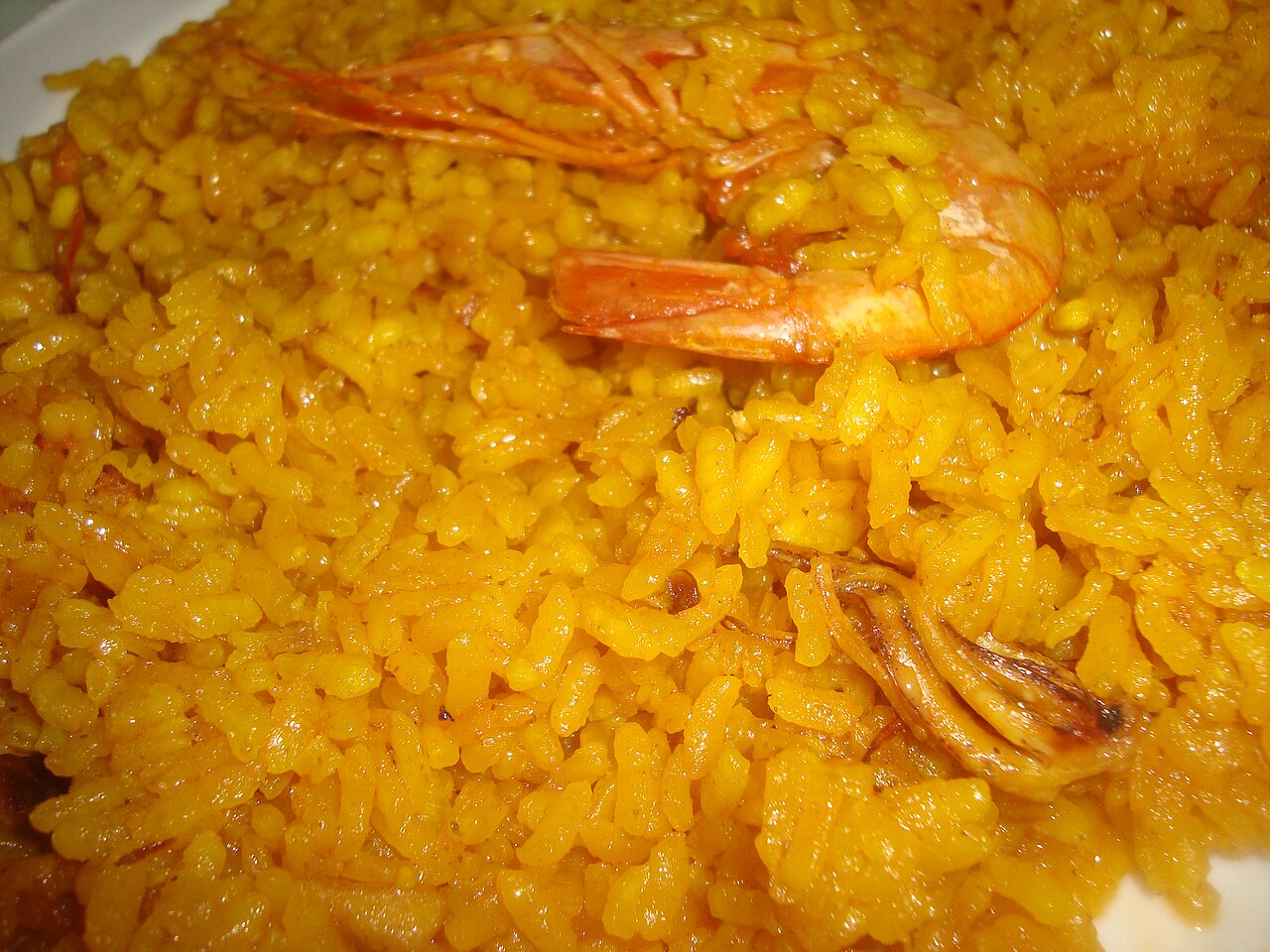
Despite the wide variety of recipes, all versions of arroz a la valenciana share certain features. The rice is typically dry (no broth) and colored with spices—originally saffron. Vegetables, meats, and seafood are common additions.
**History**
Rice was likely grown in Valencia before the Moorish period, but the Arabs expanded its cultivation and diversified its uses. Medieval cookbooks from both Christians and Muslims show that rice was already being seasoned with saffron at that time; an example is *arròs en Cassola al forn* by Mestre Robert (16th century). Over time, rice culture grew in importance in Valencia, with recipes incorporating various vegetables and meats. During the colonial era, arroz a la valenciana spread to Spanish colonies as far apart as Nicaragua and the Philippines, where it was adapted to local tastes and ingredients.
The first written mention of arroz a la valenciana appears in an 18th-century manuscript: *Avisos y instrucciones per lo principiant cuiner* by Franciscan friar Josep Orri. Shortly after, in 1780, Friar Gerónimo de San Pelayo published a cookbook in Mexico City that includes a recipe for arroz a la valenciana. Another Mexican cookbook, *New and Simple Art of Cooking* (1836) by Antonia Carrillo, includes a recipe with green chiles and saffron. The dish also appears in a cookbook published in Havana in 1862. José Castro and Serrano remarked that no province knows how to cook rice like Valencia.
Quick Facts
- Country
- Latin America, Philippines (ultimately from Valencian Community, )
- Course
- Meal
- Main Ingredient
- rice · saffron, annatto or turmeric to color · seafood · meats · vegetables
Facts from the source article.
Lore & Background
Although rice was probably grown in Valencia before the Moorish era, it was the Arabs who furthered its cultivation and diversification of use. This is reflected in both the medieval cookbooks of Christians and Muslims, in which it is evident that they were already seasoning their rice with saffron in this era; an example of this is arròs en Cassola al forn by Mestre Robert (16th century). As time went by, the culture of rice became important in Valencia, with different recipes that added vegetables and meats. In the colonial era, Arroz a la valenciana spread to Spanish colonies in the new world, to countries as far apart as Nicaragua or the Philippines. The recipe has been adapted over time to include new ingredients and to cater to American taste preferences.
The first written mention of Arroz a la valenciana is found in a manuscript from the 18th century: Avisos y instrucciones per lo principiant cuyiner by the Franciscan friar Josep Orri. Shortly afterwards, in 1780 Friar Gerónimo de San Pelayo published a cookbook in Mexico City about Arroz a la valenciana. Additionally, in another Mexican cookbook called New and Simple Art of Cooking (1836) by Antonia Carrillo, there is a Arroz a la valenciana recipe that includes green chiles and saffron. The dish also appears in a cookbook published in La Habana in 1862. In the 1890s the term arroz a la paella ('in a frying pan') began to be used as synonymous with Arroz a la valenciana. In 1903, the French chef Auguste Escoffier dedicated a few pages to riz valenciennes in his first publication of Le Guide Cullinaire.
Reader's Guide
Arroz a la valenciana represents a foundational rice-cooking tradition that spread globally through Spanish colonialism, adapting to local ingredients and tastes. Its significance lies in its versatility: while all versions share commonalities—dry rice colored by spices (originally saffron), and inclusion of vegetables, meats, and seafood—each region developed distinct variations. In Bolivia, it includes chicken, chorizo, and local potatoes; in the Philippines, glutinous rice and coconut milk are used; in Chile, curry or turmeric often replaces saffron. The dish also gave rise to paella, which emerged in the late 19th century among peasants of the Horta of Valencia. In Spain, paella with non-traditional ingredients is informally called arroz con cosas ('rice with stuff'). The legacy of arroz a la valenciana is its enduring presence across Latin America, the Philippines, Portugal, and the Mariana Islands, where it remains a staple for celebrations and everyday meals. Its adaptability and historical depth make it a key example of culinary diffusion and innovation.
Did You Know?
- The first written mention of Arroz a la valenciana is from an 18th-century manuscript by Franciscan friar Josep Orri.
- In the Philippines, arroz valenciana is sometimes called the 'paella of the poor' and is traditionally served during Christmas noche buena.
- In Spain, a paella with non-Valencian ingredients is informally and derogatorily called 'arroz con cosas' ('rice with stuff').
- The dish appears in a Mexican cookbook from 1836 that includes green chiles and saffron.
Roots in the Valencian Soil
Rice cultivation in the eastern Spanish region of Valencia likely predates the Moorish period, yet it was the Arab presence that truly deepened the culture surrounding the grain. Medieval cookbooks from both Christian and Muslim traditions reveal that saffron was already being used to season rice in this era, a practice echoed in the sixteenth-century recipe arròs en Cassola al forn attributed to Mestre Robert. Over centuries, the Valencian approach to rice evolved into a flexible, generic method of preparation that eventually gave rise to countless regional dishes. Notably, what we now call paella did not appear until the late nineteenth century, when peasants in the Horta surrounding Valencia began developing their own version of the dish. This distinction matters: the broader tradition of Valencian-style rice is far older than any single named recipe. Even within Spain, the dish carries a protective identity—when a paella incorporates ingredients deemed improperly Valencian, locals dismiss it with the mocking label arroz con cosas, or rice with stuff. As José Castro and Serrano once observed, no other province in Spain knows how to cook rice the way Valencia does.
A Recipe That Traveled the Empire
The Valencian method of preparing rice carried far beyond Iberia during the colonial era, taking root in cuisines as geographically scattered as Argentina, Colombia, Cuba, the Philippines, Nicaragua, Portugal, Uruguay, and Venezuela. The earliest written reference to the dish appears in an eighteenth-century manuscript by the Franciscan friar Josep Orri, titled Avisos y instrucciones per lo principiant cuyiner. Shortly after, in 1780, Friar Gerónimo de San Pelayo published a cookbook in Mexico City devoted to the recipe. By 1836, Antonia Carrillo's Mexican volume New and Simple Art of Cooking featured a version incorporating green chiles alongside saffron, and a Havana cookbook of 1862 confirmed the dish's presence in the Caribbean. Back in Spain, the 1889 religious celebration in Bergara served the dish to its guests, and Ángel Muro honored the country of rice with a dedicated entry in his 1892 General Dictionary of Cooking. The 1890s saw the phrase arroz a la paella emerge as a synonym, and in 1903 the French chef Auguste Escoffier devoted several pages to riz valenciennes in his Le Guide Cullinaire, cementing the dish's international culinary prestige.
One Name, a Hundred Kitchens
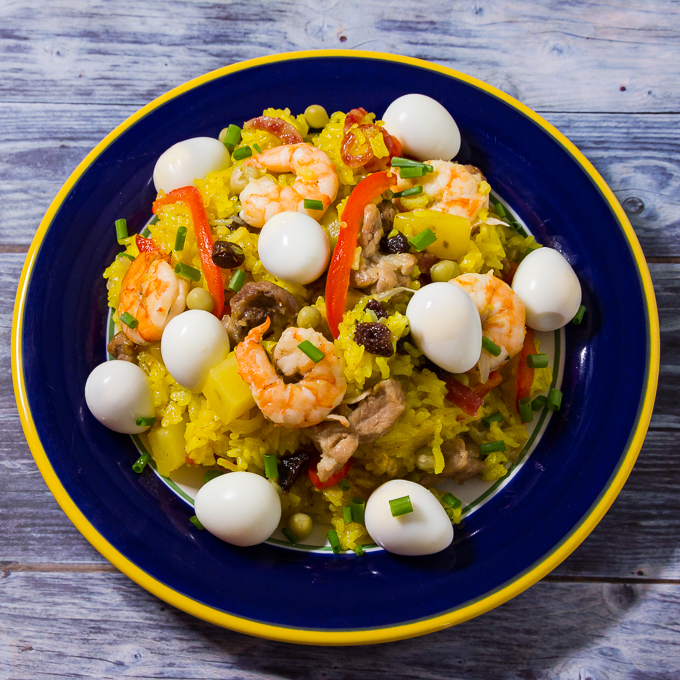
Despite its single name, arroz a la valenciana takes on a different face in every country that adopted it. In Bolivia, the dish pairs chicken or chorizo with peas, string beans, carrots, tomatoes, and local imilla potatoes, colored by paprika, saffron, or red chilli. In the Mariana Islands, Chamorro cooks call it balensiåna and season it with achiote rather than saffron. Chilean versions lean on curry or turmeric for color and often feature an assortment of shellfish—clams, prawns, and mussels—earning the nickname Chilean paella, while a vegetable-only variant is dubbed arroz a la jardinera. Colombian coastal kitchens combine pork or chicken with fish and seafood, seasoned primarily with saffron. In Nicaragua, butter replaces oil, and chiltoma, a sweet pepper, along with tomato sauce, become staples. The Filipino adaptation is perhaps the most distinctive: it uses local glutinous rice varieties called malagkít, colors the grain with achuete, turmeric, or safflower instead of saffron, and may incorporate coconut milk, white wine, or beer into the cooking process.
Shared Threads and Celebratory Roles
Beneath the surface diversity, every version of Valencian-style rice shares a few defining traits. The grain is cooked dry, without a surrounding broth, and takes on its characteristic hue from spices—saffron in the original tradition, though many regions substitute other colorants. Vegetables, meats, and seafood are common additions, giving each kitchen room to express local flavor while preserving the structural identity of the dish. In the Philippines, arroz valenciana occupies a specific cultural niche: it is considered the paella of the poor, a simpler sibling to the more elaborate paelya dishes that use pricier ingredients. It is a staple of Christmas Eve celebrations, patronal fiestas, and other special gatherings, often prepared with chicken, a Filipino-style chorizo, and a medley of onions, tomatoes, bell peppers, green peas, carrots, and parsley. In Spain, the dish's identity is fiercely guarded; any paella that strays from properly Valencian ingredients is sneered at as arroz con cosas. From Escoffier's 1903 recognition to the colonial-era cookbooks of Mexico and Cuba, arroz a la valenciana stands as one of the most widely traveled and locally reinvented rice preparations in the world.
Gallery
Frequently Asked Questions
What is Arroz a la valenciana?
It is a broad family of rice dishes rooted in the rice-cooking traditions of the Valencian Community in eastern Spain. The method has spread across many world cuisines, and paella is one of its most well-known descendants.
Where did Arroz a la valenciana originate?
The dish traces its roots to the old kingdom of Valencia in eastern Spain, where the rice-cooking technique was developed. It was later carried to numerous countries during the colonial period, appearing in the cuisines of Argentina, Colombia, Cuba, the Philippines, Nicaragua, Portugal, and Uruguay.
What is the earliest written record of Arroz a la valenciana?
The first known written reference appears in an 18th-century manuscript by Friar Josep Orri, titled 'Avisos y instrucciones per lo principiant cuiner.' A separate early record is a 1780 cookbook by Friar Gerónimo de San Pelayo in Mexico City, which includes a recipe for the dish.
What is Arroz a la valenciana called in other countries?
In the Philippines it is commonly known as 'arroz valenciana' or 'aros balensiyana,' while in Chamorro cuisine it goes by the name 'balensiåna.' The dish appears under various local names across Latin America, Portugal, and Southeast Asia.
What does 'arroz con cosas' mean in relation to Arroz a la valenciana?
It is a derogatory Spanish term used to dismiss non-traditional versions of the dish that pile on arbitrary ingredients. The phrase literally translates to 'rice with stuff' and is used to criticize departures from the authentic Valencian rice-cooking method.
More in Chilean cuisine 1-24
Spotted an error? Know more?
Reader corrections go straight into our review queue. Suggest an edit · How this site is sourced