Beer in Chile
Chile's beer culture blends German heritage with craft innovation.

S. Rae from Scotland, UK · CC BY 2.0
Beer in Chile is primarily pale lager, with a strong German influence dating to the 19th century. The country also has a tradition of chicha, often made from grapes (the most common variety) or apples, though maize-based versions exist; modern beer production began with European immigrants and now includes a growing craft beer sector.
- Traditional drink
- Chicha (grape chicha)
Lore & Background
Chile has a long tradition of brewing chicha, which is most commonly made from grapes (grape chicha) but also from apples or maize, influenced by Andean cultures; during colonial times, apple and grape chicha became common as a cheaper alternative to wine. Modern beer history began in the 19th century after independence, when European beer was introduced. German immigrants arriving around 1850 spurred massive beer production, and Chile's first brewery was established in Valdivia in 1851 by Carl Anwandter. The introduction of beer caused a decline in chicha production in areas like Máfil. By the end of the 19th century, beer was consumed nationwide, spreading from immigrant-populated cities such as Valdivia and Valparaíso. In 1907, beer production in Valdivia was notable, though the widely cited figure of 20 million litres for that city alone is not corroborated by standard historical sources.
Reader's Guide
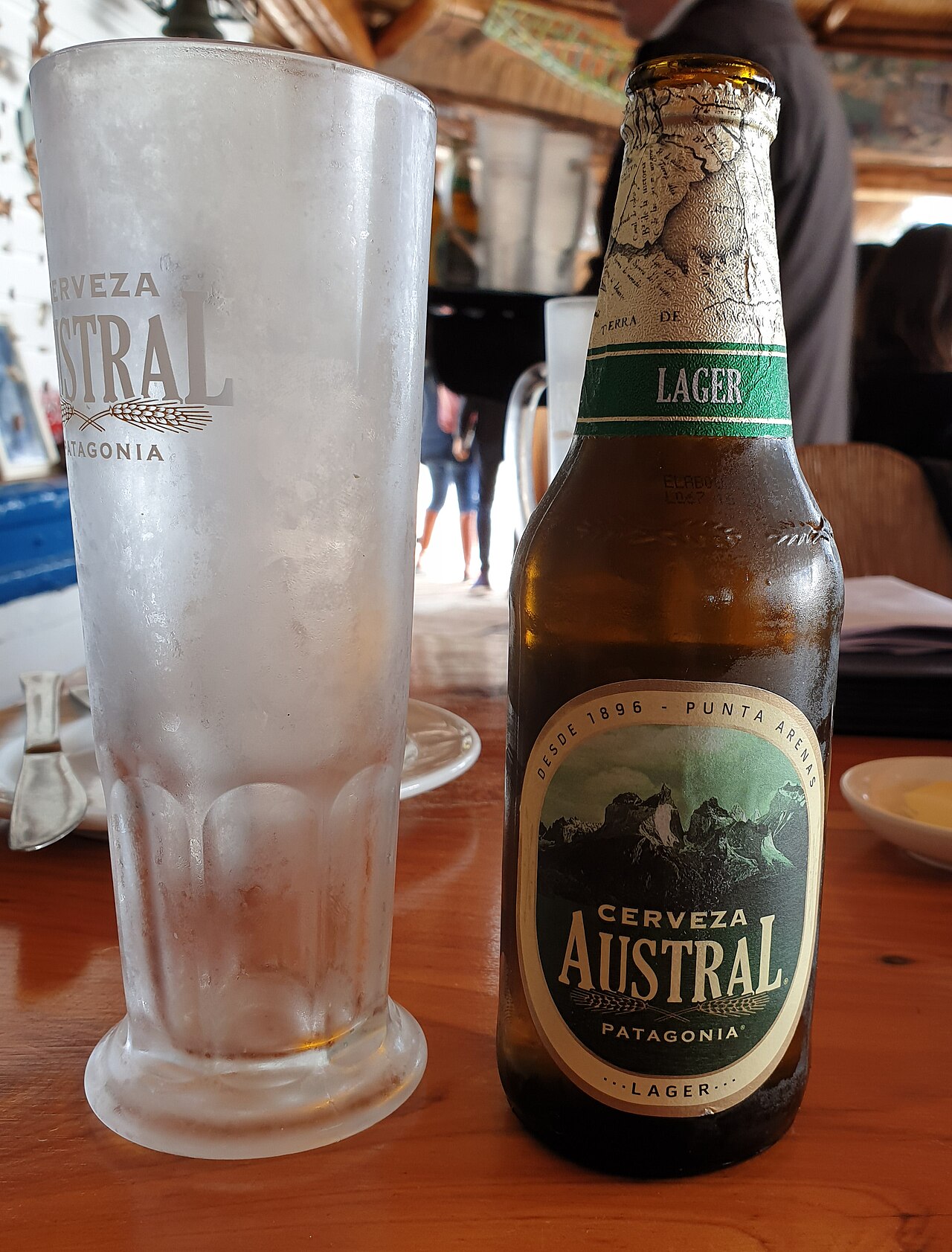
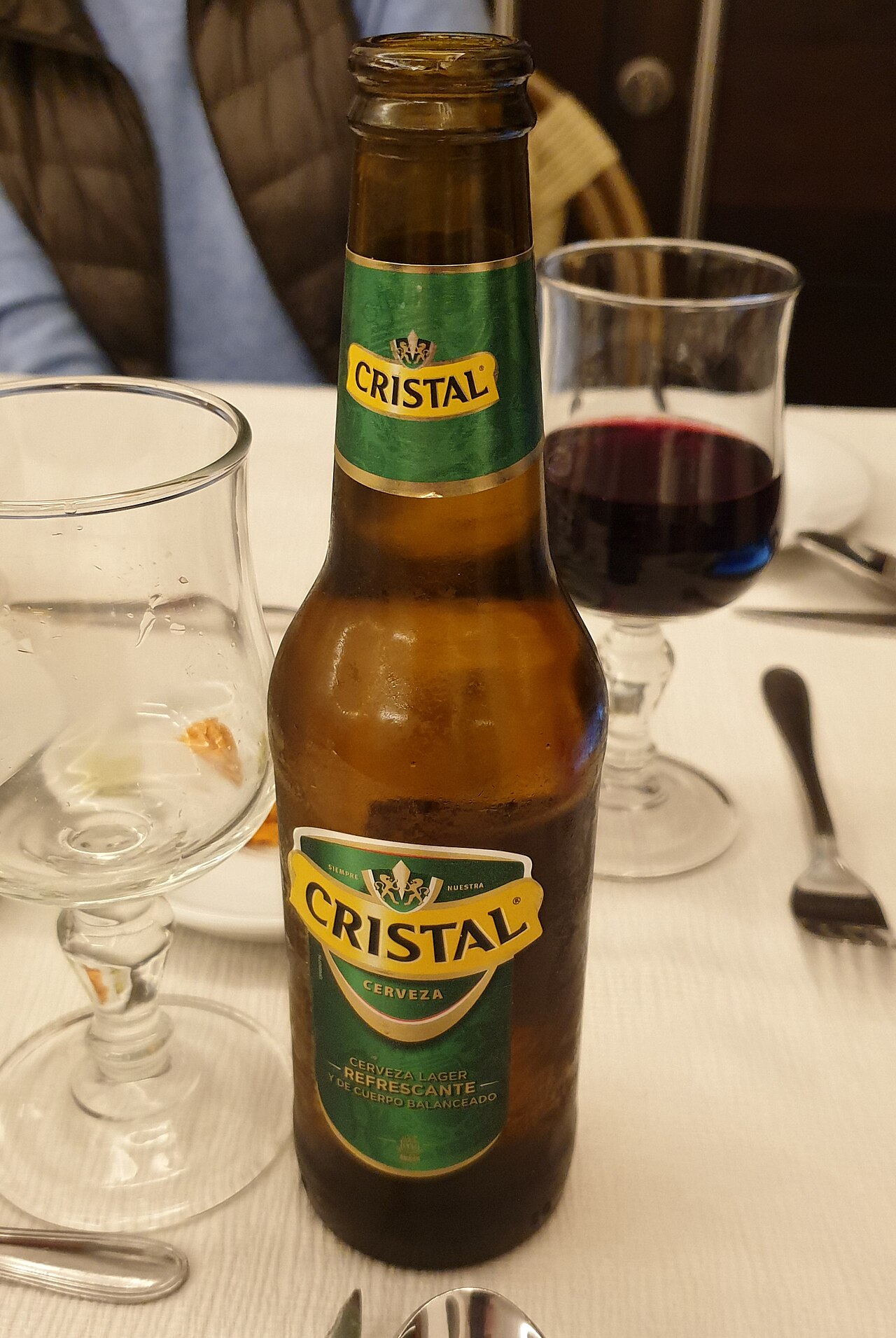
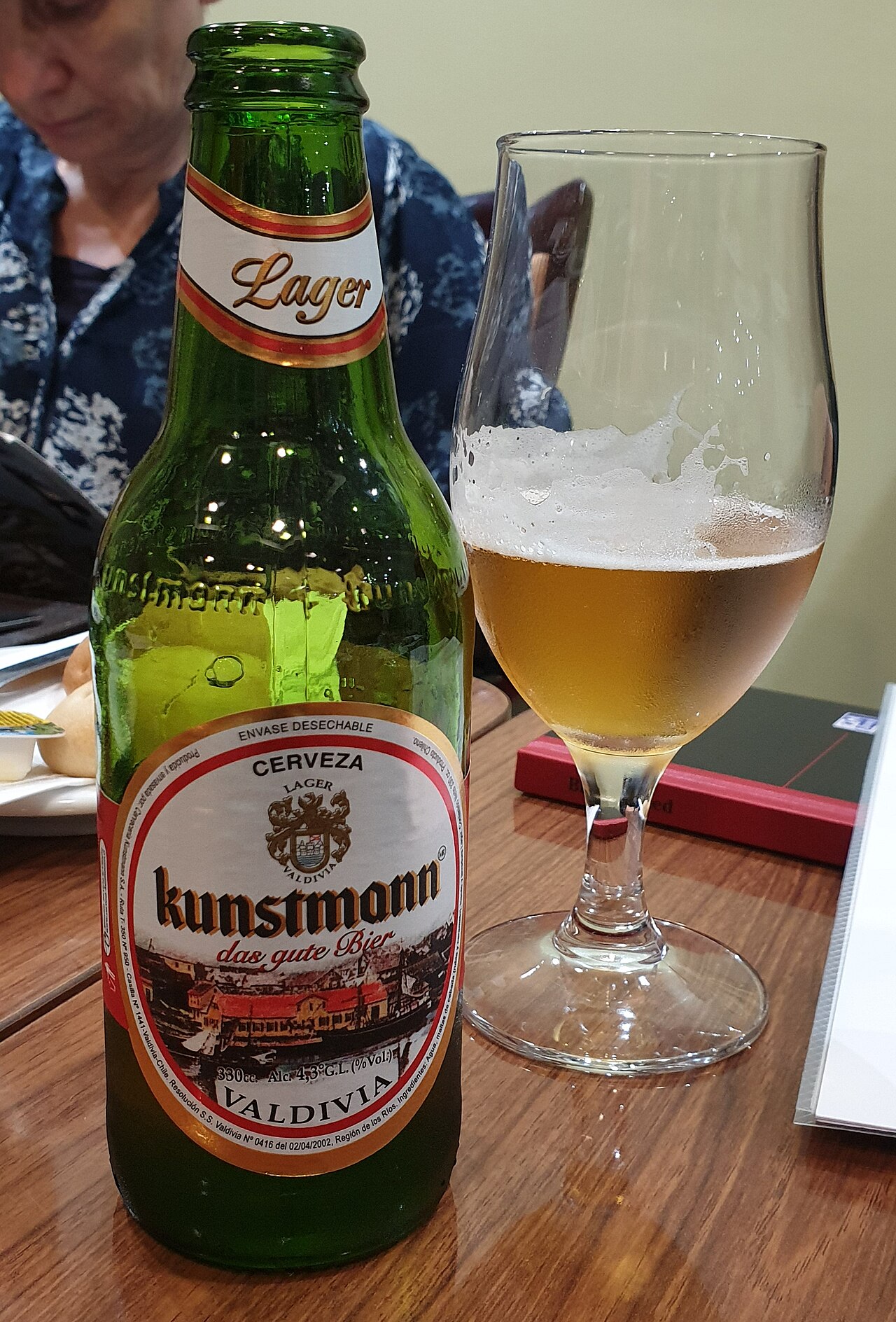
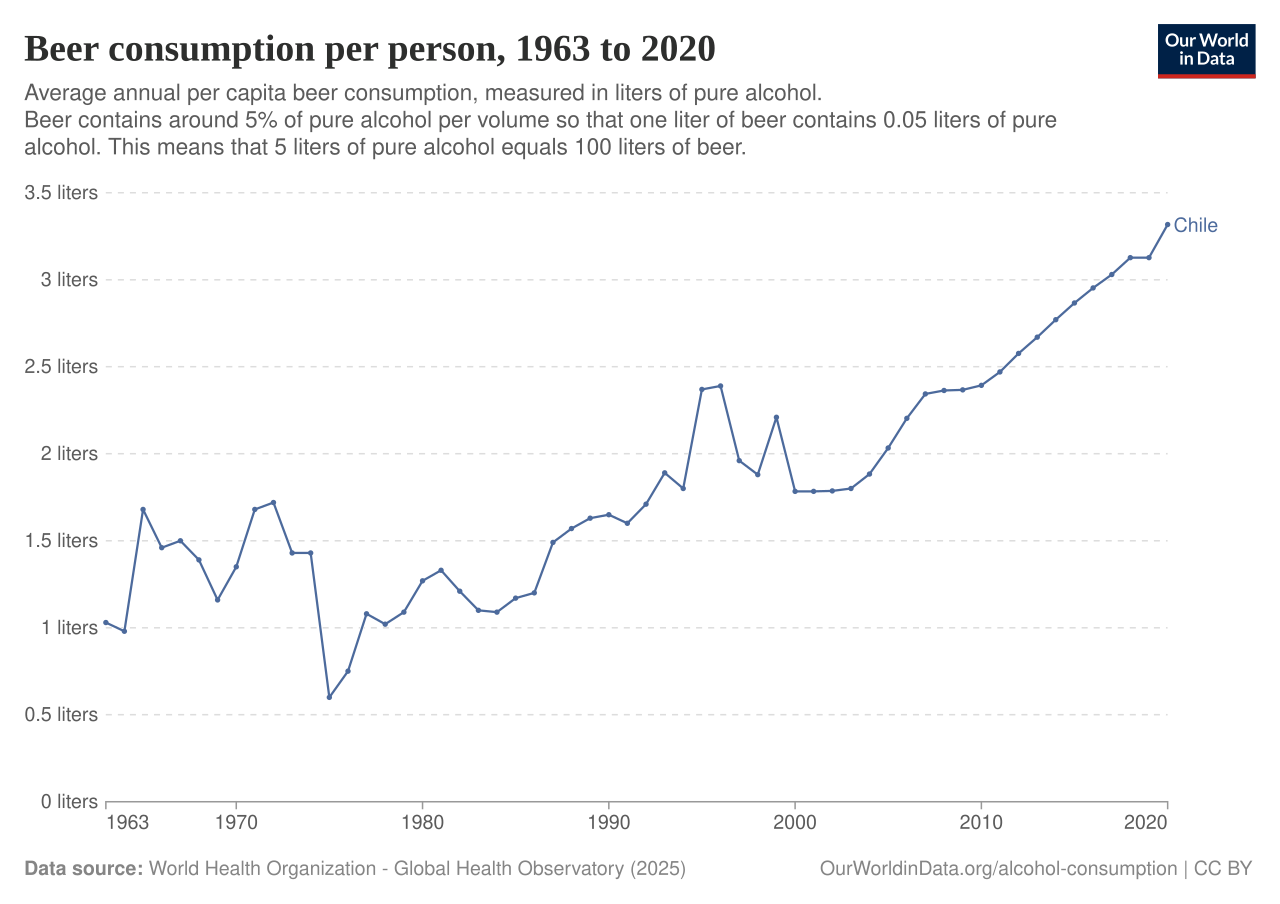
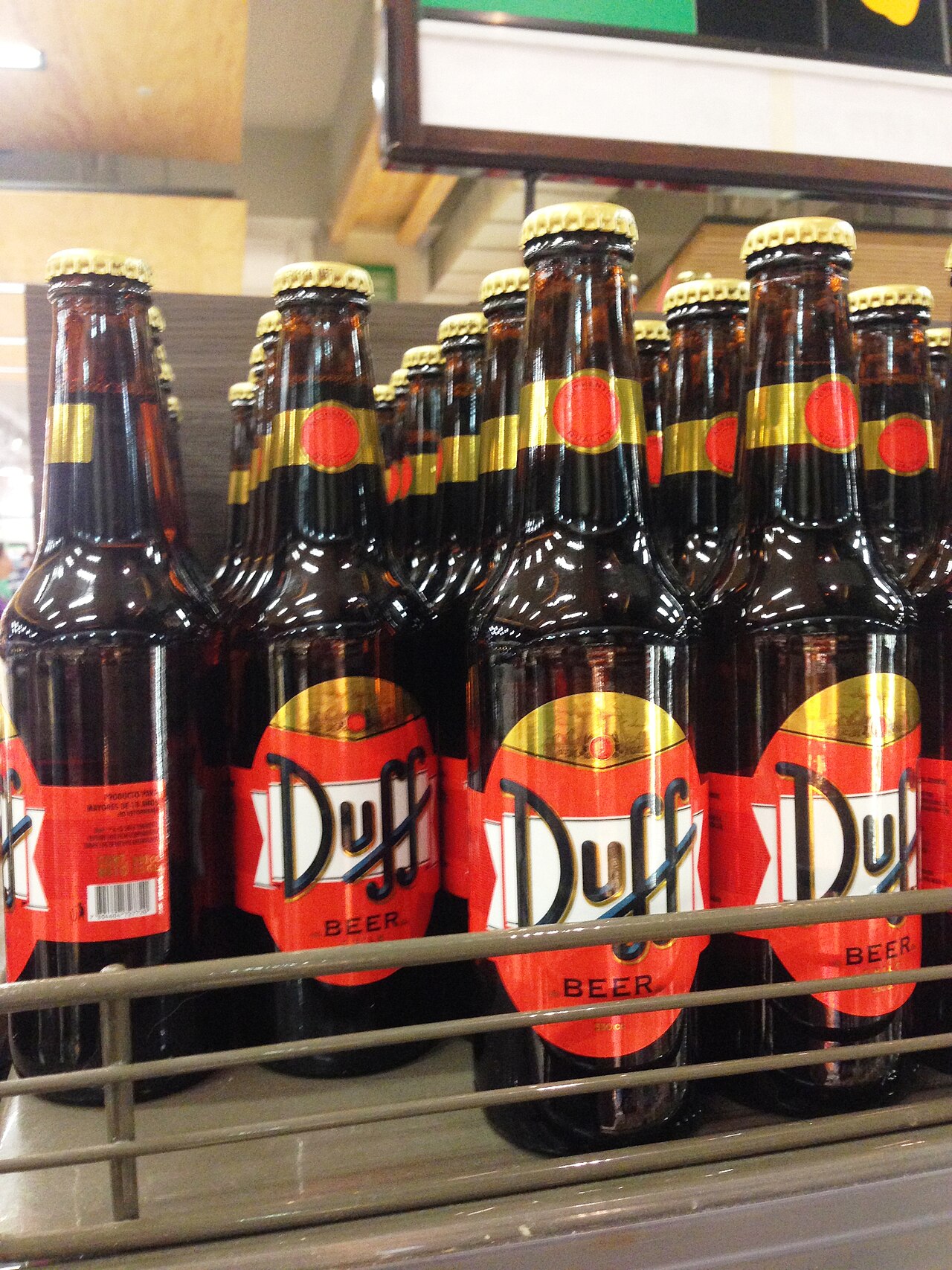
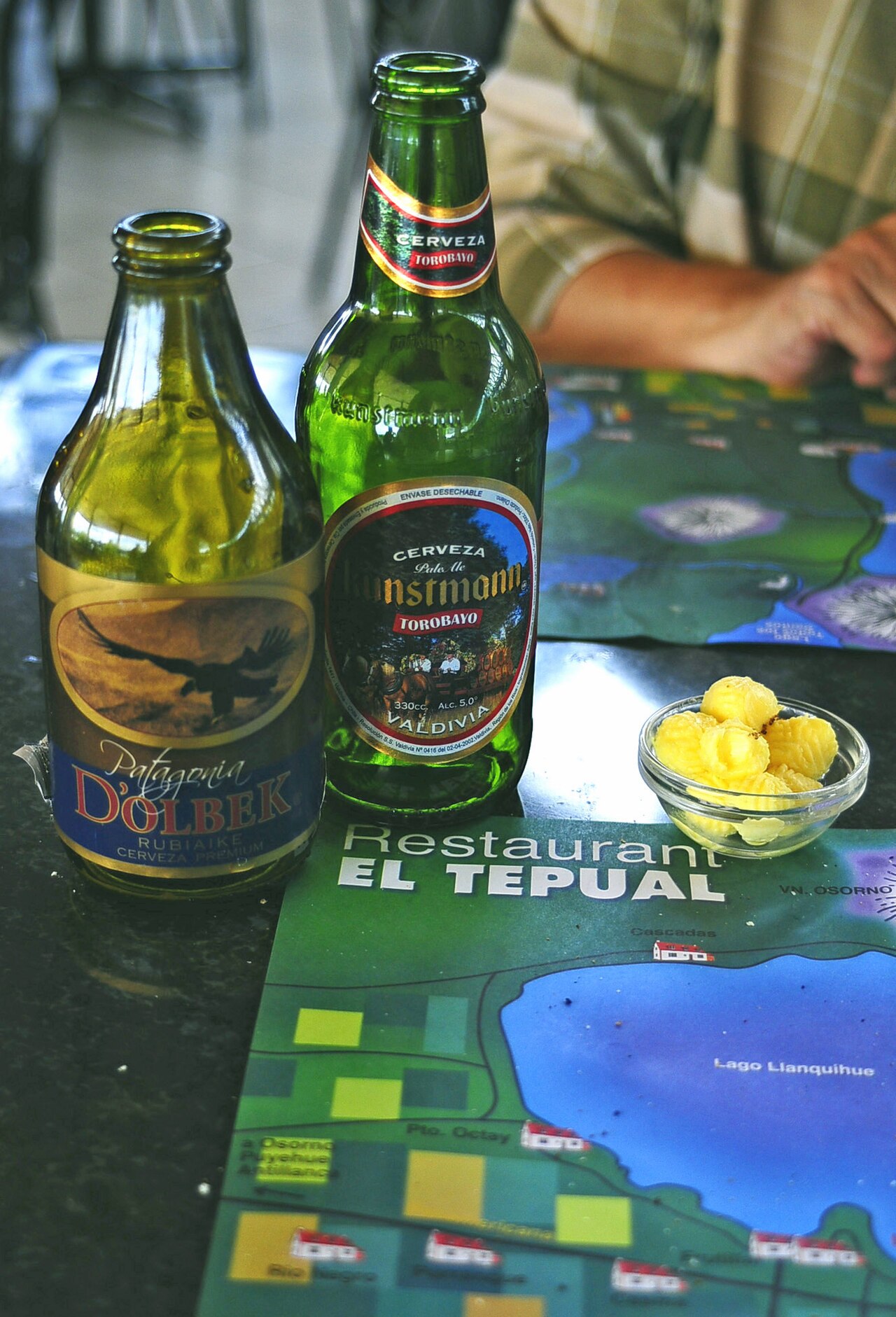
Beer in Chile is significant as the most consumed alcoholic beverage, holding 60% of the total market share for alcoholic drinks. Premium beers hold an 18% share, the highest in the region. The industry is dominated by two large-scale producers: Compañía de Cervecerías Unidas (CCU), formed in 1902, and Cervecería Chile. CCU produces major brands like Cristal and Escudo, while Cervecería Chile offers Baltica and Becker. Craft beer has gained ground, with over 300 microbreweries and more than 150 craft producers across the country. Notable craft brands include Kunstmann from Valdivia, Austral from Punta Arenas, and Kross from Curacaví. The city of Valdivia is often called Chile's 'beer capital.' Beer consumption rose steadily to a peak of 65.6 liters per capita in 2021 before falling to 59 liters in 2022.
Did You Know?
- In 1907, beer production in Valdivia was significant, though the specific figure of 20 million litres is unverified.
- There are more than 300 microbreweries in Chile.
Indigenous Roots and the Colonial Table
Chilean cuisine was born from a meeting of worlds. When Pedro de Valdivia and his Spanish conquistadors arrived in 1540, they carried wheat, livestock, chickens, and wine into a land where the Mapuche and other native peoples had already cultivated potatoes, maize, beans, and harvested abundant seafood. The fusion of these two ingredient pools became the backbone of nearly every characteristic dish. In the colonial period, meals were hearty and substantial. Lunch dwarfed dinner, opening with a protein course of fish, meat, or poultry before moving to a stew enriched with fresh sweet corn and potatoes. Three distinct breads accompanied the table: a tortilla de rescoldo, a rich Spanish-style loaf, and a flat, crunchy Chilean bread. The meal closed with a digestive infusion of paico and a simple dessert of strawberries or lucuma. Dishes like chuchoca, humitas, locro, and seaweed preparations such as cochayuyo and luche served with boiled eggs became everyday staples, weaving indigenous technique into the colonial routine.
A Mosaic of European Migrations
Between the late nineteenth and early twentieth centuries, the Chilean government actively courted European settlers, and the kitchen became one of the most visible arenas of cultural exchange. German families who settled in the southern regions introduced pork preparations, sausages, and a tradition of baking that still fills bakeries nationwide with Berliners, strudels, and kuchens. Italian immigrants brought pasta-making and cured meats; in the small southern town of Capitán Pastene, prosciutto is still produced using methods unchanged since the first Italian families arrived. French influence, arriving in the twentieth century, elevated technique and even swapped dishes, most notably replacing the Spanish tortilla with the omelette. Alongside these three dominant waves came Croatians, Greeks, Palestinians, Belgians, and Basques, each adding their own threads. Food became inseparable from the young nation's search for identity, and the layered result is a cuisine that no single European or indigenous tradition could claim alone.
A Landscape That Cooks
Chile's extraordinary topography and climate make it a natural pantry of unusual breadth. The long Pacific coastline, fed by the oxygen-rich Humboldt Current, supports unique species of fish, molluscs, crustaceans, and algae that find their way directly onto plates. The Matorral zone, spanning roughly thirty-two to thirty-seven degrees south, places a strip of the country within one of the world's five Mediterranean climate regions, lending Chilean cooking a similarity to Mediterranean traditions. Inland, the diversity of valleys and microclimates yields a wide array of agricultural produce, fruits, and vegetables. Chile ranks among the world's largest wine producers, and local vintages are woven into countless recipes. The country also claims the invention of dulce de leche, a confection that has become a global icon. Indigenous fruits like the cherimoya, the subtropical lúcuma, and a distinctly Chilean variety of choclo—larger-kernelled, tougher, and nuttier than its North American counterpart—remind that the land's original bounty still defines the table.
From Convent Ovens to Modern Kitchens
The story of Chilean food is also a story of social change. In the seventeenth century, convent nuns perfected pastry-making, and their recipes spread so widely that the idiom 'tiene mano de monja' entered everyday speech to praise anyone with a gifted touch in the kitchen. By the eighteenth century, aristocratic tables grew more refined; tea and coffee displaced mate, local wine gained prestige, and chicha—a sweet, undistilled fermented drink of grapes or apples—became a social staple. During the Patria Vieja, the early independence celebrations were marked by empanadas, chicha, and red wine, a tradition that persists at every national anniversary. In the twenty-first century, sustained economic growth and rising disposable incomes have fueled a vibrant gastronomic industry. Yet food still carries social weight: in German-influenced Osorno, desserts and marmalades are associated with a process of cultural whitening, while indigenous preparations like ñachi are coded as masculine, and European-style sweets as feminine.
Gallery
Frequently Asked Questions
Who is Beer in Chile?
Beer in Chile is the country's dominant alcoholic beverage, built on pale lager styles introduced by 19th-century German immigrants. It coexists with chicha—a fermented drink most often made from grapes—as part of Chile's layered drinking heritage.
What are Beer in Chile's powers/role?
Its core function in Chilean cuisine is serving as a crisp, everyday pale lager that accompanies meals and social gatherings. It also acts as a foundation for the expanding craft beer scene, which experiments with local ingredients while honoring that German brewing lineage.
Why is Beer in Chile important?
It physically embodies the 19th-century wave of European immigration that established the first Chilean breweries. Beyond the glass, it anchors social rituals and food pairings, making it both a practical staple and a cultural symbol at the Chilean table.
What is Beer in Chile's traditional companion?
Chicha, most commonly a grape-based fermented drink, is the indigenous-era beverage that has long shared the table with beer. Apple and maize variants also exist, and chicha still appears at family gatherings even as modern lager dominates commercial sales.
More in Chilean cuisine 1-24
Spotted an error? Know more?
Reader corrections go straight into our review queue. Suggest an edit · How this site is sourced