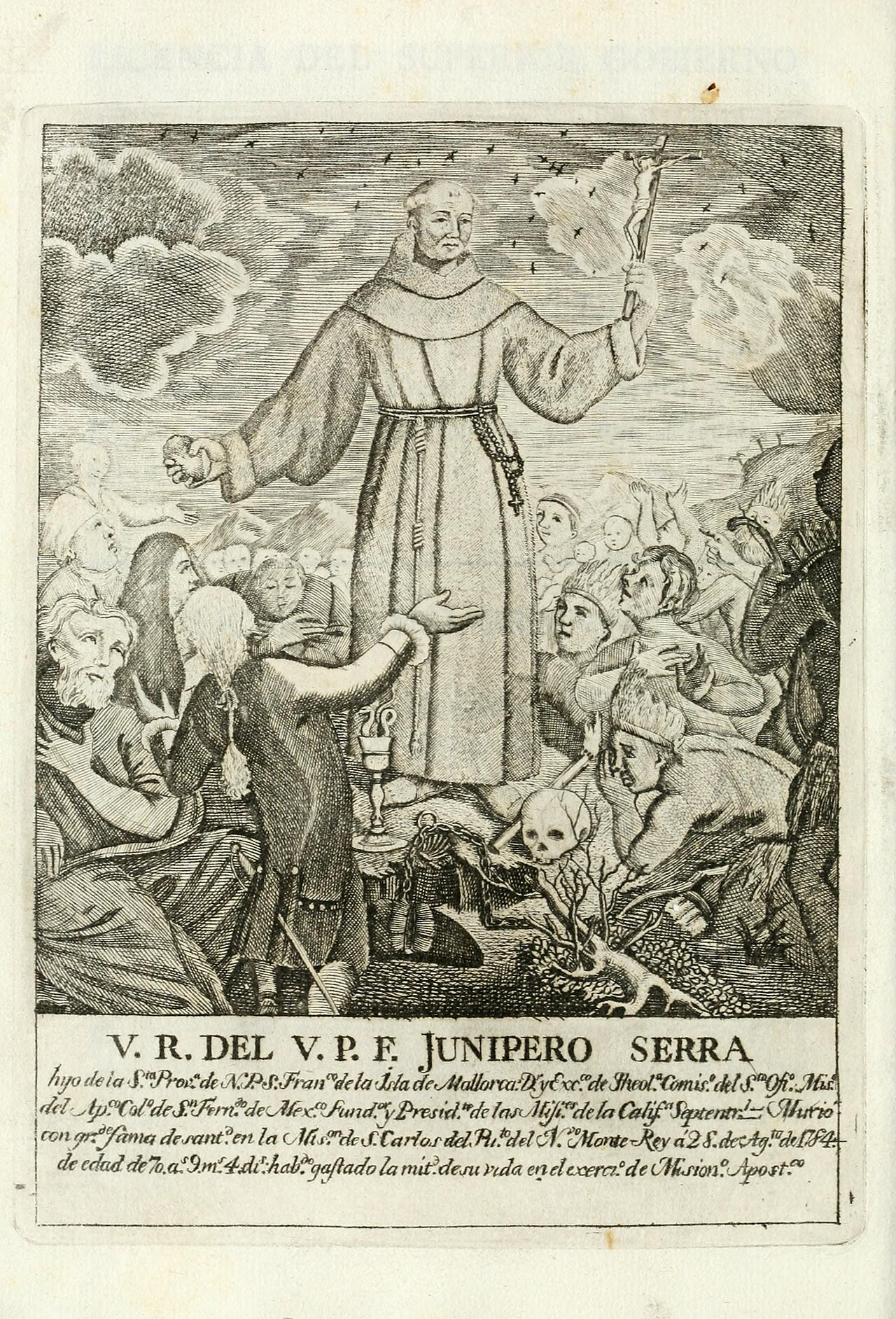
Junípero Serra
Spanish Franciscan missionary and 'Apostle of California'
Last updated

Unknown author · Public domain
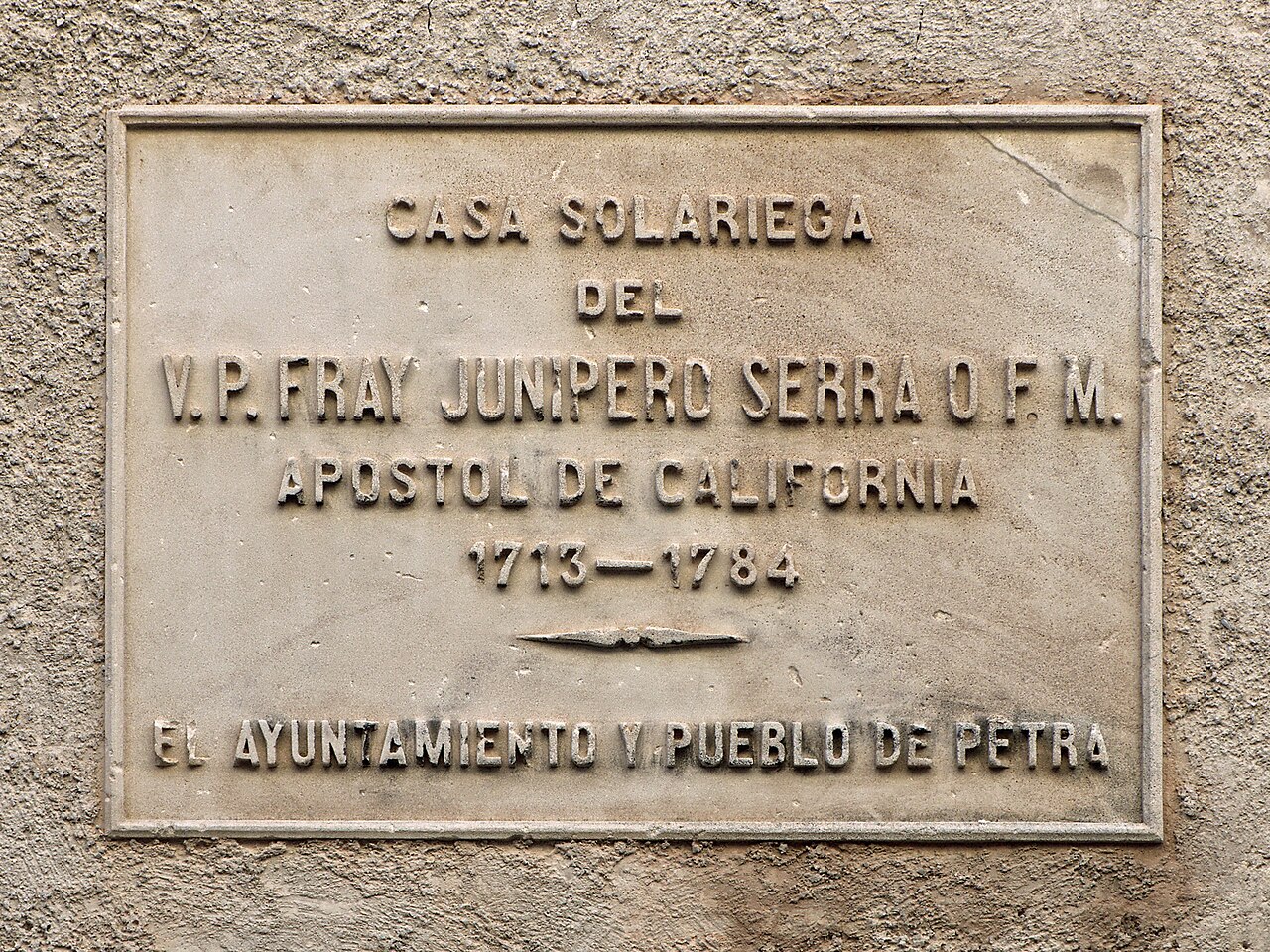
Junípero Serra Ferrer was born Miquel Josep Serra i Ferrer in the village of Petra on the island of Mallorca. His parents, Antonio Nadal Serra and Margarita Rosa Ferrer, had married in 1707. By age seven, he was working in the fields with his family, but he showed a particular interest in the local Franciscan friary, where he attended the friars’ primary school. There he learned reading, writing, mathematics, Latin, religion, and Gregorian chant, developing a good voice that allowed him to sing in the community choir.
At sixteen, his parents enrolled him in a Franciscan school in Palma de Majorca to study philosophy, and a year later he became a novice in the Franciscan order. On September 14, 1730, he formally entered the order at Palma, joining the Alcantarine branch of the Friars Minor. He was given the religious name Junípero in honor of Brother Juniper, a companion of Francis of Assisi. He took vows of poverty, chastity, and obedience, and immersed himself in rigorous studies of logic, metaphysics, cosmology, and theology.
In 1737 he became a priest, and three years later earned a license to teach philosophy at the Convento de San Francisco. His three-year philosophy course included over sixty students, among them future missionaries Francisco Palóu and Juan Crespí. Serra received a doctorate in theology from the Lullian College in Palma, where he also held the Duns Scotus chair of philosophy until 1749. That year, after confiding his missionary ambitions to Palóu, he obtained permission to leave for Spain’s American colonies, setting sail from Cádiz.
Lore & Background
Serra was born Miquel Josep Serra i Ferrer in the village of Petra on the island of Mallorca. He entered the Franciscan Order on September 14, 1730, taking the religious name Junípero.
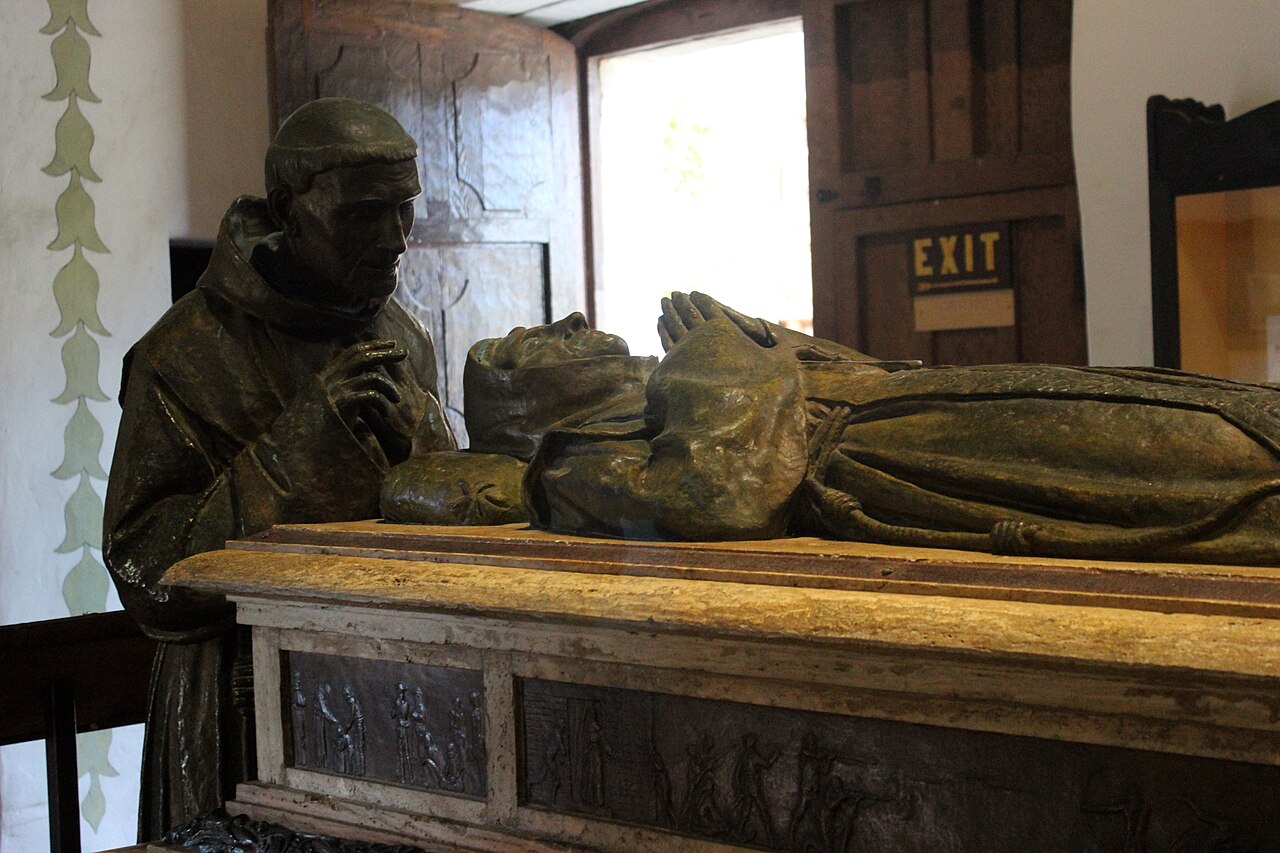
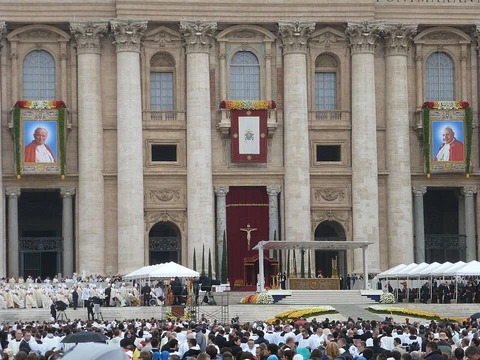
He became a priest in 1737 and earned a doctorate in theology from the Lullian College in Palma de Majorca. In 1749, he joined the missionary College of San Fernando de Mexico and traveled to New Spain. He was beatified by Pope John Paul II on September 25, 1988, and canonized by Pope Francis on September 23, 2015.
Roots in a Mallorcan Village
Born Miquel Josep Serra i Ferrer on November 24, 1713, in the small village of Petra on Mallorca, Serra grew up in a household where his parents, Antonio Nadal Serra and Margarita Rosa Ferrer, cultivated wheat and beans and tended cattle. By age seven, the young Miquel was already laboring in the fields alongside them, yet his mind was drawn to the Franciscan friary at the church of San Bernardino, located just a block from the family home. There he attended the friars' primary school, learning reading, writing, mathematics, Latin, religion, and Gregorian chant.
His natural gift for vocal music earned him a place in the community choir during special feasts. At sixteen, his parents sent him to a Franciscan school in Palma de Majorca to study philosophy, and within a year he had become a novice. The rigid daily routine—midnight prayers, meditation, choir singing, physical chores, and spiritual readings—shaped a young man who would spend his life in disciplined service.
The Alcantarine Novice and Scholar
On September 14, 1730, two months shy of his seventeenth birthday, the slight and frail Serra entered the Alcantarine branch of the Friars Minor in Palma, a reform movement within the Franciscan Order. He was given the religious name Junípero, honoring Brother Juniper, an early companion of Francis of Assisi. His novitiate demanded vows of poverty, renunciation of comfort, and celibate life, followed by seven years of rigorous study in logic, metaphysics, cosmology, and theology. His superiors discouraged correspondence and visitors, and the daily schedule left little room for personal leisure.
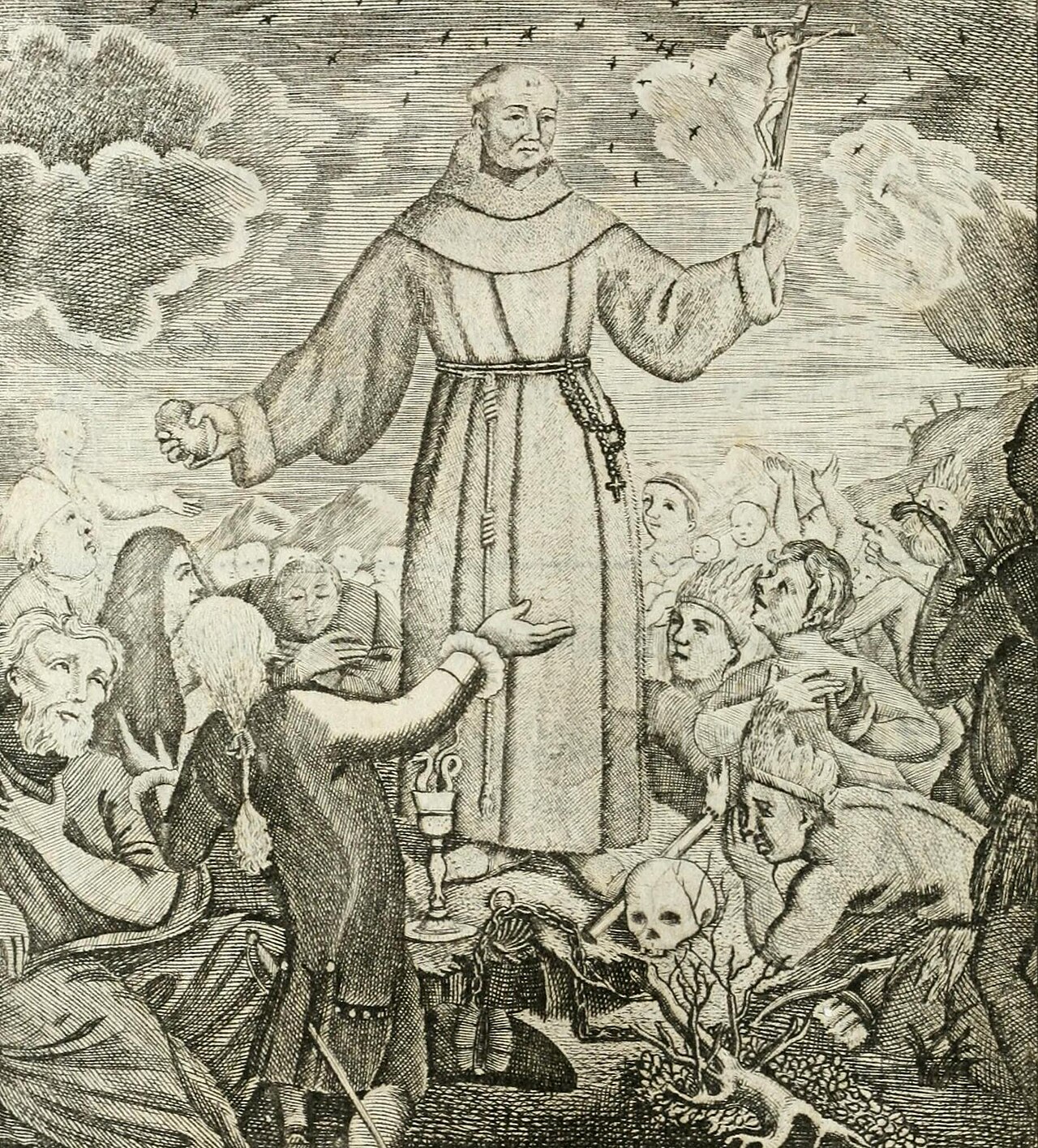
In his spare moments, Serra devoured stories of Franciscan friars who roamed the provinces of Spain and beyond, winning new souls and sometimes suffering martyrdom. By 1737 he had been ordained a priest, and three years later he earned an ecclesiastical license to teach philosophy at the Convento de San Francisco, where his course of over sixty students spanned three years. His peers regarded him as intellectually brilliant, and he ultimately received a doctorate in theology from the Lullian College, an institution founded in the fourteenth century specifically to train Franciscan missionaries.
Apostle of California
Serra's most consequential work unfolded in what was then Spanish-occupied Alta California, part of the Province of Las Californias within New Spain. He is credited with establishing the Franciscan Missions in the Sierra Gorda, a region now recognized as a UNESCO World Heritage Site. Beyond that, he founded a mission in Baja California and went on to establish eight of the twenty-one Spanish missions stretching from San Diego to San Francisco.
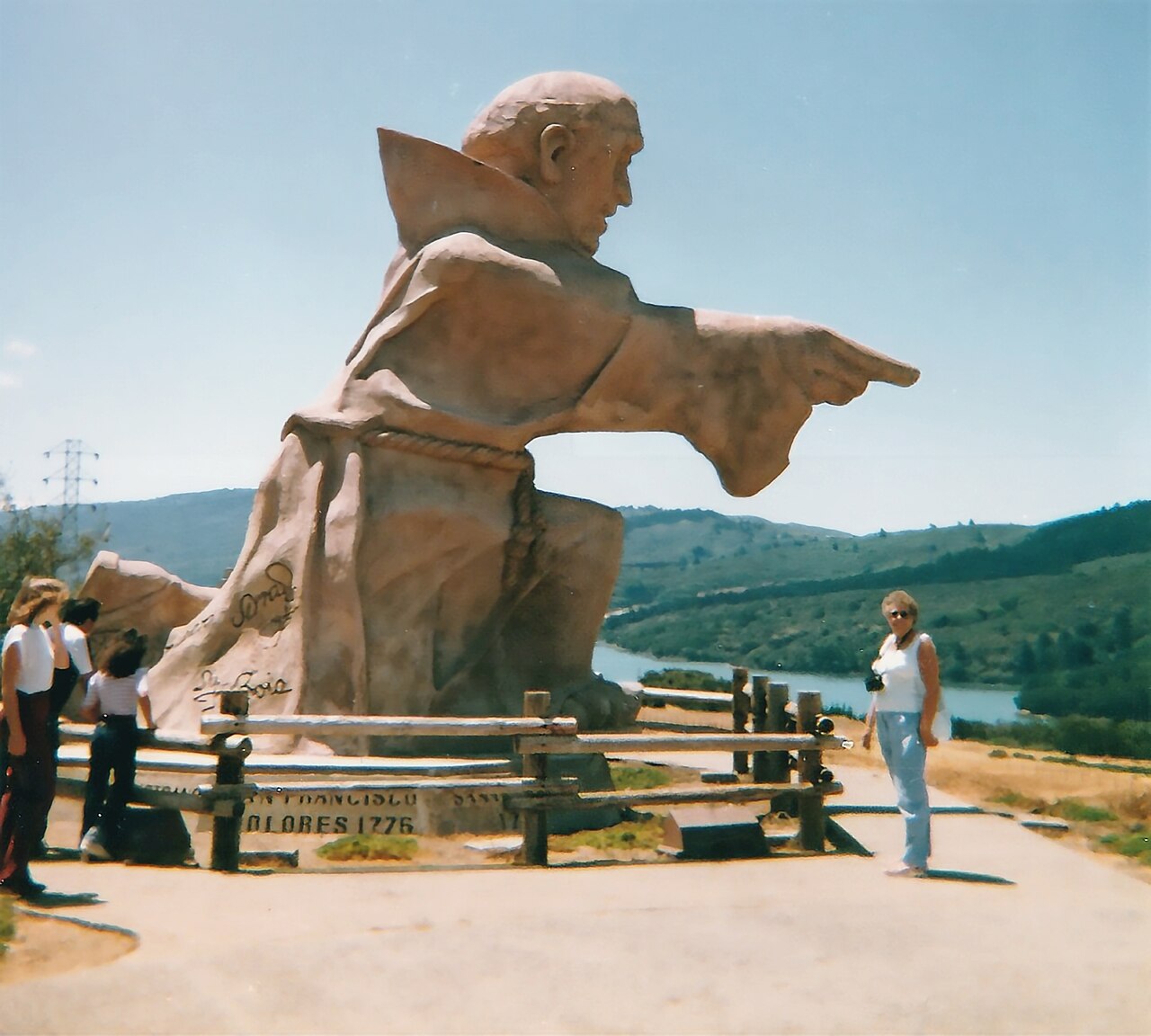
These efforts earned him the enduring title "Apostle of California." His missionary career began when, in 1749, he and a team of Franciscan missionaries landed in Veracruz on the Gulf coast of New Spain, having sailed from Cádiz after weathering administrative obstacles in Madrid's colonial bureaucracy. The decision to leave a comfortable scholarly life in Mallorca for the Americas was not impulsive; Serra and his close friend Francisco Palóu had confided to each other their shared desire to become missionaries, and Serra, then thirty-five, had been assured a prestigious career as priest and scholar had he remained on the island. Instead, he set his sights firmly on what he called pagan lands.
A Divided Legacy
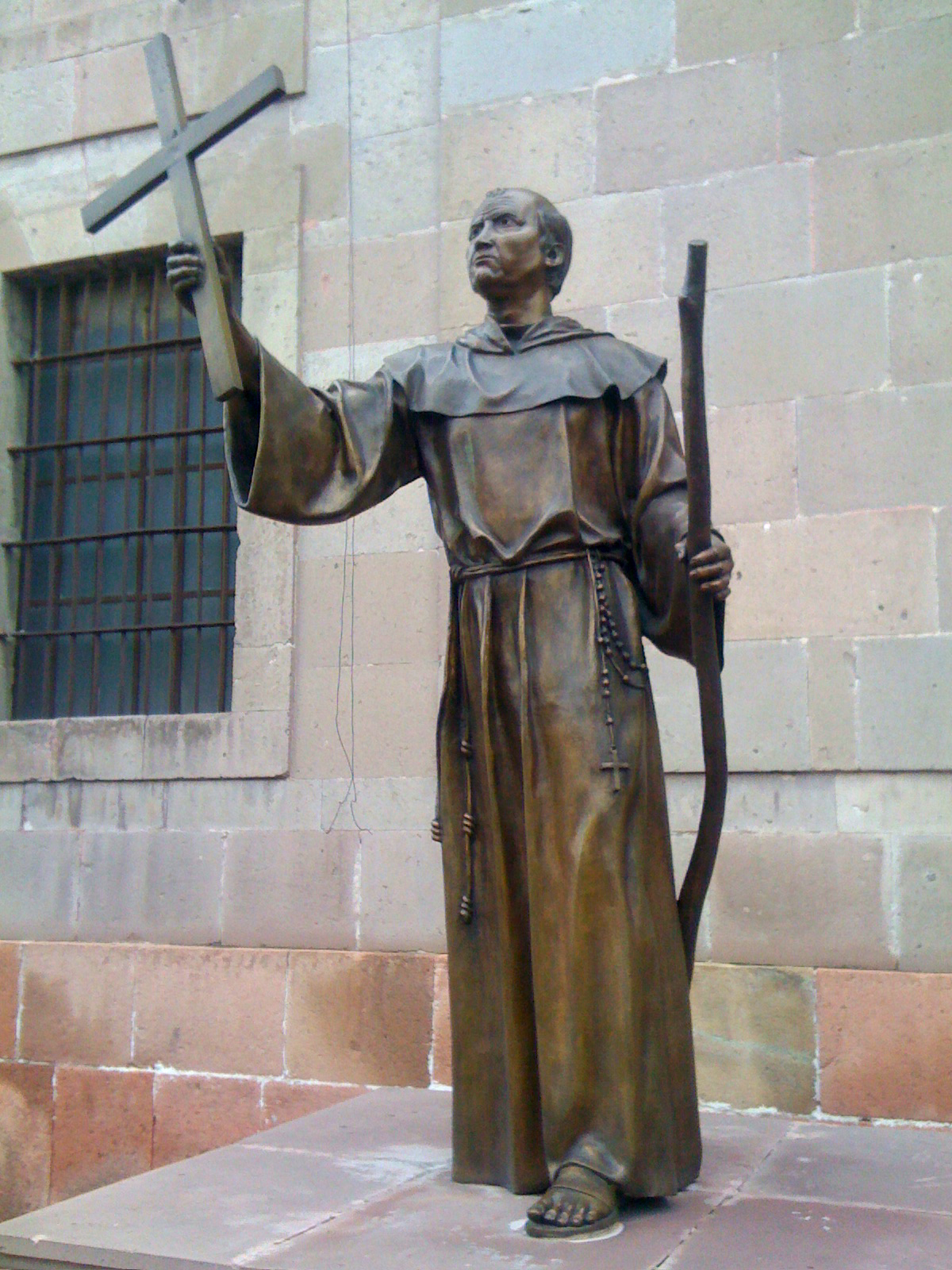
Serra's place in the Catholic Church and in American history remains deeply contested. He was beatified by Pope John Paul II on September 25, 1988, in Vatican City, a step that already drew sharp criticism. The controversy intensified when Pope Francis canonized Serra on September 23, 2015, at the Basilica of the National Shrine of the Immaculate Conception in Washington, D.C., during the pontiff's visit to the United States. Native American tribes publicly denounced the ceremony, accusing Serra of presiding over a brutal colonial subjugation of indigenous peoples.
Both before and after his canonization, critics have condemned his missionary work during the Spanish occupation, citing alleged mandatory conversions to Catholicism followed by the abuse of Native American converts. For Serra's supporters, his life of rigorous Franciscan discipline, his intellectual brilliance, and his willingness to abandon a secure career in Mallorca for the hardships of frontier mission work represent a profound act of faith. For his detractors, the very missions he built in California embody a system of cultural erasure and physical harm inflicted upon the peoples who already lived there.
Did You Know?
- Serra insisted on walking from Veracruz to Mexico City, refusing to ride a horse, in keeping with the rule of Francis of Assisi.
- During that trek, his left foot swelled and became a chronic wound that plagued him for the rest of his life.
Frequently Asked Questions
What missions did Junípero Serra found?
Serra founded nine missions in California, including San Buenaventura in 1782, as well as Misión San Fernando de Velicatá in Baja California in 1769. He also served at the pre-existing Franciscan missions in the Sierra Gorda region, which are now a UNESCO World Heritage Site.
How was Junípero Serra canonized?
Pope John Paul II beatified Serra in 1988, and Pope Francis formally canonized him as a saint in 2015. His elevation to sainthood drew sharp objections from Native American communities.
Why is Junípero Serra controversial?
Serra's canonization was met with denunciations from Native American tribes who pointed to his role in the mission system's treatment of indigenous peoples. This makes him one of the most debated figures in modern Catholic sainthood history.
What was Junípero Serra's role in the Church?
Serra was a Franciscan friar and missionary priest whose primary vocation was evangelization in the Spanish colonial frontier. His work centered on building and overseeing mission communities rather than on a specific diocesan or administrative office.
Also in the Codexery
More in Catholic Saints & Popes
Sources
Compiled from Wikipedia and the sources listed below. Text from Wikipedia is available under CC BY-SA 4.0; this entry is adapted from it.
- Wikipedia: Junípero Serra (CC BY-SA 4.0).
Spotted an error? Know more?
Reader corrections go straight into our review queue. Suggest an edit · How this site is sourced