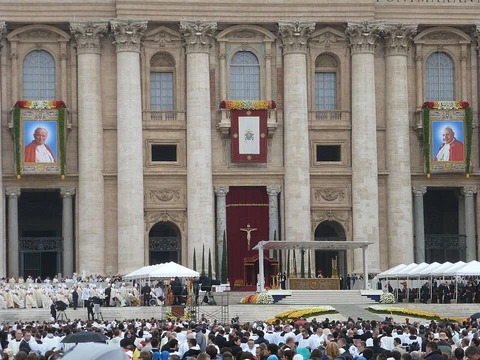
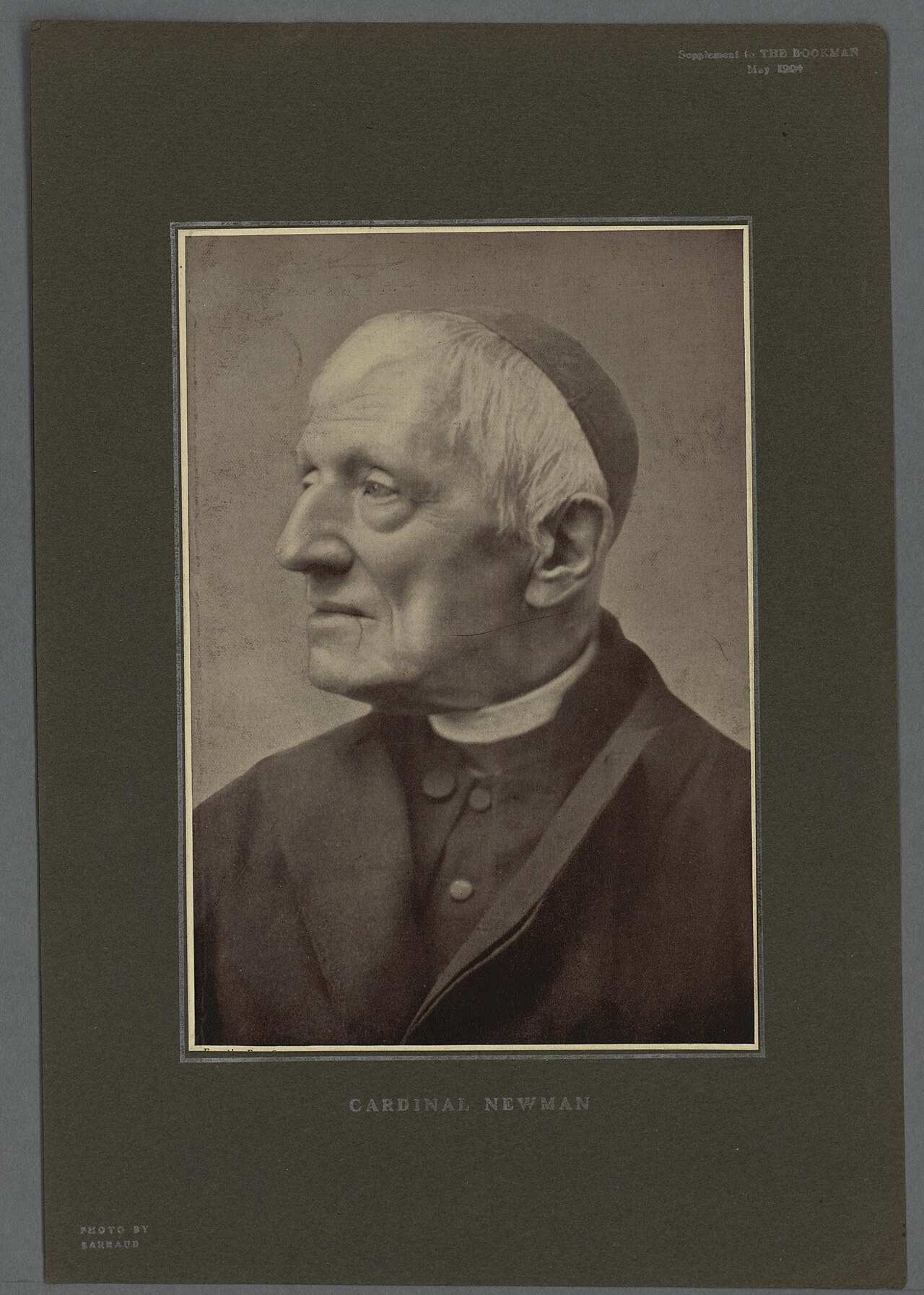
John Henry Newman
English theologian and cardinal, leader of the Oxford Movement.
Last updated

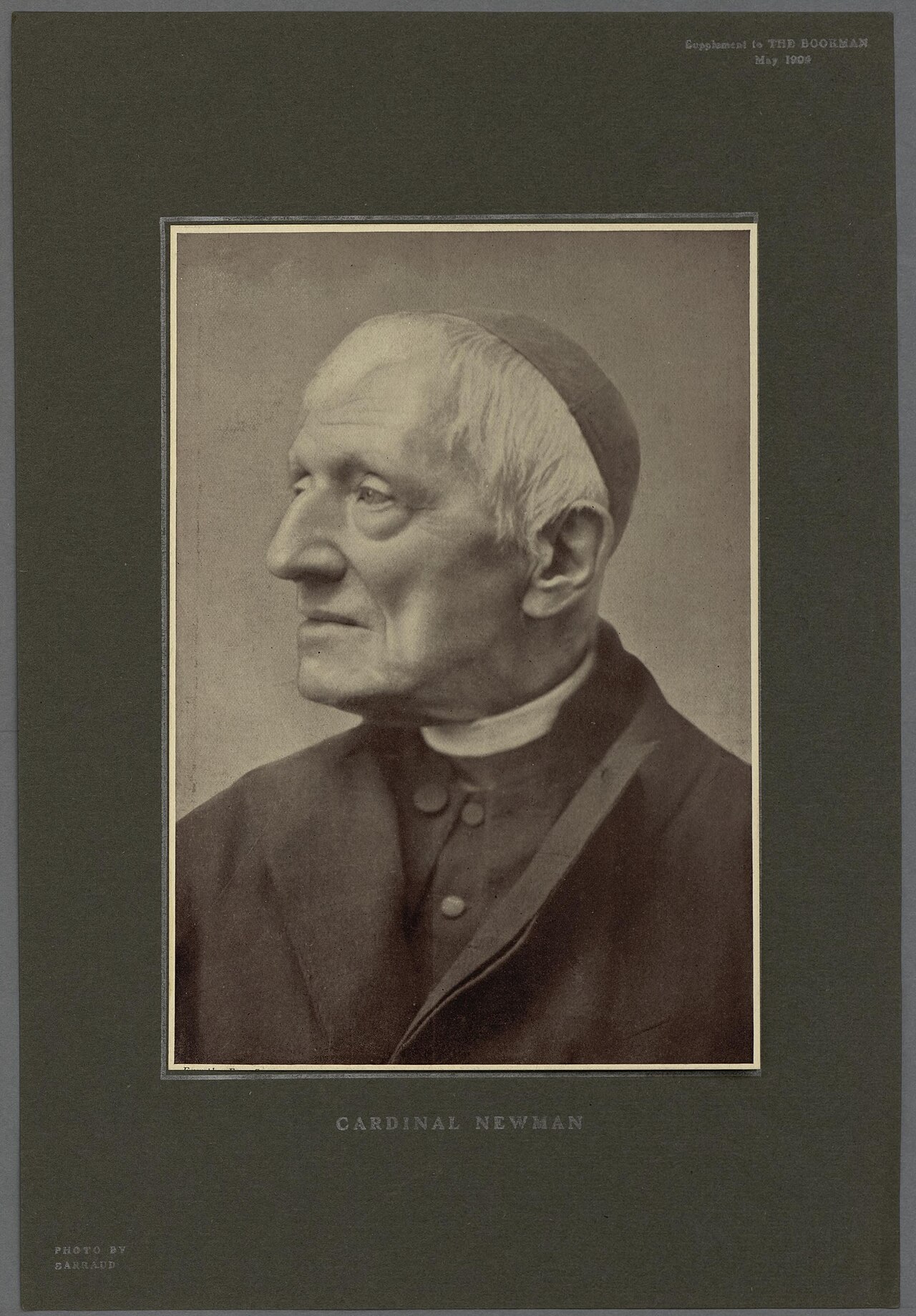
Herbert Rose Barraud · Public domain
John Henry Newman (21 February 1801 – 11 August 1890) was a 19th-century English theologian, academic, philosopher, historian, writer, and poet who played a major role in England’s religious history. He began as an evangelical scholar at the University of Oxford and an Anglican priest, but gradually moved toward the high church wing of Anglicanism. Newman became a key leader of the Oxford Movement, a group of Anglicans seeking to reintroduce Catholic beliefs and liturgical practices that had been common before the English Reformation. The movement saw some success.
Feast day
After issuing his Tract 90 in 1841, Newman later remarked that he felt “on my death-bed, as regards my membership with the Anglican Church.” In 1845, he left his Oxford teaching post and the Church of England, joining the Catholic Church. He was soon ordained a priest and remained an influential religious figure, working from Birmingham. Pope Leo XIII made him a cardinal in 1879. Pope Francis approved his canonization, which took place on 13 October 2019.
Early life and education
He was proclaimed a Doctor of the Church by Pope Leo XIV in 2025 and was also named co-patron of Catholic education, joining Saint Thomas Aquinas. Newman was born on 21 February 1801 in the City of London, the eldest of six children. His father, John Newman, worked as a banker at Ramsbottom, Newman and Company on Lombard Street. His mother, Jemima (née Fourdrinier), came from a family of Huguenot refugees descended from engraver and printer Paul Fourdrinier.
His younger brother was Francis William Newman, and his sister Harriet Elizabeth married Thomas Mozley, another Oxford Movement figure. The family lived in Bloomsbury and owned a country home in Ham, near Richmond. At age seven, Newman attended Great Ealing School under George Nicholas. There, George Huxley taught mathematics and Walter Mayers taught classics.
Newman avoided casual school games and was an avid reader of Walter Scott and Robert Southey. At 14, he read skeptical works by Thomas Paine, David Hume, and possibly Voltaire. At 15, during his final school year, Newman converted to Evangelical Christianity—an event he later called “more certain than that I have hands or feet.” Around the same time, his father’s bank failed (though it paid its creditors), and his father took over a brewery. Mayers, who had converted in 1814, lent Newman books from the English Calvinist tradition.
Lore & Background
Newman was born on 21 February 1801 in the City of London, the eldest of a family of three sons and three daughters. His father, John Newman, was a banker with Ramsbottom, Newman and Company in Lombard Street. His mother, Jemima (née Fourdrinier), was descended from a notable family of Huguenot refugees. At the age of seven Newman was sent to Great Ealing School.
Aged 14, he read sceptical works by Thomas Paine, David Hume and perhaps Voltaire. At the age of 15, during his last year at school, Newman converted to Evangelical Christianity, an incident of which he wrote in his Apologia that it was 'more certain than that I have hands or feet'. Almost at the same time (March 1816) the bank Ramsbottom, Newman and Co. crashed.
At university
Newman was sent to Trinity College, Oxford, where he studied widely. He graduated as a BA 'under the line' (with lower second class honours in Classics, and having failed classification in the Mathematical Papers). He was elected a fellow at Oriel College on 12 April 1822. On 13 June 1824, Newman was made an Anglican deacon at Christ Church Cathedral, Oxford.
Anglican ministry
On Trinity Sunday, 29 May 1825, he was ordained a priest at Christ Church Cathedral. He became, at Pusey's suggestion, curate of St Clement's Church, Oxford. In 1828, Newman was appointed vicar of St Mary's University Church.
Mediterranean travels
In December 1832, Newman accompanied Archdeacon Robert Froude and his son Hurrell on a tour in southern Europe. In June 1833 he left Palermo for Marseille in an orange boat, which was becalmed in the Strait of Bonifacio. Here, Newman wrote the verses 'Lead, Kindly Light' which later became popular as a hymn. Newman was at home again in Oxford on 9 July 1833 and, on 14 July, Keble preached at St Mary's an assize sermon on 'National Apostasy', which Newman afterwards regarded as the inauguration of the Oxford Movement.
The Long Arc of Conversion
Newman's spiritual life was defined by dramatic and successive reorientations. At fifteen, during his final school year, he underwent a conversion to Evangelical Christianity that he later regarded as more certain than the existence of his own limbs. He embraced Calvinist doctrine, absorbing the writings of Thomas Newton and Joseph Milner, and adopted the conviction that the Pope was antichrist. His teacher Walter Mayers, a moderate Clapham Sect Calvinist, supplied him with devotional texts from that tradition.
Yet even as he looked back on this 1816 transformation as the saving of his soul throughout his lifetime, he gradually came to view Evangelicalism's stress on religious feeling and justification by faith alone as a vehicle for undogmatic individualism that sidelined the Church's role in transmitting revealed truth. This trajectory carried him toward the high church tradition of Anglicanism, where he sought to restore pre-Reformation Catholic beliefs and liturgical rituals. By 1841, after the publication of Tract 90, he felt he was on his death-bed regarding his Anglican membership. In 1845 he resigned his Oxford post, left the Church of England, and was received into the Catholic Church, swiftly ordained a priest and rooted in Birmingham.
The Oxford Movement and the Breaking Point
Newman rose to become one of the most prominent leaders of the Oxford Movement, a collective of Anglicans determined to restore to their church many Catholic beliefs and liturgical practices that had flourished before the English Reformation. The movement achieved a meaningful degree of success in this endeavor. Central to Newman's contribution was the series of Tracts for the Times, issued between 1833 and 1841, which articulated the movement's theological arguments in accessible prose. The appearance of Tract 90 in 1841 proved to be a watershed.
Newman himself later reflected that this act placed him on his death-bed as far as his Anglican membership was concerned. The tension between his commitment to Catholic doctrine and the boundaries of Anglican identity became irreconcilable. In 1845 he formally resigned his teaching position at Oxford and departed the Church of England, entering the Catholic Church. He was swiftly ordained a priest and established himself as an influential religious leader in Birmingham, where he continued to shape Catholic thought in England for the remainder of his life.
A Body of Writing That Shaped Catholic Thought
Newman's literary and theological output was both substantial and enduring. Beyond the Tracts for the Times, his most significant works include the Essay on the Development of Christian Doctrine (1845), his autobiography Apologia Pro Vita Sua (1864), and the Grammar of Assent (1870). His theory on the development of doctrine, set forth in the 1845 essay, has proven particularly influential on subsequent Catholic theological thought, offering a framework for understanding how Christian teaching evolves across centuries while remaining faithful to its origins.
The Apologia served as both a personal narrative and a defense of his intellectual journey, while the Grammar of Assent explored the nature of belief and assent in philosophical terms. As a writer he also produced poetry and historical works, and earlier in his career he contributed articles on subjects ranging from Apollonius of Tyana to Cicero and miracles for the Encyclopædia Metropolitana. His range—spanning theology, philosophy, history, and literature—marked him as one of the most versatile intellectual figures in nineteenth-century England.
Institutional Legacy and the Path to Sainthood
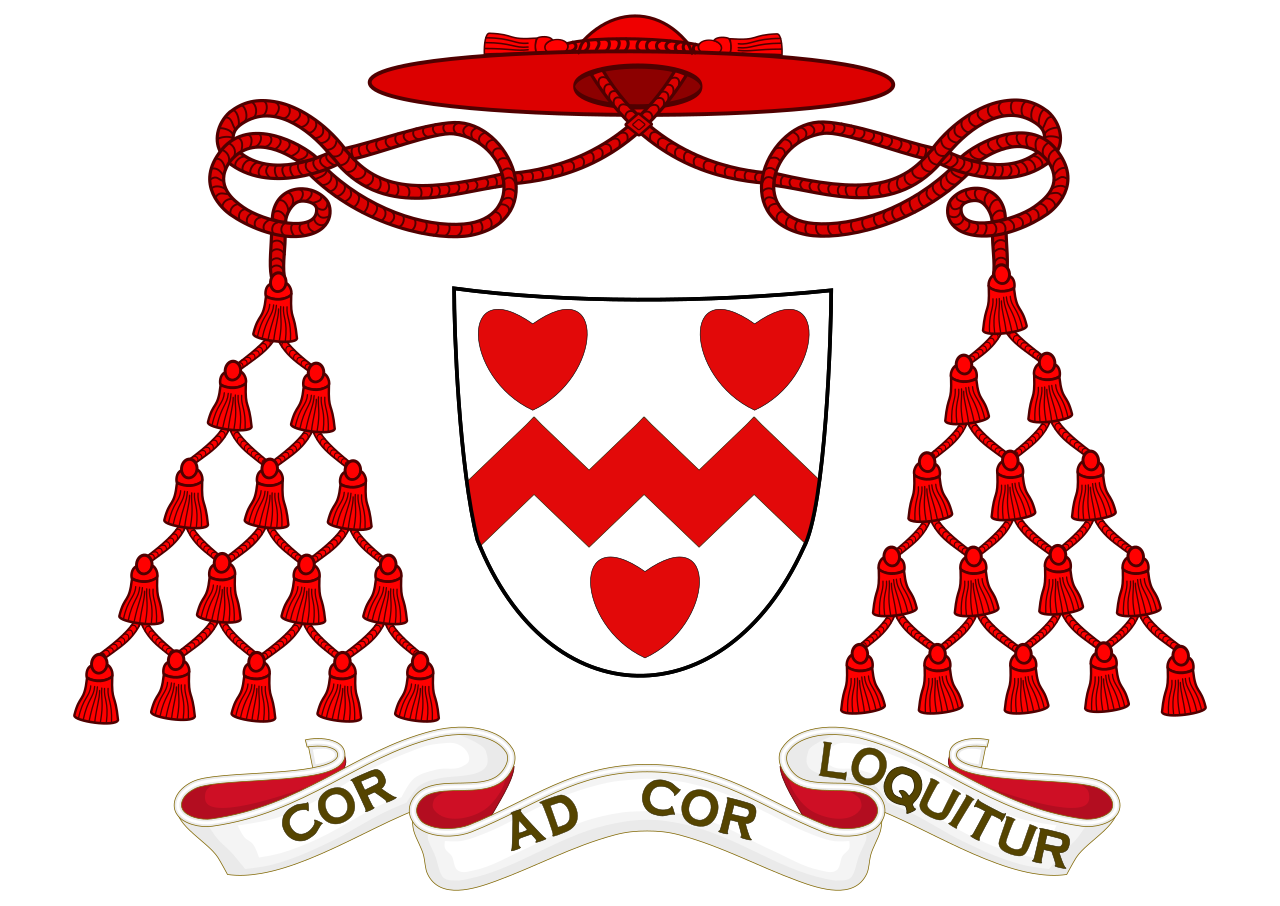
Newman's impact extended well beyond the written page. In 1879, Pope Leo XIII elevated him to the rank of cardinal in recognition of his services to the Catholic cause in England. He played an instrumental role in the founding of the Catholic University of Ireland in 1854, an institution that later evolved into University College Dublin, ensuring his intellectual legacy would shape generations of students. His recognition by the Church continued well after his death in 1890: Pope Francis approved his canonization, which took place on 13 October 2019, formally declaring him a saint.
In 2025, Pope Leo XIV proclaimed him a Doctor of the Church, a title reserved for those whose writings have profoundly shaped Catholic theology. He was also named co-patron of Catholic education, joining Saint Thomas Aquinas in that distinction. Born in the City of London in 1801 to a banking family with Huguenot roots, Newman's nearly nine-decade life spanned the full arc of English religious and intellectual history, and his elevation to sainthood and doctorate cemented his place as a defining figure in the Catholic tradition.
Frequently Asked Questions
Who is John Henry Newman?
Newman was an English theologian, philosopher, and writer born in 1801 who shaped 19th-century religious thought in Britain. He started out as an evangelical scholar at Oxford and an Anglican priest before ultimately embracing the Catholic faith.
What was Newman's role in the Oxford Movement?
Newman was one of the principal intellectual leaders of the Oxford Movement, a group of Anglican clergy who argued that the Church of England should recover Catholic liturgical practices and doctrines. His sermons and pamphlets in the 1830s and 1840s gave the movement much of its theological direction.
What are Newman's most famous writings?
His Essay on the Development of Christian Doctrine traces how Catholic teaching has organically unfolded across the centuries, while his Apologia Pro Vita Sua offers a personal defence of his journey from Anglicanism to Rome. Both remain central texts in Catholic apologetics and English literary history.
Was Newman made a cardinal?
Yes, Pope Pius IX raised Newman to the cardinalate in 1879, making him one of the first English-born cardinals in several hundred years. He held that distinction until his death on 11 August 1890.
Also in the Codexery
More in Catholic Saints & Popes
Sources
Compiled from Wikipedia and the sources listed below. Text from Wikipedia is available under CC BY-SA 4.0; this entry is adapted from it.
- Wikipedia: John Henry Newman (CC BY-SA 4.0).
Spotted an error? Know more?
Reader corrections go straight into our review queue. Suggest an edit · How this site is sourced