Padre Pio
Italian Capuchin friar, priest, stigmatist, and mystic; venerated as a saint.
Last updated
Padre Pio, born Francesco Forgione on 25 May 1887 in Pietrelcina, Italy, was a Capuchin friar, priest, stigmatist, and mystic venerated as a saint in the Catholic Church, with his feast day on 23 September. He entered the Capuchin novitiate at age fifteen, taking the name Friar Pius, and spent most of his religious life at the monastery of San Giovanni Rotondo.
Throughout his life, he was known for numerous supernatural phenomena, most notably the stigmata—wounds resembling those of Christ’s crucifixion on his hands, feet, and side. The Vatican conducted several investigations into these phenomena, which led to temporary restrictions on his ministry, yet his reputation for holiness grew. He was also renowned for other mystical experiences and extensive spiritual outreach to individuals.
Born to peasant farmers Grazio Mario Forgione and Maria Giuseppa Di Nunzio, Francesco was baptized in the Santa Anna Chapel and later served as an altar boy there. By age five, he had decided to dedicate his life to God. He worked on the family’s land and tended sheep until age ten.
His deeply religious family attended Mass daily, prayed the Rosary nightly, and abstained from meat three days a week. Though illiterate, his parents and grandparents narrated Bible stories. As a young boy, Francesco reported heavenly visions and ecstasies.
After hearing a Capuchin friar seeking donations, he expressed a desire to become a friar. His father traveled to the United States for work to pay for private tutoring so Francesco could meet the order’s academic requirements. He entered the novitiate at Morcone in January 1903, taking simple vows and the habit.
Priesthood
During his seven-year study for the priesthood, Padre Pio fell ill at age seventeen with symptoms including loss of appetite, insomnia, exhaustion, fainting, and migraines, able to digest only milk and cheese. Fellow friars reported seeing him in ecstasy and levitating. His health worsened, and he was sent to a mountain monastery, then home, but still made his solemn profession in January 1907.
He was ordained a priest on 10 August 1910 and celebrated his first Mass four days later. Due to poor health, he remained with his family in Pietrelcina until 1916, while his father and brother briefly emigrated to the United States. After his death, devotion spread worldwide, especially in the Mezzogiorno.
Lore & Background
Francesco Forgione was born on 25 May 1887 to Grazio Mario Forgione and Maria Giuseppa Di Nunzio, peasant farmers in Pietrelcina, in the province of Benevento, Campania. He had an older brother, Michele, and three younger sisters, Felicita, Pellegrina, and Grazia (who later became a Bridgettine nun); two other siblings died in infancy. Baptized in the Santa Anna Chapel, he was christened Francesco in honor of Saint Francis of Assisi.
By age five, according to his own account, he had decided to dedicate his life to God. He worked on the land until age 10, looking after the family's small flock of sheep. The family was deeply religious, attending Mass daily, praying the Rosary nightly, and abstaining from meat three days a week in honor of Our Lady of Mount Carmel. Though his parents and grandparents were illiterate, they narrated Bible stories.
In 1897, after three years at public school, he was drawn to the friar's life after listening to a young Capuchin seeking donations. His father traveled to the US for work to pay for private tutoring so Francesco could meet academic requirements. On 6 January 1903, at age 15, he entered the Capuchin novitiate at Morcone; on 22 January, he took the Franciscan habit and the name Fra Pio, in honor of Pope Pius I, with simple vows of poverty, chastity, and obedience.
Frequently Asked Questions
What were Padre Pio's stigmata?
The stigmata refer to the wounds of Christ—on his hands, feet, and side—that Padre Pio reportedly bore for over fifty years. In Catholic tradition, these marks are understood as a sign of deep union with the suffering of Jesus rather than a supernatural power in the magical sense.
When is Padre Pio's feast day?
His memorial is celebrated on 23 September, the anniversary of his death in 1968. Devotees around the world often attend Mass or light candles in his honor on that date.
How did Padre Pio's life end?
He passed away on 23 September 1968 at the Convent of San Giovanni Rotondo in Italy, where he had served for decades. His remains were later moved to a dedicated basilica, and he was canonized as a saint in 2002.
Why do Catholics venerate Padre Pio?
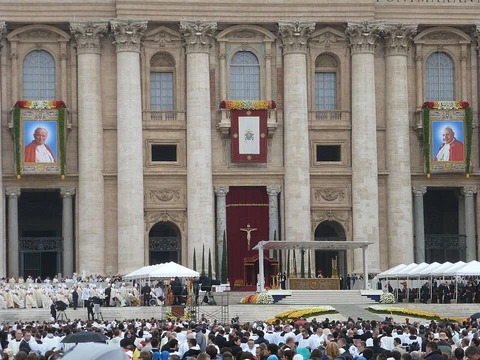
He is honored because of his reported mystical experiences, his decades of confessional ministry, and the spiritual comfort he offered to millions of penitents. His canonization by Pope John Paul II in 2002 affirmed his place in the official catalogue of saints.
Also in the Codexery
More in Catholic Saints & Popes
Sources
Compiled from Wikipedia and the sources listed below. Text from Wikipedia is available under CC BY-SA 4.0; this entry is adapted from it.
- Wikipedia: Padre Pio (CC BY-SA 4.0).
Spotted an error? Know more?
Reader corrections go straight into our review queue. Suggest an edit · How this site is sourced