Veracruz (city)
Mexico's oldest, largest, and historically most significant port city.

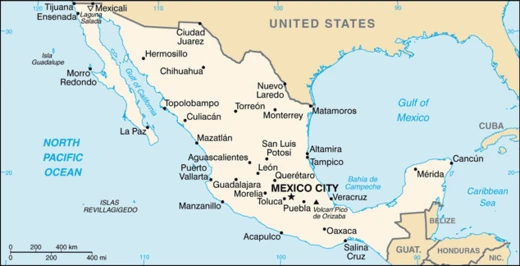
Veracruz, often called Heroica Veracruz, sits on the Gulf of Mexico as a major port and the seat of its surrounding municipality. It is the most populous city in the state of Veracruz, with part of the urban area extending into the neighboring municipality of Boca del Río. According to the 2020 census, the municipality of Veracruz had 607,209 residents; the city proper counted 537,952 people, split between 405,952 in Veracruz municipality and 132,011 in Boca del Río. Founded during Spanish colonization, it is Mexico’s oldest, largest, and most historically important port.
The name Veracruz comes from the Latin *Vera Crux* (True Cross). When Spanish explorer Hernán Cortés arrived on 22 April 1519, he founded a settlement called Villa Rica de la Vera Cruz: “Villa Rica” for the gold in the area, and “Vera Cruz” because he landed on Good Friday, the Christian day of the Crucifixion. This was the first Spanish settlement on the American mainland to receive a coat-of-arms. During the colonial period, Veracruz boasted the largest mercantile class and was sometimes wealthier than Mexico City. That wealth attracted 17th-century pirates, leading to the construction of fortifications like Fort San Juan de Ulúa. In the 19th and early 20th centuries, French and U.S. forces invaded the city; after the 1914 Tampico Affair, U.S. troops occupied Veracruz for seven months. For much of the 20th century, petroleum dominated the state’s economy, but in the late 20th and early 21st centuries, the port regained its role as the main economic driver. It now serves as the primary port for most of Mexico’s imports and exports, especially for the automotive industry.
The city’s culture blends indigenous, Spanish, and Afro-Caribbean influences, most evident in its food and music, which carry strong Spanish, Caribbean, and African elements.
The Spanish captain Juan de Grijalva, along with Bernal Díaz del Castillo, first reached the island later known as San Juan de Ulúa in 1518. They named it for John the Baptist’s feast day (24 June) and the captain; “Ulúa” comes from the local name for the Aztecs, *coluha* or *acolhua*. When Cortés arrived in 1519, the area was under Moctezuma II and the Aztec Empire. He and his men landed opposite that island, at a pre-Hispanic site called Chalchihuecan. With Francisco de Montejo and Alonso Hernández Puertocarrero, Cortés founded Villa Rica de la Vera Cruz. By abolishing Aztec rulers and electing a Justicia Mayor and Capitán General, they created the first city council on the American continent. The city received its European coat of arms from Carlos V in Valladolid, Spain, on 4 July 1523.
The original settlement moved in 1525 to what is now Antigua, at the mouth of the Huitzilapan (or Antigua) River. This separated the city from the port because ships could not enter the shallow river; they continued docking at San Juan de Ulúa, with small boats ferrying goods. Indigenous peoples suffered epidemics of European diseases after contact, and the Portuguese Empire began importing African slaves through Veracruz. In the 16th century, the state had more slaves than any other in Mexico; before abolition, Mexico had the second-highest population of African slaves in the Americas, after Brazil.
As New Spain’s most important port, Veracruz supported a wealthy merchant class more prosperous than that of Mexico City. Each year, the two voyages of the Spanish treasure fleet gathered stevedores, muleteers, navigators, sailors, contractors, merchants, and civil servants. In 1568, Armada admiral Francisco Luján ambushed a fleet of British privateers led by John Hawkins and Francis Drake while they provisioned at Veracruz. By the late 16th century, roads linked the city to Córdoba, Orizaba, Puebla, Xalapa, and Perote; gold and silver were the main exports. Piracy prompted the mid-16th-century construction of Fort San Juan de Ulúa on the island where Grijalva had landed. In 1600, to curb large-scale smuggling that avoided customs officials, the Spanish Crown ordered the settlement returned to its original site. Docks and an observation tower were built on the island to ensure goods passed through customs.
- founder
- Hernán Cortés
- country
- Mexico
- state
- Veracruz
- known_for
- Oldest and largest port in Mexico; first Spanish settlement on mainland Americas to receive a coat-of-arms
Quick Facts
- Official Name
- Heroica Veracruz
- Settlement Type
- City and municipality
- Shield Size
- 70px
- Subdivision Type
- Country
- Subdivision Name
- Mexico
- Subdivision Type1
- State
- Subdivision Name1
- Veracruz
- Subdivision Type2
- Region
- Subdivision Name2
- Sotavento Region
- Subdivision Type3
- Municipality
- Leader Title
- Municipal President
- Leader Name
- Patricia Lobeira Rodríguez · es (PAN)
Facts from the source article.
Lore & Background
In the 16th century, the Portuguese Empire began importing African slaves via the port, and the state had more slaves than any other in Mexico. Veracruz was the most important port in New Spain, with a large wealthy merchant class that was at times wealthier than Mexico City. Its wealth attracted 17th-century pirates, against which fortifications such as Fort San Juan de Ulúa were built.
Reader's Guide
Veracruz is significant as Mexico's oldest, largest, and historically most important port, serving as the principal gateway for imports and exports, especially for the automotive industry. During the colonial period, its wealthy merchant class made it at times richer than Mexico City, but also made it a target for pirates, leading to the construction of Fort San Juan de Ulúa. In the 20th century, petroleum dominated the state's economy, but in the late 20th and early 21st centuries, the port re-emerged as the main economic engine. The city's culture blends indigenous, Spanish, and Afro-Caribbean influences, especially visible in its food and music. Today, Veracruz remains a major port and the most populous city in its state.
Did You Know?
- The name Veracruz derives from the Latin Vera Crux (True Cross), chosen because Cortés landed on Good Friday.
Frequently Asked Questions
What is Veracruz (city)?
Veracruz, also called Heroica Veracruz, is a major port city on Mexico's Gulf coast that serves as the municipal seat for the surrounding Veracruz municipality. It is the most populous city in the state of Veracruz.
Who founded Veracruz (city)?
The city was established by Hernán Cortés during the Spanish colonization era, making it one of the earliest Spanish settlements in the Americas.
What is Veracruz (city) known for?
It holds the distinction of being Mexico's oldest, largest, and most historically significant port. It was also the first Spanish settlement on the mainland Americas to be granted a coat-of-arms.
Where is Veracruz (city) located?
It sits on the Gulf of Mexico within the state of Veracruz, in eastern Mexico. Its coastal position is central to its identity as the country's premier port.
Why is Veracruz (city) important to Mexican history?
As the nation's oldest and largest port, it served as a critical gateway for trade and colonization from the Spanish era onward. Its founding by Cortés and its early receipt of a coat-of-arms underscore its foundational role in Mexican history.
More in Mexican Cities 1-20
Spotted an error? Know more?
This is a living reference — every entry is fact-audited, and reader corrections feed straight into our audit queue. Suggest an edit · See this site's audit record