
Hydrofluoric acid burn
A chemical burn from hydrofluoric acid causing severe pain and systemic toxicity.

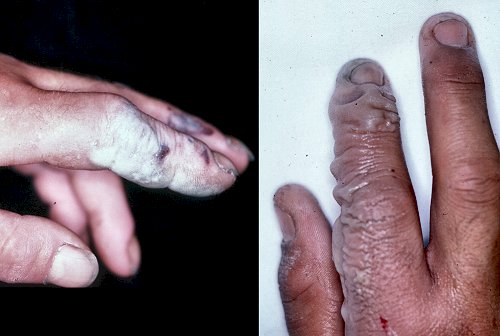
A hydrofluoric acid burn is a chemical burn resulting from exposure to hydrofluoric acid. It causes significant pain, swelling, redness, and skin breakdown upon contact, and inhalation of fumes can lead to upper airway swelling and bleeding. Complications may include electrolyte imbalance and problems affecting the heart, lungs, kidneys, gastroenterological system, and neurological system.
Quick Facts
- Specialty
- Toxicology
- Symptoms
- Severe pain at the site of exposure
- Complications
- electrolyte, heart, lung, and neurological problems
- Onset
- Immediate or delayed
- Causes
- Hydrofluoric acid
- Diagnosis
- Based on history of exposure and symptoms
- Treatment
- Removing contaminated clothing, washing with water, calcium gluconate
- Frequency
- Rare
Facts from the source article.
Lore & Background
Most exposures to hydrofluoric acid occur at work, particularly in industries such as glass etching and electronics manufacturing. The acid can also be released from volcanoes, sea salt aerosol, welding, or manufacturing processes. It is generated upon combustion of fluorine-containing compounds like Viton and polytetrafluoroethylene (Teflon), and hydrofluorocarbons in automatic fire suppression systems can release hydrogen fluoride at high temperatures, leading to deaths from acute respiratory failure in military personnel when a rocket-propelled grenade hit such a system.
Reader's Guide
Hydrofluoric acid burns are significant due to their potential for severe systemic toxicity, even from relatively small exposures. The acid reacts with calcium and magnesium ions in the body, forming insoluble calcium fluoride, which can cause a precipitous fall in serum calcium and lead to cardiac arrest. Burns larger than 160 cm² (25 square inches) pose a risk of serious systemic toxicity. Diagnosis requires blood tests for calcium, potassium, and magnesium, along with an electrocardiogram to detect changes like QRS widening and prolonged QT interval. Initial treatment involves removing contaminated clothing and washing with large amounts of water for at least 30 minutes, followed by application of calcium gluconate cream. Inhaled HF may require oxygen therapy, tracheal intubation, and nebulized calcium gluconate. Despite the availability of special rinsing solutions like Hexafluorine, studies have found their efficacy in reducing long-term electrolyte imbalance effects is almost identical to water rinsing. Emergency services should be contacted immediately in all cases.
Did You Know?
- With concentrations less than 7%, onset of symptoms may not occur for hours, while with concentrations greater than 15%, onset is nearly immediate.
- Hydrofluoric acid can be released from volcanoes, sea salt aerosol, and welding or manufacturing processes.
- Burns with areas larger than 160 cm² (25 square inches) have the potential to cause serious systemic toxicity from interference with blood and tissue calcium levels.
The Silent Chemistry of Systemic Toxicity
Unlike most chemical burns that damage tissue at the surface, hydrofluoric acid penetrates deep and triggers a cascade of internal failure. Once the acid crosses the skin barrier, its fluoride ions latch onto calcium and magnesium ions that are essential throughout the body. The proposed mechanism involves the formation of insoluble calcium fluoride, a reaction that simultaneously drains serum calcium and generates the severe pain victims describe. This dual assault explains why a seemingly small burn can become life-threatening: the fluoride steals the very minerals the heart and nervous system depend on. When the affected area exceeds roughly 160 square centimeters, the risk of serious systemic toxicity rises sharply, as blood and tissue calcium levels are disrupted on a scale the body cannot compensate for. In the most severe scenarios, the precipitous drop in calcium can trigger cardiac arrest. Hypocalcemia may develop even in smaller exposures, and the fluoride's interference with magnesium compounds the danger. The result is a burn that is as much a metabolic emergency as a dermatological one, capable of producing heart, lung, kidney, gastrointestinal, and neurological complications long after the initial contact.
Reading the Body's Warning Signals
The clinical picture of hydrofluoric acid exposure spans a wide spectrum, from superficial irritation to multi-organ crisis. At the point of contact, victims typically experience intense pain, swelling, redness, and progressive skin breakdown, while the eyes, nose, and throat may also become inflamed. Bone damage is a recognized consequence, underscoring how deeply the acid can penetrate. The timing of symptom onset depends heavily on concentration: solutions below seven percent may remain deceptive, with symptoms not appearing for hours, whereas concentrations above fifteen percent produce nearly immediate effects. This delay makes early recognition particularly challenging. When fumes are inhaled, the upper airway swells and may bleed, and the lungs can fill with fluid in a condition called pulmonary edema, accompanied by fever, low blood oxygen, and potentially fatal respiratory failure. In the diagnostic workup, clinicians order blood panels measuring calcium, potassium, and magnesium, paired with an electrocardiogram. The ECG may reveal QRS widening or a prolonged QT interval, both red flags that the heart's electrical system is under chemical stress. Together, these tests paint a picture of how far the fluoride has traveled beyond the skin.
The Race Against Fluoride
Immediate response to a hydrofluoric acid contact begins with stripping away contaminated clothing and flooding the affected area with copious water for a minimum of thirty minutes. This first step dilutes and removes residual acid before it can penetrate further. Next, calcium gluconate cream is applied to the wound, providing a local source of calcium ions that bind and neutralize the rogue fluoride. If pain persists despite topical treatment, clinicians may inject calcium gluconate directly into the tissue or deliver it intravenously or intra-arterially. In the most severe cases, surgical debridement of the damaged tissue becomes necessary. A specialized product called Hexafluorine Solution has been marketed to combine rinsing, hydrogen-ion neutralization, and fluoride chelation in a single step, though follow-up research suggests its long-term benefit for electrolyte balance is no better than plain water irrigation. For inhaled exposures, the protocol shifts to oxygen therapy, possible tracheal intubation, and nebulized calcium gluconate. In rare instances where the acid reaches internal organs, fulminant colitis can develop, demanding urgent surgical intervention. Regardless of the burn's size, emergency services must be contacted without delay.
Where the Danger Lurks
Although roughly a thousand hydrofluoric acid burn cases are estimated worldwide each year, the exposures cluster in specific settings. The majority occur in occupational environments, and the people most frequently affected are adult males. Hydrogen fluoride is a staple reagent in glass etching and electronics manufacturing, placing workers in direct contact with the acid on a routine basis. Beyond deliberate industrial use, the compound can appear as an unintended byproduct: burning fluorine-containing materials such as Viton or polytetrafluoroethylene (Teflon) components releases hydrogen fluoride into the air. Hydrofluorocarbons housed in automatic fire-suppression systems can also generate the gas at high temperatures, a hazard that proved fatal when a rocket-propelled grenade struck the suppression system in a military vehicle, killing personnel through acute respiratory failure. Nature, too, contributes sources; volcanoes emit the acid, and sea-salt aerosol can carry trace amounts. Welding and various manufacturing processes add further exposure pathways. The combination of widespread industrial use, unpredictable combustion byproducts, and natural emissions means that hydrofluoric acid encounters are far from rare, even if the total annual case count sounds modest.
Gallery
Frequently Asked Questions
What is a Hydrofluoric acid burn?
A Hydrofluoric acid burn is a chemical injury produced when skin or mucous membranes come into contact with hydrofluoric acid. It is classified as a chemical burn rather than a thermal one, and it can trigger both local tissue damage and dangerous systemic toxicity.
What causes a Hydrofluoric acid burn?
The most common route of exposure is occupational, meaning workers in industries that handle the acid are at highest risk. The affected population skews heavily toward adult males, and roughly one thousand cases are reported worldwide each year.
What are the 'powers' or effects of a Hydrofluoric acid burn?
Locally, it produces intense pain, swelling, redness, and progressive skin breakdown at the contact site. Systemically, the acid can disrupt electrolyte balance and compromise the heart, lungs, kidneys, gastrointestinal tract, and nervous system; inhaled fumes may cause upper-airway swelling and bleeding.
How is a Hydrofluoric acid burn treated?
The cornerstone of first-line management is immediate irrigation with copious water followed by application of calcium gluconate cream to neutralize the acid at the tissue level. The speed of this intervention matters because symptom onset varies with concentration—hours for solutions below 7% and nearly immediate for those above 15%.
Why is a Hydrofluoric acid burn considered important in burn medicine?
Unlike many other chemical burns, hydrofluoric acid penetrates deeply and continues to cause harm well after initial contact, making it uniquely dangerous. Its potential for fatal cardiac arrhythmia and multi-organ failure means even a small exposed area can become a life-threatening emergency.
More in Burns 1-24
Spotted an error? Know more?
Reader corrections go straight into our review queue. Suggest an edit · How this site is sourced