
Burn mask
A rigid transparent mask that compresses facial scars to prevent hypertrophy.

Ambassador of the United States of America to the People's Republic of China · Public domain
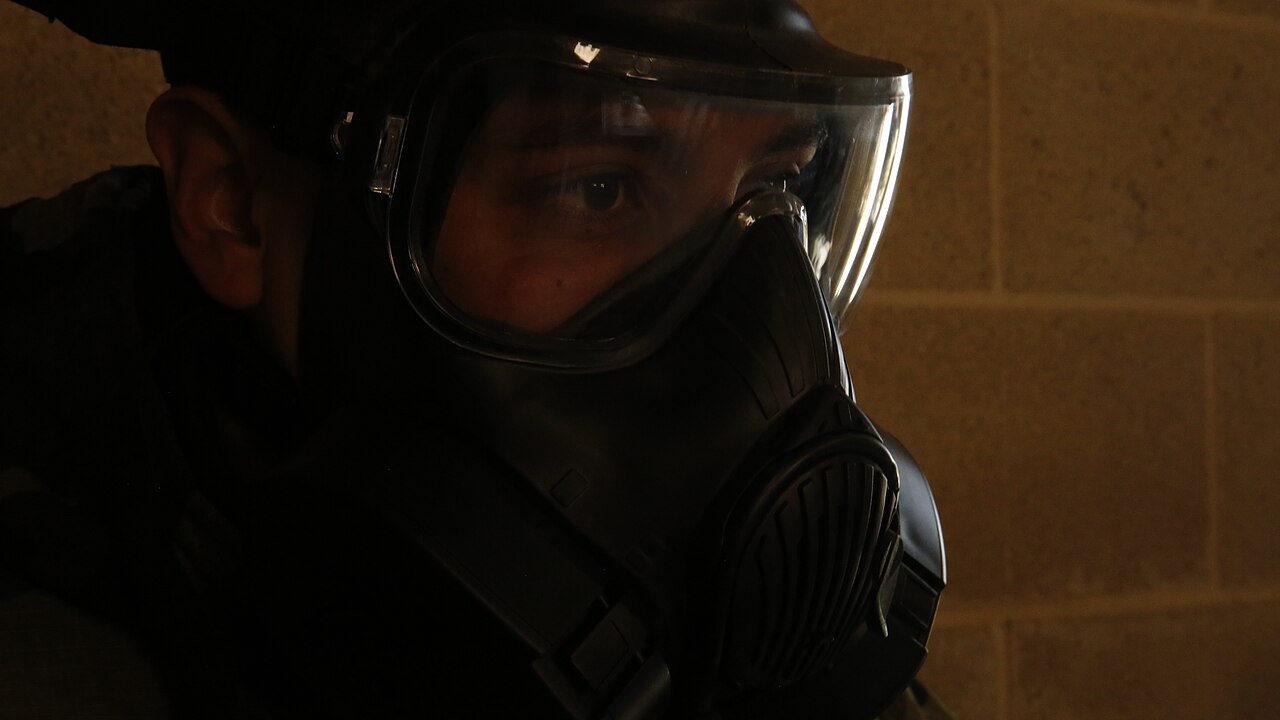
A burn mask, also known as a transparent facial orthosis or facial pressure garment, is a rigid, clear thermoplastic device individually moulded to exert continuous, evenly distributed compression on the face of a burn survivor. Its purpose is to prevent or remodel hypertrophic scarring, and it has been regarded as a mainstay of conservative facial scar management since becoming widely adopted during the 1980s.
- Field
- Burn care and scar management
- Known for
- Preventing or remodeling hypertrophic scarring on the face through sustained compression
- Pressure range
- 20–32 mm Hg
- Wear schedule
- 20–23 hours per day for a minimum of two months, often up to two years
Lore & Background
Transparent burn masks evolved in the late 1970s from earlier elastic hoods whose irregular pressure made them ineffective over concave facial regions. Rigid masks became widely adopted during the 1980s and have since been regarded as a mainstay of conservative facial scar management. Although routine in specialist burn centres, their precise mechanism of action remains incompletely understood; prevailing hypotheses propose that sustained external pressure lowers capillary perfusion, reduces fluid retention in the skin and collagen production, and encourages parallel alignment of fibroblasts, thereby flattening and softening the scar tissue.
Reader's Guide
Conventional fabrication is labour-intensive: an orthotist first takes a negative plaster impression of the patient's face, pours a positive plaster cast, and then vacuums a heated, clear polycarbonate or PET-G sheet over the model to form the shell, which is held in place by adjustable straps and often lined with medical grade silicone to improve force distribution. Systematic review findings group production methods into classical plaster, fully digital three-dimensional scanning and printing, or hybrid approaches, but report no definitive evidence that digital masks improve clinical outcomes or reduce costs. Materials, harness configurations and the addition of embedded pressure sensors vary between centres, reflecting a lack of international standardisation. Consensus guidance from the International Society for Burn Injuries recommends that masks deliver 20–32 mm Hg—above capillary pressure yet below levels that would impede circulation—and be worn for 20–23 hours per day for a minimum of two months and often up to two years, depending on scar maturation. Systematic reviews of clinical studies involving fewer than forty patients document statistically significant improvements in scar thickness, pliability and colour on validated scales such as the Patient and Observer Scar Assessment Scale (POSAS), while simultaneously emphasising the low quality and heterogeneity of the underlying evidence base. Major practical challenges include discomfort, heat build-up, speech interference and the stringent wear schedule, all of which contribute to poor adherence and make randomised trials difficult for ethical and logistical reasons. Contemporary authors therefore call for multicentre studies employing objective pressure monitoring and standard outcome measures to clarify indications, optimise design parameters and quantify long-term functional and psychosocial benefits.
Did You Know?
- The burn mask is also termed a transparent facial orthosis or facial pressure garment.
- Consensus guidance recommends masks deliver 20–32 mm Hg and be worn 20–23 hours per day for a minimum of two months.
From Elastic Hoods to Rigid Shields
The story of the burn mask begins with a design failure. In the late 1970s, clinicians relied on elastic hoods to compress facial burn wounds, but these soft garments could not maintain consistent pressure across the concave contours of the face. Cheekbones, the nasal bridge, and the jawline all deflected the stretchy fabric unevenly, leaving critical areas under-compressed. The solution was a fundamental paradigm shift: replacing textile with a rigid, transparent thermoplastic shell moulded precisely to each individual's unique facial geometry. By the 1980s, these clear masks had become the standard of care in specialist burn units worldwide. Their transparency was no mere aesthetic choice; it allowed both patient and clinician to monitor skin condition continuously without removing the device. Today, the burn mask—sometimes called a transparent facial orthosis or facial pressure garment—stands as the cornerstone of conservative facial scar management, even though the exact biological pathways through which it exerts its therapeutic effect remain only partially mapped.
The Craft Behind the Shell
Producing a burn mask is, by most accounts, a hands-on artisanal process. An orthotist begins by pressing a negative plaster impression against the patient's face, then pours a second layer to create a positive cast. Over this model, a sheet of heated polycarbonate or PET-G plastic is vacuum-formed into a precise shell. The finished device is secured with adjustable straps and typically lined with medical-grade silicone to spread compressive force more evenly across the skin. Yet the field remains far from uniform. Systematic reviews categorise fabrication into classical plaster methods, fully digital three-dimensional scanning and printing, or hybrid workflows, but they find no conclusive evidence that digital routes yield better clinical results or lower costs. Materials, strap configurations, and the optional inclusion of embedded pressure sensors all differ from centre to centre, a patchwork that reflects the absence of any international standardisation protocol governing how these devices are made.
Pressure, Patience, and the Biology of Healing
The International Society for Burn Injuries sets a narrow therapeutic window: masks should deliver between twenty and thirty-two millimetres of mercury—enough to exceed capillary pressure and suppress scar proliferation, yet low enough to avoid compromising blood flow. Within that window, the prescribed regimen is demanding. Patients are expected to wear the device for twenty to twenty-three hours each day, for a minimum of two months and frequently for as long as two years, tracking the slow maturation of scar tissue. The biological rationale, while plausible, is still hypothesis-driven. Sustained external pressure is thought to reduce capillary perfusion, limit interstitial fluid retention, dampen collagen synthesis, and coax fibroblasts into a parallel arrangement that ultimately flattens and softens the scar. No single mechanism has been definitively proven, and the interplay of these factors in living tissue remains an active area of investigation.
Thin Evidence, Thick Challenges
The clinical literature supporting burn masks is, by the reviewers' own admission, thin. Systematic analyses draw on studies involving fewer than forty patients each, and while these small cohorts report statistically significant gains in scar thickness, pliability, and colour on validated instruments such as the Patient and Observer Scar Assessment Scale, the reviewers consistently flag the low quality and heterogeneity of the underlying data. Practical barriers compound the problem. Masks generate heat, interfere with speech, cause discomfort, and impose a wear schedule so stringent that adherence drops, making randomised controlled trials ethically and logistically fraught. In response, contemporary researchers are calling for multicentre trials that incorporate objective, continuous pressure monitoring and standardised outcome measures. The goal is to clarify exactly who benefits, optimise design parameters, and quantify the long-term functional and psychosocial advantages that patients experience but that current evidence cannot yet capture with confidence.
Gallery

Frequently Asked Questions
What is a burn mask?
A burn mask is a clear, rigid thermoplastic device that is custom-moulded to fit a burn survivor's face. It applies steady, even compression over the entire facial area to manage scarring.
What does a burn mask actually do?
Its primary job is to stop or reshape hypertrophic (raised) scars by keeping constant pressure on the healing tissue. It has been considered a cornerstone of non-surgical facial scar treatment since the 1980s.
How long do burn survivors need to wear the mask?
The typical schedule calls for 20 to 23 hours of wear per day, with a minimum duration of about two months. In many cases, patients continue wearing it for as long as two years to maintain results.
What level of pressure does a burn mask deliver?
The mask is engineered to sustain a compression range of roughly 20 to 32 mm Hg across the treated area. This range is considered sufficient to influence collagen remodeling without causing tissue damage.
Why is the burn mask important in burn recovery?
It offers a non-invasive way to control the most visible and psychologically impactful scars—those on the face. Before its widespread adoption, facial burn survivors had far fewer conservative options for managing raised scarring.
More in Burns 1-24
Spotted an error? Know more?
Reader corrections go straight into our review queue. Suggest an edit · How this site is sourced