
Friction burn
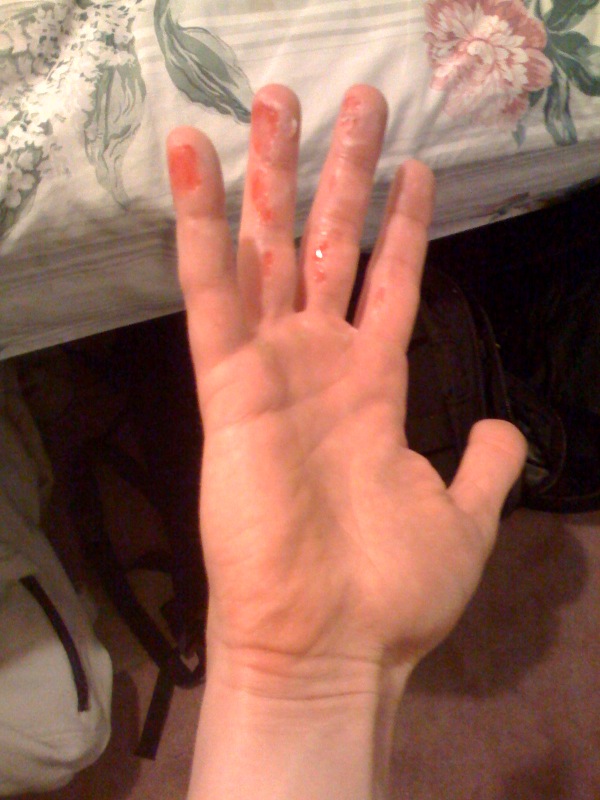
Abrasion from skin friction, often called chafing or rope burn.

Adam Gould · Public domain
A friction burn is an abrasion that happens when skin rubs against a surface. It goes by other names like skinning, chafing, or a surface-specific term such as rope burn, carpet burn, or rug burn. Since friction produces heat, severe chafing can actually cause a true thermal burn on the skin’s outer layers.
After the top layers of the epidermis—the stratum corneum, stratum granulosum, stratum spinosum, and stratum basale—are worn away, the dermal papillae may become exposed. This is often uncomfortable or painful, but bleeding is rare. The abrasive surface can be a person’s own skin or someone else’s, though it is more commonly something like clothing, carpet, or rope. Skin-to-skin chafing frequently occurs between the thighs and under the armpits. Friction burns are also common on knees from pants during sports or sliding on wooden surfaces. Less serious friction burns often happen on sensitive areas like the genitals during sexual activity or masturbation. Risks include infection and either temporary or permanent scarring.
Most minor friction burns need little or no treatment, unless a specific allergy makes the burn worse. Treatment typically involves applying an anti-inflammatory cream, and pain relievers may also be taken.
Quick Facts
- Field
- Dermatology
- Causes
- Carpet, rope, rug, treadmill, sand, swingset
Facts from the source article.
Lore & Background
A friction burn occurs when the skin rubs against a surface, generating heat that can remove the top layers of the epidermis, including the stratum corneum, stratum granulosum, stratum spinosum, and stratum basale. This may expose the dermal papillae, causing discomfort or pain, but rarely results in bleeding. The condition is commonly caused by abrasive surfaces such as clothing, carpet, or rope, and can also occur from skin-to-skin contact, such as between the thighs or under the armpits.
Reader's Guide
Friction burns are a common but generally minor injury, often requiring little to no treatment. However, extreme cases can lead to genuine thermal burning of the outer skin layers. The primary risks associated with friction burns are infection and scarring, which may be temporary or permanent. Treatment typically involves application of an anti-inflammatory cream, and pain relieving medication may also be taken. The condition is notable for its variety of names based on the causative surface, such as rope burn or carpet burn, and its frequent occurrence in everyday activities like sports or sexual activity.
Did You Know?
- Friction burns can be caused by a person's own skin or the skin of another person acting as an abrasive surface.
- Extreme cases of chafing may result in genuine thermal burning of the outer layers of skin.
- Common places for skin-to-skin chafing are between the thighs and under the armpits.
- Friction burns rarely result in bleeding, even when the dermal papillae are exposed.
What a Friction Burn Actually Is
A friction burn is essentially an abrasion that happens when skin is rubbed forcefully against a surface. The term covers a wide family of injuries — people might call it skinning, chafing, or give it a name tied to whatever caused it, like a rope burn, carpet burn, or rug burn. What makes this injury interesting from a physics standpoint is that the rubbing action generates heat. In particularly severe cases of chafing, that generated heat is enough to cause a genuine thermal burn of the outermost skin layers, blurring the line between a mechanical abrasion and a true burn. The defining characteristic remains the friction: it is the repetitive or forceful rubbing that strips away tissue rather than a single impact or chemical exposure.
What Happens Beneath the Surface
When the top layers of the epidermis are stripped away by friction, the result is a raw, sensitive wound. The layers removed in sequence include the stratum corneum, stratum granulosum, stratum spinosum, and stratum basale. Once these are gone, the dermal papillae — the small projections of the dermis that normally sit beneath the epidermis — become exposed. This exposure is what makes a friction burn so uncomfortable and often quite painful, as nerve endings in the papillae are now directly accessible to air, pressure, and irritants. Despite the intensity of the pain, these injuries rarely produce significant bleeding, which distinguishes them from deeper lacerations or more severe burns. The wound is essentially a shallow, raw patch of skin rather than a deep gash.
Where and How They Happen
Friction burns are remarkably common and can arise in a surprising variety of everyday and recreational situations. A person's own skin can serve as the abrasive surface — chafing between the thighs or under the armpits are classic examples of skin-to-skin friction. More frequently, however, the culprit is an external material: clothing rubbing against the body, a carpet or rug scraping the skin, or a rope dragging across a hand. Sports and play introduce additional risks; sliding on wooden surfaces or kneeling in pants while playing can produce a burn on the knees. Even intimate contexts such as sexual intercourse or masturbation can produce friction burns on the sensitive skin of the genitals. The common thread is repetitive or forceful rubbing against a textured or rough surface, whether that surface is fabric, wood, rope, or another person's skin.
Risks and Managing the Wound
While most friction burns are minor and heal on their own, they do carry real risks. The two primary concerns are infection, since the exposed dermal tissue is vulnerable to bacteria, and scarring, which can be either temporary or permanent depending on the severity of the abrasion. Treatment for a typical minor friction burn is often minimal — in some cases, no treatment at all is needed, and applying a specific remedy could actually aggravate the wound, particularly if the person has a relevant allergy. When intervention is warranted, the standard approach involves applying an anti-inflammatory cream to reduce swelling and irritation. Over-the-counter pain relieving medication may also be taken to manage the discomfort while the skin regenerates. The overall prognosis is favorable, but proper care helps minimize the chance of infection and long-term scarring.
Gallery
Frequently Asked Questions
What is a friction burn?
A friction burn is an abrasion formed when skin is rubbed or dragged across a rough surface. People also call it skinning, chafing, or use surface-specific labels like rope burn, carpet burn, or rug burn.
Where do friction burns usually show up?
They most commonly appear in spots where skin meets skin or fabric, such as the inner thighs, under the armpits, the knees, and the genital area. The abrasive surface can be anything from a carpet or rope to another person's own skin.
What actually happens to the skin during a friction burn?
The rubbing strips away the outermost epidermal layers—corneum, granulosum, spinosum, and basale—until the sensitive dermal papillae are left exposed, making the area tender but rarely bloody. In severe cases, the heat generated by the friction can add a true thermal burn on top of the abrasion.
How do you treat a friction burn?
Standard care involves applying an anti-inflammatory cream to soothe the irritated tissue and taking over-the-counter pain relievers for discomfort. Keeping the area clean and protected supports healing without complications.
Can a friction burn lead to long-term problems?
If the wound becomes contaminated or is left untreated, it can develop into an infection or produce scarring that may be either temporary or permanent.
More in Burns 1-24
Spotted an error? Know more?
Reader corrections go straight into our review queue. Suggest an edit · How this site is sourced