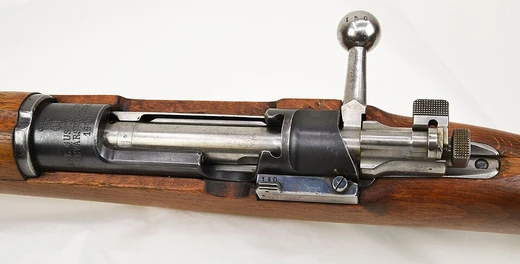
35M rifle
Hungarian bolt-action rifle derived from the Mannlicher–Schönauer action.

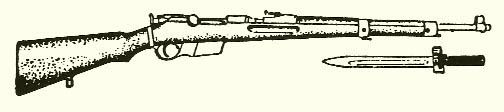
The FÉG 35M was a bolt-action rifle chambered in 8×56mmR, used by Hungary in the years leading up to and during World War II, as well as after World War II. Though superficially still resembling the 95/31M Carbine, it was a new design with a cock-on-close bolt and a bolt handle placed further forward than in the 1895 design.
Quick Facts
- Is Ranged
- yes
- Origin
- Kingdom of Hungary
- Designer
- FÉG
- Design Date
- 1935
- Manufacturer
- FÉG / possiblyDanuvia
- Production Date
- 1935–1950s
- Number
- 35M: 186,600 / G98/40: 138,400 / 43M: 91,500
- Used By
- Kingdom of Hungary / Soviet Union / Nazi Germany / People's Republic of Hungary
- Wars
- Slovak–Hungarian War / World War II / Hungarian Revolution of 1956
- Cartridge
- 8×56mmR 35M / 7.92×57mm Mauser G98/40 and 43M
- Action
- Bolt-action
- Velocity
- 730 m/s
Facts from the source article.
Lore & Background
The FÉG 35M was a bolt-action rifle firing the 8×56mmR cartridge. While it looked similar to the earlier 95/31M Carbine, it was an entirely new design featuring a cock-on-close bolt. Its most obvious visual difference was the bolt handle, positioned farther forward than on the 1895 model. Hungary used the 35M before, during, and after World War II, but it was gradually replaced by surplus Red Army weapons and locally made Mosin–Nagant carbines.
After World War I, the 95M carbines were updated with metric sights and later rechambered for the Austrian 8×56mmR round. Combat experience revealed several problems with the 95M: the straight-pull Mannlicher bolt could freeze in cold weather, bolts were hand-fitted and not interchangeable (requiring a gunsmith to replace), and the cock-on-opening action was undesirable. The military decided the new rifle needed a simpler rotating bolt and a better bayonet.
Hungary and FÉG based the new design on the Mannlicher–Schönauer action, which itself came from the Gewehr 88 bolt and was also used in Romanian and Dutch Mannlichers. A trial prototype, the 33.M, was made in small numbers in 1933. It differed from the final 35M in several ways: it used a Berthier-style bayonet with a crosspiece and press stud (based on a 1923 prototype) instead of a G98-type bayonet, and had a flat blade rather than a cruciform one; the bolt handle was moved forward of the receiver bridge to strengthen the action; the metal receiver piece separating the forearm from the buttstock was shifted rearward, from around the magazine to a position like that of the Lee-Enfield; and the Arisaka-style sliding receiver cover was dropped.
All springs in the rifle except the sight spring are coil springs. The safety could be engaged whether the rifle was cocked or not. The barrel was lengthened, and the distance between the front and rear sights was increased. A British-style two-piece stock eliminated the need to import highly stable wood.
During World War II, cooperation with Germany and a shortage of standard K98k rifles led to modifications of the 35M. It was rechambered for the German 7.92×57 IS cartridge, given a fully enclosed flush magazine, an angled bolt handle, a bayonet socket for German bayonets, and altered sling mounts. It also accepted standard Mauser 5-round charger clips, and its sights were recalibrated for the 7.92mm IS round. In German service, this version was called the Gewehr 98/40. Hungary adopted a slightly modified version as the 43M.
Reader's Guide
The 35M rifle represents Hungary's effort to modernize its infantry armament after the Great War, addressing the shortcomings of the earlier straight-pull Mannlicher design. Its adoption of a rotating bolt based on the Mannlicher–Schönauer action provided a more reliable and simpler mechanism, while the forward placement of the bolt handle strengthened the action. The rifle saw service before, during, and after World War II, but was gradually phased out by both Red Army surplus and locally produced Mosin–Nagant carbines in the years after the war.
During World War II, military cooperation with Germany led to a modified version rechambered to 7.92×57 IS, known in German service as the Gewehr 98/40, and adopted by Hungary as the 43M. This variant featured an angled bolt handle, a fully enclosed flush magazine, and sights recalibrated for the German cartridge. The 35M and its derivatives thus served as a bridge between older Austro-Hungarian designs and the Mauser-based rifles that became standard in the region.
Did You Know?
- The 35M used a cock-on-close rotating bolt, unlike the straight-pull Mannlicher it replaced.
- The bolt handle was placed further forward than on the 1895 design to strengthen the action.
- All springs in the rifle except the one in the sight are coil springs.
- The 35M was rechambered to 7.92×57 IS as the Gewehr 98/40 for German use.
From Straight-Pull to Rotating Bolt: The Design Rationale
Post-World War I evaluations of the 95M carbine exposed a cluster of operational weaknesses that ultimately drove Hungary to seek an entirely new rifle. The straight-pull Mannlicher mechanism proved unreliable in freezing conditions, the bolts were individually hand-fitted and therefore non-interchangeable in the field, and the cock-on-opening cycle was considered awkward. Rather than patching these issues, Hungarian military planners and the FÉG works decided to adopt a simpler, more conventional rotating bolt paired with an improved bayonet. The action they selected was the Mannlicher-Schönauer, a design descended from the Gewehr 88 bolt that had also served in Romanian and Dutch Mannlicher rifles. A small-batch prototype, designated 33.M, was built for trials in 1933. It already differed from the eventual 35M in several respects: the bayonet was swapped from a G98-style blade to a flat-bladed crosspiece-and-press-stud arrangement inspired by the French Berthier, the bolt handle was shifted forward ahead of the receiver bridge to stiffen the action, the metal receiver section was relocated rearward to a position similar to the Lee-Enfield, and the Arisaka-inspired sliding receiver cover was dropped. A competing proposal from Steyr-Solothurn, based on the ŒWG 1917 G98 modernization that saw serial production in China, was evaluated but never adopted.
Wartime Convergence: The 43M and Gewehr 98/40
The alliance with Nazi Germany during the Second World War produced a significant wartime variant of the 35M. As the Wehrmacht faced a shortage of standard Mauser K98k rifles, Hungarian military cooperation led to a series of modifications that effectively turned the 35M into a German-pattern weapon. The barrel was rechambered to the 7.92×57 IS cartridge, a fully enclosed flush magazine replaced the open-top design, the bolt handle was given an angled profile, and the bayonet socket was reworked to accept German bayonets. Sling mounts were altered, the rifle was fitted to use standard Mauser five-round charger clips, and the sights were recalibrated to match the ballistics of the 7.92mm round. Germany adopted this modified weapon under the designation Gewehr 98/40, while Hungary fielded its own slightly altered version as the 43M. In this way, a single Hungarian bolt-action design entered service in two national armies simultaneously, bridging the gap between the 8×56mmR tradition and the dominant German cartridge of the era.
Engineering Details and Practical Choices
Beneath the 35M's familiar silhouette—still superficially echoing the older 95/31M Carbine—lay a collection of deliberate engineering choices aimed at reliability and manufacturability. Every spring in the rifle, with the single exception of the sight mechanism, was a coil spring, a departure from the leaf-spring arrangements common in earlier designs. The new safety lever could be engaged whether the bolt was cocked or uncocked, giving the shooter more flexibility. The barrel was lengthened relative to the 95M, and the distance between front and rear sights was increased to improve aiming geometry. Perhaps most pragmatically, the stock was built in a British-style two-piece configuration, which eliminated the need to import wood of extremely high dimensional stability—a significant logistical advantage for a country that did not control all of its raw material supply. The bolt handle, set further forward than on the 1895 design, became one of the rifle's most immediately recognizable visual cues, distinguishing it at a glance from its straight-pull predecessor.
Service Career and Postwar Fate
The 35M saw active Hungarian service in the years immediately preceding the Second World War, throughout the conflict itself, and into the postwar period. It also figured in the Slovak-Hungarian War, placing it among the weapons employed in that particular engagement. However, the political and military upheaval following 1945 reshaped Hungary's small-arms inventory. In the years after the war, the 35M was gradually phased out as the Hungarian armed forces absorbed large quantities of Red Army surplus weapons and began producing Mosin-Nagant carbines domestically. These two sources of replacement rifles steadily displaced the 35M from frontline and reserve roles alike. In the broader context of mid-twentieth-century bolt-action design, the 35M sits alongside contemporaries such as the Steyr M95, the MAS-36, the Type 99 Arisaka, the Karabiner 98k, the Mosin-Nagant, the Lee-Enfield, and the Carcano M1938—a group of rifles that collectively defined the final era of the bolt-action service rifle before semi-automatic and fully automatic weapons took over.
Gallery
Frequently Asked Questions
What is the FÉG 35M rifle?
It is a Hungarian bolt-action service rifle produced by FÉG and chambered in 8×56mmR. Hungary fielded it in the run-up to World War II, during the war itself, and into the postwar period.
How does the 35M differ from the 95/31M Carbine it resembles?
Despite the superficial similarity, the 35M is a distinct new design rather than a direct evolution of the 1895-pattern rifle. Its bolt cocks on close and the bolt handle sits further forward than on the older 95/31M.
What action type does the 35M use?
It employs a cock-on-close rotating bolt mechanism derived from the Mannlicher–Schönauer action family.
What variants of the 35M are known?
Two recognized variants are the 43M and the Gewehr 98/40, both sharing the same basic FÉG 35M platform.
Who manufactured the 35M and where did it originate?
The rifle was built by FÉG in Hungary, making it a domestically produced design for the Hungarian armed forces.
More in Bolt-Action Rifles 1-24
Spotted an error? Know more?
Reader corrections go straight into our review queue. Suggest an edit · How this site is sourced