Iron City Brewing Company
Pittsburgh's historic lager brewery, revived in Creighton.

Max Pemberton (1863-1950) · Public domain
Iron City Brewing Company, originally founded as Iron City Brewery in 1861 by German immigrant Edward Frauenheim, is a Pittsburgh-based brewery known for producing Iron City Beer, I.C. Light, and other brands. It became the flagship of the Pittsburgh Brewing Company and is notable for being one of the first American breweries to produce lager, as well as for its distinctive aluminum bottle.
Quick Facts
- Location
- 3340 Liberty Avenue, Pittsburgh, Pennsylvania
- Opened
- 1861
- Production
- 1.2 e6usbeerbbl (2004)
Facts from the source article.
Lore & Background
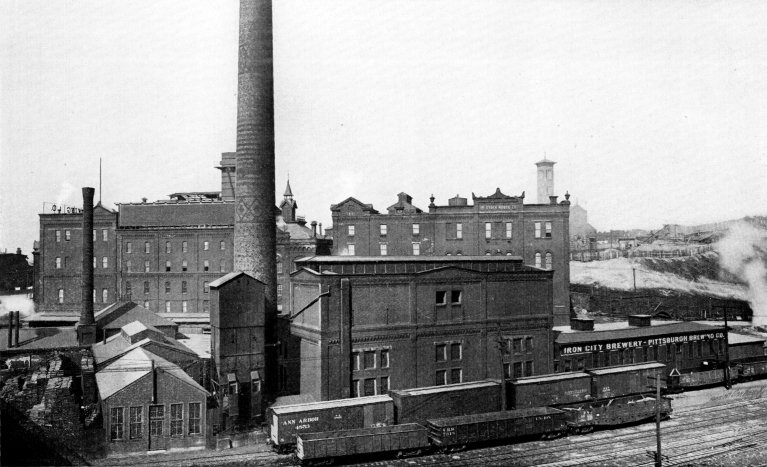
The Iron City Brewery was established in 1861 by Edward Frauenheim, a young German immigrant, in the river port known as the 'Smoky City.' By 1866, the brewery had moved to a four-story brick building at Liberty Avenue and 34th Street, valued at $250,000, and added a three-story building three years later. The facility used state-of-the-art equipment and employed 25 of 30 skilled workmen full-time, carrying an average stock of about 10,000 barrels. After the 1866 expansion, Leopold Vilsack joined the firm and later became a partner, forming Frauenheim and Vilsack Company. The brewery became one of the largest and most fully equipped in the country, with an annual capacity of about 50,000 barrels and a total valuation of about $150,000.
In 1899, the Iron City Brewing Company was one of 12 local breweries that transferred their licenses to the Pittsburgh Brewing Company trust, which combined 21 breweries to become the largest brewing operation in Pennsylvania and the third largest in the country, with a capacity of more than one million barrels. During Prohibition (1920–1933), Pittsburgh Brewing Company survived by producing soft drinks, ice cream, 'near beer,' and running a cold storage business. After repeal, brewmaster Peter Zugel, who learned skills working with his father, helped rebuild the business and remained until his retirement in 1973.
In the 1970s, Pittsburgh Brewing Company acquired the Queen City Brewing Company of Cumberland, Maryland, transferring brands including Old German and Old Export. In 1977, the brewery introduced Iron City Light (IC Light), which captured 80 percent of the local light-beer market and helped Iron City regain its position as southwestern Pennsylvania's favorite beer. The brewery later introduced the aluminum bottle under owner Joseph Piccirilli, who purchased the company in 1995.
Reader's Guide
Iron City Brewing Company's significance lies in its long history as a Pittsburgh institution and its role in the consolidation of the American brewing industry. Founded in 1861, it was one of the first American breweries to produce lager and grew to become the largest brewery in Pittsburgh. Its participation in the 1899 merger that formed Pittsburgh Brewing Company—the largest brewing operation in Pennsylvania and third largest in the country—reflects the trust movement of the late 19th century. The brewery's survival through Prohibition by diversifying into soft drinks and near beer demonstrates its resilience. The introduction of IC Light in 1977 revitalized the brand, capturing 80 percent of the local light-beer market and restoring Iron City as the region's favorite beer. The company's later innovations, such as the aluminum bottle, and its eventual return to self-production in a new Creighton facility in 2021, underscore its enduring presence in Pittsburgh's cultural and industrial landscape.
Did You Know?
- Iron City Brewery was one of the first American breweries to produce a lager.
- During Prohibition, Pittsburgh Brewing Company survived by making soft drinks, ice cream, and near beer.
- IC Light captured 80 percent of the local light-beer market after its 1977 introduction.
- The brewery's new Creighton facility, opened in 2021, can produce 150,000 BBLs of beer annually.
Roots in the Smoky City: Founding & Early Growth
In 1861, Edward Frauenheim, a young German immigrant, planted the seeds of what would become one of Pittsburgh's most enduring brewing institutions. Operating in a river port still nicknamed the "Smoky City," Frauenheim, Miller & Company became one of the earliest American breweries to produce a lager, a distinction that set it apart in a market dominated by ale-style operations. By 1866, the fledgling operation had outgrown its modest 17th Street location, prompting the construction of a four-story brick building at Liberty Avenue and 34th Street—a structure valued at roughly $250,000 at the time. Three years later, a second three-story building joined the site. Together, the two structures held an average inventory of around 10,000 barrels and employed 25 full-time skilled workers out of a total staff of 30. Equipped with what was then state-of-the-art brewing technology, the brewery steadily expanded its market reach until it claimed the title of Pittsburgh's largest brewery.
The Vilsack Partnership & Industrial Scale
After the 1866 expansion, a Pittsburgh native named Leopold Vilsack—born Sebold to Alsatian immigrant parents—joined the firm after learning the brewer's craft at the old Bennett Brewery. When partner Miller retired and another partner passed away, Vilsack invested his personal savings to keep the company afloat, and the business was rechristened Frauenheim and Vilsack Company. Under their stewardship, the brewery grew to an annual capacity of approximately 50,000 barrels, a scale that allowed it to compete in volume with any brewery west of the Atlantic coast. The combined valuation of stock and raw materials sat around $150,000, and by 1886 the operation managed roughly 500 large reception casks, each holding 45 to 50 barrels, alongside about 10,000 kegs in constant rotation. Vilsack went on to build wealth in real estate, insurance, and banking, donated to Pittsburgh's St. Paul Cathedral, and provided relief to victims of the devastating 1889 Johnstown Flood. A self-described staunch Democrat who never sought office, he died in 1907.
The Great Merger & Prohibition's Crucible
The late 19th century saw American industries consolidate into trusts to harness economies of scale, and brewing was no exception. On February 3, 1899, the Pittsburgh Dispatch reported that twelve local brewing firms—including Wainwright, Phoenix, Keystone, Winter Brothers, and the Iron City Brewing Company—applied to transfer their licenses to a new entity: Pittsburgh Brewing Company. Nine additional breweries outside Allegheny County joined the fold, bringing the total to twenty-one operations. The combined facilities, valued at approximately $11 million, offered a capacity exceeding one million barrels, making PBC the largest brewing operation in Pennsylvania and the third largest in the nation. Prohibition's arrival in 1920 devastated the industry, yet PBC endured by pivoting to soft drinks, ice cream, near beer, and a cold storage business. When the ban lifted in April 1933, PBC was one of only 725 American breweries still standing—a testament to the resilience forged during those dark years.
From Queen City to Creighton: Post-Prohibition & the Modern Era
In the years following prohibition's end, the brewery sought a brewmaster capable of restoring its pre-ban quality. Peter Zugel, whose skills had been honed working alongside his father—a local spirits producer who had cultivated relationships with brewery executives—rose to the role and remained brewmaster until his 1973 retirement. The company also expanded its portfolio, acquiring the Queen City Brewing Company of Cumberland, Maryland in the 1970s; that operation, also known as Old German Brewing Company, had at its peak produced over 250,000 barrels annually. Back in Pittsburgh, all production ran from the Lawrenceville neighborhood facility until August 2009, when brewing shifted to City Brewing Company at the former Rolling Rock plant. That arrangement lasted until February 4, 2021, when the company announced via Instagram that it would resume in-house production at a new brewery in Creighton, Pennsylvania, housed in the original Pittsburgh Plate Glass Company plant. The facility opened with an annual capacity of 150,000 barrels, carrying forward a brand family that now includes Iron City Beer, I.C. Light, I.C. Light Mango, Old German, and Block House Brewing.
Gallery


Frequently Asked Questions
Who is Iron City Brewing Company?
Iron City Brewing Company is a Pittsburgh-based brewery originally established in 1861 by German immigrant Edward Frauenheim. It is best known for its flagship product, Iron City Beer, and for being one of the earliest American breweries to produce lager.
What makes Iron City Beer distinctive?
The brand is famous for its recognizable aluminum bottle, which set it apart from competitors relying on glass. It also holds the distinction of being among the first lagers brewed in the United States.
Where is Iron City Brewing Company located?
The brewery's original facility sits in the Lawrenceville neighborhood of Pittsburgh, Pennsylvania. The brand was later revived at a production site in Creighton, Pennsylvania, with an annual capacity of roughly 150,000 barrels.
Who founded Iron City and what was the original scale of production?
Edward Frauenheim, a German immigrant, started the brewery in 1861. The original Lawrenceville facility had an annual production capacity of about 50,000 barrels.
What is Iron City's connection to the Pittsburgh Brewing Company?
Iron City Beer became the flagship brand anchoring the Pittsburgh Brewing Company's portfolio. The brewery's legacy as a historic Pittsburgh lager producer was carried forward through the Creighton revival.
More in Beer Brands, Part 3 1-24
Spotted an error? Know more?
Reader corrections go straight into our review queue. Suggest an edit · How this site is sourced