Hudepohl Brewing Company
A Cincinnati brewing legacy tied to the Bengals' chant.

Warren LeMay from Cincinnati, OH, United States · CC0
Hudepohl Brewing Company is a brewery established in Cincinnati, Ohio in 1885 by founder Ludwig Hudepohl II. It became one of the city's dominant brewers, known for its golden and dark lagers, and survived Prohibition by producing near beer and soft drinks. The brewery is notable for its connection to the Cincinnati Bengals' 'Who Dey' chant, which originated from the brewery's name and led to special 'Hu-Dey' beer cans for the team's Super Bowl runs.
Quick Facts
- Location City
- Cincinnati
- Location State
- Ohio
- Location Country
- United States
- Opened
- 1885
- Key People
- Ludwig Hudepohl II
- Parent
- Christian Moerlein Brewing Company
Facts from the source article.
Lore & Background
Hudepohl Brewing Company was established in 1885 by Ludwig Hudepohl II, who had previously worked in the surgical tool business. The brewery thrived amid waves of German immigrants settling in Cincinnati in the 1850s and 1860s, who craved the lager beers of their homeland. Hudepohl brewed golden lager, dark lager, seasonal bock beer, and other regional lager styles, reaching an annual production of 100,000 barrels by the mid-1890s. During Prohibition, which began in 1918, the company survived by making near beer and soft drinks. After repeal in 1933, Hudepohl quickly resumed beer production and within two years became the dominant brewer in Cincinnati, selling all it could produce locally without exporting to other states. During World War II, Hudepohl Beer was selected by the War Department for U.S. troops in the Pacific, with special olive green Crowntainer cans packed in straw and parachuted to troops on islands throughout the Pacific.
Reader's Guide
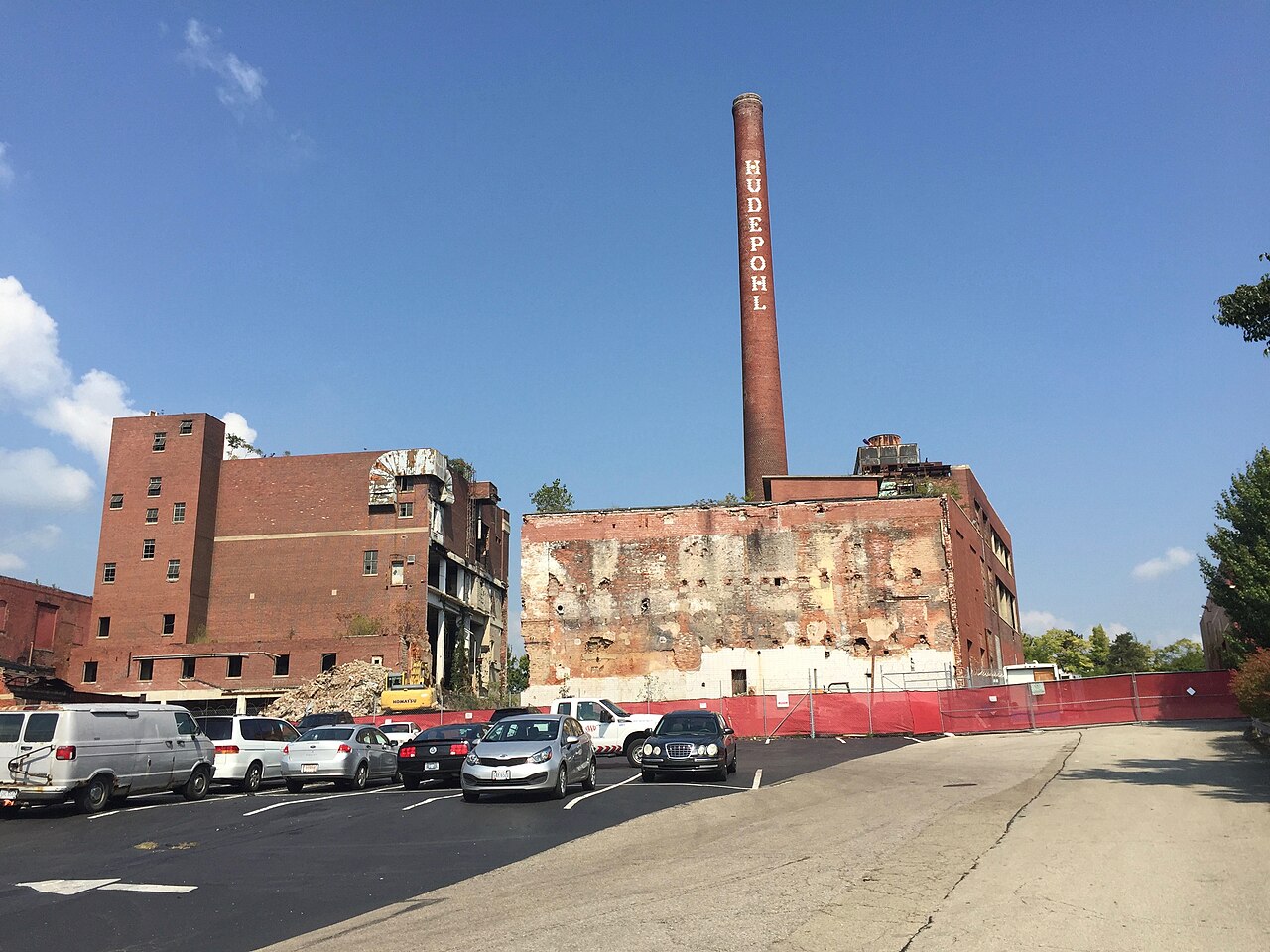
Hudepohl Brewing Company's significance lies in its long history as a major Cincinnati brewer and its cultural impact on the city. The brewery's name is said to be the origin of the 'Who Dey' chant used by Cincinnati Bengals fans, leading to special edition 'Hu-Dey' beer cans for the Bengals' Super Bowl runs in 1981, 1989, and 2022. After merging with Schoenling Brewing Company in 1986, production moved to the Schoenling facility in 1987, and the original Hudepohl plant was closed. The combined company was sold to Boston Beer Company in 1997, which brewed Hudepohl-Schoenling brands under contract until 2001. The brands later passed through several owners, including Crooked River Brewing Company and Snyder International Brewing Group, before being purchased by Christian Moerlein Brewing Company in 2006. As of 2014, Hudepohl beers were brewed at the Christian Moerlein brewery on Moore Street in Cincinnati, and in 2015 the formula of Hudy Amber Lager was changed and rebranded as Hudepohl Pure Lager, with brewing moved back to Cincinnati. The legacy of Hudepohl reflects the rise and consolidation of regional breweries in the face of national competition.
Did You Know?
- Hudepohl Brewing Company was founded in 1885 by Ludwig Hudepohl II, who previously worked in the surgical tool business.
- During World War II, Hudepohl Beer was parachuted to U.S. troops on islands throughout the Pacific.
- In 1986, Hudepohl merged with crosstown rival Schoenling Brewing Company.
A Node in the Contract Brewing Network
The Hudepohl-Schoenling Brewery in Cincinnati occupied a particular niche in the American brewing landscape during the late 1980s and early 1990s: that of a facility with surplus production capacity available to outside brands. When James "Jim" Koch was scaling Samuel Adams beyond what his initial arrangements could support, he sought out breweries across the country with idle equipment. Hudepohl-Schoenling became one of several such partners, appearing in the same roster as Pittsburgh Brewing Company (home of Iron City), Stroh's operations, Portland's Blitz-Weinhard brewery, and the massive SABMiller complex. For Hudepohl-Schoenling, this meant its vats and lines were lending their output to a fast-growing Boston-born lager that had been voted "Best Beer in America" just six weeks after its March 1985 debut at the Great American Beer Festival. The arrangement was purely commercial at first—Koch rented excess capacity rather than owning the plant—yet it placed the Cincinnati brewery at the operational heart of what would eventually become the fourth-largest brewer in the United States.
A Family Thread Stretching Back to the 1940s
Long before Hudepohl-Schoenling became a line item in a corporate acquisition, it held a deeply personal significance for the man who would eventually buy it. Jim Koch, the Harvard-trained consultant who poured his own $100,000 into launching Samuel Adams in 1984, grew up in Cincinnati. His father had apprenticed at the Hudepohl-Schoenling Brewery in the 1940s, immersing himself in the craft during a decade when American brewing was still reshaping itself after the war. That early family exposure to the rhythms of a working Cincinnati brewery meant that, years later, when Koch was weighing where to anchor his own production, the Hudepohl-Schoenling plant carried an emotional weight no other contract facility could match. While Pittsburgh, Stroh, Blitz-Weinhard, and SABMiller were simply names on a list of available capacity, Hudepohl-Schoenling was the place where his father had learned the trade. The 1997 purchase was therefore not merely a strategic move to cut contract-brewing costs; it was a homecoming to a specific building, a specific city, and a specific family memory stretching back nearly half a century.
The 1997 Purchase and the End of the Contract Era
In early 1997, the Boston Beer Company completed its acquisition of the Hudepohl-Schoenling Brewery, a transaction that marked a decisive shift in how Samuel Adams would be produced. Up to that point, the company had depended on a patchwork of contract arrangements—renting vats at Pittsburgh Brewing, Stroh facilities, the now-shuttered Blitz-Weinhard plant, and SABMiller—to meet the growing demand for its Boston Lager and other brands. Koch himself described the Cincinnati purchase as "an important step the company took to reduce reliance on contract brewing," signaling a move toward owning the means of production rather than leasing it. The timing was significant: by 1997, Samuel Adams had already launched Hardcore Cider that same year and would introduce Twisted Tea in 2000, meaning the company's portfolio was expanding rapidly and could no longer be sustained by scattered third-party capacity. Bringing Hudepohl-Schoenling in-house gave Boston Beer a dedicated, controllable brewing base in the Midwest, complementing its small R&D brewery in Jamaica Plain, Boston, and foreshadowing the later 2007 purchase of the Breinigsville, Pennsylvania plant.
Hudepohl-Schoenling in the Cincinnati Brewing Story
Within the broader narrative of Cincinnati's brewing heritage, the Hudepohl-Schoenling Brewery represents a chapter in which a local operation became entangled with the ambitions of a national brand. The brewery sat in a city that had long been a center of American beer production, and its compound name suggests a partnership or succession of brewing families who built a working plant capable of producing commercial volumes. By the late 1980s, that capacity was being shared: Boston Beer's Samuel Adams was among the brands flowing through its lines as part of a contract-brewing arrangement. The brewery thus occupied a dual role—part independent Cincinnati institution, part outsourced production arm for a Boston startup that would grow to become the fourth-largest brewer in the country. When Koch purchased the facility in 1997, that duality collapsed into a single corporate identity. The Hudepohl-Schoenling name, the family apprenticeships of the 1940s, and the local character of the plant were absorbed into the Boston Beer Company's expanding infrastructure, which by 2014 employed 1,325 workers across its Boston, Cincinnati, and Pennsylvania sites.
Gallery
Frequently Asked Questions
What is Hudepohl Brewing Company and who founded it?
Hudepohl Brewing Company was a Cincinnati, Ohio brewery established in 1885 by Ludwig Hudepohl II. It grew into one of the city's leading beer producers, reaching roughly 100,000 barrels of annual output by the mid-1890s, and was especially well known for its golden and dark lagers.
How did Hudepohl Brewing Company get through Prohibition?
When federal law banned full-strength alcohol, the brewery kept its doors open by shifting production to near beer and soft drinks. This pivot allowed the company to retain its workforce and infrastructure until legal brewing resumed.
How is Hudepohl connected to the Cincinnati Bengals' 'Who Dey' chant?
The chant's origin traces back to the Hudepohl name, and the brewery capitalized on the link by releasing special 'Hu-Dey' branded cans during the Bengals' Super Bowl runs. That connection turned a 19th-century brewing house into a fixture of Cincinnati sports fandom.
What happened to Hudepohl Brewing Company at the end of its independent life?
In 1986 the brewery merged with Schoenling Brewing Company, and the combined operation became a wholly owned subsidiary of Christian Moerlein Brewing Company. That merger effectively ended Hudepohl as a standalone brand.
Why does Hudepohl Brewing Company still matter to Cincinnati fans?
For well over a century it shaped the city's beer landscape, and its name lives on in one of the NFL's most recognizable fan chants. Even after the 1986 merger, Hudepohl remains a shorthand for Cincinnati's brewing heritage and its playful tie to the Bengals.
More in Beer Brands, Part 3 1-24
Spotted an error? Know more?
Reader corrections go straight into our review queue. Suggest an edit · How this site is sourced