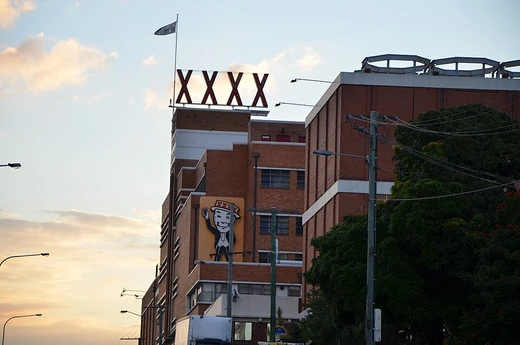
Hale's Ales
Traditional English-style ales from a Seattle pioneer.

Wikimedia Commons · Public domain
Hale's Ales was a Seattle, Washington brewery that got its start in 1983. Founder Mike Hale cooked up the first batch in a Colville apartment before moving operations into a local warehouse. Four years later, a second brewery opened in Kirkland, Washington. The Colville site relocated to Spokane in 1992, and the Kirkland brewery moved to Seattle's Ballard neighborhood in 1995, where it became a 30-barrel brewpub.
The brewery stuck to traditional English methods, using open fermentation tanks and top-fermenting ale yeast. Most recipes relied on a proprietary English yeast strain, though Belgian strains turned up in some seasonal offerings. Hale's also experimented with bourbon barrel-aging for certain beers, including Wee Heavy Winter Ale, Troll Porter, and Supergoose IPA.
Year-round brews included Pale American Ale, Kölsch German Style Ale, Mongoose IPA, Red Menace Big Amber, El Jefe Weizen, Cream Ale, Cream H.S.B. (Hale's Special Bitter), Troll Porter, Nightroll Porter, and Supergoose IPA. Seasonal releases featured Wee Heavy Winter Ale, Irish Style Nut Brown Ale, O'Brian's Harvest Ale, Rudyard's Rare Barley Wine, Aftermath Imperial I.P.A., Pikop Andropov's Rushin' Imperial Stout, Belgian Dubbel 25th Anniversary Ale, and The Palladium.
The former brewery warehouse now serves as a flexible event space, hosting the Moisture Festival theater production, weddings, company parties, dance, cabaret, and more. It comes equipped with stage lighting, sound gear, a concession stand, a green room, and plenty of atmosphere.
Quick Facts
- Location City
- Seattle
- Location State
- Washington
- Location Country
- USA
- Opened
- 1983
- Closed
- 2022
- Key People
- Mike Hale
Facts from the source article.
Lore & Background
Hale's Ales was founded in 1983 by Mike Hale, who brewed the first batch in a Colville, Washington apartment before opening the brewery in a local warehouse. A second brewery opened four years later in Kirkland, Washington. The Colville brewery moved to Spokane, Washington, in 1992, and the Kirkland brewery moved to Seattle's Ballard neighborhood in 1995, where it operated as a 30-barrel brewpub.
The brewing process followed a traditional English style, utilizing open fermentation tanks with top-fermenting ale yeast. Most recipes called for a proprietary English yeast strain, though Belgian strains were used in some seasonal recipes. Hale's Ales also began experimenting with bourbon barrel-aging certain recipes, including the Wee Heavy Winter Ale, Troll Porter, and Supergoose IPA.
Year-round brews included Pale American Ale, Kölsch German Style Ale, Mongoose IPA, Red Menace Big Amber, El Jefe Weizen, Cream Ale, Cream H.S.B (Hale's Special Bitter), Troll Porter, Nightroll Porter, and Supergoose IPA. Seasonal offerings included Wee Heavy Winter Ale, Irish Style Nut Brown Ale, O'Brian's Harvest Ale, Rudyard's Rare Barley Wine, Aftermath Imperial I.P.A., Pikop Andropov's Rushin' Imperial Stout, Belgian Dubbel 25th Anniversary Ale, and The Palladium.
Reader's Guide
Hale's Ales was notable for its early role in Seattle's craft brewing scene, having been founded in 1983 when the industry was still emerging. Its commitment to traditional English brewing methods, including open fermentation and top-fermenting yeast, distinguished its beers from many contemporaries. The brewery's expansion from a Colville apartment to multiple locations in Washington state reflected its growth over more than a decade. The Ballard brewpub, opened in 1995, became a community hub, and its former warehouse space later hosted events such as the Moisture Festival, weddings, and cabaret performances. The brewery's experimentation with bourbon barrel-aging and Belgian yeast strains in seasonal recipes showed a willingness to innovate within its traditional framework. Hale's Ales left a legacy as a pioneer of English-style ales in the Pacific Northwest, with a range of year-round and seasonal beers that included both classic styles and inventive offerings.
Did You Know?
- The first batch of Hale's Ales was brewed in a Colville, Washington apartment.
- Hale's Ales used open fermentation tanks with top-fermenting ale yeast.
- The brewery experimented with bourbon barrel-aging for Wee Heavy Winter Ale, Troll Porter, and Supergoose IPA.
- The former Ballard brewery warehouse now hosts the Moisture Festival and other events.
Medieval Roots and the Birth of Small Beer
Low-alcohol brewing traces its lineage back to medieval Europe, where communities faced a practical dilemma: water supplies were frequently contaminated with faeces and parasites, making them dangerous to drink. In this context, small beer emerged as a safer, more affordable alternative to the higher-alcohol stouts, porters, and ales reserved for those who could afford them. This humble brew served as a daily necessity rather than a luxury. Centuries later, the temperance movements and the practical need to avoid intoxication while driving, operating machinery, or taking medications drove further innovation in non-intoxicating brews. The concept of reducing alcohol while preserving the essence of beer thus evolved from a survival strategy into a deliberate consumer choice, laying the groundwork for the diverse low-alcohol market that spans lagers, stouts, and ales today.
Prohibition and the Survival of Breweries
In the United States, the path to non-alcoholic brewing was shaped dramatically by political forces. In 1917, President Wilson proposed capping malt beverage alcohol at 2.75% in an attempt to satisfy avid prohibitionists. Two years later, Congress passed the Volstead Act, restricting all beverages to 0.5% ABV. Breweries, facing the threat of closure, adapted by producing what became known as tonics. Because removing alcohol required only a single additional step in the brewing process, many producers viewed the transition as a manageable adjustment rather than a fundamental overhaul. When Prohibition was repealed in 1933, breweries simply dropped that extra step and returned to full-strength production. This episode demonstrated the industry's remarkable flexibility and established a legal framework—under 0.5% ABV for non-alcoholic labeling—that would persist in American law for decades afterward.
The Modern Light Beer Revolution
The 1980s and 1990s marked a turning point as light beers surged in popularity, driven by consumers seeking fewer calories without sacrificing the ritual of beer. In the United States, major brands like Bud Light, Coors Light, and Miller Lite settled around 4.2% ABV, slightly below their full-strength counterparts at 5%. In Canada, the spectrum runs from 2.6% to 4.0% for reduced-alcohol options, with extra-light below 2.5%. A significant catalyst arrived in the UK in October 2011, when the government introduced a lower beer duty rate for brews at 2.8% ABV or below. This tax incentive prompted numerous small brewers to revive traditional small beer styles and craft higher-hopped, lower-alcohol options, making them more affordable for consumers. Meanwhile, the Middle East now accounts for roughly a third of the global alcohol-free market, partly due to Islamic scholarly rulings permitting beer consumption when it cannot cause intoxication even in large quantities.
Regulation, Health, and the Consumer Debate
The landscape of low-alcohol beer is shaped by a complex web of regulations and health considerations. In the UK, voluntary government guidance classifies drinks as alcohol-free (0.05% ABV or less), dealcoholized (above 0.05% but under 0.5%), or low-alcohol (up to 1.2%). In parts of the EU, alcohol-free labeling requires no more than 0.5% ABV. Legally, some US states like Pennsylvania still bar sales of non-alcoholic beer to those under 21. On the health front, proponents highlight reduced hangover severity, lower caloric content, and the ability to drive after drinking. Some products are marketed as isotonic post-exercise beverages, though experts caution that sodium levels are insufficient for true electrolyte replenishment. Critics point to flavor loss, a sugary aftertaste, and shorter shelf life. A study from Indiana University's psychology department noted that non-alcoholic beer's sensory cues can create a placebo effect, making drinkers feel intoxicated despite the absence of meaningful alcohol. Additionally, some products labeled 0% may contain trace alcohol exceeding 1%, prompting one paper to advise against consumption during pregnancy.
Gallery
Frequently Asked Questions
Who founded Hale's Ales and when did it begin?
Mike Hale started the brewery in 1983, brewing his very first batch in a Colville, Washington apartment before scaling up into a nearby warehouse.
What brewing style did Hale's Ales specialize in?
The brewery committed to traditional English ale techniques, relying on open fermentation tanks, top-fermenting ale yeast, and a proprietary English yeast strain for most of its recipes.
How did Hale's Ales expand its locations over the years?
A second brewery opened in Kirkland, Washington in 1987; the Colville site later moved to Spokane in 1992, and the Kirkland operation relocated to Seattle's Ballard neighborhood in 1995, where it operated as a 30-barrel brewpub.
Why was Hale's Ales considered a pioneer in Seattle's beer scene?
As one of the earliest craft breweries in the Pacific Northwest, Hale's Ales helped establish Seattle as a hub for small-batch, traditional-style ale production long before the city's modern craft boom.
What made Hale's Ales's yeast choice stand out among other brewers?
Rather than using widely available commercial strains, the brewery depended on its own proprietary English yeast for the majority of its beers, giving its ales a distinct character tied to that single culture.
More in Beer Brands, Part 3 1-24
Spotted an error? Know more?
Reader corrections go straight into our review queue. Suggest an edit · How this site is sourced