Genesee Brewing Company
A historic Rochester brewery revived after Prohibition and now part of FIFCO.

Brian Stiehler · Public domain
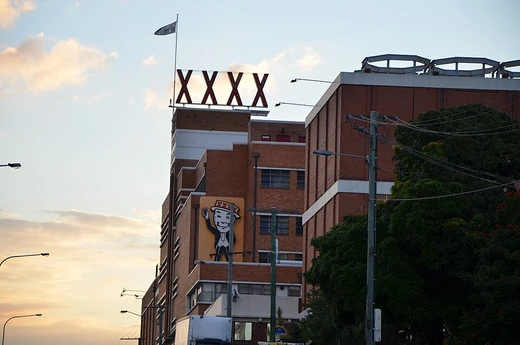
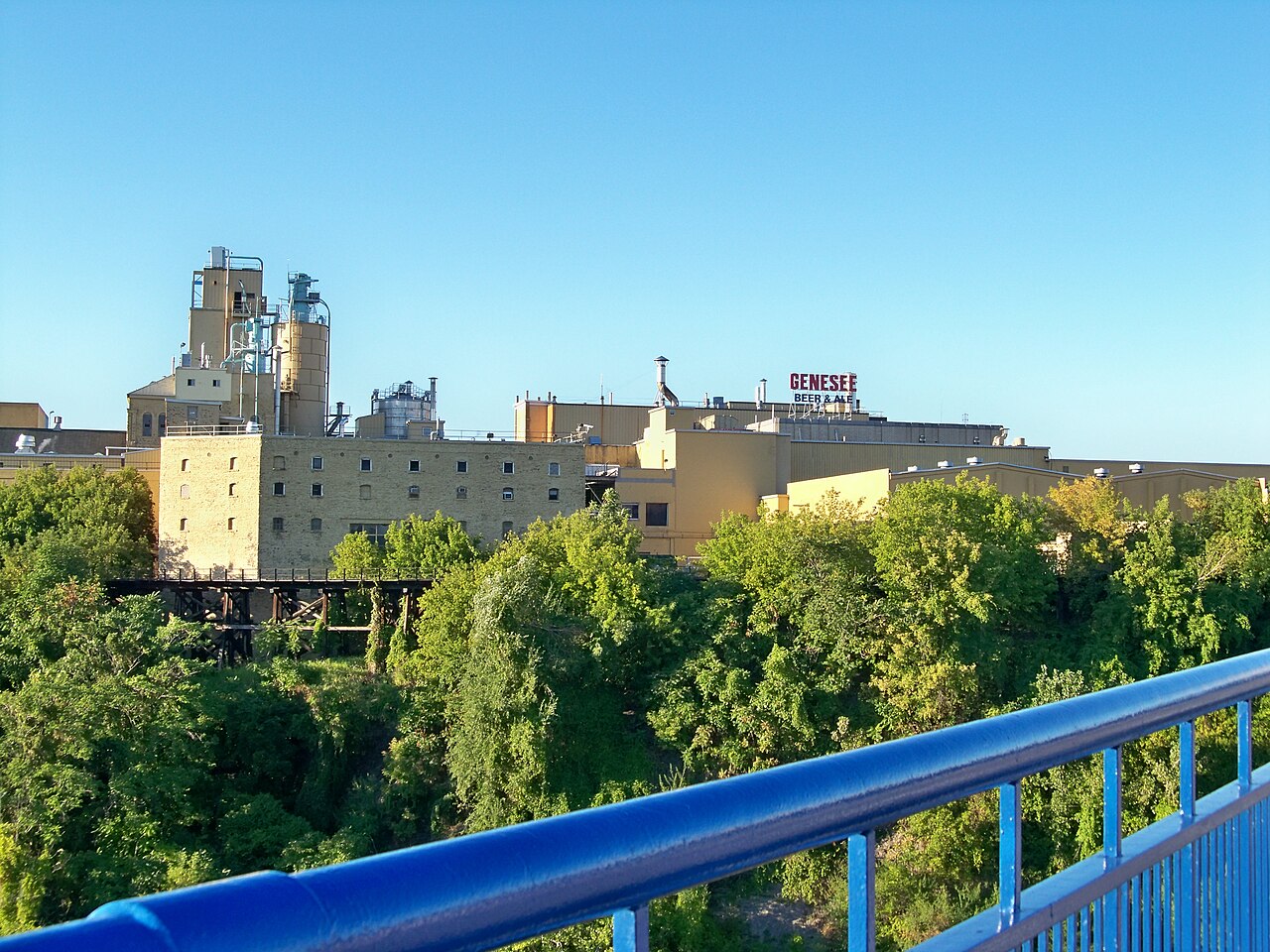
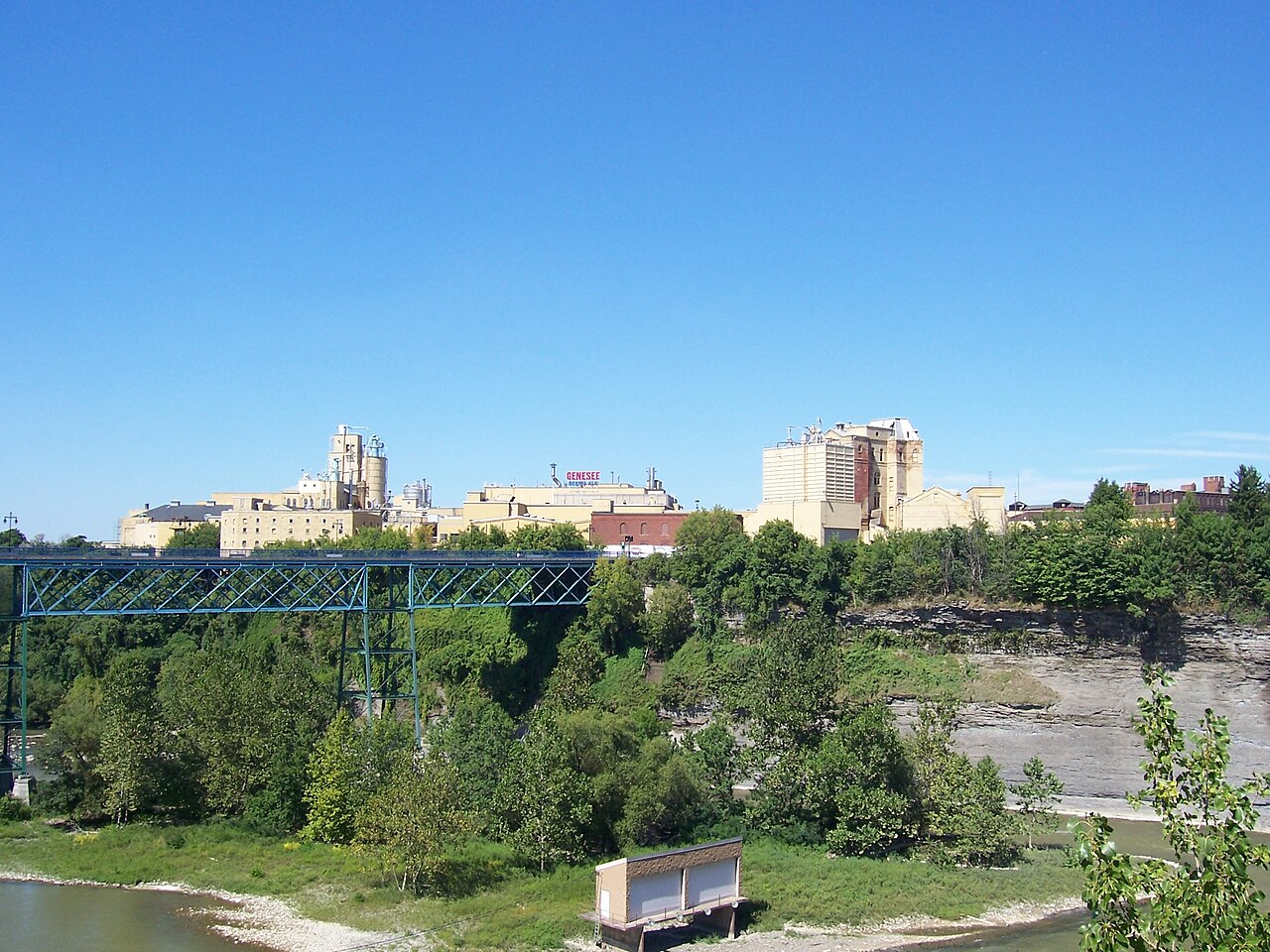
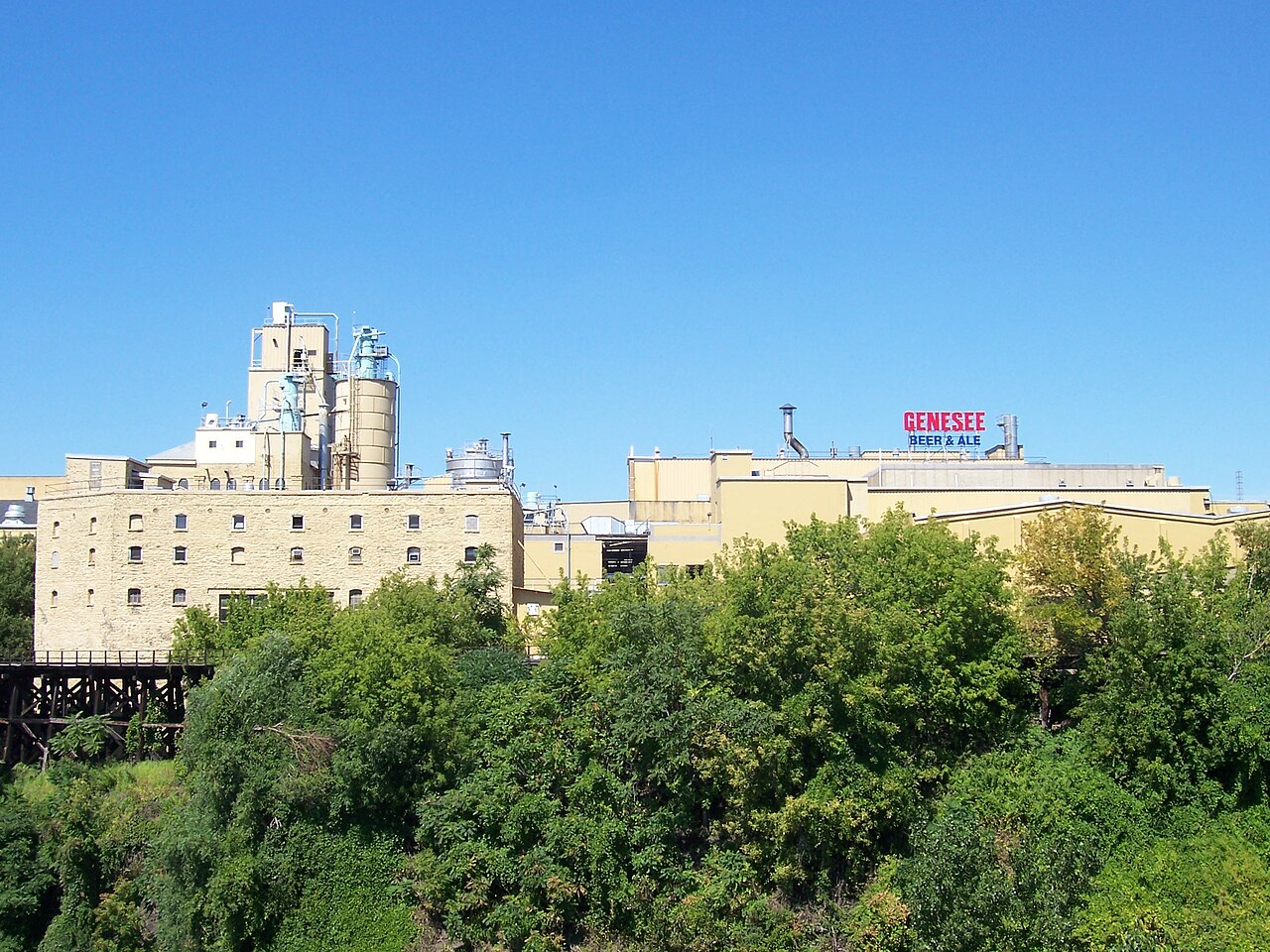
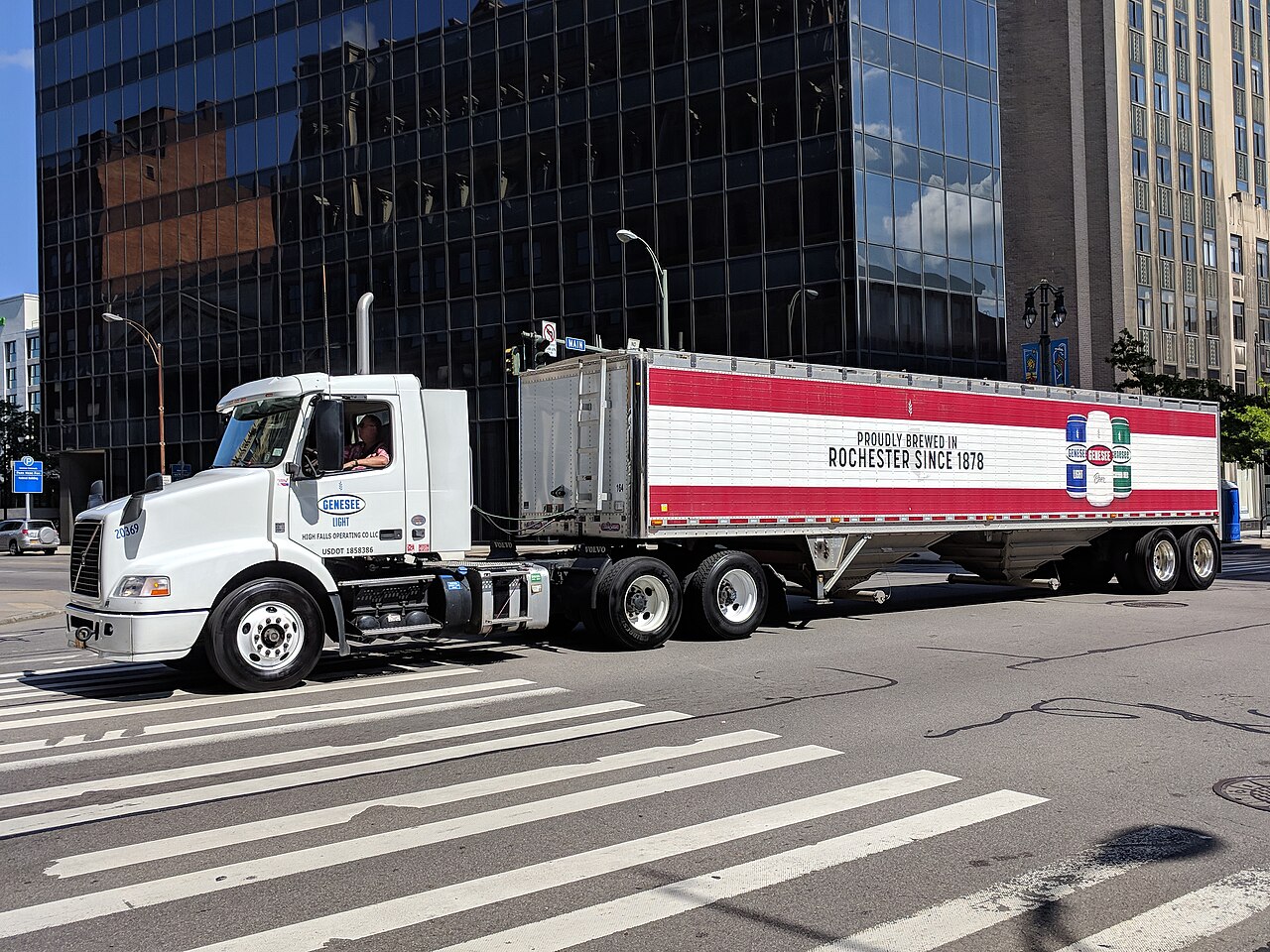
Genesee Brewing Company is an American brewery located along the Genesee River in Rochester, New York. It is notable for being part of North American Breweries, which in 2012 was the sixth-largest brewing company in America by sales volume. The brewery has a history dating back to 1878, when Mathias Kondolf purchased an existing brewery and incorporated it as the Genesee Brewing Company.
Quick Facts
- Location
- 445 Saint Paul Street, Rochester, New York, U.S.
- Production
- 2 e6usbeerbbl in 2014
- Owner
- North American Breweries
- Num Employees
- 460+
- Divisions
- Dundee Brewing Company, Honey Brown, Seagram's, Imperial, Labatt Blue Lime, Rock Wall Brewing, Contract Business
Facts from the source article.
Lore & Background
The pre-Prohibition Genesee Brewery was one of many in Rochester's brewing history. In 1878, local businessman Mathias Kondolf purchased the existing Reisky & Spies brewery, organized a stock company, and incorporated it as Genesee Brewing Company. That original brewery had first opened in 1856 by Charles Rau. In 1889, English investors purchased stock in Genesee Brewery, Rochester Brewing Company, and Bartholomay Brewery Company, renaming the conglomerate Bartholomew Brewing Company, Limited. After Prohibition, in 1932, Louis Wehle—a former Genesee brewmaster and vice president of a bakery—purchased the former brewery buildings and recipes, incorporating the new Genesee Brewing Company on July 8. Following the Cullen–Harrison Act in March 1933, Wehle relaunched the 'Liebotschaner' beer and served the first draft on April 29, 1933. The first year's production totaled about 150,000 barrels, and by 1934 he had nearly 1,000 employees. In 1936, the company acquired the old Parsons Malt House in Sodus Point, which operated until 1986. In December 1984, it purchased the Fred Koch Brewery of Dunkirk, New York, transferring Koch's brands to Rochester. In 2000, the company was sold to an employee investment group and renamed High Falls Brewing Company. In 2009, High Falls was acquired by KPS Capital and merged with Labatt USA as North American Breweries, reverting the brewery name to Genesee Brewing Company. In October 2012, North American Breweries was purchased by FIFCO. A $3.9 million Genesee Brew House opened in September 2012, featuring exhibits and a pub. In 2016, an expansion and redesign project was announced, with $9.5 million in state funding, and the brewery switched from a lauter tun to a mash filter system. In 2018, a renovation added 24 fermentation and storage tanks and a new dry-hopping system.
Reader's Guide
Genesee Brewing Company's significance lies in its long history as a regional American brewery that survived Prohibition and multiple ownership changes. Its Cream Ale, introduced in 1960, won two consecutive gold medals at the Great American Beer Festival. The brewery's 12 Horse Ale, first released in 1933, was marketed with a unique 12-horse hitch. The company also introduced Genny Light in 1978, the 100-year anniversary of the original brewery. Under the High Falls name, it launched the Dundee Ales and Lagers line in 1994, which won a gold medal at the 1994 World Beer Cup. After becoming part of North American Breweries, Genesee acquired the U.S. brand rights to Seagram's Escapes Flavored Coolers and began producing them in Rochester. It also developed the Rock Wall Brewing line in 2010, producing Dog Bite High Gravity malt liquor. The brewery holds the U.S. import rights to Labatt Brewing Company's beers from Canada. Its legacy includes seasonal specialties like Spring Bock (brewed since 1951) and newer offerings such as Ruby Red Kolsch (2018) and Schwarzbier (2018). The brewery's modernization efforts, including the 2012 Genesee Brew House and 2018 renovations, reflect its continued operation as a major brewing facility.
Did You Know?
- The original Genesee Brewery was first opened in 1856 by Charles Rau, a former brewmaster at Marburger Brothers.
- Genesee Cream Ale was originally conceived by brewmaster Clarence Geminn in 1960 and has 5.1% alcohol by volume.
- In 1933, Genesee's 12 Horse Ale was marketed with what was believed to be the only 12-horse hitch in the world, using a matched team of red roan Belgians.
- The company's proprietary top-fermenting ale yeast was brought from England in 1933 and has been used ever since.
Foundations Along the Genesee River
The story of Genesee Brewing Company begins in 1856, when Charles Rau—a former brewmaster at the Marburger Brothers brewery on North Clinton Avenue—opened a brewing operation along the Genesee River in Rochester, New York. Two decades later, in 1878, local businessman Mathias Kondolf acquired the existing Reisky & Spies brewery, reorganized it as a stock company, and formally incorporated it under the Genesee Brewing Company name. Kondolf's ambitions extended further; in 1909 he established the Moerlbach Brewery on Emerson Street, which operated until Prohibition shut it down. The brewery's early independence, however, proved short-lived. In 1889, a group of English investors consolidated stock in three Rochester breweries—Genesee, the Rochester Brewing Company, and the Bartholomay Brewery Company—into a single conglomerate called Bartholomew Brewing Company, Limited. The former Rochester Brewery buildings were repurposed as a cold storage plant, marking the end of an era for that particular site. This period of foreign ownership and consolidation set the stage for the brewery's long and turbulent journey through the twentieth century.
The Post-Prohibition Rebirth
After Prohibition's long shadow, the Genesee name was resurrected by an unlikely figure: Louis Wehle, a former Genesee brewmaster who had gone on to serve as vice president and manager of a successful Rochester bakery. On July 8, 1932, Wehle purchased the old brewery buildings and their recipes, incorporating the Genesee Brewing Company anew. Just over eight months later, President Franklin D. Roosevelt signed the Cullen-Harrison Act on March 22, 1933, legalizing the sale of 3.2 percent beer and wine. Wehle seized the moment, relaunching the storied Liebotschaner beer and pouring the first draft on April 29, 1933. The response was extraordinary: the first year's production reached roughly 150,000 barrels, and by 1934 the company employed nearly 1,000 workers. Wehle's expansion continued in 1936 when the company acquired the Parsons Malt House in Sodus Point, spending close to $200,000 on renovations finished in 1938. At the time, it stood as the only malt house privately owned by an eastern brewery, employing the traditional European floor system for malting barley that was shipped from a grain elevator in Oswego. That operation ran until 1986.
A Chameleon of Ownership
Genesee's corporate identity has shifted dramatically over the decades. In 2000, the brewery was sold to an employee investment group and rebranded as High Falls Brewing Company. Under CEO Norman Snyder, appointed in 2007, the company refreshed the Genesee label with a more classic aesthetic, launched a new corporate website, and ramped up brand marketing. Then in February 2009, New York City–based KPS Capital Partners acquired High Falls and folded it into its North American Breweries subsidiary. By June of that year, the brewery's name was restored to Genesee Brewing Company, a deliberate nod to its deep roots. In 2012, North American Breweries ranked as the sixth-largest brewing company in the United States by sales volume. That same October, Costa Rican food-and-beverage giant FIFCO purchased NAB in an all-cash transaction worth $338 million, routed through its Cerveceria Costa Rica subsidiary. FIFCO, headquartered in San Jose, assured that the existing workforce, leadership, and operations would remain intact. The brewery's ownership changed hands once more in September 2026, when FIFCO USA sold Genesee to Pennsylvania-based private equity firm Saothair Capital Partners, which reverted the corporate name back to North American Breweries.
Signature Beers and Brewing Craft
The brewery's beer portfolio carries nearly a century of heritage. 12 Horse Ale, first brewed in 1933 to mark the end of Prohibition, is made with six-row barley malt, hops from the Yakima Valley, and a proprietary top-fermenting ale yeast imported from England that same year and in continuous use ever since. The launch was accompanied by a remarkable marketing stunt: a matched team of twelve red roan Belgian horses, hitched three abreast in four rows pulling a red wagon—believed to be the only 12-horse hitch in the world. The barn that housed the team and their harness now sits at the Genesee Country Village and Museum. Genesee Cream Ale, conceived by brewmaster Clarence Geminn in 1960, carries a 5.1 percent alcohol by volume and has earned two consecutive gold medals at the Great American Beer Festival. Genny Light debuted in 1978 to mark the original brewery's centennial. More recently, the facility modernized its brewing process, replacing its old lauter tun system with a mash filter, adding 24 fermentation and storage tanks in a new cold block building, and installing a dry-hopping system as part of a 2018 renovation.
Gallery
Frequently Asked Questions
What is Genesee Brewing Company and where is it based?
Genesee is an American brewery situated along the Genesee River in Rochester, New York. It was formally incorporated in 1878 after Mathias Kondolf purchased an already-operating brewery and gave it the Genesee name.
What beer is Genesee most famous for?
Their signature product is Genesee Cream Ale, a 5.1% ABV lager-style beer that first appeared in 1960. It remains the brand's flagship and most widely recognized brew.
Who owns Genesee Brewing Company today?
Genesee operates under North American Breweries, which became a subsidiary of FIFCO in October 2012. At that point, North American Breweries was the sixth-largest brewing company in the United States by sales volume.
How large was Genesee at its pre-Prohibition peak?
By the early 1930s the brewery was turning out roughly 150,000 barrels a year and employing close to 1,000 workers. It survived Prohibition and was subsequently revived as a working brewery in Rochester.
When did Genesee Brewing Company get its start?
The brand's history begins in 1878, when Mathias Kondolf acquired an existing brewery and incorporated it as the Genesee Brewing Company. That original incorporation marks the starting point of the brand's more than 140-year run.
More in Beer Brands, Part 3 1-24
Spotted an error? Know more?
Reader corrections go straight into our review queue. Suggest an edit · How this site is sourced