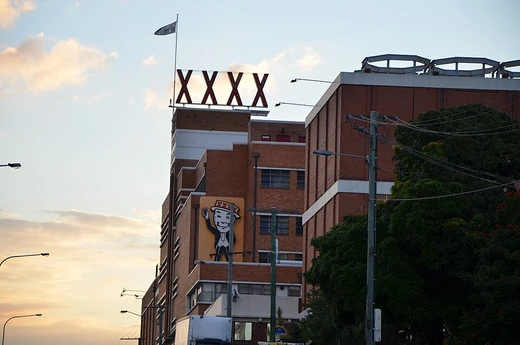
Goose Island Brewery
Chicago's oldest operating brewery, known for barrel-aged stouts.

artistmac · CC BY-SA 2.0
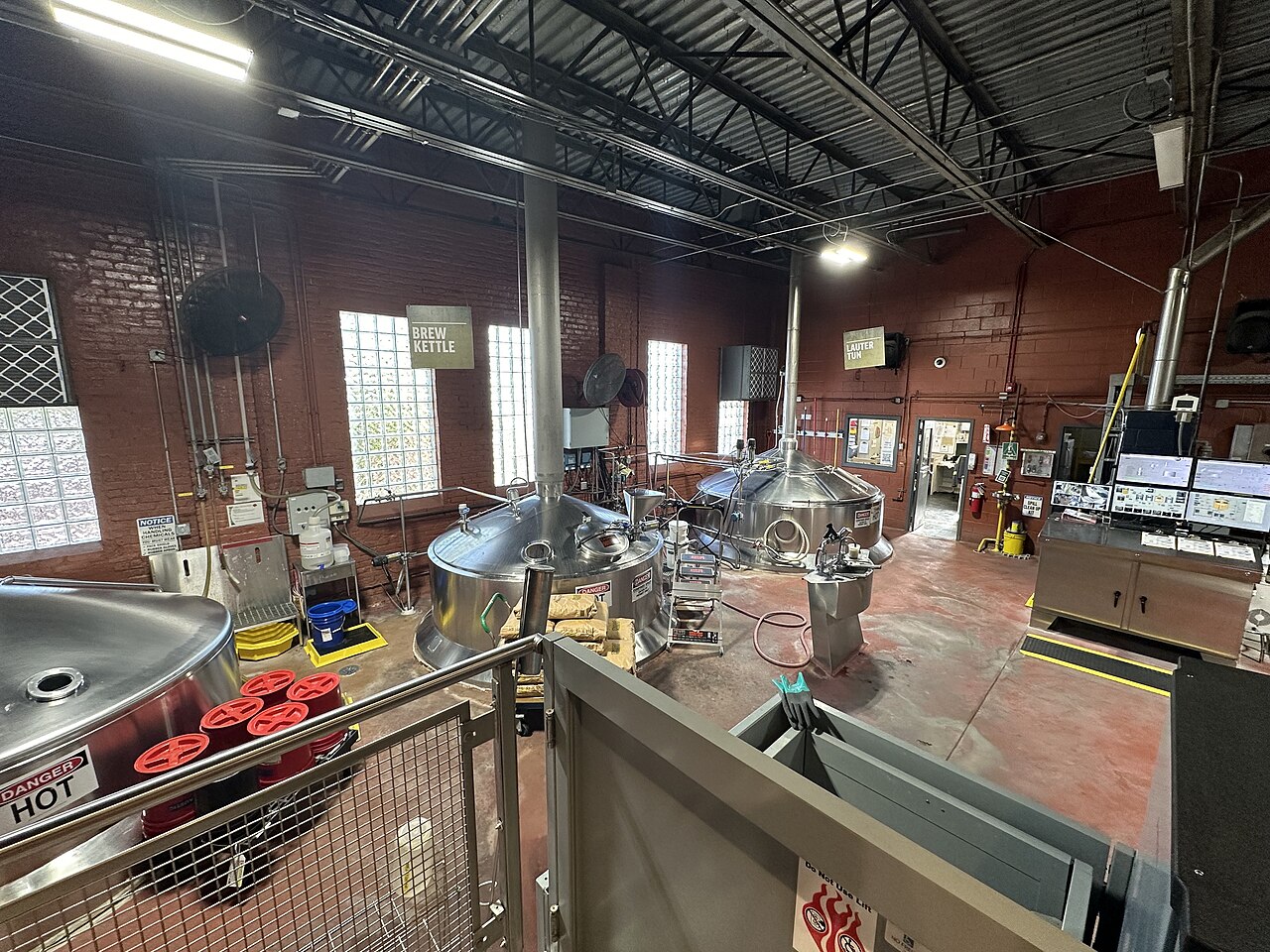
Goose Island Beer Company, based in Chicago, is the oldest brewery still operating in Illinois. It started as a brewpub in 1988 in the Lincoln Park neighborhood, taking its name from a nearby island. A larger production facility followed in 1995, and a second brewpub in Wrigleyville opened in 1999 but closed in 2015. The brewery’s beers are sold across the United States and in the United Kingdom. In 2011, Anheuser-Busch InBev purchased the company.
Quick Facts
- Location
- Chicago, Illinois / United States
- Opened
- 1988
- Key People
- John Hall (Founder) / Todd Ahsmann (President) / Daryl Hoedtke (Brewmaster)
- Owner
- Anheuser-Busch InBev
Facts from the source article.
Lore & Background
Goose Island was founded by John Hall, who was originally influenced by the English brewing tradition and pub culture. The original brewpub on Clybourn Avenue was sold to Anheuser-Busch in 2016 but remains a subsidiary of the Fulton Street brewery; it closed for renovation in January 2017 and reopened in October 2017 as Goose Island Brewhouse. The Wrigleyville brewpub closed in 2015 to make way for development. The brewery now operates concept locations in Dubai, Toronto, São Paulo, Seoul, and Shanghai.
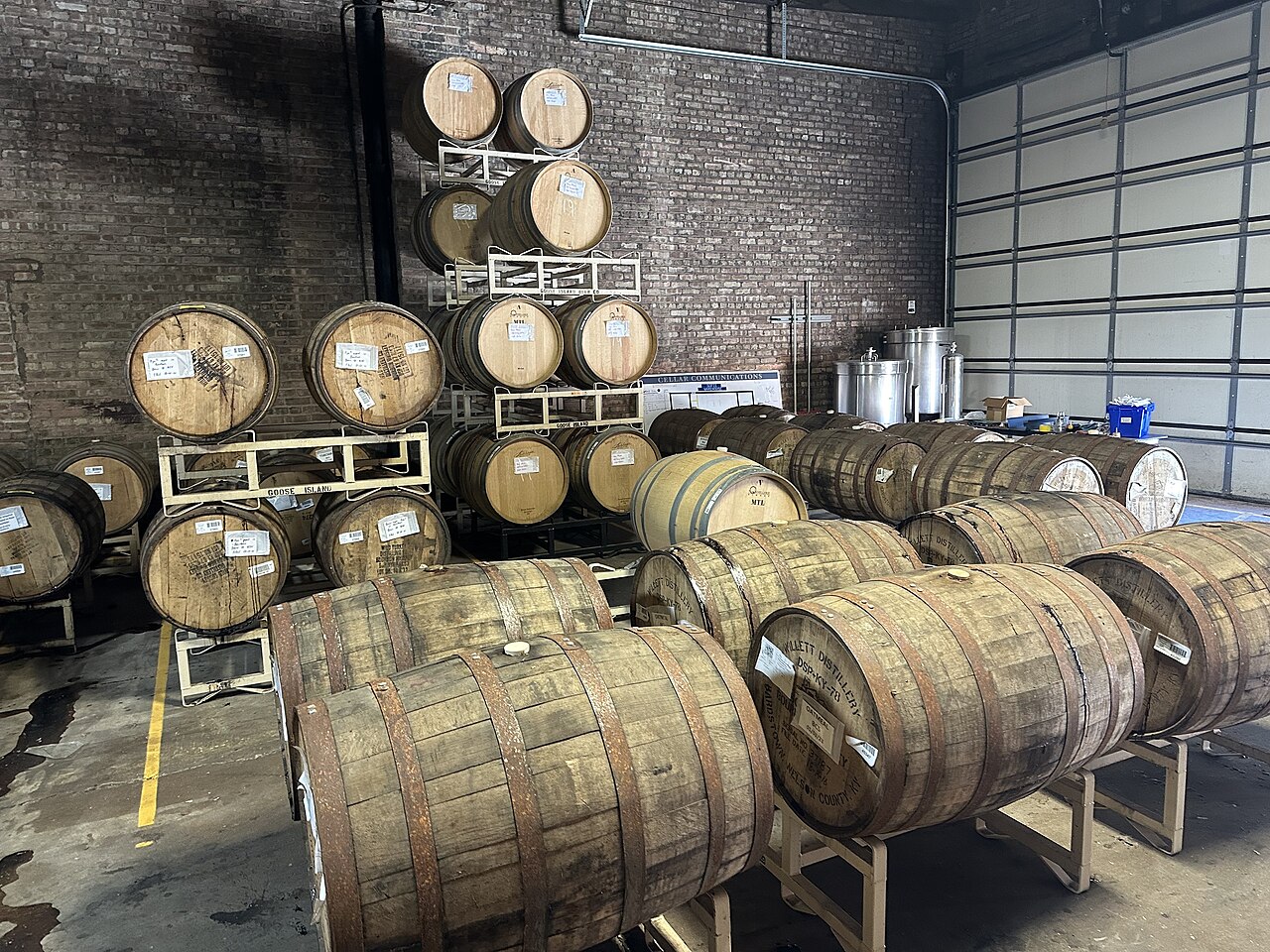
Goose Island's Bourbon County Stout was one of the first bourbon barrel-aged beers. It was first produced by Greg Hall in Chicago in 1992, when Jim Beam gave the brewer a couple of used barrels; however, according to Hall's assistant brewmaster and other evidence, it may not have been produced until 1995. Brewmaster Brett Porter has said that the warehouse is allowed to run to Chicago temperatures—cold winters followed by hot humid summers—which causes the staves in the bourbon barrels to bring in and then force out liquid, creating the flavor. The beer is released annually in late November in several variants.
Reader's Guide
Goose Island's significance lies in its pioneering role in barrel-aged beer, particularly Bourbon County Stout, which helped popularize the style in the United States. The brewery's history reflects the evolution of American craft brewing: starting as a small brewpub in Chicago, expanding through a partnership with Widmer Brothers Brewery in 2006, and eventually being acquired by Anheuser-Busch InBev in 2011. This acquisition allowed Goose Island products to become available in all 50 US states by 2012, and in Europe the beer is brewed at InBev facilities in Belgium. The original brewpub on Clybourn Avenue continues to operate as a subsidiary, and the Fulton Street brewery offers a tap room and tours. Goose Island's legacy includes its role in the bourbon barrel-aging trend and its status as the oldest operating brewery in Illinois, maintaining a global presence with brewpubs on multiple continents.
Did You Know?
- Goose Island was named after a nearby island in Chicago.
- Bourbon County Stout was first produced using barrels given to the brewer by Jim Beam.
- After the AB InBev acquisition, Goose Island beer for Europe is brewed at InBev facilities in Belgium.
Origins: From Maltings to Microbrewery
The story of Wychwood Brewery begins in the shadow of a much older brewing operation. The site in Witney, Oxfordshire, was originally the Eagle Maltings, constructed in 1841 to process barley for Clinch's brewery, which at one point controlled seventy-one pubs across Southern England. When Courage acquired Clinch's in 1961, the malting operation was shut down, leaving the building dormant for two decades. In 1983, Paddy Glenny—brother of BBC journalist Misha Glenny—secured a modest £18,000 bank loan and rented part of the old site. Working alongside junior partner Chris Moss, he launched what he initially called Glenny Brewery. The first brew was Eagle Bitter, quickly renamed Witney Brewery after Charles Wells Brewery threatened legal action, followed by Wychwood Best. The operation also produced Little Gem, a 7.7% barleywine exported to Italy. By 1990, Glenny sold the venture to Ian Rogers and relocated to British Columbia, Canada, where he went on to revive Nelson Brewing Company.
Rogers' Expansion: Pubs, Supermarkets, and Japan
Ian Rogers transformed the small Witney operation into a nationally recognized brand through a combination of bold retail strategy and pub expansion. He funded his 1990 buyout by selling his own house and a chapel he owned in Somerset, then renamed the brewery after the ancient Wychwood Forest that borders the town. In 1992, he leased nine pub sites from Allied and Inntrepreneur in town centres and university areas, revamping them with wood fittings, stone floors, and goblin-and-witch imagery. The first Hobgoblin pub opened in Staines, Surrey, with follow-ups in Bristol, Bath, Brighton, and High Wycombe, targeting real-ale drinkers and students. Simultaneously, Rogers struck supermarket deals with Tesco, Safeway, and Waitrose, propelling Hobgoblin to the fifth-best-selling beer in the UK. In 1993, private equity firm 3i became a key investor, funding the pub chain's growth to thirty-five locations by 1999. Rogers also expanded internationally: after meeting businessman Mark Spencer on an EU trade mission, he opened a Hobgoblin pub in Tokyo's Akasaka district in 2000, followed by Roppongi, both of which continued trading.
The Hobgoblin Identity and Its Cultural Footprint
Hobgoblin became the defining identity of Wychwood Brewery, originally conceived as a strong winter ale and named by Paddy Glenny himself. The visual identity evolved through multiple artists: Andy Farmer first created the artwork for Glenny, then Ed Org was commissioned by Rogers, and Dave Noonan designed the distinctive Hobgoblin font. The label drew on the myths and legends of the ancient Wychwood Forest, giving the brand a character-driven aesthetic that stood out on shelves. Rogers used United Glass to produce a Coca-Cola-shaped clear bottle, and Hobgoblin became the first British supermarket beer to feature a pictorial label with gold embossing and a full-colour logo. Under later owner Rupert Thompson, the brand gained the memorable "What's the matter, Lagerboy" slogan, backed by a £150,000 trade-press advertising spend. Thompson also positioned Hobgoblin as the unofficial beer of Halloween and ran a campaign at the Great British Beer Festival with the tagline "Le Real Ale, Because You're Worth It." At the 2010 G-20 Toronto summit, Prime Minister David Cameron presented President Barack Obama with a bottle of Hobgoblin as a hometown gift.
Ownership Turmoil and the 2023 Closure
After Chris Moss's death in 2001, 3i placed the business on the market. Refresh UK, led by Rupert Thompson, acquired the brewery in 2002, while the twenty-nine Hobgoblin pubs were sold to Balaclava. That pub chain's trajectory was turbulent: Balaclava entered administration in 2003, was absorbed by Pubs 'N' Bars plc, which itself collapsed in 2009, and the individual pubs were eventually sold off, shedding their Hobgoblin branding entirely. In 2008, Marston's purchased Refresh UK and with it Wychwood Brewery. Production had already shifted to Marston's Burton upon Trent facility in 1995. In 2020, Marston's brewing operations merged with Carlsberg UK to form Carlsberg Marston's Brewing Company, later rebranded as Carlsberg Britvic. By the time of the closure announcement in September 2023, the Witney brewery employed just six people. CMBC cited the need to "consolidate our brewing network" amid an "incredibly competitive" UK ale market and a "turbulent economic outlook." The closure took effect in November 2023, ending four decades of brewing at the site. The Hobgoblin brand, however, continues to be marketed under Carlsberg Britvic's ownership.
Gallery
Frequently Asked Questions
Who is Goose Island Brewery?
Goose Island Beer Company is a Chicago-based brewery that began as a small brewpub in the Lincoln Park neighborhood in 1988. It holds the distinction of being the oldest brewery still in operation in the state of Illinois.
What is Goose Island's most famous beer?
Bourbon County Stout is the brewery's signature release, a barrel-aged imperial stout first brewed in the early 1990s. It has become one of the most sought-after craft beers in the country.
Who owns Goose Island Brewery now?
Anheuser-Busch InBev acquired the company in 2011, bringing it under the umbrella of one of the world's largest brewing conglomerates. Despite the corporate ownership, the brewery continues to operate out of Chicago.
Where can you buy Goose Island beer?
The brewery's beers are distributed in all fifty U.S. states, a reach it achieved starting in 2012. They are also available in the United Kingdom and parts of Europe.
What happened to the Wrigleyville brewpub?
Goose Island opened a second brewpub location in the Wrigleyville neighborhood in 1999. That location eventually shut down in 2015, leaving the original Lincoln Park site as the primary brewpub.
More in Beer Brands, Part 3 1-24
Spotted an error? Know more?
Reader corrections go straight into our review queue. Suggest an edit · How this site is sourced