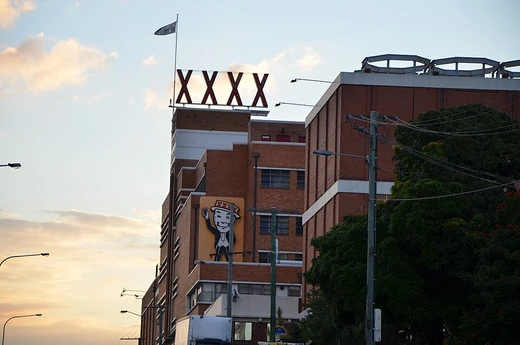
Half Acre Beer Company
Chicago brewery known for its tap rooms and cycling club sponsorship.

Internet Archive Book Images · No restrictions
Half Acre Beer Company is a brewery in Chicago, Illinois, United States, founded by Gabriel Magliaro in 2006. Its first beer, Half Acre Lager, debuted in August 2007. The company initially brewed its beer at Sand Creek Brewery in Black River Falls, Wisconsin, before opening its own production facility in Chicago in March 2009.
Quick Facts
- Location
- Chicago, Illinois / United States
- Owner
- Gabriel Magliaro
- Opened
- 2007
- Production
- 43000 usbeerbbl in 2017
Facts from the source article.
Lore & Background
Half Acre Beer Company, a Chicago brewery, was established by Gabriel Magliaro in 2006. While its recipes were created in Chicago, the initial brewing took place at Sand Creek Brewery in Black River Falls, Wisconsin. The company’s first beer, Half Acre Lager, was released in August 2007. Production moved to its own Lincoln Avenue brewery in Chicago’s North Center neighborhood in March 2009. A tap room next to the brewhouse opened in 2012, and a 2013 poll by *Chicago* magazine ranked it the city’s eighth best bar. A kitchen was added in January 2016, making it a full-service brewpub. In 2015, the brewery opened a larger second brewhouse and pub on Balmoral Avenue in the Bowmanville neighborhood, about a mile and a half from the original location. Operations were consolidated at the Balmoral Avenue site in 2021, closing the Lincoln Avenue facility. Since 2007, the company has sponsored the local Half Acre Cycling club. To reduce brewing waste, it challenged Northwestern University engineering students to find ways to minimize or repurpose byproducts.
Reader's Guide
Half Acre Beer Company brews six year-round beers, three seasonal beers, as well as monthly special releases and small batches for its taproom and beer garden. When asked about the citrus flavor of Half Acre Lager, Magliaro said that the only thing in his beer is water, yeast and 'lots and lots' of German malt and Saaz hops. In October 2014, Half Acre Heyoka won a silver medal at the Great American Beer Festival in the category of American-style IPA. In January 2015, Heyoka was renamed Senita after members of the American Indian Movement objected to the term 'heyoka' being used for commercial purposes. In June 2015, the beer was renamed again, to Gone Away, after another brewery claimed that the name Senita infringed too closely on the name of one of its beers. The company's history reflects a trajectory from contract brewing to owning multiple facilities, a tap room recognized by a local magazine, and a consolidation of operations in 2021.
Did You Know?
- The company sponsored the local bicycle club Half Acre Cycling since 2007.
- The beer Heyoka was renamed twice: first to Senita, then to Gone Away.
The Water That Built a Brand
Leopold Friederich Schmidt, a German immigrant who had settled in Deer Lodge, Montana, chose Tumwater Falls along the Deschutes River as the site for his brewing ambitions. Working alongside his brother Louis, Schmidt erected a four-story wooden brewhouse, a five-story cellar, a one-story ice factory driven by the lower falls, and a bottling and keg plant. Before a single batch was brewed, Schmidt and the Whal-Henius Institute tested two containers of river water; satisfied with the results, Schmidt declared he could brew the finest beer of his life. In 1896, Olympia Beer hit the market. By 1902 the operation had been formally renamed the Olympia Brewing Company, and company secretary Frank Kenney crafted the now-iconic slogan "It's the Water" to market the flagship lager. For decades the brewery drew from artesian wells, and one promotional campaign playfully attributed the water to a mythical tribe of "artesians." Even after the brewery's closure, that water identity endures through H2Olympia, a local advocacy group fighting to preserve a remaining public artesian well in downtown Olympia.
From Regional Staple to National Player
By 1909, Olympia was Tumwater's principal industry, employing over a hundred workers with an annual payroll of $100,000. Schmidt's death in 1914 led to a brief shutdown in 1915, just ahead of Washington's statewide prohibition in January 1916. After Prohibition, a new brewery rose just upstream, and Olympia beer returned to shelves in 1934. For roughly half a century the brand was the Pacific Northwest's go-to lager, and in the 1970s it expanded nationally, repositioning as a budget-friendly option. Olympia also absorbed Hamm's and Lone Star, and brewed Buckhorn. Its regional dominance was partly shielded by Coors' limited distribution: Washington and Montana only gained Coors in 1976, and Oregon grocery stores waited until 1985. Flat revenues in the 1970s and 1980s pushed the Schmidt family to sell in 1982. Pabst acquired the company through a 1983 stock swap. A chain of consolidations following Stroh's collapse saw Miller Brewing take the Tumwater plant in 1999, and SABMiller purchase Miller in 2002.
The Last Brewery Standing
For a period after the 1990s, the Tumwater facility became the Pacific Northwest's final active brewery, absorbing production from shuttered competitors. The Lucky Lager brewery in Vancouver, Washington, the Henry Weinhard's plant in Portland, and even the Seattle brewery behind arch-rival Rainier Beer all closed their doors, with their output shifting to Tumwater. Yet SABMiller, which had absorbed Miller in 2002, determined the small plant was no longer economical. In June 2003 the brewery was shut down, with the company citing excess capacity and the high cost of running a small operation. The 100-acre campus on Custer Way fell into disrepair. A three-alarm fire on October 7, 2018 partially collapsed the administration building's south side, drawing fire crews from multiple neighboring departments. In 2019 an oil leak contaminated the nearby Deschutes River, prompting a city fine and a settlement with the state. By the 2020s residents described the site as a depressing eyesore, and while proposals for a new brewery or mixed-use development have been floated, possible contamination and prohibitive eminent-domain costs have stalled progress.
A Brand That Outlived Its Brewery
Olympia's cultural reach extended well beyond the taproom. Stuntman Evel Knievel carried the brand on his jackets, vehicles, and even his parachutes, with Olympia paying to have "Olympia Beer" stitched into his gear. After the Tumwater plant closed, the label survived through contract brewing. In 2014, beer industry veteran Eugene Kashper, backed by TSG Consumer Partners, purchased Pabst and the Olympia name; production moved to MillerCoors in Irwindale, California. The old Tumwater machinery was sold to Ag Energy Resources of Benton, Illinois, for ethanol production. On January 25, 2021, Pabst announced on Twitter that it was temporarily pausing Olympia Beer production due to soft demand, redirecting focus to its Olympia Distilling Company spirit line. As of 2026, the beer is brewed by Great Western Brewing in Saskatoon, Saskatchewan—a full circle from a small Pacific Northwest fallside operation to a Canadian contract facility, the water slogan long retired but the name still on shelves.
Gallery
Frequently Asked Questions
Who started Half Acre Beer Company and in what year?
Gabriel Magliaro launched the brewery in 2006, establishing it as a Chicago-based craft operation. It quickly became a fixture in the local beer scene.
What was the first beer Half Acre ever released?
Half Acre Lager hit the market in August 2007 and served as the brewery's debut offering. It set the tone for the company's approachable, session-friendly style.
Where did Half Acre brew its beer before opening its own Chicago facility?
In its earliest days the company contracted production to Sand Creek Brewery in Black River Falls, Wisconsin. That arrangement lasted until March 2009, when Half Acre moved into its own dedicated production space in Chicago.
How large is Half Acre's core beer lineup?
The brewery maintains six year-round beers alongside three seasonal releases. This keeps the tap list focused while still giving fans rotating options throughout the year.
What makes Half Acre stand out in the Chicago craft beer community?
The brewery is well recognized for its welcoming tap room spaces and its ongoing sponsorship of local cycling clubs. Those community ties help it feel like more than just a production facility.
More in Beer Brands, Part 3 1-24
Spotted an error? Know more?
Reader corrections go straight into our review queue. Suggest an edit · How this site is sourced