Taybeh Brewery
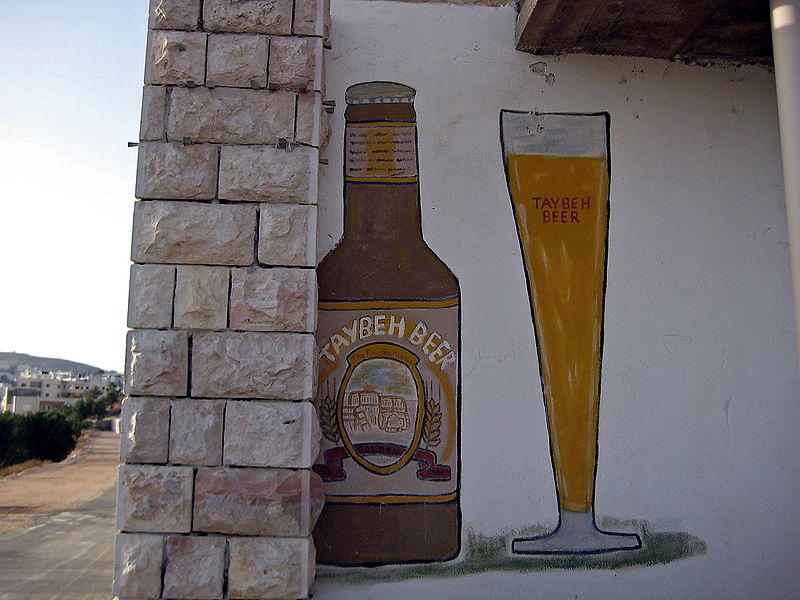
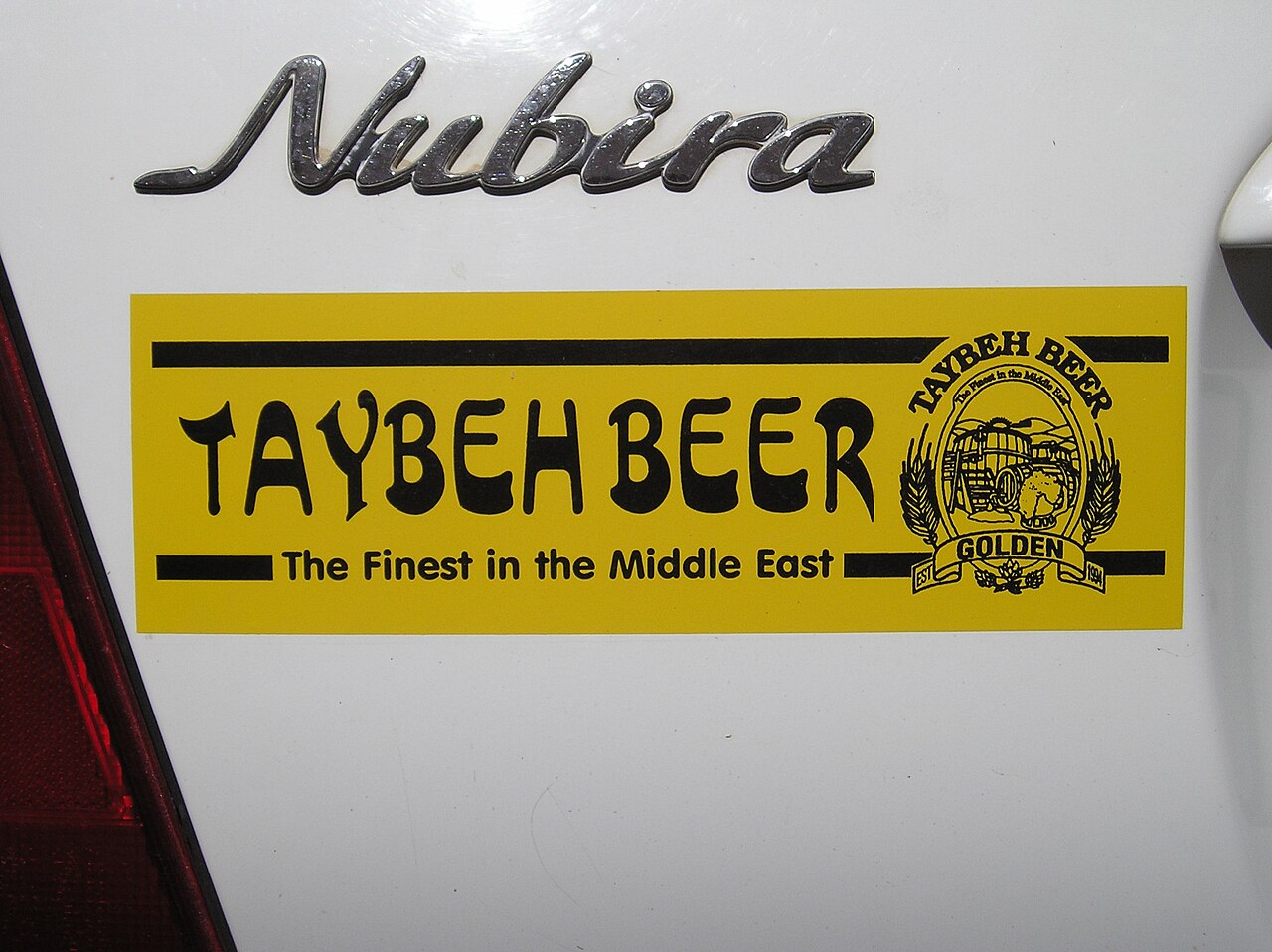
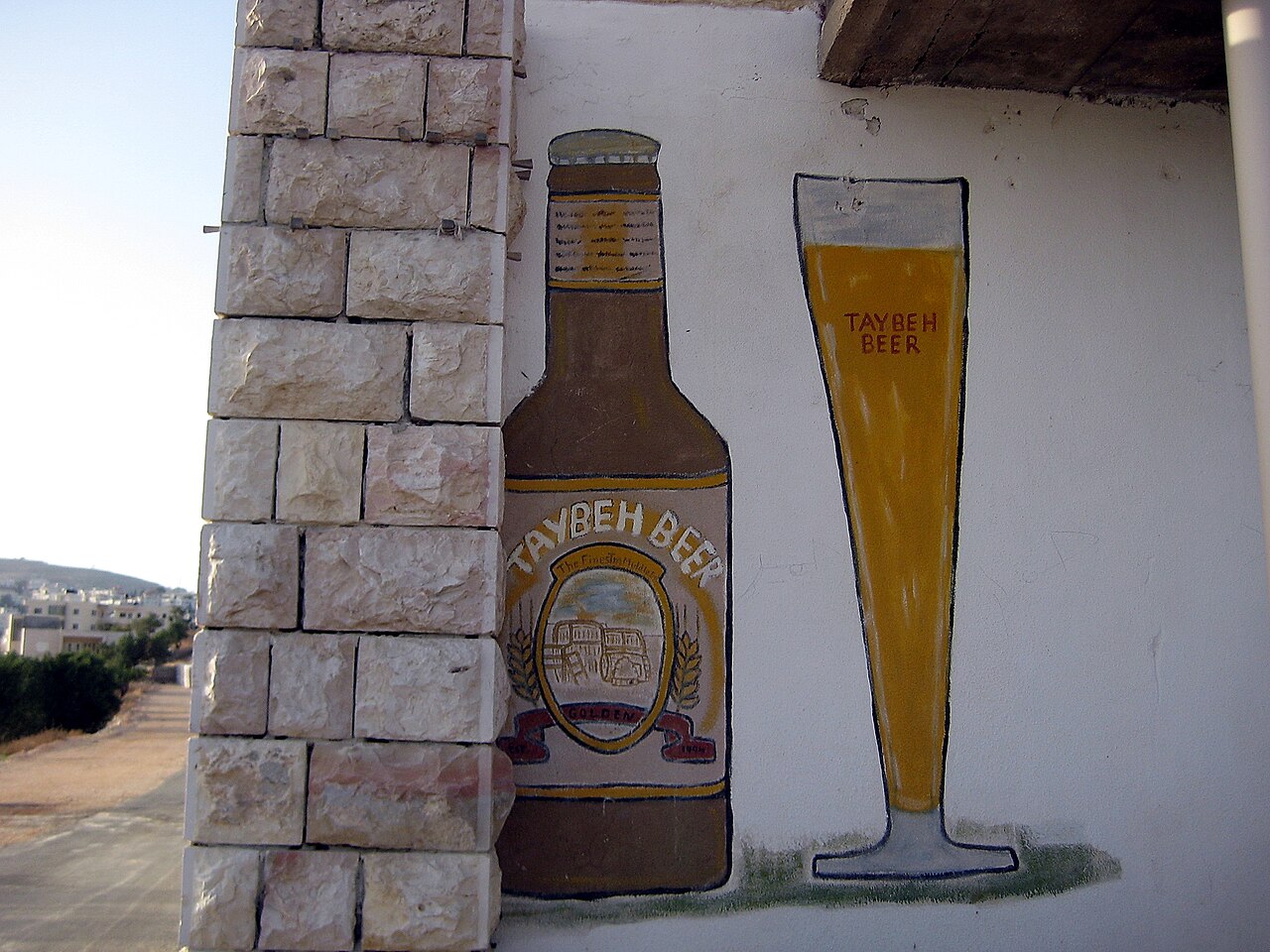
First Palestinian brewery and first microbrewery in the Middle East.

Magister · CC BY-SA 3.0
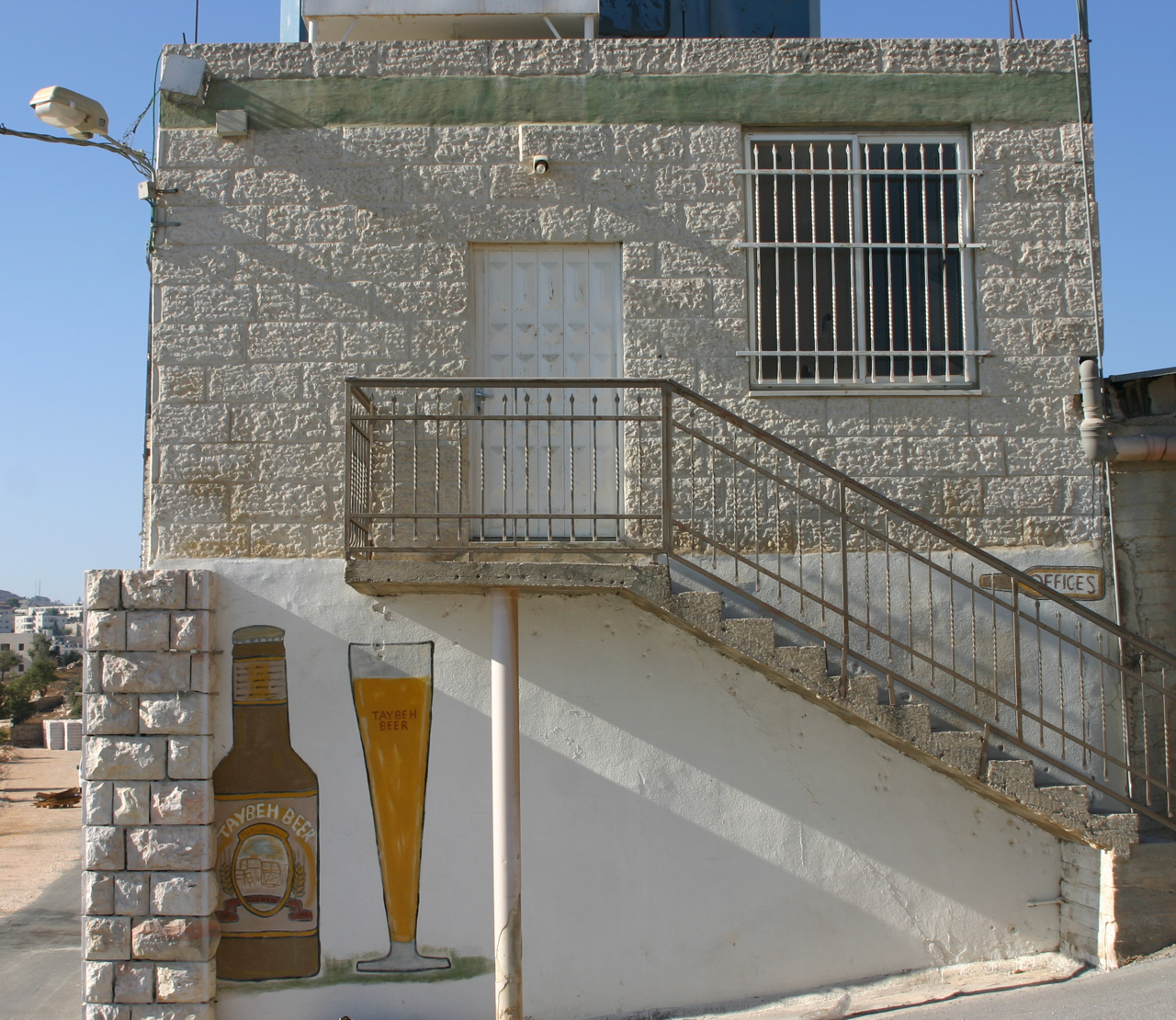
Taybeh Brewery, whose name means "delicious brewery," was founded in 1994 in the West Bank village of Taybeh, about 35 kilometers north of Jerusalem. It was started by brothers Nadim and David Khoury, who are part of the local Palestinian Christian community. The brewery is recognized as the first Palestinian brewery and the first microbrewery in the entire Middle East, opening about a decade before the first Israeli microbrewery. Since then, other notable Middle Eastern microbreweries have appeared, such as Birzeit Brewery, also in Palestine.
The Khoury family originally came from Taybeh but grew up in Brookline, Massachusetts, where they ran a liquor store. In the 1980s, while a student at Hellenic College in Brookline, Nadim began brewing beer in his dormitory basement. He later formally studied brewing at the University of California, Davis, earning a master's degree. The brewery was funded with $1.5 million of the family's own money, after banks refused to lend to them; they raised the seed capital by selling their property in Brookline. The first beer was produced in 1995, and the brand eventually gained a global following.
The idea of a Palestinian brewery was controversial in 1994, since Palestinian society is mostly Muslim and alcohol consumption is culturally discouraged. However, Palestinian President Yasser Arafat supported the brewery early on, arguing it would help break Palestine's reliance on imported Israeli alcohol. Arafat's backing is believed to have been crucial for the brewery's establishment. Shortly after its founding, Taybeh beer was also certified kosher by a rabbi from the Ofra settlement. Before the Second Intifada began in 2000, 70% of its sales went to Israelis. The brewery relied on imports passing through Israel for its equipment and ingredients.
When the Intifada brought violence, Israel set up checkpoints and built the West Bank barrier, which separated the brewery from the port of Ashdod, where its hops, barley, and yeast arrived. These barriers made it extremely difficult to import raw materials. On one occasion, a $20,000 shipment of bottles incurred $6,000 in extra costs due to port delays. In 2002, Nadim said that Israeli authorities held shipments to check for weapons, took bottle samples, inspected them, and charged fees for each security check.
Quick Facts
- Key People
- Nadim Khoury
- Location Country
- Palestine
- Location City
- Taybeh
Facts from the source article.
Lore & Background
Taybeh Brewery was co-founded in 1994, shortly after the signing of the first Oslo Accords in 1993. The Khoury family originated in Taybeh but grew up in Brookline, Massachusetts, where they ran a liquor store. Nadim Khoury began making beer in his dorm basement at Hellenic College and later earned a master's degree in brewing from UC Davis. The brewery was funded with $1.5 million of the family's own money, obtained by selling their property in Brookline, as banks refused to lend. The idea of a Palestinian brewery was controversial in 1994 because Palestinian society is predominantly Muslim and alcohol consumption is culturally disapproved of, but Palestinian President Yasser Arafat supported it on the grounds that it would help break Palestine's dependence on alcohol imported from Israel. Taybeh beer was also certified as kosher by a rabbi from the Ofra settlement shortly after its founding, and 70% of its sales before the outbreak of the Second Intifada in 2000 were to Israelis. The brewery depended on imports that passed through Israel for its equipment and ingredients.
During the Second Intifada, Israeli checkpoints and the West Bank barrier made it extremely difficult to import raw materials and export beer. On one occasion, Taybeh was charged $6,000 in costs for hold-ups at the port of Ashdod on a $20,000 shipment of bottles. Sales plunged, with revenue falling by over 90% by 2002, and Khoury had to lay off all 12 employees. As a stopgap, Taybeh sold olive oil produced by a local church to a company in Belgium. The brewery recovered somewhat after the Intifada ended in 2005, but was dealt a major blow in 2007 when Hamas took control of the Gaza Strip and ended the sale of alcohol there. Since 2007, Taybeh has continued to recover and expand, with its beer sold in at least 12 countries as of 2018, but it continues to face obstacles imposed by the Israeli occupation, including delays at ports and water scarcity concerns.
Reader's Guide
Taybeh Brewery's significance lies in its pioneering role as the first Palestinian brewery and the first microbrewery in the Middle East, predating Israeli microbreweries by about a decade. Its establishment in 1994, funded entirely by the Khoury family after banks refused loans, represented a bold venture in a predominantly Muslim society where alcohol is culturally disapproved. The brewery's survival and gradual expansion despite severe obstacles—including a 90% revenue drop during the Second Intifada, layoffs, reliance on Israeli ports, and ongoing checkpoints—illustrates its resilience. Taybeh's ability to adapt, such as selling olive oil to stay afloat and introducing a non-alcoholic beer for the local Muslim market, underscores its pragmatic approach. Its legacy includes launching an annual Oktoberfest-style beer festival in 2005, opening a winery in 2012, and finally entering the U.S. market in 2017, though labeled as 'Product of the West Bank' due to U.S. labeling rules. The brewery remains a symbol of Palestinian entrepreneurship and cultural identity, with 60% of its sales in Israel and the West Bank as of the latest data.
Did You Know?
- Taybeh Brewery was founded in 1994 by Nadim and David Khoury, who grew up in Brookline, Massachusetts, where their family ran a liquor store.
- The brewery's first beer was produced in 1995, and it is considered the first microbrewery in the entire Middle East.
- During the Second Intifada, Taybeh's revenue fell by over 90% by 2002, forcing the layoff of all 12 employees.
Ancient Roots and the Ophrah Connection
Taybeh's identity stretches back to antiquity, where it is widely identified with the biblical Ophrah of the tribe of Benjamin. The 1882 Survey of Western Palestine first proposed this link, and subsequent scholars have reinforced it. Josephus references the settlement during the First Jewish–Roman War under the Greek names Ephraim or Apharaema. In 145 BCE, the town was severed from Samaria and folded into Judaea, eventually serving as an administrative seat for a toparchy until Gophna assumed that role. In the early summer of 69 CE, Vespasian seized the settlement during his Judean campaign and left a military garrison behind. Archaeological traces in the village include a rock-cut tomb with multiple kokhim—originally Jewish in character but later reappropriated by Christians, as shown by a double Latin cross relief carved above its entrance. By the fifth century, a church dedicated to St George had been erected on the eastern side of the town, anchoring Taybeh firmly in the Byzantine Christian landscape.
Crusader Fortifications and the Saladin Legend
The medieval history of Taybeh is inseparable from the Crusader presence. Evidence points to a Christian community here as early as the ninth century, and by the twelfth century the Crusaders had added a second church attached to the original Byzantine structure. They also raised a fortified castle, known in English as the Castle of St Elias. In February 1182, Joscelin III transferred the castle to King Baldwin IV of Jerusalem in exchange for the lordship of Mi'ilya; three years later, Baldwin V granted it to his grandfather, William V, Marquess of Montferrat. The fortress's life under Crusader control ended in 1187, when Saladin captured Taybeh following the Battle of Hattin. Contemporary chroniclers Imad ad-Din al-Isfahani and Yaqut al-Hamawi both recorded the event, the latter describing it under the name 'Afra as a fortress in the Filastin Province near Jerusalem. Local tradition holds that Saladin, struck by the villagers' hospitality during his campaigns against the Crusaders, renamed the settlement Taybeh—meaning "the goodly." An alternative explanation, offered by Israeli archaeologist Hanan Eshel, suggests the name change occurred when Arabic replaced earlier place names, as residents wished to distance the village from Ifrit, a demon in Islamic mythology.
Ottoman Ledgers and the European Wanderers
Under Ottoman rule, Taybeh appears in the 1596 tax registers as Tayyibat al-Isem, situated in the Nahiya of Quds within the Liwa of Quds. The records list 63 Muslim households and 23 Christian families, with taxes levied on wheat, barley, vines, fruit trees, goats, and beehives totaling 22,100 akçe, all directed to a Waqf. The village's turbulent nineteenth century included a major clash around 1810–1820 between the rival Kais and Yamani factions, after which the Yamani sheikh of Abu Ghosh reasserted control. European travelers then began documenting the settlement: Edward Robinson in 1838 counted 75 taxable inhabitants, suggesting a community of roughly 300 to 400. Victor Guérin, visiting in 1863, estimated 800 residents—60 Catholics and the remainder Greek Orthodox—and noted the ruins of a large hilltop building. The 1882 Survey of Western Palestine painted a vivid picture of a substantial Christian settlement with well-built stone houses, a central hilltop tower, olive and fig gardens, and the remains of both a St George church and a castle. French hermit Charles de Foucauld passed through in 1889 and returned in 1898, later composing a reflective account titled "Eight Days in Aphram."
A Christian Enclave in the West Bank
Taybeh stands out as one of roughly a dozen majority-Christian villages in the West Bank, perched at 850 meters above sea level, 15 kilometers northeast of Jerusalem and 12 kilometers northeast of Ramallah. Its religious character is deeply layered. The 1922 British Mandate census recorded 961 residents, of whom 954 were Christian—663 Orthodox, 249 Roman Catholic, 60 Melkite, and 2 Anglican—against just 7 Muslims. In 1927, a new Greek Orthodox church was constructed atop the older Byzantine structure, deliberately preserving its columns, lintels, capitals, two fonts, and a fragmentary mosaic bearing a Greek inscription. Population figures continued to climb: 1,125 in 1931 (1,038 Christians, 87 Muslims in 262 houses), and 1,330 by 1945 (1,180 Christians, 150 Muslims), spread across 20,231 dunams of land, with 5,287 dunams devoted to plantations and irrigable ground and 5,748 to cereals. After the 1948 war and the 1949 Armistice Agreements, Taybeh fell under Jordanian administration, and the 1961 Jordanian census recorded 1,677 inhabitants. By 2017, the Palestinian Central Bureau of Statistics counted 1,340 residents.
Gallery
Frequently Asked Questions
Who founded Taybeh Brewery and when did it open?
Brothers Nadim and David Khoury, members of the local Palestinian Christian community, established the brewery in 1994 in their hometown village of Taybeh. The name is a direct translation meaning 'delicious brewery.'
Why is Taybeh Brewery considered a milestone in Middle Eastern brewing?
It holds the dual distinction of being the first brewery in Palestine and the first microbrewery anywhere in the Middle East. It began operations roughly a decade before the first Israeli microbrewery appeared on the scene.
Where is Taybeh Brewery located?
The brewery is based in the village of Taybeh in the West Bank, sitting about 35 kilometers north of Jerusalem.
What beers are in Taybeh Brewery's current lineup?
Their range covers Golden, Light, Dark, Amber, White, and a Non-alcoholic option. The very first batch of beer rolled out in 1995, just one year after the brewery was founded.
How did Taybeh Brewery get its initial funding?
The Khoury family poured $1.5 million of their own capital into launching the project. Having originally come from Taybeh, they chose to build their business right in the village where their family roots lay.
More in Beer Brands, Part 2 1-24
Spotted an error? Know more?
Reader corrections go straight into our review queue. Suggest an edit · How this site is sourced