
Giuseppe Mario Bellanca
Italian-American aviation pioneer who shaped modern aircraft design.

Unknown author · Public domain
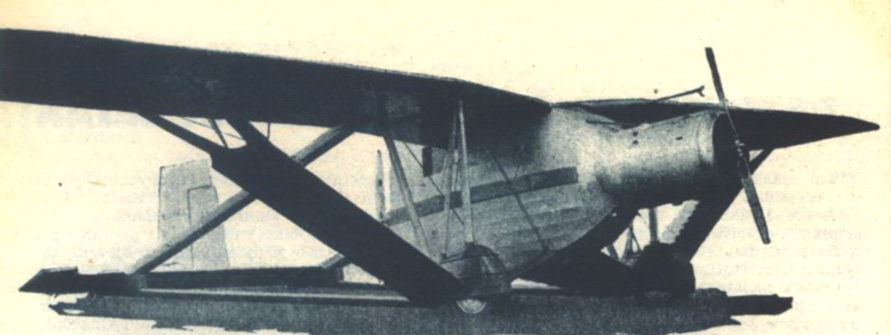
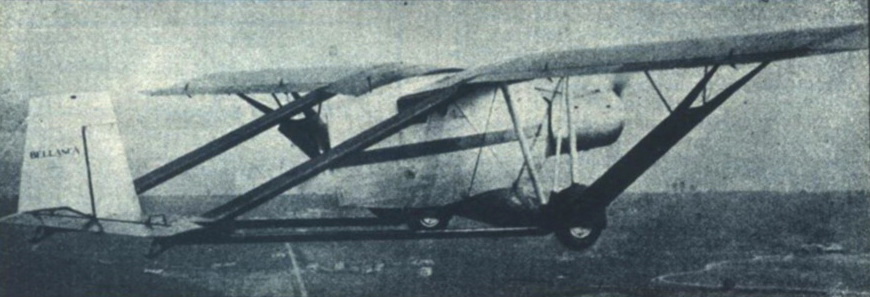
Giuseppe Mario Bellanca was an Italian-American aviation pioneer, airplane designer, and builder. He is credited with many design firsts and his aircraft broke numerous aviation records, leading the way for international and commercial air transportation.
- Born
- March 19, 1886, Sciacca, Italy
- Died
- December 26, 1960, New York City, USA
- Field
- Aviation pioneer, airplane designer and builder
- Nationality
- Italian-American
- Known for
- First enclosed-cabin monoplane, long-range aircraft, tractor design, first fully retractable commercial landing gear
Lore & Background
Bellanca studied at the Istituto Tecnico in Milan and later at the University of Palermo, then emigrated to Brooklyn in October 1911. He operated the Bellanca Flying School from 1912 to 1916. In 1913, he designed an early tractor-configuration aircraft, though the layout with engine and propeller in front, wing in the middle, and tail aft had already been established by others. In 1922, he built the first enclosed-cabin monoplane, the Bellanca CF, now preserved at the Steven F. Udvar-Hazy Center. He also developed the 'Bellanca A' airfoil, which was notably efficient but did not lift twice the weight of other airfoils.
In 1927, Bellanca partnered with Charles A. Levine to form Columbia Aircraft Corp. The Bellanca-designed WB-2, renamed the Columbia, set a world endurance record of 51 hours, 11 minutes, and 25 seconds in April 1927. Charles Lindbergh first sought to purchase the Columbia for his transatlantic flight but was turned down, according to one source, because Bellanca and Levine thought a solo flight was suicidal. The Columbia later crossed the Atlantic in June 1927 with a passenger, beating Lindbergh's distance record. Bellanca appeared on the cover of Time magazine in July 1927. He later formed the Bellanca Aircraft Corporation of America with the du Pont family. In 1928, he received a patent for the first fully retractable commercial landing gear. In 1931, a Bellanca CH-400 Skyrocket named Miss Veedol made the first non-stop Pacific crossing.
Reader's Guide
Giuseppe Mario Bellanca's contributions fundamentally altered the course of aviation. His 1913 tractor design established the standard layout for virtually all subsequent aircraft, improving performance and safety. The enclosed-cabin monoplane and the high-lift Bellanca A airfoil enabled longer, more practical flights, directly advancing commercial air transportation and military bombing capabilities. His aircraft set multiple records, including the first transatlantic flight with a passenger and the first non-stop Pacific crossing. Bellanca's innovations in retractable landing gear further reduced drag and increased efficiency. Despite being overshadowed by Lindbergh's solo flight, Bellanca's designs were technically superior and had been ready years earlier. His work laid the groundwork for modern general aviation and light commercial aircraft, with American Champion still producing aircraft with a Bellanca lineage. Aviation historians have stated that Bellanca did more for general aviation than any other person in aviation's first 100 years.
Did You Know?
- Bellanca's 1913 tractor design was an early example of the configuration that became standard, though others had pioneered it earlier.
- The Bellanca CF, built in 1922, was one of the world's first enclosed-cabin monoplanes and is now displayed at the Steven F. Udvar-Hazy Center.
- Bellanca received the first U.S. patent for a fully retractable commercial landing gear in 1928.
The Tractor Configuration Revolution
In 1913, Bellanca introduced what would become the defining layout of nearly every airplane built since. His design placed the engine and propeller at the front, the wing in the middle, and the tail at the rear — a configuration that was essentially the inverse of what was standard at the time. This 'tractor' arrangement delivered significant gains in both performance and safety compared to the older pusher-style aircraft. The design was so fundamentally superior that it was adopted internationally as the new baseline for aircraft construction, and it remains the configuration most people recognize today. This single innovation, emerging from Bellanca's work while operating his flying school in Brooklyn between 1912 and 1916, effectively set the geometric template for the entire modern aviation industry.
The Bellanca A Airfoil and the Dawn of Commercial Flight
Bellanca's development of the 'Bellanca A' airfoil represented a quantum leap in aerodynamic efficiency. The new profile could lift roughly twice the weight of competing airfoils available at the time, a capability that transformed what was possible in both commercial and military aviation. Bellanca applied this breakthrough to his six-place WB-1 and WB-2 aircraft, which became the first long-range passenger planes. The WB-2, later renamed the Columbia and then Miss Columbia, demonstrated the practical reach of the design: in January 1927, pilots Clarence Chamberlin and Bert Acosta logged a world non-refueled endurance record of 51.5 hours in the airframe. The Bellanca A airfoil did not merely improve existing aircraft; it opened the door to sustained international and commercial air transportation and made long-range strategic bombing a military reality. Its influence on the trajectory of aviation economics and capability was profound and lasting.
The Columbia, Lindbergh, and the Transatlantic Race of 1927
The most dramatic chapter in Bellanca's career unfolded in the spring of 1927. Charles Lindbergh's first choice for his transatlantic attempt was the Columbia, Bellanca's long-range monoplane. However, Bellanca and his partner Charles A. Levine reportedly refused the deal, believing a solo crossing was suicidal given the hours of continuous wakefulness required. The Columbia was then grounded by a court injunction stemming from a contract dispute between Levine and a pilot named Bertaud, who had been slated as co-pilot. Two weeks after Lindbergh's solo flight to Paris on May 20, the Columbia finally departed Roosevelt Field on June 4, 1927, with Chamberlin at the controls and Levine aboard as passenger. After a 43-hour flight, they landed in Eisleben, Germany — running out of fuel before reaching Berlin — and then continued to the German capital, where 150,000 people greeted them. The Columbia had beaten Lindbergh's distance record, carried a passenger, and featured a windshield for forward visibility. Bellanca appeared on the cover of Time magazine on July 4, 1927.
Later Innovations, Wartime Work, and Enduring Legacy
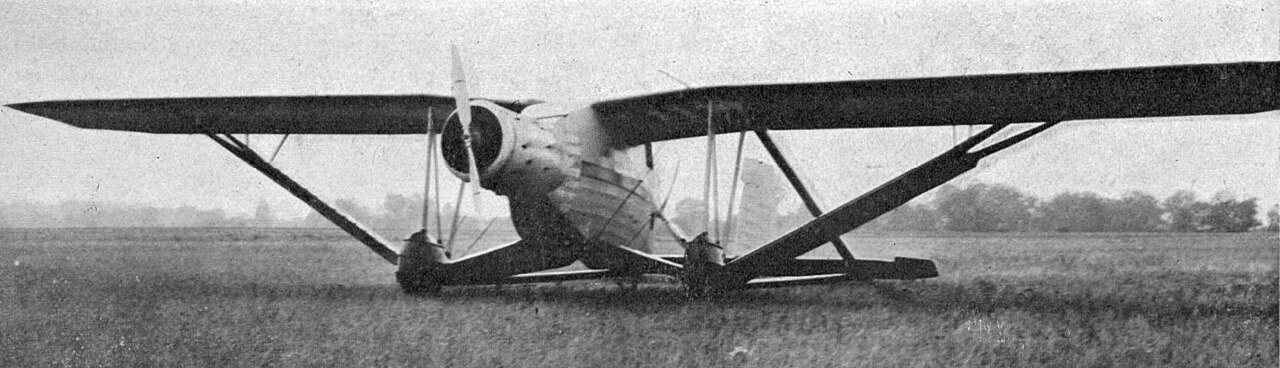
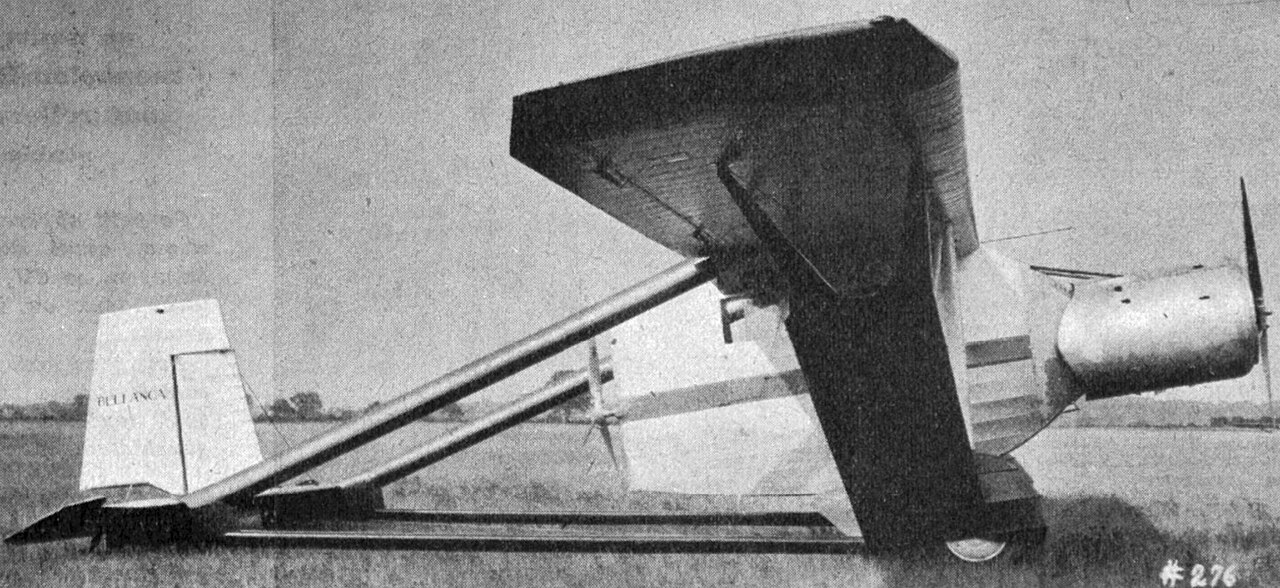
Bellanca's inventive output extended well beyond the 1920s. In 1928 he received his first U.S. patent for an inwardly retracting landing gear that reduced aerodynamic drag — the first fully retractable commercial landing gear ever developed, installed on the Rome the previous year. In 1931, a Bellanca CH-400 Skyrocket named Miss Veedol became the first aircraft to cross the Pacific non-stop, flying from Samishiro Beach, Japan, to Wenatchee, Washington, under Clyde Pangborn and Hugh Herndon Jr. During World War II, after a 1941 disagreement with corporate directors, Bellanca partnered with Andrew Jackson Higgins to design cargo aircraft for the Army Air Corps. That same year he sketched the first 'blended wing body' concept — a twin-tail-boom, twin-pusher-propeller design with laminar flow characteristics that eerily prefigured the modern B-2 bomber. His Bellanca CF monoplane remains on display at the National Air and Space Museum, and American Champion still produces aircraft carrying a Bellanca lineage. He was inducted into the National Aviation Hall of Fame in 1973.
Gallery
Frequently Asked Questions
Who is Giuseppe Mario Bellanca?
Bellanca was an Italian-American aviation pioneer, aircraft designer, and builder who made groundbreaking contributions to airplane design in the early 20th century. He is recognized for introducing several design firsts that helped shape modern aviation.
What is Giuseppe Mario Bellanca most famous for designing?
He is credited with creating the first enclosed-cabin monoplane, the first fully retractable commercial landing gear, and pioneering the tractor (front-puller) engine configuration. His long-range aircraft also set numerous speed and distance records of his era.
When and where was Giuseppe Mario Bellanca born, and when did he die?
He was born on March 19, 1886, in Sciacca, Italy, and passed away on December 26, 1960, in New York City, USA.
Why is Giuseppe Mario Bellanca considered important in aviation history?
His design innovations—particularly in cabin enclosure, retractable gear, and tractor layout—laid foundational groundwork for both commercial and international air transportation. His record-breaking aircraft demonstrated that practical, passenger-friendly airplane designs were achievable well before the industry matured.
What was Bellanca's nationality and professional field?
Bellanca was of Italian birth but became an American aviation figure, working as a designer and builder of experimental and commercial aircraft. His career spanned the early decades of flight, during which he held multiple design patents and record achievements.
More in Aviation inventors 1-24
Spotted an error? Know more?
Reader corrections go straight into our review queue. Suggest an edit · How this site is sourced