Caramel shortbread
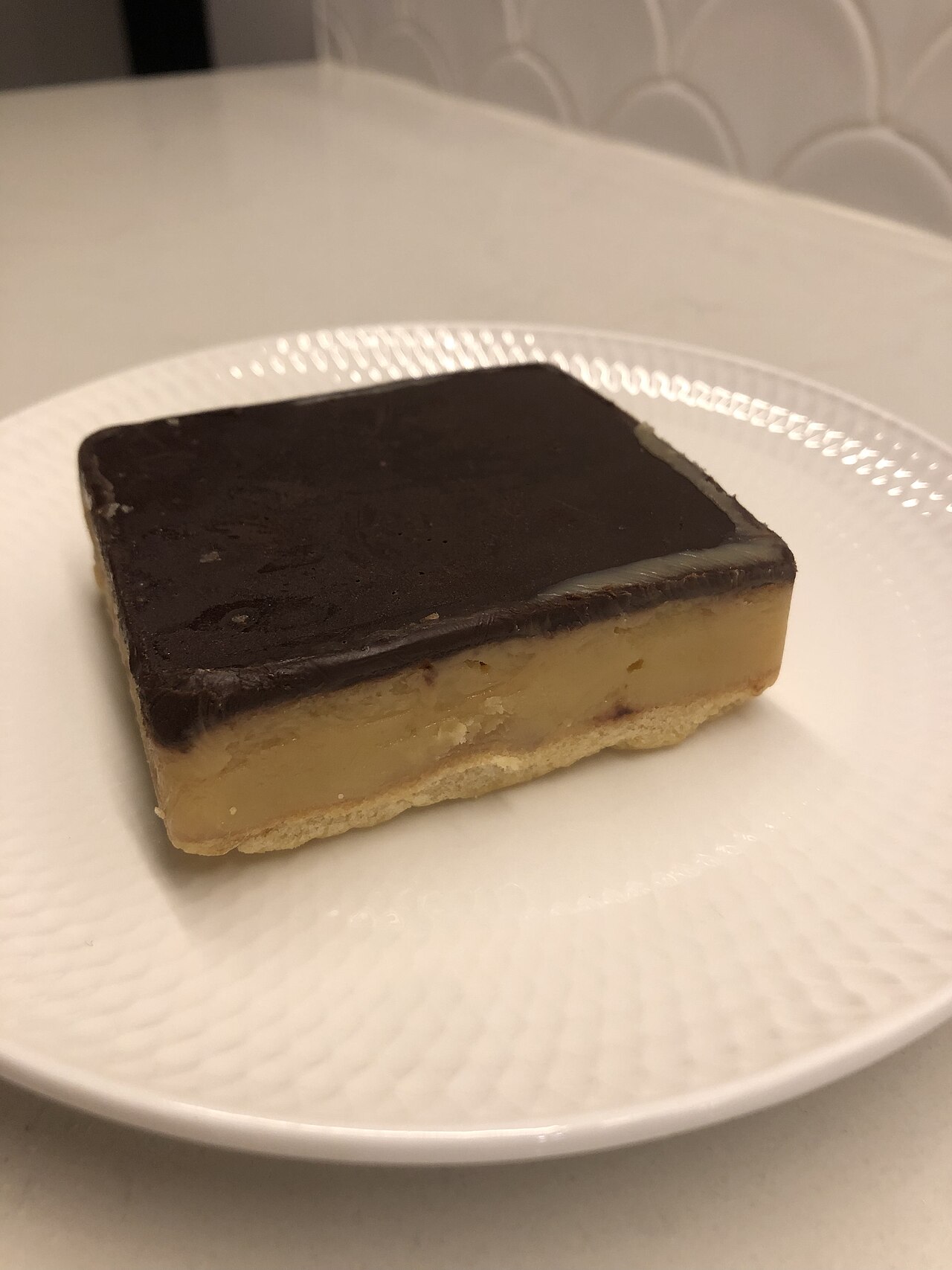
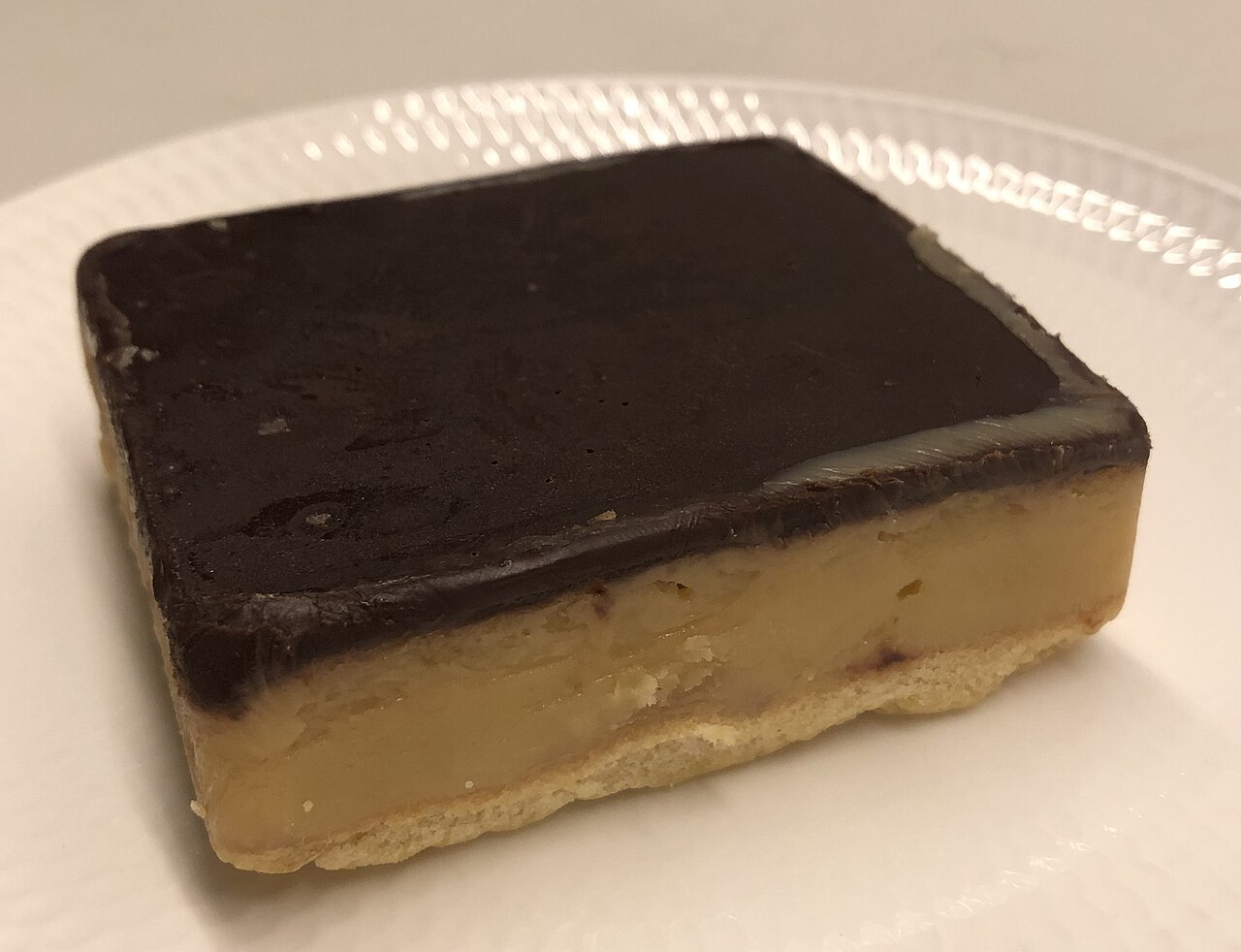
A biscuit confection with shortbread, caramel, and chocolate.

Finbar.concaig · CC BY-SA 4.0
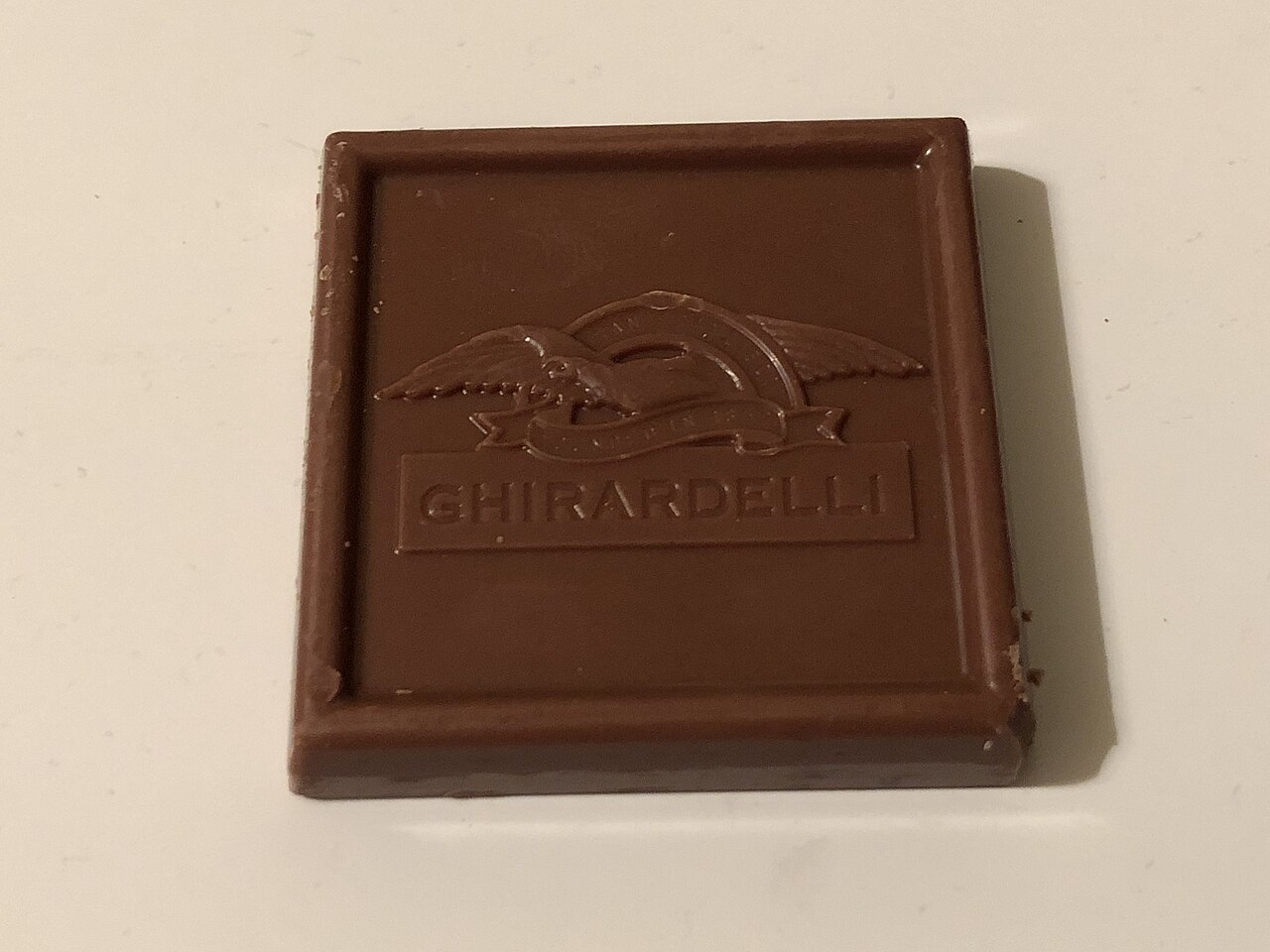
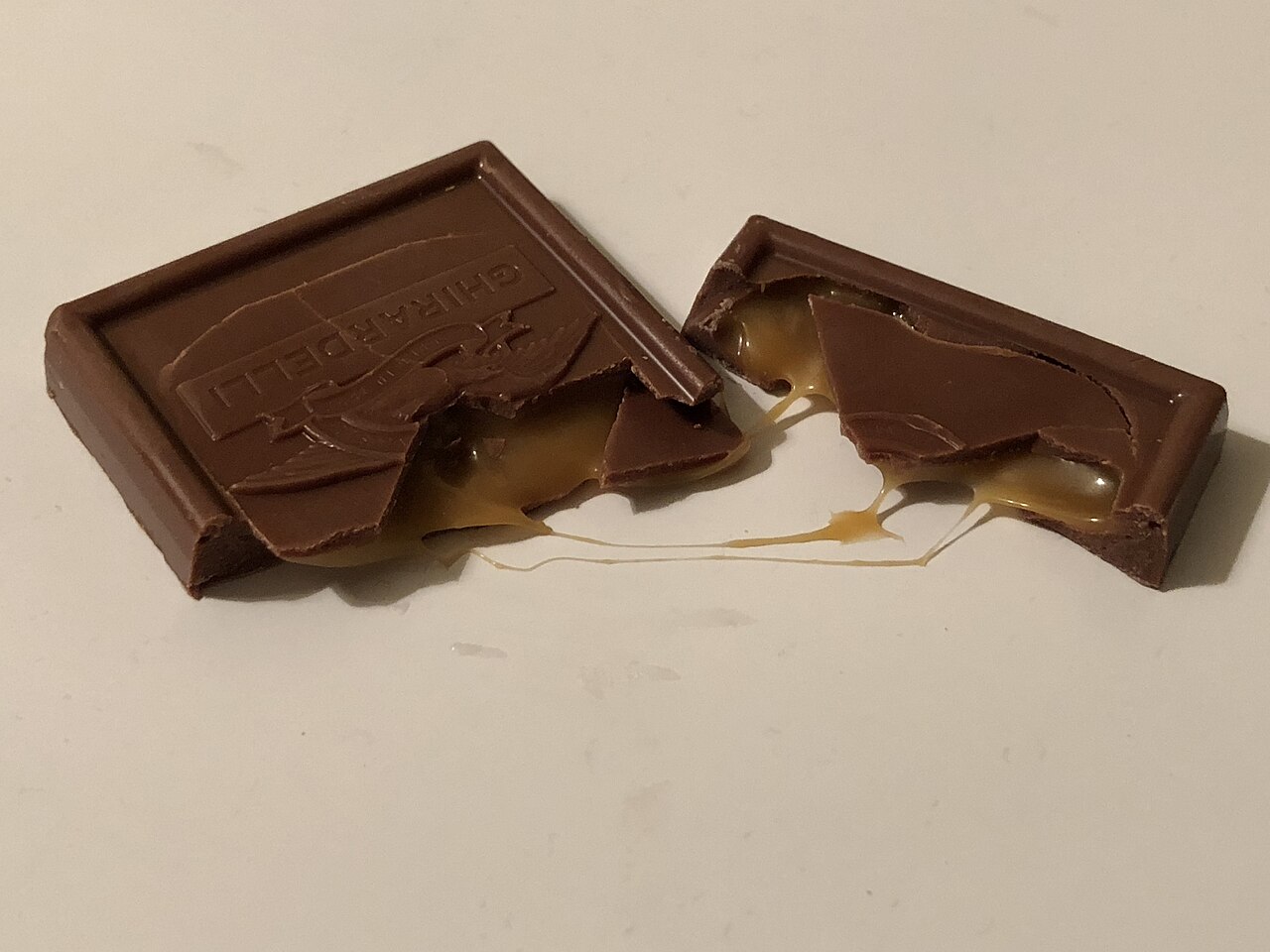
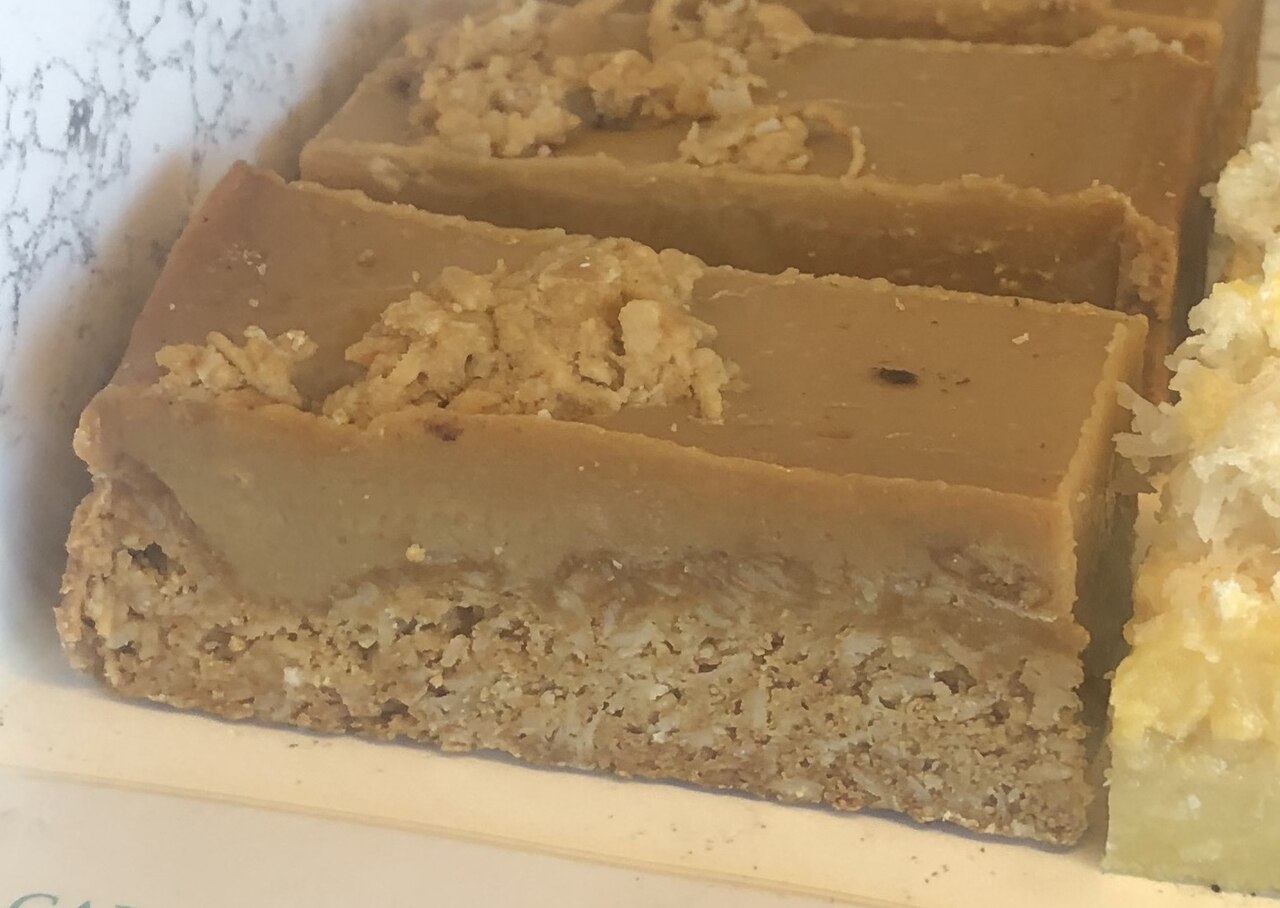
Caramel shortbread—also called caramel squares, caramel slice, millionaire's shortbread, millionaire's slice, chocolate caramel shortbread, or Wellington squares—is a biscuit confection built from a shortbread base, a layer of caramel, and a milk chocolate topping. It evolved from traditional Scottish shortbread, which dates to around the 15th century. By the 19th century, bakers were already adding extras like candied orange peel and almonds to shortbread. The specific pairing of shortbread with a caramel topping goes back to at least the early 1950s. A recipe for a version with both caramel and a chocolate top coat, called Chocolate Caramel Crunch (Millionaires' Shortbread), appeared in 1972 in a cookbook from the Scottish Association of Young Farmers' Clubs, contributed by Scottish members. Around the same time, recipes for a chocolate-topped version surfaced in Australia: the earliest, from 1970 in *The Australian Women's Weekly*, was named "Caramel Shortbread" but lacked chocolate, while a later 1981 recipe included it. The treat remains common in Australia, New Zealand, Scotland, and British cuisine more broadly. It's also eaten worldwide under various names, and in 2018 it was featured on the American show *America's Test Kitchen*.
The name "millionaire's shortbread" likely originated in Scotland, with the "millionaire" prefix suggesting a sense of decadence and luxury, marking it as an upgrade from plain shortbread. Other names include caramel shortbread, chocolate caramel shortbread, caramel slice, caramel squares, and millionaire's slice.
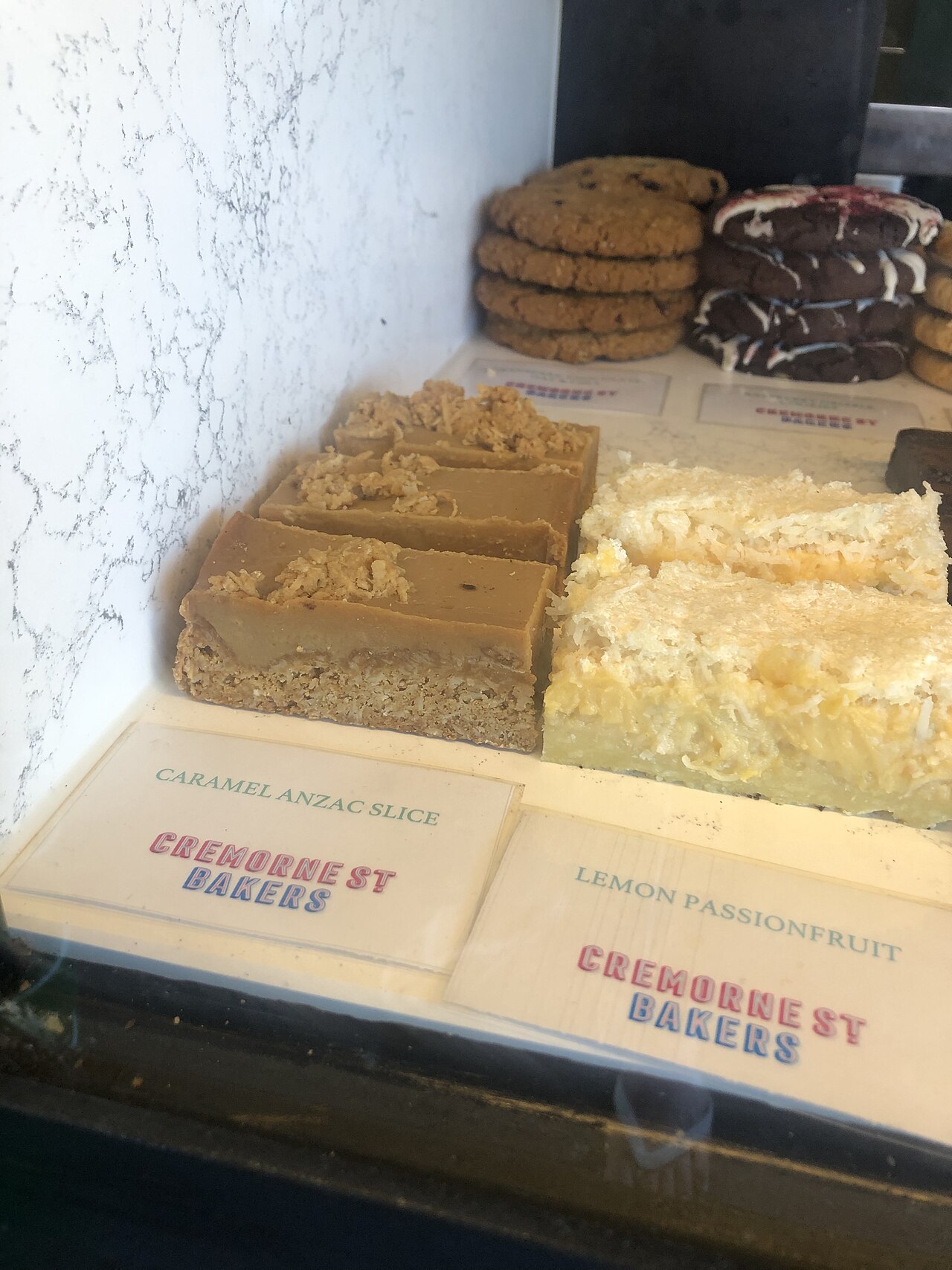
Many variations exist to suit different tastes, dietary needs, or ingredient availability. Some swaps include white chocolate instead of milk chocolate, added espresso and hazelnut, shortbread replaced with Anzac biscuits, raisins mixed into the shortbread, or peanut butter used as a topping instead of chocolate. Gluten-free and vegan versions are also common.
- Type
- Confectionery
- Origin
- Scotland
- Earliest known recipe with chocolate
- 1972 (Scottish Association of Young Farmers' Clubs)
- Also associated with
- Australia, New Zealand, British cuisine
- Key ingredients
- Shortbread, caramel, milk chocolate
- Alternative names
- Millionaire's shortbread, caramel slice, caramel squares, Wellington squares
Lore & Background
Caramel shortbread is an adapted form of the original Scottish shortbread, which originated around the 15th century. The practice of adding toppings to shortbread dates to at least the 19th century, when candied orange peel and almonds were used. The specific combination of shortbread with a caramel topping dates to at least the early 1950s.
A recipe for Chocolate Caramel Crunch (Millionaires' Shortbread), with a caramel layer and chocolate top coat, was published in 1972 in a book by the Scottish Association of Young Farmers' Clubs. In Australia, recipes for the dish with chocolate topping appeared in The Australian Women's Weekly in the early 1970s; the earliest known recipe there, from 1970, was named 'Caramel Shortbread' but lacked chocolate, while a 1981 recipe included the chocolate layer.
The treat is commonly associated with the cuisines of Australia, New Zealand, and Scotland, and is still consumed widely today.
Reader's Guide
Caramel shortbread holds significance as a modern evolution of a centuries-old Scottish baking tradition, demonstrating how a classic shortbread base can be adapted with caramel and chocolate to create a widely popular confection. Its multiple names—including millionaire's shortbread, caramel slice, and Wellington squares—reflect regional variations and cultural associations, particularly in Scotland, Australia, and New Zealand. The name 'millionaire's shortbread' originated in Scotland, implying a level of decadence and wealth. The treat's appearance in both Scottish and Australian cookbooks in the early 1970s shows parallel development, with the chocolate layer becoming standard by the 1980s. Its continued presence in home baking and its feature on an American television show in 2018 illustrate its enduring appeal. The existence of numerous variations—using white chocolate, espresso, hazelnut, Anzac biscuits, raisins, peanut butter, or gluten-free and vegan adaptations—demonstrates its versatility and ability to meet diverse tastes and dietary needs. Caramel shortbread thus represents a successful fusion of traditional shortbread with modern confectionery trends, maintaining relevance across generations and continents.
Did You Know?
- The combination of shortbread with caramel topping dates to at least the early 1950s.
- A recipe for Chocolate Caramel Crunch (Millionaires' Shortbread) was published in 1972 by the Scottish Association of Young Farmers' Clubs.
- The earliest Australian recipe for 'Caramel Shortbread' (1970) lacked the chocolate topping; a chocolate layer appeared in a 1981 recipe.
- In Scotland, caramel shortbread is often served to the first visitor to a house on New Year's Day.
Origins & Historical Evolution
Caramel shortbread traces its lineage back to Scottish shortbread, a confectionery whose roots stretch to roughly the fifteenth century. While the basic biscuit form existed for centuries, the refined version we recognize today is often credited to Mary, Queen of Scots, whose influence in the sixteenth century shaped the recipe into something more polished. For a long time, shortbread remained a standalone treat, but by the nineteenth century, bakers in Scotland began experimenting with additional toppings—candied orange peel and almonds among them—establishing a tradition of layering and embellishment. The specific marriage of shortbread with a caramel layer, however, did not appear until at least the early 1950s. A notable milestone came in 1972, when the Scottish Association of Young Farmers' Clubs published a recipe book in which members contributed a recipe they called Chocolate Caramel Crunch, featuring both a caramel layer and a chocolate top coat. This publication marks one of the earliest documented instances of the three-layer confection as we know it today.
Global Spread & Cultural Presence
Though firmly rooted in Scottish baking tradition, caramel shortbread has traveled well beyond its homeland. In Australia, the treat found an early foothold through the pages of The Australian Women's Weekly. The very first recipe appearing in that publication in 1970 was labeled simply Caramel Shortbread and notably omitted the chocolate layer that would later become a defining feature. By 1981, however, recipes in the same magazine included the full three-layer construction with chocolate on top. The confection is now a staple across Australian, New Zealand, and broader British cuisine, consumed regularly in all these regions. In Scotland specifically, it carries a charming social custom: it is traditionally offered to the first guest who crosses a household's threshold on New Year's Day. The treat's reach extends even further afield; in 2018, it was featured on the American television program America's Test Kitchen, demonstrating that this once-regional Scottish biscuit has become a genuinely international dessert recognized and enjoyed on multiple continents.
Naming & Cultural Identity
One of the most striking aspects of caramel shortbread is the sheer variety of names it goes by across different regions and eras. Depending on where you are, the same three-layer confection might be called caramel squares, caramel slice, millionaire's shortbread, millionaire's slice, chocolate caramel shortbread, or simply Wellington squares. This linguistic diversity reflects both the treat's widespread adoption and the way different communities have claimed and localized it. The millionaire prefix, which appears to have originated in Scotland, carries a playful connotation of indulgence and affluence. It positions the layered dessert as a luxurious upgrade over plain shortbread, suggesting that the addition of caramel and chocolate elevates a humble biscuit into something worthy of a more grandiose title. The multiplicity of names also serves as a reminder that this is not a single, monolithic recipe but rather a flexible concept that different cultures have embraced, renamed, and made their own while preserving the essential shortbread-caramel-chocolate architecture at its core.
Variations & Modern Adaptations
The fundamental architecture of caramel shortbread—shortbread base, caramel middle, chocolate top—has proven remarkably adaptable. Bakers around the world have introduced a wide range of substitutions and additions to suit personal taste, dietary needs, or local ingredient availability. Some swap milk chocolate for white chocolate, while others enrich the recipe with espresso and hazelnut for a more complex flavor profile. In certain regions, the shortbread base is replaced entirely with Anzac biscuits, lending a distinctly Australian character to the confection. Other variations incorporate raisins into the biscuit layer or substitute peanut butter for the chocolate topping, creating a markedly different taste experience. Perhaps most significantly, the recipe has been reworked to accommodate modern dietary considerations. Gluten-free versions replace traditional wheat flour with alternative flours, and fully vegan iterations eliminate butter and dairy chocolate, ensuring that the layered indulgence is accessible to a far broader audience than the original Scottish recipe would have contemplated.
Gallery
Frequently Asked Questions
What exactly is caramel shortbread?
It's a layered biscuit confection built from a shortbread base, a thick caramel middle, and a slab of milk chocolate on top. In Australia it's one of the most instantly recognisable sweet treats and goes by a dozen different names.
What are the three layers in a proper caramel shortbread?
The non-negotiable core is shortbread on the bottom, caramel in the middle, and milk chocolate on top. Some bakers tuck in extras like candied peel or almonds, but those three tiers define the treat.
Where did caramel shortbread actually come from?
The shortbread foundation traces back to roughly the 15th century in Scotland, and the specific shortbread-plus-caramel pairing appears in recipes from at least the early 1950s. The chocolate-topped version we know today first showed up in a 1972 recipe from the Scottish Association of Young Farmers' Clubs.
Why does caramel shortbread have so many different names?
You'll hear it called millionaire's shortbread, caramel slice, caramel squares, or even Wellington squares depending on the region or shop. They all point to the same three-layer confection; the variety is just a product of local branding and naming habits across Australia, New Zealand, and the UK.
Is caramel shortbread strictly an Australian dessert?
Not quite—it's firmly rooted in Scottish baking tradition and is also a staple in New Zealand and British cuisine. Australia adopted it whole and it's now practically a national icon, but the lineage stretches well beyond any single country.
More in Australian cuisine 1-24
Spotted an error? Know more?
Reader corrections go straight into our review queue. Suggest an edit · How this site is sourced